Automatic Data Processing Machine Parts
CN → US| HS Code | Tariff Rate | Origin | Destination | Doc |
|---|---|---|---|---|
| 8542900000 | 60.0% | CN | US | Official Doc |
| 8473301180 | 35.0% | CN | US | Official Doc |
| 8542390090 | 60.0% | CN | US | Official Doc |
| 8473309100 | 35.0% | CN | US | Official Doc |
| 8544429090 | 87.6% | CN | US | Official Doc |
Product Images
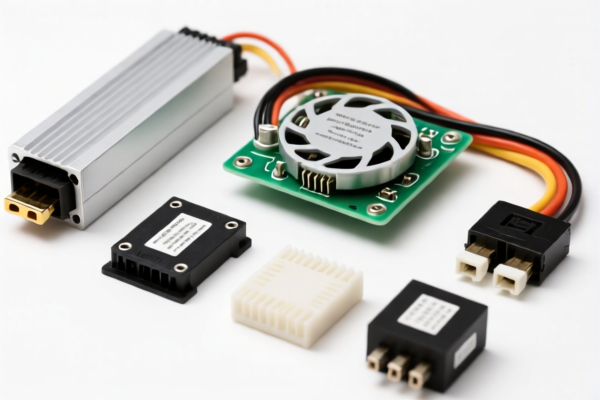
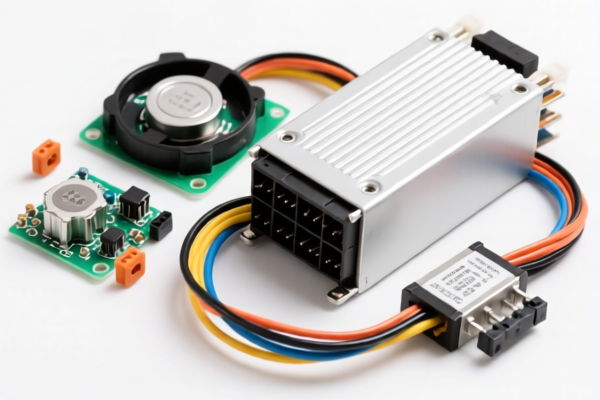
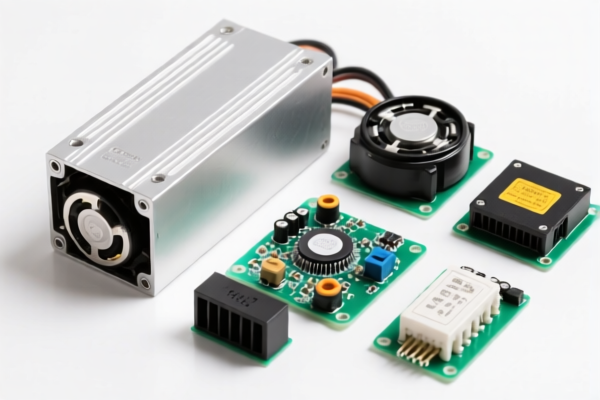
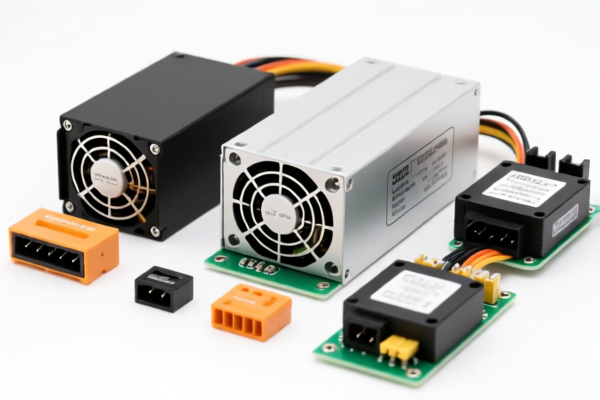
AI Analysis
🖥️ Automatic Data Processing Machine Parts: The High-Stakes Tariff Battlefield
🌐 HS Code Reference & Customs Clearance Guide | 2026 Latest Tariff Analysis | Strategic Compliance Strategy
📌 I. Product Definition: What Are "ADP Machine Parts"?
Automatic Data Processing (ADP) Machine Parts refer to components, assemblies, or accessories specifically designed for use with automatic data processing machines (computers, servers, mainframes, etc.). Unlike general electronics, these parts are classified based on their specific compatibility with ADP equipment (Heading 8471 or 8542).
In international trade, especially under US Customs regulations, "Parts" are scrutinized heavily. Misclassification can lead to massive duty hikes due to Section 301 and IEEPA tariffs.
⚠️ Key Distinction Point:
- General Electronics vs. ADP Parts: Is the part exclusively or primarily designed for an ADP machine? If yes, it likely falls under 8473 (Parts of 8471 machines) or 8542/8544 (Electronic components).
- Assembly Level: Is it a finished circuit board (PCBA)? A raw connector? Or a structural bracket? This determines the HS Code and, consequently, the tariff rate.
📦 II. HS Code Classification Details (2026 Latest Tariff Data)
Based on the provided data, here are the 5 specific HS Codes identified for ADP Machine Parts, with their corresponding tax implications.
| HS Code | Summary & Logic | Total Tax Rate | Tax Detail Breakdown |
|---|---|---|---|
8542.90.00.00 |
ADP Parts (Components). Classified as parts/components with no material conflict. Fits the default preference for "Parts & Accessories." | 60.0% | Base: 0.0% Section 301: 50.0% IEEPA (122 Clause): 10% |
8473.30.11.80 |
ADP Parts (PCBA/Components). Matches components/parts under 8473. Reasonable material inference for Printed Circuit Board Assemblies. | 35.0% | Base: 0.0% Section 301: 25.0% IEEPA (122 Clause): 10% |
| 8473.30.91.00 | ADP Parts (Accessories). Directly corresponds to machines in Heading 8471. No material conflict. | 35.0% | Base: 0.0% Section 301: 25.0% IEEPA (122 Clause): 10% |
8542.39.00.90 |
ADP Parts (ICs/Electronic). Classified as parts; no functional/material conflict with "Other Integrated Circuits." Fits electronic component characteristics. | 60.0% | Base: 0.0% Section 301: 50.0% IEEPA (122 Clause): 10% |
8544.42.90.90 |
ADP Parts (Cables/Wires). Classified as parts/accessories. Attributes match insulated conductors ≤ 1,000V. Material inferred as metal/plastic. | 87.6% | Base: 2.6% Section 301: 25.0% IEEPA (122 Clause): 10% Steel/Aluminum/Copper Surcharge: +50% |
🔍 Critical Analysis:
- The "60% Trap": Codes8542.90.00.00and8542.39.00.90attract a 50% Section 301 tariff, resulting in a total of 60%. This applies to specific electronic components and general ADP parts that do not fall under the more favorable 8473 category.
- The "35% Sweet Spot": Codes8473.30.11.80and8473.30.91.00benefit from a lower 25% Section 301 tariff, bringing the total to 35%. These are explicitly tied to the "Parts and Accessories" of Heading 8471 (ADP Machines).
- The "87.6% Nightmare": Code8544.42.90.90(Insulated Wires/Cables) is the most expensive due to the base duty (2.6%) plus the 50% surcharge on copper/steel/aluminum products, in addition to the 35% general add-ons.
💰 III. 2026 Latest Tariff Rate Breakdown (Detailed)
✅ Applicable Country: USA (US)
✅ Origin: China (CN)
✅ Effective Date: Post-2025 (Includes IEEPA 122 Clause)
🎯 1. The "Electronic Component" Trap: 8542.90.00.00 & 8542.39.00.90
| Item | Content |
|---|---|
| Base Duty | 0.0% (Ad valorem) |
| Section 301 Duty | +50.0% |
| IEEPA (122 Clause) | +10.0% |
| Total Effective Rate | 60.0% |
| Calculation | CIF Value × 60% |
| De Minimis Exemption | ❌ NOT Eligible (High risk of denial) |
📌 Explanation:
- These codes fall under Heading 8542 (Integrated Circuits/Electronic Assemblies).
- The 50% Section 301 tariff is the dominant cost driver.
- Even though the base duty is 0%, the additional tariffs make this category prohibitively expensive for low-margin goods.
- Legal Path:USITC:8542.90.00.00→Footnote 9903.88.01(for 50% addition).
🎯 2. The "ADP Parts" Advantage: 8473.30.11.80 & 8473.30.91.00
| Item | Content |
|---|---|
| Base Duty | 0.0% (Ad valorem) |
| Section 301 Duty | +25.0% |
| IEEPA (122 Clause) | +10.0% |
| Total Effective Rate | 35.0% |
| Calculation | CIF Value × 35% |
| De Minimis Exemption | ❌ NOT Eligible (High risk of denial) |
📌 Explanation:
- These codes are explicitly for Parts and Accessories of Heading 8471 (Automatic Data Processing Machines).
- The Section 301 tariff is only 25%, saving you 25 percentage points compared to the 60% rate.
- Strategy: If your part is compatible with a computer/server, always strive to classify it under 8473 rather than generic electronics (8542) if possible.
🎯 3. The "Cable/Wire" Penalty: 8544.42.90.90
| Item | Content |
|---|---|
| Base Duty | 2.6% |
| Section 301 Duty | +25.0% |
| IEEPA (122 Clause) | +10.0% |
| Metal Surcharge | +50.0% (If Steel, Aluminum, or Copper) |
| Total Effective Rate | 87.6% |
| Calculation | CIF Value × 87.6% |
| De Minimis Exemption | ❌ NOT Eligible |
📌 Explanation:
- This code applies to Insulated Wires, Cables, and Conductors.
- The 50% surcharge is applied specifically to copper and steel/aluminum products under certain trade actions.
- This is the highest tax bracket in the dataset. Avoid this classification if your "part" can be argued as a generic assembly under 8473.
🛠️ IV. Customs Clearance Practical Advice (Real-World Pitfall Guide)
✅ 1. Documentation Checklist (Non-Negotiable)
| Document | Required? | Purpose |
|---|---|---|
| ✅ Product Spec Sheet | ✔️ | Must explicitly state: "Compatible with [Brand/Model] ADP Machine." |
| ✅ Functional Description | ✔️ | Detail how the part functions within the ADP machine (e.g., "Motherboard component," "Power connector for server"). |
| ✅ Photos (Internal & External) | ✔️ | Show connectors, labels, and lack of general-purpose use. |
| ✅ Bill of Materials (BOM) | ✔️ | Crucial for 8544.42.90.90 to prove if metal content triggers the 50% surcharge. |
| ✅ Commercial Invoice | ✔️ | Use precise language: "Part for Automatic Data Processing Machine, Model XYZ." Avoid vague terms like "Electrical Connector." |
✅ 2. Classification Strategy (The "Save Money" Cheat Code)
🔥 Golden Rule: "If it fits, it’s 8473. If it’s just 'electronic,' it’s 8542."
| Scenario | Recommended HS Code | Tax Rate | Why? |
|---|---|---|---|
| Mainboard, RAM, Hard Drive Part | 8473.30.11.80 or 8473.30.91.00 |
35% | Explicitly "Parts of ADP Machine." Lower Section 301 rate. |
| Generic CPU, Chipset | 8542.39.00.90 or 8542.90.00.00 |
60% | Classified as "Integrated Circuits" or "Electronic Components," not specific ADP parts. Higher Section 301. |
| Power Cable, Data Cable | 8544.42.90.90 |
87.6% | Classified as "Insulated Wire." Triggered by metal content. Avoid if possible. |
✅ 3. Special Handling Tips
| Situation | Advice |
|---|---|
| Mixed Shipments | Separate ADP Parts from General Electronics. Mixing them can trigger audits. |
| Cable Classification | If your cable is a standard USB/HDMI cable, it might be classified under 8544.42. Ensure the description emphasizes its specific use in ADP machines to justify 8473 if applicable (though difficult for generic cables). |
| OEM Parts | Provide the OEM Part Number and Cross-Reference. This proves the part is specifically designed for the ADP machine, supporting 8473 classification. |
| Raw Components | If importing bare PCBs without components, they may fall under 8534 (Printed Circuits), not 8473. Check carefully. |
🌍 V. Global Market Comparison (Contextual Insight)
| Market | HS Code Trend | Tax Impact | Key Note |
|---|---|---|---|
| 🇺🇸 USA | Strict 8473 vs 8542 split |
35% - 87.6% | High Risk. Section 301 + IEEPA make accurate classification critical. |
| 🇨🇳 China | 8473.30 / 8542.90 |
Low (1-5%) | No Section 301. Focus on VAT and Domestic duties. |
| 🇪🇺 EU | 8473.30 / 8542.90 |
~0-2% | No additional trade tariffs. Focus on CE/RoHS compliance. |
📌 Conclusion:
- The USA is the only market where this classification split causes significant financial impact due to Section 301 and IEEPA.
- Target8473.30whenever possible to save 25-52% in duties compared to8542or8544.
📌 VI. Common Mistakes & Pitfalls (Lessons Learned)
❌ Mistake 1: Calling a "Motherboard" a "Computer Part" → Labeled as 8542 (60%).
👉 Fix: Call it "Part of Automatic Data Processing Machine" → Labeled as 8473.30 (35%).
❌ Mistake 2: Shipping "Data Cables" as "Accessories" without detailing material.
👉 Fix: Declare material content. If copper/steel, expect 87.6% under 8544.42.90.90. Consider if it qualifies as a specific ADP accessory under 8473 (harder, but possible for proprietary cables).
❌ Mistake 3: Ignoring the IEEPA 122 Clause.
👉 Fix: All these codes have an additional 10% IEEPA tariff. Do not base calculations on Section 301 alone.
❌ Mistake 4: Assuming "De Minimis" applies.
👉 Fix: Do not apply. These goods are subject to high tariffs and are explicitly excluded from the $800 de minimis exemption in most cases involving Chinese origin.
🎯 VII. Conclusion: Precision is Profit
🎯 Remember the Mantra:
🔹 "ADP Parts: 8473 is King (35%). Electronic Components: 8542 is Costly (60%). Cables: 8544 is Expensive (87.6%)."
🔹 "Describe Specificity, Not Generality. Prove Compatibility, Not Just Material."
📌 Pro Tip:
If your part is a generic connector used in both ADP and non-ADP devices, consider if it truly qualifies as an "ADP Part." If not, it might fall under
8536(Connectors), which may have different tariff implications. Always consult a customs broker for pre-classification rulings.
📣 Immediate Action:
📞 Submit a Binding Ruling Request to US Customs for high-volume ADP parts.
📄 Update Invoice Descriptions to explicitly mention "Automatic Data Processing Machine Parts."
🚀 Audit Your HS Codes: Are you paying 60% when you should be paying 35%? Correct it now.
✨ Professional Clearance Starts with Accurate Classification!
💼 Every Percentage Point Saved is Pure Profit!
Customer Reviews
About HS Code Classification
The Harmonized System (HS) is an internationally standardized nomenclature developed by the World Customs Organization (WCO) to classify traded products. Over 200 countries use the HS system as the basis for customs tariffs, trade statistics, and import/export regulations.
Each HS code follows a hierarchical structure:
- Chapter (2 digits) — Broad category of goods (e.g., Chapter 84: Machinery and Mechanical Appliances)
- Heading (4 digits) — More specific grouping within the chapter
- Subheading (6 digits) — Internationally standardized breakdown, used by all WCO member countries
- National subdivisions (8-10 digits) — Country-specific extensions for further classification, such as US HTSUS 10-digit codes
Correct HS code classification is essential for smooth customs clearance, accurate duty payment, and compliance with trade regulations. Misclassification can lead to customs delays, overpayment of duties, or penalties.
When importing from CN to US, the applicable tariff rates may include:
- Most-Favored-Nation (MFN) rate — The standard duty rate applied to WTO members
- General rate — Applied to countries without trade agreements
- Trade remedy duties — Additional tariffs such as Section 301 (anti-dumping), Section 232 (national security), or countervailing duties
The information provided on this page is for reference purposes only. For official classification, please consult with your local customs authority or a licensed customs broker.