Automatic Fish Feeder
CN → US| HS Code | Tariff Rate | Origin | Destination | Doc |
|---|---|---|---|---|
| 3926909989 | 22.8% | CN | US | Official Doc |
| 8509805095 | 14.2% | CN | US | Official Doc |
| 8509805080 | 14.2% | CN | US | Official Doc |
| 8479896500 | 20.3% | CN | US | Official Doc |
| 8479899599 | 87.5% | CN | US | Official Doc |
Product Images
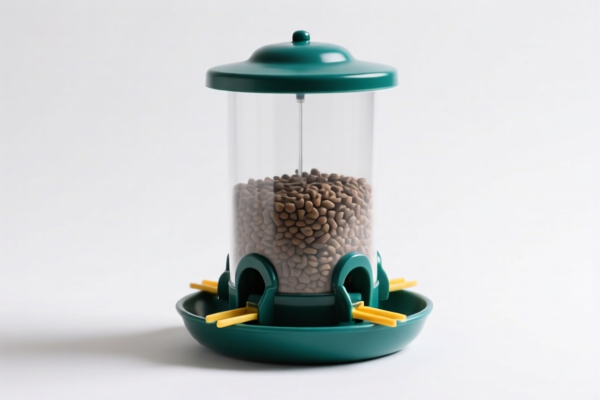
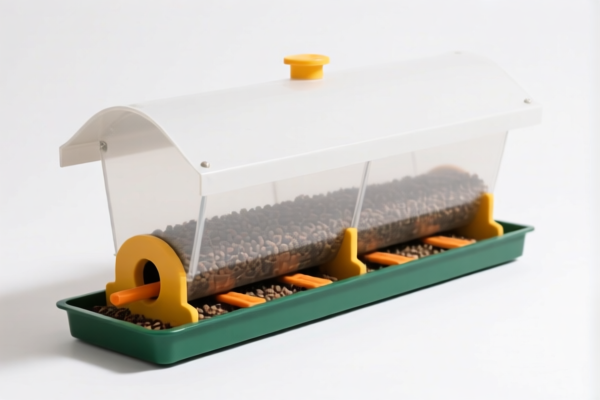


AI Analysis
🐟 Automatic Fish Feeder (Smart Pet Food Dispensers)
🌐 HS Code Reference & Customs Clearance Guide | 2026 Latest Tariff Analysis | Strategic Customs Strategy
📌 I. Product Definition & Classification: Do You Really Understand "Automatic Fish Feeders"?
An Automatic Fish Feeder is an electric appliance designed to dispense pet food at scheduled intervals. In international trade, these devices are often misclassified because they straddle the line between "plastic goods" and "electrical appliances." The correct classification depends heavily on material composition and functional complexity.
In the context of US imports from China, three primary classification paths exist, ranging from simple plastic housings to complex motorized mechanical units.
⚠️ Key Distinction:
- If the device is viewed purely as a plastic container with minimal electronics → Chapter 39 (Plastics).
- If the device is viewed as a household appliance with a self-contained motor → Chapter 85 (Electrical Machinery).
- If the device is viewed as a general-purpose machine (often a fallback category) → Chapter 84 (Machinery).
📦 II. HS Code Classification Details (2026 Latest Tariff Authority Comparison)
Based on current data, there are five potential HS Codes for Automatic Fish Feeders, with significantly different tariff implications.
| HS Code | Product Description | Logic / Classification Basis | Total Tax Rate (China Origin) |
|---|---|---|---|
3926.90.99.89 |
Other Articles of Plastics | Classified as a plastic article not specifically mentioned elsewhere. Assumes the device is primarily a plastic container. | 22.8% |
8509.80.50.95 |
Electromechanical Domestic Appliances | Classified as a household appliance with its own motor. Material: Plastic or Metal. | 14.2% |
8509.80.50.80 |
Domestic Appliances (Other) | Based on the residual principle for household appliances. Fits general household character. | 14.2% |
8479.89.65.00 |
Machines with Independent Function | Classified as a machine with an independent function and a built-in self-contained motor. | 20.3% |
8479.89.95.99 |
Machines (Residual/Other) | Classified as a machine with independent function, falling under residual categories. | 87.5% |
🔍 Critical Insight:
- The difference between8509(14.2%) and3926(22.8%) is 8.6%.
- The difference between8509(14.2%) and8479.89.95.99(87.5%) is massive. Misclassifying a simple feeder as a "general machine" can lead to catastrophic cost increases.
- Note on Steel/Aluminum/Copper: The 87.5% rate includes an additional 50% tariff for steel/aluminum/copper products (Section 232/301 nuances), making this the most dangerous classification to choose accidentally.
💰 III. 2026 Latest Tariff Rate Breakdown (Detailed Tax Clauses)
✅ Applicable Country: USA (US)
✅ Origin: China (CN)
✅ Effective Time: 2025-11-10 (Includes subsequent imports)
🎯 1. 8509.80.50.95 & 8509.80.50.80 —— THE OPTIMAL CLASSIFICATION?
(Electromechanical Domestic Appliances)
| Item | Detail |
|---|---|
| Base Tariff | 4.2% (Ad valorem) |
| Section 301 / Additional Tariff | 0.0% (Specific to these subheadings) |
| Section 122 Tariff | +10% (Retaliation/Countervailing) |
| Total Tax Rate | 14.2% |
| Tax Calculation | CIF Value × 14.2% |
| De Minimis Eligibility | ❌ Not Eligible (High risk of audit) |
| Legal Basis Path | HTSUS:8509.80.50 → Section 122 Add-on |
📌 Explanation:
- This is likely the most favorable and legally defensible classification for standard plastic/metal automatic feeders.
- The "Additional Tariff" is 0.0% for this specific subheading, unlike the 25% often applied to other electrical goods.
- The only surcharge is the 10% Section 122 tariff.
🎯 2. 3926.90.99.89 —— The "Plastic Article" Classification
| Item | Detail |
|---|---|
| Base Tariff | 5.3% |
| Section 301 / Additional Tariff | +7.5% |
| Section 122 Tariff | +10% |
| Total Tax Rate | 22.8% |
| Tax Calculation | CIF Value × 22.8% |
| De Minimis Eligibility | ❌ Not Eligible |
| Legal Basis Path | HTSUS:3926.90.99 → Section 301 (7.5%) → Section 122 (10%) |
📌 Explanation:
- If Customs determines the electronic components are negligible and the item is primarily a "plastic article," it falls here.
- Cost Impact: This is 8.6% higher than the8509classification. Avoid if the device has a clear motor and control board.
🎯 3. 8479.89.65.00 —— The "General Machine" Classification
| Item | Detail |
|---|---|
| Base Tariff | 2.8% |
| Section 301 / Additional Tariff | +7.5% |
| Section 122 Tariff | +10% |
| Total Tax Rate | 20.3% |
| Tax Calculation | CIF Value × 20.3% |
| De Minimis Eligibility | ❌ Not Eligible |
📌 Explanation:
- Used when the machine is considered to have an "independent function" not covered by Chapter 85.
- Slightly more expensive than8509but much cheaper than the residual8479.95category.
🚫 4. 8479.89.95.99 —— THE DANGEROUS "RESIDUAL" CLASSIFICATION
| Item | Detail |
|---|---|
| Base Tariff | 2.5% |
| Section 301 / Additional Tariff | +25.0% (Standard 301) |
| Section 122 Tariff | +10% |
| Steel/Aluminum/Copper Surcharge | +50% (If applicable materials) |
| Total Tax Rate | 87.5% (Max) |
| Tax Calculation | CIF Value × 87.5% |
| De Minimis Eligibility | ❌ Not Eligible |
⚠️ CRITICAL WARNING:
- This is the worst-case scenario.
- It applies the maximum 25% Section 301 tariff plus the 50% metals surcharge if any steel/aluminum parts are used.
- Never use this code unless you have no other option and have calculated the massive cost impact. It is a "residual" category (Others) and is highly scrutinized.
🛠️ IV. Customs Clearance Practical Advice (Real-World Pitfall Guide)
✅ 1. Required Documentation Checklist
| Document | Must Provide | Description |
|---|---|---|
| ✅ Product Specification Sheet | ✔️ | Must include motor specs, voltage, material composition (Plastic vs. Metal ratios). |
| ✅ Circuit Diagram / Block Diagram | ✔️ | Crucial: Proves the device is an "electromechanical appliance" (8509) rather than just a "machine" or "plastic part." |
| ✅ Product Photos | ✔️ | Clear images of the label, motor, control panel, and housing. |
| ✅ Commercial Invoice | ✔️ | Description must be precise: "Electric Automatic Fish Feeder, Model XYZ." Avoid vague terms like "Plastic Dispenser." |
| ✅ Packing List | ✔️ | Detail included accessories (power adapter, scoops) to prevent "split shipment" penalties. |
✅ 2. Declaration Strategy (Key Mnemonics)
🔥 “Electronics First, Plastics Last, Avoid Residuals at All Costs!”
| Scenario | Correct HS Code | Incorrect Code | Consequence |
|---|---|---|---|
| Standard Electric Feeder (Plastic/Metal body, Motor, Timer) | 8509.80.50.95 or 8509.80.50.80 |
3926.90.99.89 |
Overpay by 8.6% |
| Feeder with Steel Housing | 8509.80.50.95 |
8479.89.95.99 |
Tax Skyrockets to 87.5% (Huge Loss) |
| Non-Electric Manual Feeder (No Motor) | 3926.90.99.89 |
8509.80.50.95 |
Under-declaration Risk (Penalty) |
✅ 3. Special Handling Tips
| Situation | Recommendation |
|---|---|
| Hybrid Materials | If the feeder has significant steel/aluminum components, emphasize the electrical function (8509) to avoid the 50% metals surcharge in 8479.95. |
| Smart Features (Wi-Fi/APP) | Explicitly state "Smart Appliance" in descriptions. This reinforces the 8509 (Electrical Machinery) classification. |
| Pre-Ruling | Apply for a Binding Tariff Information (BTI) or Pre-Ruling from CBP. The cost of a pre-ruling is negligible compared to the risk of an 87.5% tax bill. |
🌍 V. Global Market Comparison (2026 Latest)
| Country/Region | Recommended HS Code | Est. Tariff (China Origin) | Certification | Notes |
|---|---|---|---|---|
| 🇺🇸 USA | 8509.80.50.95 |
14.2% | FCC, UL | Best Rate. Avoid 8479.95 (87.5%). |
| 🇺🇸 USA | 3926.90.99.89 |
22.8% | None | Higher tax, acceptable if plastic-heavy. |
| 🇨🇳 China | 8509.80.90.00 |
~5-10% | CCC | Lower import tax, but focus is on export duties. |
| 🇪🇺 EU | 8509.80.00 |
~3.5-8.0% | CE, RoHS | No Section 122/301 equivalents. |
| 🇬🇧 UK | 8509.80.00 |
~3.5-8.0% | UKCA | Post-Brexit rules apply. |
📌 Conclusion:
- For the US Market,8509.80.50.95is the Gold Standard.
- It minimizes the Section 301 impact (0% vs 25%) and avoids the disastrous Section 122/Metals surcharges of residual codes.
- Do not use8479.89.95.99unless you are ready to pay nearly 90% in duties.
📌 VI. Common Mistakes & Pitfalls (Lessons Learned)
❌ Mistake 1: Classifying an electric feeder as 3926 (Plastics) without justification.
👉 Result: You pay 22.8% instead of 14.2%.
👉 Fix: Provide circuit diagrams to prove electrical function.
❌ Mistake 2: Using 8479.89.95.99 as a "catch-all" for unknown goods.
👉 Result: Tax jumps to 87.5% due to the 25% Section 301 + 50% Metals surcharge.
👉 Fix: Always look for specific headings in Chapter 84 or 85 before using residual codes.
❌ Mistake 3: Ignoring material composition (Steel vs. Plastic).
👉 Result: If classified under 8479 with steel parts, you trigger the 50% additional tariff.
👉 Fix: If using steel/aluminum, ensure it falls under 8509 (Appliances) to mitigate surcharges.
🎯 VII. Conclusion: Precision Saves Money!
🎯 Remember the Golden Rule:
🔹 “Electric Motor = Chapter 85 (14.2%)”
🔹 “Pure Plastic = Chapter 39 (22.8%)”
🔹 “General Machine Residual = Chapter 84/95 (87.5% - AVOID!)”
📌 Pro Tip:
For automatic fish feeders, the presence of a self-contained motor and electronic timer strongly supports classification under HTS 8509.80.50.
Action Step:
1. Prepare technical specs highlighting the motor and control board.
2. Declare as "Automatic Electric Fish Feeder".
3. Use HS Code 8509.80.50.95 to secure the 14.2% total tax rate.
4. Avoid vague descriptions like "Pet Dispenser" which may lead to misclassification.
📣 Immediate Action Required:
📞 Consult a licensed customs broker for a Pre-Ruling if your product has unique mechanical features.
🚀 Correct HS Code = Lower Duties = Higher Profit Margins.
✨ Professional Customs Clearance Starts with Accurate Classification!
💼 Every percentage point saved is pure profit!
Customer Reviews
About HS Code Classification
The Harmonized System (HS) is an internationally standardized nomenclature developed by the World Customs Organization (WCO) to classify traded products. Over 200 countries use the HS system as the basis for customs tariffs, trade statistics, and import/export regulations.
Each HS code follows a hierarchical structure:
- Chapter (2 digits) — Broad category of goods (e.g., Chapter 84: Machinery and Mechanical Appliances)
- Heading (4 digits) — More specific grouping within the chapter
- Subheading (6 digits) — Internationally standardized breakdown, used by all WCO member countries
- National subdivisions (8-10 digits) — Country-specific extensions for further classification, such as US HTSUS 10-digit codes
Correct HS code classification is essential for smooth customs clearance, accurate duty payment, and compliance with trade regulations. Misclassification can lead to customs delays, overpayment of duties, or penalties.
When importing from CN to US, the applicable tariff rates may include:
- Most-Favored-Nation (MFN) rate — The standard duty rate applied to WTO members
- General rate — Applied to countries without trade agreements
- Trade remedy duties — Additional tariffs such as Section 301 (anti-dumping), Section 232 (national security), or countervailing duties
The information provided on this page is for reference purposes only. For official classification, please consult with your local customs authority or a licensed customs broker.