Automatic Paper Roll Feeder
CN → US| HS Code | Tariff Rate | Origin | Destination | Doc |
|---|---|---|---|---|
| 8441100000 | 35.0% | CN | US | Official Doc |
| 8441900000 | 35.0% | CN | US | Official Doc |
| 8479909596 | 85.0% | CN | US | Official Doc |
| 8479899595 | 37.5% | CN | US | Official Doc |
Product Images

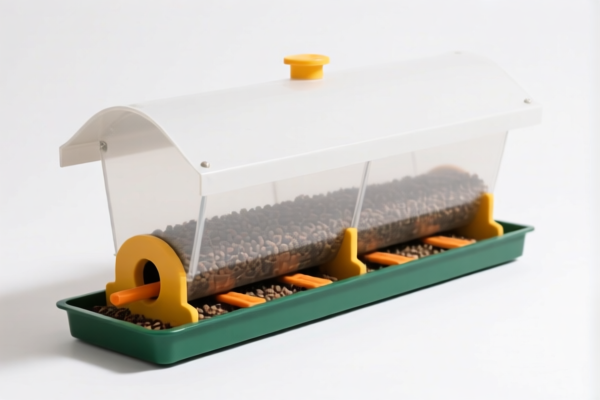


AI Analysis
📜 Automatic Paper Roll Feeder (Papertool Processing Machinery)
🌐 HS Code Reference & Customs Clearance Guide | 2026 Latest Tariff Analysis | Professional Entry Strategy
📌 I. Product Definition & Classification: What is an "Automatic Paper Roll Feeder"?
An Automatic Paper Roll Feeder is a specialized industrial machine used in the paper processing, printing, and converting industries. Its primary function is to unwind large rolls of paper, pulp, or cardboard and feed them automatically into downstream machinery (such as cutters, printers, or laminators).
In international trade, classification depends heavily on specificity: * Specific Paper-Processing Machinery: If the machine is exclusively or primarily designed for cutting, trimming, or feeding paper/pulp/cardboard, it falls under Chapter 84, Heading 8441. * General Industrial Parts/Other Machinery: If it is considered a generic part of another machine, or a general-purpose industrial robot/feeder not specifically defined as "paper processing," it may fall under Heading 8479.
⚠️ Critical Distinction:
- If the feeder is an integral part of a paper cutter or specifically designed for paper/pulp/cardboard processing → 8441.xxxxxx
- If it is a generic industrial feeder with no specific paper-processing designation, or considered a part of a larger non-specified system → 8479.xxxxxx
📦 II. HS Code Classification Details (Based on Provided Data)
Based on the provided dataset, here are the applicable HS Codes for Automatic Paper Roll Feeders, categorized by their functional description and tariff implications.
| HS Code | Summary Description | Applicable Scenario | Tax Rate |
|---|---|---|---|
8441.10.00.00 |
Machinery for cutting paper pulp, paper, or cardboard | Specific feeders integrated with cutting mechanisms for paper products | 35.0% |
8441.90.00.00 |
Parts of machinery for paper pulp, paper, or cardboard | Standalone feeder units classified as "parts" of a larger paper-processing line | 35.0% |
8479.90.95.96 |
Other parts of independent functions machines and mechanical appliances | Generic feeders deemed "other" independent machines; Steel, Aluminum, Copper products attract 50% surcharge | 85.0% |
8479.89.95.95 |
Automation functions for industrial mechanical appliances | Automated feeding systems classified under general industrial automation | 37.5% |
🔍 Key Analysis:
- 8441 Codes (35%): These are the most accurate for pure paper-processing feeders. The base tariff is 0%, but additional duties bring the total to 35%.
- 8479.90.95.96 (85%): This is a high-risk category. If the feeder contains significant metal components (steel/aluminum/copper), it triggers a 50% surcharge, pushing the total rate to 85%. Avoid this classification unless the machine is clearly not a paper-processing machine.
- 8479.89.95.95 (37.5%): A middle-ground option for automated industrial feeders, with a 2.5% base tariff.
💰 III. 2026 Latest Tariff Rate Breakdown (Including Surcharges & Policy Add-ons)
✅ Applicable Country: United States (US)
✅ Origin: China (CN)
✅ Effective Date: 2025年11月10日起 (From Nov 10, 2025, for subsequent imports)
🎯 1. 8441.10.00.00 & 8441.90.00.00 – Paper Processing Machinery & Parts
| Item | Detail |
|---|---|
| Base Rate | 0% (ad valorem) |
| Section 301 Surcharge | +25% |
| Section 122 Surcharge | +10% |
| Total Tax Rate | 35.0% |
| Calculation | CIF Value × 35% |
| De Minimis Exemption | ❌ Not Eligible (deny_de_minimis) |
| Legal Basis | Section 301: 25% + Section 122: 10% |
📌 Explanation:
- These codes benefit from a 0% base tariff, making them more favorable than the 8479 categories.
- The 35% total is driven by US trade policies (301 and 122 clauses) targeting Chinese industrial equipment.
- Crucial: Ensure the machine is described as "for paper/pulp/cardboard" to justify this lower rate.
🎯 2. 8479.90.95.96 – Other Independent Machines (High Risk)
| Item | Detail |
|---|---|
| Base Rate | 0% |
| Section 301 Surcharge | +25% |
| Section 122 Surcharge | +10% |
| Material Surcharge (Steel/Al/Cu) | +50% |
| Total Tax Rate | 85.0% |
| Calculation | CIF Value × 85% |
| De Minimis Exemption | ❌ Not Eligible |
| Legal Basis | Section 301: 25% + Section 122: 10% + Material Surcharge: 50% |
📌 Warning:
- This code applies if the machine is not specifically classified under paper-processing machinery.
- Steel, Aluminum, and Copper components trigger an additional 50% tariff.
- Total rate of 85% is extremely high. Only use this if the machine cannot be classified under 8441.
🎯 3. 8479.89.95.95 – Industrial Automation Functions
| Item | Detail |
|---|---|
| Base Rate | 2.5% |
| Section 301 Surcharge | +25% |
| Section 122 Surcharge | +10% |
| Total Tax Rate | 37.5% |
| Calculation | CIF Value × 37.5% |
| De Minimis Exemption | ❌ Not Eligible |
| Legal Basis | Section 301: 25% + Section 122: 10% |
📌 Note:
- Slightly higher than 8441 codes (35% vs 37.5%).
- Applies to "automation functions" for industrial machinery.
- Useful if the feeder is part of a broader automated system not strictly defined as "paper processing."
🛠️ IV. Customs Clearance Practical Advice (Battle-Tested Tips)
✅ 1. Documentation Checklist (Mandatory)
| Document | Required | Notes |
|---|---|---|
| Product Specification Sheet | ✔️ | Must specify: Material processed (paper/pulp/cardboard), feeding mechanism, speed, capacity. |
| Technical Drawings | ✔️ | Show if it is a standalone unit or part of a larger line. Highlight paper-specific components. |
| Commercial Invoice | ✔️ | Clearly state: "Automatic Paper Roll Feeder for Paper Processing" – avoid vague terms like "Industrial Robot." |
| Certificate of Origin (CO) | ✔️ | Required to verify origin. If not China, may avoid surcharges. |
| Bill of Lading | ✔️ | Ensure weight and dimensions match HS Code requirements. |
✅ 2. Classification Strategy (Key Mantra)
🔥 “Be Specific for 8441, Avoid 8479 Metal Surcharge!”
| Scenario | Recommended HS Code | Reason |
|---|---|---|
| Standalone Paper Feeder | 8441.10.00.00 |
Explicitly for paper processing → 35% Tax |
| Feeder as Part of Line | 8441.90.00.00 |
Classified as part of paper machinery → 35% Tax |
| Generic Industrial Feeder | 8479.89.95.95 |
Not specific to paper → 37.5% Tax |
| Feeder with Heavy Metal Frame | ❌ Avoid 8479.90.95.96 |
Triggers 50% material surcharge → 85% Tax |
✅ 3. Special Cases & Pitfalls
| Scenario | Handling Advice |
|---|---|
| Feeder for Non-Paper Materials (e.g., plastic film) | Do NOT use 8441 codes. Use 8479.89.95.95 or other appropriate codes. Misclassification leads to penalties. |
| Integrated System (Feeder + Cutter + Printer) | Declare as 8441.10.00.00 if the primary function is paper processing. Do not split into parts. |
| Second-Hand Machinery | Provide proof of age and condition. Customs may apply different valuation methods. |
| OEM Custom Design | Provide design drawings to prove specific paper-processing functionality. |
🌍 V. Global Market Comparison (2026 Latest)
| Country/Region | Recommended HS Code | Tariff Rate | Certification Requirements | Notes |
|---|---|---|---|---|
| 🇺🇸 USA | 8441.10.00.00 |
35% (China) | CE/FCC (if applicable) | Highest risk if misclassified as 8479 |
| 🇨🇳 China | 8441.10.00.00 |
5-10% | CCC (if applicable) | Lower base rates |
| 🇪🇺 EU | 8441.10.00.00 |
0-2.5% | CE Marking | No Section 301/122 surcharges |
| 🇦🇺 Australia | 8441.10.00.00 |
5% | RCM | No major surcharges |
| 🇯🇵 Japan | 8441.10.00.00 |
0-5% | PSE | Competitive market |
📌 Conclusion:
- USA is the most challenging market due to Section 301 and 122 surcharges.
- Precision in classification is critical. Misclassifying a paper feeder as a "general industrial machine" can increase tariffs from 35% to 85%.
📌 VI. Common Errors & Pitfall Avoidance (Lessons Learned)
❌ Error 1: Calling the feeder a "Robot" or "Automated Arm"
👉 Consequence: Customs may classify it under 8479.90.95.96, triggering 85% tax.
👉 Fix: Always use "Paper Roll Feeder" or "Paper Processing Machine".
❌ Error 2: Splitting the feeder from the main machine
👉 Consequence: Parts may be taxed separately, potentially at higher rates if not linked to the main HS Code.
👉 Fix: Declare as a single unit if integrated, or provide clear linkage documents.
❌ Error 3: Ignoring Material Composition
👉 Consequence: Heavy steel components in a misclassified machine trigger 50% surcharge.
👉 Fix: Ensure classification aligns with 8441 to avoid material-specific surcharges.
❌ Error 4: Vague Invoice Descriptions
👉 Consequence: Customs delays, additional inspections, or misclassification.
👉 Fix: Use precise descriptions: "Automatic Unwind Feeder for Paper Rolls, Model XYZ, for Printing Press"
✅ Correct Practice:
"Automatic Paper Roll Feeder, 8441.10.00.00, for Paper Processing, 100kg, Model ABC, Made in China"
🎯 VII. Conclusion: Precision Saves Costs!
🎯 Remember the Mantra:
🔹 "Paper Feeder = 8441 = 35% Tax"
🔹 "Generic Machine = 8479 = 37.5%~85% Tax"
🔹 "Metal Surcharge = 50% More – Avoid at All Costs!"
📌 Pro Tip:
If your feeder is not made in China, you may avoid the 35% surcharge.
✅ Recommendation:
📞 Consult a Customs Broker + Provide Technical Specs + Apply for Advance Ruling
🚀 Ensure Smooth Clearance, Minimize Duties, Maximize Profit!
✨ Professional Classification Starts with Accurate Descriptions!
💼 Every Percent of Tax Saved is Pure Profit!
Customer Reviews
About HS Code Classification
The Harmonized System (HS) is an internationally standardized nomenclature developed by the World Customs Organization (WCO) to classify traded products. Over 200 countries use the HS system as the basis for customs tariffs, trade statistics, and import/export regulations.
Each HS code follows a hierarchical structure:
- Chapter (2 digits) — Broad category of goods (e.g., Chapter 84: Machinery and Mechanical Appliances)
- Heading (4 digits) — More specific grouping within the chapter
- Subheading (6 digits) — Internationally standardized breakdown, used by all WCO member countries
- National subdivisions (8-10 digits) — Country-specific extensions for further classification, such as US HTSUS 10-digit codes
Correct HS code classification is essential for smooth customs clearance, accurate duty payment, and compliance with trade regulations. Misclassification can lead to customs delays, overpayment of duties, or penalties.
When importing from CN to US, the applicable tariff rates may include:
- Most-Favored-Nation (MFN) rate — The standard duty rate applied to WTO members
- General rate — Applied to countries without trade agreements
- Trade remedy duties — Additional tariffs such as Section 301 (anti-dumping), Section 232 (national security), or countervailing duties
The information provided on this page is for reference purposes only. For official classification, please consult with your local customs authority or a licensed customs broker.