Automatic Pet Feeder
CN → US| HS Code | Tariff Rate | Origin | Destination | Doc |
|---|---|---|---|---|
| 8509805095 | 14.2% | CN | US | Official Doc |
| 3926909989 | 22.8% | CN | US | Official Doc |
| 8509805080 | 14.2% | CN | US | Official Doc |
| 8479896500 | 20.3% | CN | US | Official Doc |
| 8479899599 | 87.5% | CN | US | Official Doc |
Product Images
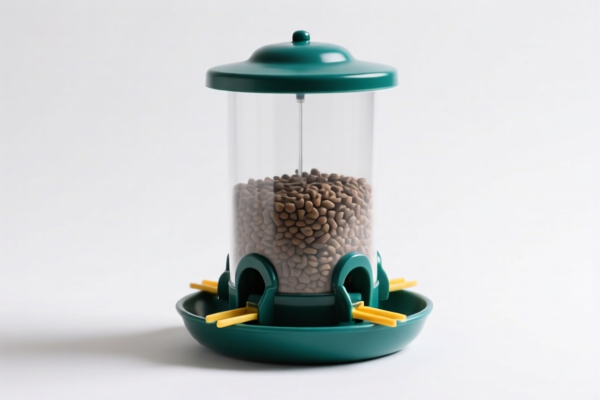
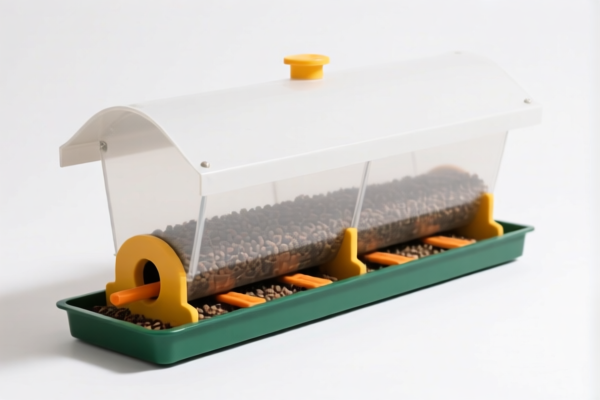


AI Analysis
🐾 Automatic Pet Feeder (Smart Pet Food Dispensers)
🌐 HS Code Reference & Customs Clearance Guide | 2026 Latest Tariff Breakdown | Professional Entry Strategy
📌 I. Product Definition & Classification: Do You Really Understand "Automatic Pet Feeders"?
An Automatic Pet Feeder is a domestic appliance designed to dispense pet food at preset times. In international trade, the classification hinges on two key factors:
1. Does it have a built-in electric motor? (Yes → Chapter 85 or 84)
2. Is it primarily a "home appliance" or a "general-purpose mechanical unit"?
⚠️ Key Distinction Point:
- If it is a standard household appliance with a self-contained motor, used for feeding pets at home → Generally falls under Chapter 85 (Electrical Machinery/Equipment).
- If it has specialized mechanical functions (e.g., advanced weighing, complex automated deployment logic not typical of simple appliances) → It may be argued under Chapter 84 (Machinery).
- Critical Material Factor: If the casing is predominantly plastic, customs may scrutinize Chapter 39 (Plastics), but usually, the function (motor-driven appliance) prevails over material for finished goods.
📦 II. HS Code Classification Details (Based on Provided Data)
According to the provided dataset, there are 5 potential HS Codes for an Automatic Pet Feeder. The choice depends on the specific design, material composition, and functional complexity.
| HS Code | Product Description (Summary) | Total Tax Rate | Tax Breakdown (Base + Additional + 122 Clause) | Key Classification Logic |
|---|---|---|---|---|
| 8509.80.50.95 | Electric Home Appliance: Has its own motor; fits the "other appliances" catch-all definition. | 14.2% | Base: 4.2% Addl: 0.0% Sec 301/122: 10% |
Most Common: Simple feeders with basic motor/drive. Classified as "Other electrical household appliances." |
| 3926.90.99.89 | Plastic Product: Primarily plastic material; other plastic articles not specified elsewhere. | 22.8% | Base: 5.3% Addl: 7.5% Sec 301/122: 10% |
Material-Based: If the item is deemed a "plastic part" rather than a functional machine, or if the motor is not considered the essential character. Higher tax! |
| 8509.80.50.80 | Automated Home Appliance: Non-vacuum cleaner electromechanical home appliance. | 14.2% | Base: 4.2% Addl: 0.0% Sec 301/122: 10% |
Function-Based: Specifically for automated home devices (not vacuums). Often preferred for "smart" feeders with timers/apps. |
| 8479.89.65.00 | Mechanical Unit: Independent function machine with self-contained motor for automatic dispensing/deployment. | 20.3% | Base: 2.8% Addl: 7.5% Sec 301/122: 10% |
High-Tech/Mechanical: For feeders with complex automated "dispensing" mechanisms (e.g., precise portion control, weighing scales) considered "machinery" rather than simple appliances. |
| 8479.89.95.99 | Mechanical Unit: Other electromechanical machinery with independent function (Catch-all). | 87.5% | Base: 2.5% Addl: 25.0% Sec 301/122: 10% Metal Surcharge: +50% (if steel/aluminum/copper) |
Last Resort/Catch-All: High-risk classification. Applies if it doesn't fit other machine categories. Extremely high tax! Avoid if possible. |
🔍 Critical Insight:
- 14.2% (8509) is generally the most favorable and common rate for standard electric pet feeders.
- 20.3% (8479.65) applies if the "automatic dispensing" feature is deemed a specialized mechanical function.
- 22.8% (3926) is a risk if classified purely as a plastic container without emphasizing the motor/function.
- 87.5% (8479.95) is a penalty category for miscategorized mechanical items. Do not use this unless legally required.
💰 III. Detailed Tariff Rate Analysis (2026 Update)
✅ Applicable Country: United States (US)
✅ Origin: China (CN) (Note: If origin is Vietnam/Mexico, tariffs may differ)
✅ Effective Date: 2025/2026 Current Regime
🎯 1. 8509.80.50.95 & 8509.80.50.80 — The "Safe" Electrical Appliance Route
- Total Tax: 14.2%
- Breakdown:
- Base MFN Rate: 4.2%
- Section 301 Additional Tariff: 0.0% (Note: Some 8509 subheadings may have Section 301, but this specific data shows 0.0% for this code).
- "122 Clause" / Other Surcharges: 10%
- Why Choose This?:
Most standard automatic pet feeders (timer-based, motor-driven auger) are considered electrical household appliances. This is the lowest risk and lowest cost classification. - Legal Path:
8509.80→Other electrical appliances→14.2%
🎯 2. 8479.89.65.00 — The "Specialized Machinery" Route
- Total Tax: 20.3%
- Breakdown:
- Base MFN Rate: 2.8%
- Section 301 Additional Tariff: 7.5%
- "122 Clause": 10%
- Why Choose This?:
If your feeder has advanced features (e.g., camera, app-controlled precise gram-weighing, dual-mechanism dispensing), it might be argued as a mechanical device with independent function (Chapter 84). The higher Section 301 rate (7.5% vs 0%) makes this less attractive unless legally necessary.
🎯 3. 3926.90.99.89 — The "Plastic Article" Risk
- Total Tax: 22.8%
- Breakdown:
- Base MFN Rate: 5.3%
- Section 301 Additional Tariff: 7.5%
- "122 Clause": 10%
- Why Avoid This?:
Customs usually classifies finished electrical appliances under Chapter 85 or 84, not Chapter 39. Chapter 39 is for plastics that are not machines. Using this code may trigger an audit for misclassification, as it ignores the motor/electronic control system.
🎯 4. 8479.89.95.99 — The "Danger Zone" (Catch-All)
- Total Tax: 87.5% (or higher with metal surcharge)
- Breakdown:
- Base MFN Rate: 2.5%
- Section 301 Additional Tariff: 25.0%
- "122 Clause": 10%
- Metal Surcharge: +50% (if steel/aluminum/copper components > threshold)
- Why Avoid This?:
This is a generic "other machine" category. It carries the highest Section 301 tariff (25%). Only use this if the product is a complex industrial-grade automated dispensing unit that clearly doesn't fit "household appliance" definitions. For a consumer pet feeder, this is incorrect and extremely costly.
🛠️ IV. Customs Clearance Practical Advice (Real-World Pitfall Guide)
✅ 1. Documentation Checklist (Must-Have)
| Document | Required? | Purpose |
|---|---|---|
| Product Specification Sheet | ✔️ | Must list: Voltage, Power, Motor Type, Capacity, Dimensions. |
| Circuit Board/Control Logic Diagram | ✔️ | To prove it's an electrical appliance (supports 8509) vs. pure mechanical. |
| Product Photos (Labeled) | ✔️ | Show brand, model, input/output, and any digital interfaces (screens/apps). |
| Commercial Invoice | ✔️ | Must state: "Automatic Electric Pet Feeder, Model XYZ, Voltage 110V" |
| Packaging List | ✔️ | Confirm no other heavy machinery parts included. |
| Material Declaration | ✔️ | Confirm if casing is plastic or metal (affects potential metal surcharge under 8479.95). |
✅ 2. Declaration Strategy (Key Tips)
🔥 "Function over Material, Motor over Plastic!"
| Scenario | Recommended HS Code | Risk Level | Reason |
|---|---|---|---|
| Standard Timer Feeder | 8509.80.50.95 or 8509.80.50.80 |
🟢 Low | Clearly an electrical household appliance. |
| Smart App-Controlled Feeder | 8509.80.50.80 |
🟢 Low | Emphasize "Automated Home Appliance" and "Electrical Control." |
| Heavy-Duty Industrial Dispenser | 8479.89.65.00 |
🟡 Medium | If it has complex weighing/dispensing logic not typical of home use. |
| Plain Plastic Container (No Motor) | 3926.90.99.89 |
🟢 Low | If it’s just a bucket without electronics. |
| Complex Mechanical Robot Feeder | 8479.89.95.99 |
🔴 HIGH | Avoid! High tax and high scrutiny. |
✅ 3. Special Case Handling
- Metal Components: If the feeder has significant steel/aluminum parts (e.g., metal gears, chassis), and you classify under
8479.89.95.99, you may face an additional 50% metal surcharge. Stick to8509or8479.65to avoid this. - Origin Marking: Ensure the country of origin is clearly marked on the product and packaging. Mislabeling can lead to penalties.
- Pre-Ruling: For high-volume imports, consider applying for a Binding Tariff Information (BTI) or Advance Ruling from US Customs to lock in the
8509classification.
🌍 V. Global Market Comparison (2026 Snapshot)
| Market | Recommended HS Code | Est. Total Duty | Notes |
|---|---|---|---|
| 🇺🇸 USA | 8509.80.50.95 |
14.2% | Best rate for electric feeders. Avoid 8479.95 (87.5%). |
| 🇨🇳 China | 8509.80.50 |
~5-7% | Lower base rate, no Section 301. |
| 🇪🇺 EU | 8509.80 |
~0-4% | Low duty, but strict CE/RoHS certification required. |
| 🇬🇧 UK | 8509.80 |
~4% | Post-Brexit rules apply; CE/UKCA mark needed. |
📌 Conclusion:
For the US market,8509.80.50.95or8509.80.50.80is the optimal choice. It offers the lowest total tax (14.2%) and aligns with the product's nature as an electrical household appliance. Avoid8479.89.95.99due to the punitive 87.5% rate.
📌 VI. Common Mistakes & Pitfalls (Blood Lessons)
❌ Mistake 1: Classifying as a "Plastic Toy" (9503) or "Plastic Part" (3926)
👉 Consequence: If Customs finds a motor, they will reclassify to 8509 or 8479, potentially adding back taxes + penalties. Also, 3926 has a 22.8% rate, which is higher than 8509.
❌ Mistake 2: Using 8479.89.95.99 (The 87.5% Code)
👉 Consequence: Unnecessary tax burden. This code is for general machinery, not specific household appliances.
❌ Mistake 3: Ignoring the "122 Clause" / Section 301 Details
👉 Consequence: Assuming 0% additional tariff when 8479.65 has 7.5% and 8479.95 has 25%. Always check the latest tariff footnote.
❌ Mistake 4: Not Declaring Motor Power/Voltage
👉 Consequence: Customs may classify as "General Machinery" due to lack of electrical specs, leading to higher duty.
✅ Correct Declaration Example:
"Automatic Electric Pet Feeder, Model XYZ, 110V AC, 5W Motor, Plastic Housing, Timer & App Controlled, for Household Use"
🎯 VII. Conclusion: Smart Classification, Maximum Profit
🎯 Remember the Golden Rule:
🔹 "Electric Motor = Chapter 85 (14.2%)"
🔹 "Specialized Mechanics = Chapter 84 (20.3%)"
🔹 "Plastic Only = Chapter 39 (22.8%)"
🔹 "Catch-All Machine = Chapter 84 (87.5%!) — AVOID!"
📌 Pro Tip:
For your Automatic Pet Feeder, prioritize 8509.80.50.95 or 8509.80.50.80. Ensure your product description emphasizes "Electrical Household Appliance" and includes voltage/power specs to support this classification. This keeps your landed cost at 14.2%, maximizing your margin.
📣 Immediate Action:
📞 Consult your freight forwarder with the Product Spec Sheet
📝 Declare as "Automatic Electric Pet Feeder"
🚀 Secure the 14.2% Rate, Avoid the 87.5% Trap!
✨ Professional Clearance Starts with Accurate Classification!
💼 Every Percent Matters in Cross-Border Trade!
Customer Reviews
About HS Code Classification
The Harmonized System (HS) is an internationally standardized nomenclature developed by the World Customs Organization (WCO) to classify traded products. Over 200 countries use the HS system as the basis for customs tariffs, trade statistics, and import/export regulations.
Each HS code follows a hierarchical structure:
- Chapter (2 digits) — Broad category of goods (e.g., Chapter 84: Machinery and Mechanical Appliances)
- Heading (4 digits) — More specific grouping within the chapter
- Subheading (6 digits) — Internationally standardized breakdown, used by all WCO member countries
- National subdivisions (8-10 digits) — Country-specific extensions for further classification, such as US HTSUS 10-digit codes
Correct HS code classification is essential for smooth customs clearance, accurate duty payment, and compliance with trade regulations. Misclassification can lead to customs delays, overpayment of duties, or penalties.
When importing from CN to US, the applicable tariff rates may include:
- Most-Favored-Nation (MFN) rate — The standard duty rate applied to WTO members
- General rate — Applied to countries without trade agreements
- Trade remedy duties — Additional tariffs such as Section 301 (anti-dumping), Section 232 (national security), or countervailing duties
The information provided on this page is for reference purposes only. For official classification, please consult with your local customs authority or a licensed customs broker.