Automatic Regulating or Controlling Instruments and Equipment
CN → US| HS Code | Tariff Rate | Origin | Destination | Doc |
|---|---|---|---|---|
| 9032896015 | 36.7% | CN | US | Official Doc |
| 9032100030 | 36.7% | CN | US | Official Doc |
| 9032896030 | 36.7% | CN | US | Official Doc |
| 9032896015 | 36.7% | CN | US | Official Doc |
Product Images
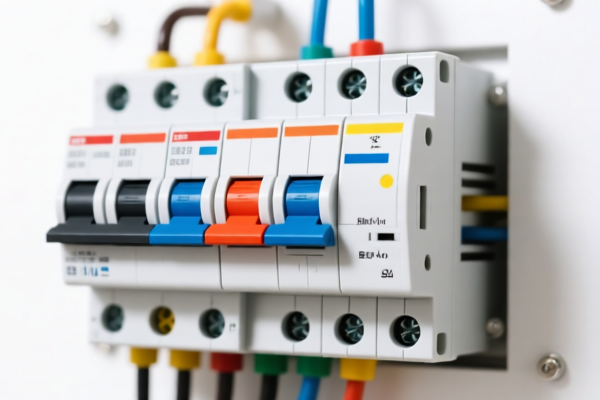
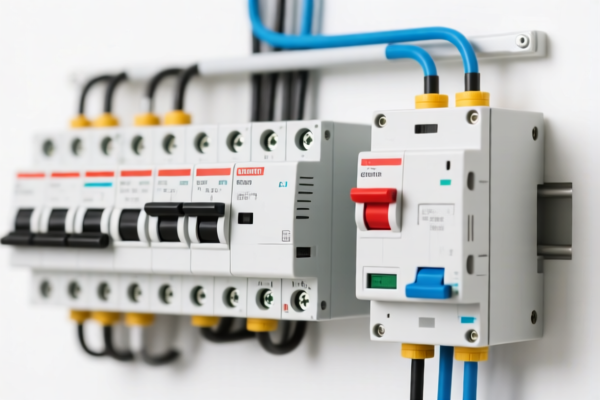
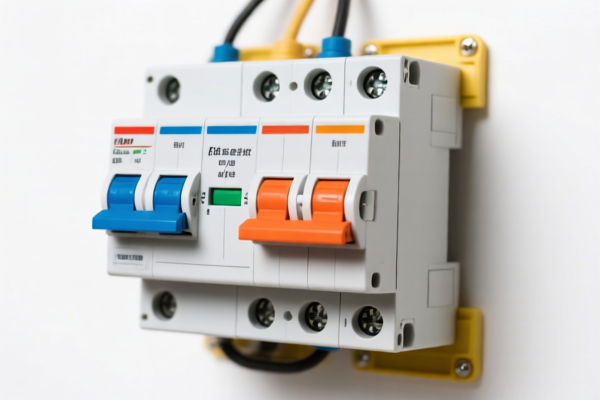
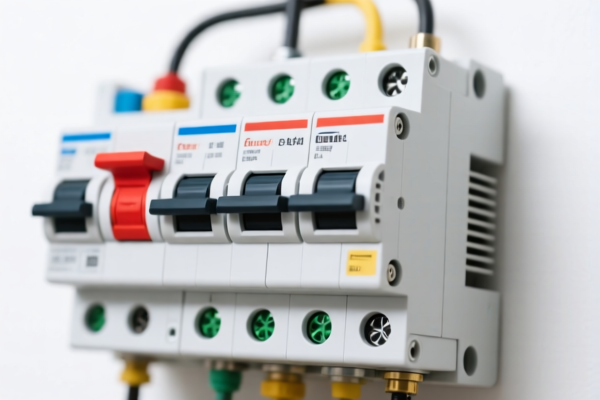
AI Analysis
🎛️ Automatic Regulating or Controlling Instruments and Equipment
🌐 HS Code Reference & Customs Clearance Guide | 2026 Latest Tariff Analysis | Professional Compliance Strategy
📌 I. Product Definition & Classification: What Are "Automatic Regulating/Controlling Instruments"?
These are devices designed to automatically maintain specific conditions (such as temperature, pressure, flow, or level) or control processes without direct human intervention. In international trade, they fall under Chapter 90 (Optical, Photographic, Cinematographic, Measuring, Checking, Precision, Medical or Surgical Instruments).
The key distinction lies in functionality: - Automatic Control: The device compares input signals with set values and adjusts output to minimize error (e.g., PID controllers, thermostats). - Measuring Instruments: Devices that only measure and display data without control capabilities.
⚠️ Critical Distinction:
- If the device only measures → May fall under 9026, 9028, 9029.
- If the device controls/regulates based on measurements → Must fall under 9032.
- If it’s a simple switch or manual valve → Not covered by 9032.
📦 II. HS Code Classification Details (2026 Latest Tariff Authority Comparison)
| HS Code | Product Description | Application Scenario | Control Capability |
|---|---|---|---|
9032.10.00.30 |
Automatic regulating or controlling instruments and apparatus, electric | HVAC systems, industrial process control, smart home hubs | ✅ Yes |
9032.89.60.15 |
Other automatic regulating or controlling instruments and apparatus | Specialized industrial regulators, non-electric control systems | ✅ Yes |
9032.89.60.30 |
Other automatic regulating or controlling instruments and apparatus (Residual Category) | Niche or emerging control technologies not explicitly listed elsewhere | ✅ Yes |
🔍 Key Reminder:
- All devices under 9032 must have automatic regulation or control functionality.
- If a device merely displays data (no feedback loop), it does not qualify for 9032.
- 9032.89.60.30 is a "catch-all" category under the "Other" principle for 9032.89.
💰 III. 2026 Latest Tariff Rate Breakdown (Including Surcharges & Policy Add-ons)
✅ Applicable Country: United States (US)
✅ Origin: China (CN)
✅ Effective Date: From November 10, 2025 (including subsequent imports)
🎯 1. 9032.10.00.30 —— Automatic Regulating/Controlling Instruments (Electric)
| Item | Content |
|---|---|
| Base Duty Rate | 1.7% |
| Section 301 Duty | +25.0% |
| Section 122 Duty | +10.0% |
| Total Duty Rate | 36.7% |
| Tax Calculation | CIF Value × 36.7% |
| De Minimis Eligibility | ❌ Not Eligible (deny_de_minimis) |
| Legal Authority Path | Section 301: 9903.88.01 → Section 122: 9903.01.25 → USITC: 9032.10.00.30 |
📌 Explanation:
- Section 301 (25%): Imposed under U.S. Trade Act Section 301 against Chinese imports.
- Section 122 (10%): Additional duty under Section 122 of the Trade Act of 1974.
- Base Rate (1.7%): Standard MFN (Most Favored Nation) rate for Chapter 90.
- Total: 36.7% is a significant cost driver for electric control devices.
🎯 2. 9032.89.60.15 —— Other Automatic Regulating/Controlling Instruments
| Item | Content |
|---|---|
| Base Duty Rate | 1.7% |
| Section 301 Duty | +25.0% |
| Section 122 Duty | +10.0% |
| Total Duty Rate | 36.7% |
| Tax Calculation | CIF Value × 36.7% |
| De Minimis Eligibility | ❌ Not Eligible |
| Legal Authority Path | Section 301: 9903.88.01 → Section 122: 9903.01.25 → USITC: 9032.89.60.15 |
📌 Note:
- Same tax structure as9032.10.00.30due to identical surcharge rules.
- Applies to non-electric or specialized control devices.
🎯 3. 9032.89.60.30 —— Other Automatic Regulating/Controlling Instruments (Catch-All)
| Item | Content |
|---|---|
| Base Duty Rate | 1.7% |
| Section 301 Duty | +25.0% |
| Section 122 Duty | +10.0% |
| Total Duty Rate | 36.7% |
| Tax Calculation | CIF Value × 36.7% |
| De Minimis Eligibility | ❌ Not Eligible |
| Legal Authority Path | Section 301: 9903.88.01 → Section 122: 9903.01.25 → USITC: 9032.89.60.30 |
📌 Note:
- This is a residual category. Use only if the device doesn’t fit9032.10or9032.89.60.15.
- Must still demonstrate automatic regulation/control function.
🛠️ IV. Customs Clearance Practical Advice (Pro Tips & Pitfall Avoidance)
✅ 1. Required Documentation Checklist (Mandatory)
| Document | Required | Description |
|---|---|---|
| ✅ Product Specification Sheet | ✔️ | Detailed technical specs, control logic, input/output signals |
| ✅ Control Diagram/Flowchart | ✔️ | To prove automatic regulation capability |
| ✅ Product Photos (with Nameplate) | ✔️ | Clear view of model, brand, and technical labels |
| ✅ Third-Party Test Report | ✔️ | CE, FCC, UL, ISO (if applicable) |
| ✅ Commercial Invoice | ✔️ | Must state "Automatic Regulating or Controlling Instrument" |
| ✅ Certificate of Origin (CO) | ✔️ | For preferential tariff claims (if applicable) |
| ✅ Packing List | ✔️ | Detailing components and accessories |
✅ 2. Declaration Tips (Key Mantra)
🔥 "Function Dictates Code, Control is Key, Misclassification Costs!"
| Scenario | Correct Declaration | Incorrect Practice |
|---|---|---|
| Device with PID Controller | 9032.10.00.30 |
Misclassified as "Sensor" (9026) → Lower duty but audit risk |
| Non-Electric Regulator | 9032.89.60.15 |
Misclassified as "Mechanical Valve" (8481) → 0% duty but false declaration |
| Simple Thermostat (No Auto-Control) | Not 9032 → Likely 8516.80 or 8481.80 |
Forcing into 9032 → 36.7% duty + penalty |
| Data Logger (No Control) | Not 9032 → Likely 9031.80 |
Misclassified → 36.7% duty |
✅ 3. Special Case Handling
| Scenario | Handling Advice |
|---|---|
| OEM Custom Controllers | Provide client design specs to prove custom control logic |
| Integrated Control + Display Units | Still classified under 9032 if control is primary function |
| Devices Used in Medical Equipment | If control is integral to medical function, still 9032; if standalone, verify |
| Export to Non-US Markets | Check local tariffs; e.g., EU has 0% for many 9032 items |
🌍 V. Global Market Customs Clearance Comparison (2026 Latest)
| Country/Region | Recommended HS Code | Duty Rate (China Origin) | Certification Requirements | Notes |
|---|---|---|---|---|
| 🇺🇸 USA | 9032.10.00.30 / 9032.89.60.15 |
36.7% | FCC, UL, CE | High duty due to Section 301 + 122 |
| 🇨🇳 China | 9032.10.00.30 |
5% | CCC (if applicable) | Lower duty, no surcharges |
| 🇪🇺 EU | 9032.10.00.30 |
0% (most) | CE, RoHS | No Section 301 equivalent |
| 🇬🇧 UK | 9032.10.00.30 |
0% | UKCA | Post-Brexit alignment with EU |
| 🇯🇵 Japan | 9032.10.00.30 |
0% - 5% | PSE, METI | Low duty for most control devices |
📌 Conclusion:
- USA is the only major market with high surcharges (36.7%) for these devices.
- EU, UK, Japan, and China offer significantly lower or zero tariffs.
- Supply Chain Strategy: Consider sourcing or assembling in non-China origins (e.g., Vietnam, Mexico) to avoid US surcharges.
📌 VI. Common Errors & Pitfall Avoidance (Lessons Learned)
❌ Error 1: Declaring a "Thermostat" as 9032 when it lacks automatic control
👉 Consequence: Overpayment of 36.7% duty + potential penalty for misclassification.
❌ Error 2: Ignoring "Automatic Control" function proof
👉 Consequence: Customs may reclassify to 9026 (Measuring) or 8481 (Valves), leading to audits.
❌ Error 3: Using vague descriptions like "Controller" without technical details
👉 Consequence: Delayed clearance, requests for additional documentation, or detention.
❌ Error 4: Assuming all "Instruments" in Chapter 90 are 9032
👉 Consequence: Misclassification if the device only measures or displays.
✅ Correct Practice:
"Automatic PID Temperature Controller, Model XYZ, Input: 4-20mA, Output: Relay, with LCD Display, FCC & CE Certified, For HVAC Use"
🎯 VII. Conclusion: Precision Classification Saves Costs!
🎯 Remember the Mantra:
🔹 "Control Function is King, 9032 Requires Proof, Surcharge is High, Plan Ahead!"
🔹 "HS Code Defines Tax, 36.7% in US, 0% in EU, Choose Wisely!"
📌 Pro Tip:
- If your product can be classified under both 9032 (Control) and 9026 (Measure), ensure the control function is dominant.
- Pre-Ruling Request: Submit an Advance Ruling to US Customs (CBP) for certainty.
- Supply Chain Optimization: For US-bound goods, consider China+1 strategies (e.g., Vietnam, Thailand) to mitigate 36.7% duty.
📣 Immediate Action:
📞 Engage a Licensed Customs Broker
📄 Provide Full Technical Specifications
🚀 Apply for Pre-Ruling if High-Value Shipment
✨ Professional Customs Clearance Starts with Accurate Classification!
💼 Every Percentage Point Counts in Global Trade!
Customer Reviews
About HS Code Classification
The Harmonized System (HS) is an internationally standardized nomenclature developed by the World Customs Organization (WCO) to classify traded products. Over 200 countries use the HS system as the basis for customs tariffs, trade statistics, and import/export regulations.
Each HS code follows a hierarchical structure:
- Chapter (2 digits) — Broad category of goods (e.g., Chapter 84: Machinery and Mechanical Appliances)
- Heading (4 digits) — More specific grouping within the chapter
- Subheading (6 digits) — Internationally standardized breakdown, used by all WCO member countries
- National subdivisions (8-10 digits) — Country-specific extensions for further classification, such as US HTSUS 10-digit codes
Correct HS code classification is essential for smooth customs clearance, accurate duty payment, and compliance with trade regulations. Misclassification can lead to customs delays, overpayment of duties, or penalties.
When importing from CN to US, the applicable tariff rates may include:
- Most-Favored-Nation (MFN) rate — The standard duty rate applied to WTO members
- General rate — Applied to countries without trade agreements
- Trade remedy duties — Additional tariffs such as Section 301 (anti-dumping), Section 232 (national security), or countervailing duties
The information provided on this page is for reference purposes only. For official classification, please consult with your local customs authority or a licensed customs broker.