Automatic Watch Winder
CN → USProduct Images
AI Analysis
🌀 The Automatic Watch Winder (Motion Simulator)
🌐 HS Code Reference & Customs Clearance Guide | 2026 Latest Tariff Analysis | Professional-Level Clearance Strategy
📌 I. Product Definition & Classification: Do You Really Understand the "Watch Winder"?
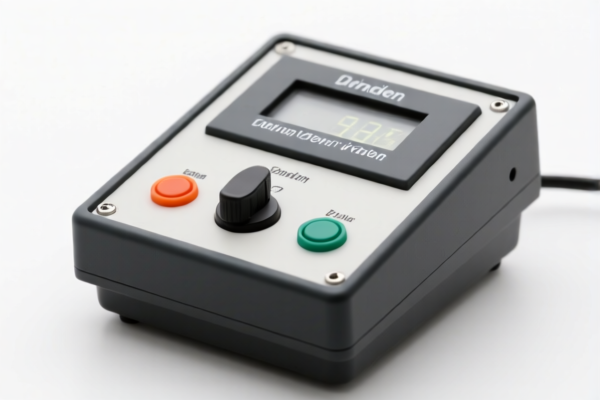
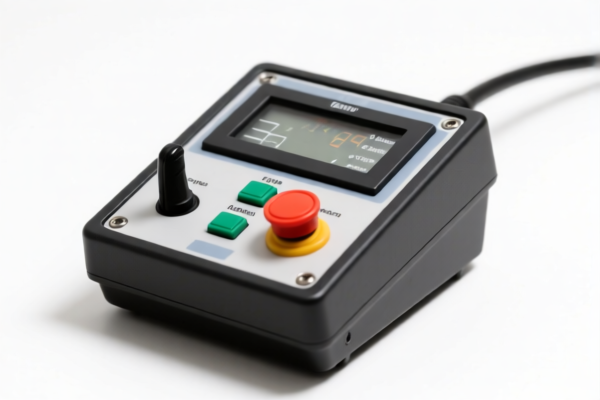
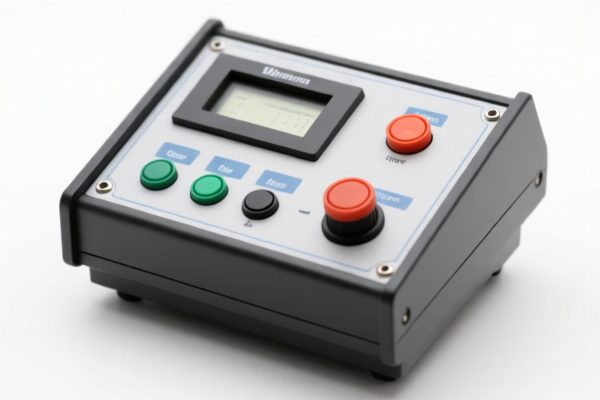
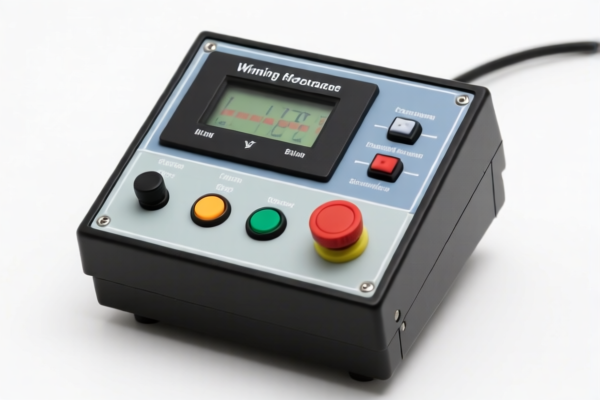
An Automatic Watch Winder is a device designed to rotate automatic mechanical watches when they are not being worn. By simulating the natural motion of the wearer's wrist, it keeps the mainspring wound, ensuring the watch remains accurate and ready to wear.
In international trade, these devices are NOT classified as watch parts or accessories. Instead, they are generally classified as electric motors or electromechanical assemblies because their core function is driven by an electric motor (often DC) and control circuitry.
⚠️ Key Distinction:
- Core Component: The driving force is a low-voltage electric motor (typically 5V–12V DC).
- Function: It is an external accessory, not a part of the watch itself.
- Classification Trap: Many importers mistakenly classify these under "Parts of Watches" (HS 9114), which is incorrect. The correct classification usually falls under 8501 (Electric Motors) or 8543 (Electrical Machines with Individual Function).
📦 II. HS Code Classification Details (2026 Latest Tariff Authority Alignment)
| HS Code | Product Description | Applicable Scenario | Key Identifier |
|---|---|---|---|
8501.10.00.00 |
Electric Motors (Other than DC Motors of Heading 8501.60) | Rarely applies (usually AC motors) | ❌ Unlikely |
8501.33.00.00 |
DC Motors (Other than those of heading 8501.60) | Most Common: Internal DC motor drives the rotation | ✅ High Probability |
8501.34.00.00 |
DC Motors, Output > 375W | Industrial large-scale winders | ❌ Not for consumer use |
8543.70.96.00 |
Electrical Machines with Individual Function, NESOI | If classified as a "smart device" with complex IoT/Bluetooth control | ✅ Possible for High-End Smart Winders |
8205.59.00.00 |
Hand Tools (Including Screwdrivers) | ❌ Incorrect: Do not classify as tools | |
9114.90.00.00 |
Parts of Watches | ❌ Incorrect: Winder is not a watch part |
🔍 Critical Reminder:
- The US Customs and Border Protection (CBP) has historically ruled that watch winders are electric motors or electrical machines.
- Primary Classification:8501.33.00.00(DC Motor) is the most widely accepted HS code for standard watch winders.
- Alternative Classification:8543.70.96.00may apply if the device includes significant programmable logic, Bluetooth connectivity, and app integration, but8501is safer for basic models.
💰 III. 2026 Latest Tariff Rate Breakdown (Including Surcharges, Policy Add-ons)
✅ Applicable Country: United States (US)
✅ Origin: China (CN)
✅ Effective Time: From November 10, 2025 (including subsequent imports)
🎯 1. 8501.33.00.00 —— DC Motors (Standard Watch Winder)
| Item | Content |
|---|---|
| Base Tariff Rate | 3.5% (ad valorem) |
| USITC Surcharge | +25% (From USITC Footnote 9903.88.01, Section 301) |
| IEEPA Surcharge | +10% (Against China/Hong Kong products, effective Nov 10, 2025) |
| Total Tariff Rate | 38.5% |
| Tax Calculation | CIF Value × 38.5% |
| De Minimis Exemption | ❌ Not Eligible (deny_de_minimis) |
| Legal Path | IEEPA:9903.01.25 → IEEPA:9903.01.24 → USITC:8501.33.00.00 → FOOTNOTE:9903.88.01 |
📌 Explanation:
- The 3.5% base rate is the standard MFN (Most Favored Nation) rate for DC motors.
- The 25% Section 301 tariff applies because watch winders are considered "electrical machinery" subject to China tariffs.
- The 10% IEEPA tariff is the new additional levy on Chinese electronics.
- Total 38.5% is a significant cost driver. Profit margins must be calculated carefully.
🎯 2. 8543.70.96.00 —— Electrical Machines with Individual Function (Smart Winders)
| Item | Content |
|---|---|
| Base Tariff Rate | 3.5% |
| USITC Surcharge | +25% (Section 301) |
| IEEPA Surcharge | +10% |
| Total Tariff Rate | 38.5% |
| Tax Calculation | CIF Value × 38.5% |
| De Minimis Exemption | ❌ Not Eligible |
| Legal Path | IEEPA:9901.25 → IEEPA:9903.01.24 → USITC:8543.70.96.00 → FOOTNOTE:9903.88.01 |
📌 Note:
- Even if classified as a "smart device," the surcharge rates remain the same.
- No tariff advantage is gained by over-complicating the classification.
🛠️ IV. Customs Clearance Practical Advice (Pitfall Avoidance Guide)
✅ 1. Required Documentation Checklist (Non-Negotiable)
| Document | Mandatory | Explanation |
|---|---|---|
| ✅ Product Specification Sheet | ✔️ | Must include: Voltage (V), Amperage (A), RPM, Rotation Direction (CW/CCW/Alternating). |
| ✅ Circuit Diagram / Motor Specs | ✔️ | Proves the core function is an electric motor. Crucial for HS 8501 classification. |
| ✅ Product Photos (with Nameplate) | ✔️ | Clear view of model number, input/output parameters, and brand. |
| ✅ FCC Certification | ✔️ | Mandatory for US. Wireless/Bluetooth winders need FCC ID. |
| ✅ Commercial Invoice | ✔️ | Must clearly state "Electric Watch Winder" or "Motor-Driven Watch Winder." Avoid vague terms like "Gadget." |
| ✅ Packing List | ✔️ | Separate line items if accessories are sold individually. |
✅ 2. Declaration Tips (Key Mantra)
🔥 "Motor Core, 8501 Clear, FCC Ready, Tariff 38.5% Here!"
| Scenario | Correct Declaration | Wrong Practice |
|---|---|---|
| Standard Watch Winder | 8501.33.00.00 + "DC Motor Watch Winder" |
Misclassifying as "Watch Accessory" → Risk of audit |
| Smart Watch Winder (App-controlled) | 8543.70.96.00 + "Smart Watch Winder with IoT" |
Claiming "Software" classification → Delayed clearance |
| Watch Winder + Watch Bundle | Declare both items separately | Declaring as one unit → Complex valuation issues |
| Non-Chinese Origin (e.g., Vietnam) | Apply for IEEPA Exemption | Failing to provide Country of Origin Certificate |
✅ 3. Special Case Handling
| Situation | Handling Advice |
|---|---|
| OEM Custom Winder | Provide client order + design drawings. Ensure specs match the declared HS code. |
| Bluetooth/USB-C Powered | Ensure FCC ID is listed on the device and invoice. |
| Kit Assembly (DIY Winder) | If sold as a kit with a motor and wood parts, still classify as the dominant function (Motor/8501) if assembled, or parts if not. |
| Used/Refurbished Winders | Generally prohibited or heavily restricted in the US. Declare as New Only. |
🌍 V. Global Market Clearance Comparison (2026 Latest)
| Country/Region | Recommended HS Code | Tariff | Certification Required | Notes |
|---|---|---|---|---|
| 🇺🇸 USA | 8501.33.00.00 |
38.5% (CN Origin) | FCC + UL/ETL (Plugs) | High tariff burden. |
| 🇨🇳 China | 8501.33.00.00 |
5% | CCC (if applicable) | Low tariffs for import into China. |
| 🇪🇺 EU | 8501.31.00 |
0% | CE + RoHS + WEEE | No additional duties. Best for EU market. |
| 🇬🇧 UK | 8501.31.00 |
0% | UKCA + RoHS | Post-Brexit rules apply; CE still accepted in many cases. |
| 🇦🇺 Australia | 8501.31.00 |
5% | RCM | Moderate cost. |
| 🇯🇵 Japan | 8501.31.00 |
0% | PSE | No additional duties. |
📌 Conclusion:
- The US is the most expensive market for Chinese-made watch winders due to the 38.5% total tariff.
- EU, UK, Japan, and Australia offer much more favorable tariff structures (0–5%).
- If selling to the US, consider supply chain diversification (e.g., assembling in Vietnam/Malaysia) to mitigate IEEPA/301 tariffs.
📌 VI. Common Mistakes & Pitfalls (Blood Lessons)
❌ Mistake 1: Classifying under 9114.90 (Parts of Watches)
👉 Consequence: CBP will reclassify to 8501.33 + assess back taxes + penalties. The 3.5% vs 38.5% difference is huge.
❌ Mistake 2: Omitting FCC Information
👉 Consequence: Detention at Port. US Customs will not release any electronic device without an FCC ID.
❌ Mistake 3: Vague Description ("Watch Holder")
👉 Consequence: Customs officer has discretion to classify as "Miscellaneous Electrical" (higher duty) or request a Binding Ruling.
❌ Mistake 4: Ignoring IEEPA Surcharge
👉 Consequence: Underpayment of duties by 10%. Leads to seizure or liquidation of entered merchandise.
✅ Correct Approach:
"Electric Automatic Watch Winder, DC Motor Driven, 5V Input, 110-240V AC Adapter, Model XYZ, FCC ID: XXXXX, Country of Origin: China"
🎯 VII. Conclusion: Precision in Classification Saves Money!
🎯 Remember the Mantra:
🔹 "It's a Motor, Not a Watch Part."
🔹 "FCC is Mandatory, HS 8501 is Key."
🔹 "38.5% is the US Reality, Think Twice Before Exporting."
📌 Pro Tip:
If your watch winders are manufactured in Vietnam, Malaysia, or Thailand, you can apply for IEEPA Exemption and potentially avoid the 10% IEEPA surcharge and 25% Section 301 tariff (depending on specific rules of origin).
Recommendation: Apply for an Advance Ruling from US CBP if you are importing large volumes. This provides legal certainty and protects against future audits.
📣 Immediate Action:
📞 Contact a Licensed Customs Broker + Provide FCC Cert + Verify HS Code
8501.33.00.00
🚀 Ensure smooth clearance, avoid port delays, and protect your margins!
✨ Professional Clearance Starts with Accurate Classification!
💼 Every Cent Saved is a Cent Earned!
Customer Reviews
About HS Code Classification
The Harmonized System (HS) is an internationally standardized nomenclature developed by the World Customs Organization (WCO) to classify traded products. Over 200 countries use the HS system as the basis for customs tariffs, trade statistics, and import/export regulations.
Each HS code follows a hierarchical structure:
- Chapter (2 digits) — Broad category of goods (e.g., Chapter 84: Machinery and Mechanical Appliances)
- Heading (4 digits) — More specific grouping within the chapter
- Subheading (6 digits) — Internationally standardized breakdown, used by all WCO member countries
- National subdivisions (8-10 digits) — Country-specific extensions for further classification, such as US HTSUS 10-digit codes
Correct HS code classification is essential for smooth customs clearance, accurate duty payment, and compliance with trade regulations. Misclassification can lead to customs delays, overpayment of duties, or penalties.
When importing from CN to US, the applicable tariff rates may include:
- Most-Favored-Nation (MFN) rate — The standard duty rate applied to WTO members
- General rate — Applied to countries without trade agreements
- Trade remedy duties — Additional tariffs such as Section 301 (anti-dumping), Section 232 (national security), or countervailing duties
The information provided on this page is for reference purposes only. For official classification, please consult with your local customs authority or a licensed customs broker.