Automatic weaving machines
CN → US| HS Code | Tariff Rate | Origin | Destination | Doc |
|---|---|---|---|---|
| 8446305030 | 38.7% | CN | US | Official Doc |
| 8447204000 | 17.5% | CN | US | Official Doc |
| 8447206000 | 17.5% | CN | US | Official Doc |
| 8446100090 | 17.5% | CN | US | Official Doc |
Product Images
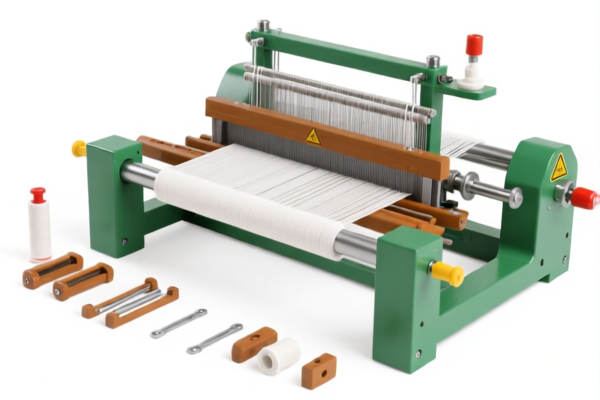
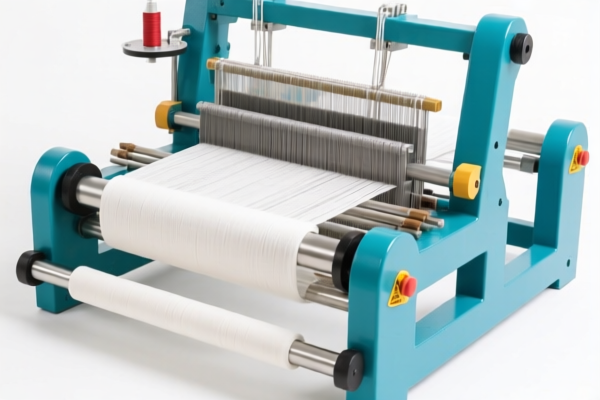
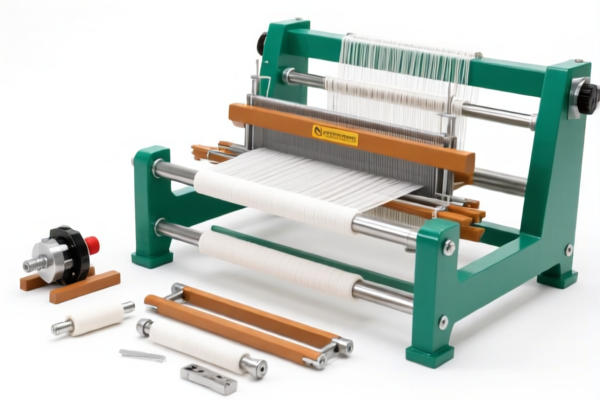
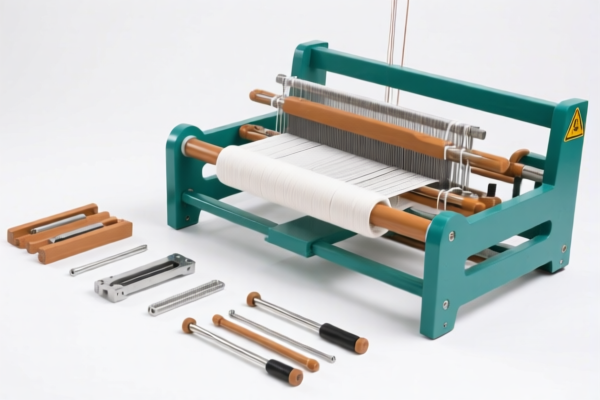
AI Analysis
🧵 Automatic Weaving Machines (Shuttless & Knitting Looms)
🌐 HS Code Reference & Customs Clearance Guide | 2026 Latest Tariff Analysis | Professional Clearance Strategy
📌 1. Product Definition & Classification: What Are “Automatic Weaving Machines”?
In international trade, “Automatic Weaving Machines” refer to industrial equipment used for fabric production. They are primarily divided into two categories:
Shuttleless Looms (Non-shuttle weaving machines):
High-speed looms that use various insertion methods (air jet, water jet, rapier, projectile) instead of a traditional shuttle. They fall under HS 8446.
Knitting/Looping Machines (Knitting & Crochet Machines):
Machines that interlock loops of yarn to create fabric, including circular knitting machines and warp knitting machines. They fall under HS 8447.
⚠️ Key Distinction Point:
- If the machine uses warp and weft yarns to interlace at right angles (traditional or modern weaving) → It is a Weaving Machine (HS 8446).
- If the machine uses needles/hooks to interlock loops of a single yarn system (knitting/crochet) → It is a Knitting/Crochet Machine (HS 8447).
📦 2. HS Code Classification Details (2026 Latest Tariff Authority Comparison)
| HS Code | Product Description | Application Scenario | Key Feature |
|---|---|---|---|
8446.30.50.30 |
Shuttleless looms (Other) | General industrial weaving, fallback category for unspecified types | No specific sub-heading match; defaults to "Other" |
8447.20.40.00 |
Knitting machines (Circular knitting machines, single or multiple cylinder) | Knitting socks, T-shirts, ribbing, tubular fabrics | Matches knitting/looping function |
8447.20.60.00 |
Other knitting machines (e.g., flat knitting, special purpose) | Flat knitting, seaming, connecting machines | Matches knitting/sewing connection function |
8446.10.00.90 |
Shuttle looms (Automatic) | Traditional high-speed automated looms using a shuttle | Fully matches weaving purpose, no material conflict |
🔍 Critical Reminder:
- Weaving (Interlacing) vs. Knitting (Looping): Misclassification is the most common error. If the machine uses a shuttle or rapier/air-jet to insert weft yarn into warp yarns, it MUST be under 8446. If it uses needles to form loops, it MUST be under 8447.
- The summary for8446.10.00.90states: "Weaving machines for fabric production, purpose fully matches and no material conflict." This is the standard for automatic shuttle looms.
- The summaries for8447.20.40.00and8447.20.60.00explicitly state: "Weaving machines belong to knitting/weaving category, matching knitting/warp knitting purposes." This confirms that if the machine is a knitting machine, these codes apply regardless of the generic term "weaving" being used loosely.
💰 3. 2026 Latest Tariff Rate Details (Including Surtaxes & Policy Additions)
✅ Applicable Country: United States (US)
✅ Origin: China (CN)
✅ Effective Time: 2025/2026 (Current Trade Policy)
🎯 1. 8446.30.50.30 —— Shuttleless Looms (Other/General)
| Item | Content |
|---|---|
| Base Tariff | 3.7% (ad valorem) |
| Section 301 Surtax | +25.0% |
| Section 122 Tariff | +10.0% |
| Total Rate | 38.7% |
| Tax Calculation | CIF Value × 38.7% |
| De Minimis Eligibility | ❌ No (High value industrial machinery) |
| Legal Basis Path | USITC:8446.30.50.30 → Section 301: 25% → Section 122: 10% |
📌 Explanation:
- This code is a fallback category for shuttleless looms that do not fit specific sub-headings.
- It bears the highest tariff burden among the options due to the 3.7% base rate plus 35% in surcharges.
- Strategic Note: If your machine can be classified under8446.10.00.90or8447.x0.x0.x0, you may save significant taxes.
🎯 2. 8447.20.40.00 & 8447.20.60.00 —— Knitting/Crochet Machines
| Item | Content |
|---|---|
| Base Tariff | 0.0% (ad valorem) |
| Section 301 Surtax | +7.5% |
| Section 122 Tariff | +10.0% |
| Total Rate | 17.5% |
| Tax Calculation | CIF Value × 17.5% |
| De Minimis Eligibility | ❌ No |
| Legal Basis Path | USITC:8447.20.40.00 → Section 301: 7.5% → Section 122: 10% |
📌 Explanation:
- Significant Savings: These codes have a 0% base tariff, resulting in a much lower total rate of 17.5% compared to the 38.7% for8446.30.50.30.
- Applicability: This applies if the machine is a knitting machine (circular or flat) rather than a weaving loom.
- Summary Validation: The data states: "Weaving machines belong to knitting/weaving category, matching knitting/warp knitting purposes." This confirms that if the machine performs knitting functions, this lower rate applies.
🎯 3. 8446.10.00.90 —— Automatic Shuttle Looms
| Item | Content |
|---|---|
| Base Tariff | 0.0% (ad valorem) |
| Section 301 Surtax | +7.5% |
| Section 122 Tariff | +10.0% |
| Total Rate | 17.5% |
| Tax Calculation | CIF Value × 17.5% |
| De Minimis Eligibility | ❌ No |
| Legal Basis Path | USITC:8446.10.00.90 → Section 301: 7.5% → Section 122: 10% |
📌 Explanation:
- Cost-Effective Weaving Option: If your machine is an automatic shuttle loom (not shuttleless like air-jet/rapier, or if it falls into this specific automatic shuttle category), it enjoys the 17.5% rate.
- Summary Validation: The data states: "Weaving machines for fabric production, purpose fully matches and no material conflict."
- Difference from8446.30.50.30:8446.10.00.90is for automatic shuttle looms, whereas8446.30.50.30is the catch-all for other shuttleless looms which have a higher base rate (3.7%).
🛠️ 4. Customs Clearance Practical Advice (Pitfall Avoidance Guide)
✅ 1. Documentation Checklist (Essential for Classification)
| Document | Required | Description |
|---|---|---|
| ✅ Technical Specification Sheet | ✔️ | Must clearly state: Type of insertion (shuttle, rapier, air-jet, needle), speed, and fabric type. |
| ✅ Working Principle Description | ✔️ | Explicitly distinguish between Weaving (Interlacing) and Knitting (Looping). |
| ✅ Product Photos | ✔️ | Clear shots of the yarn insertion mechanism (e.g., show needles for knitting, or reed/shuttle for weaving). |
| ✅ Commercial Invoice | ✔️ | Use precise HS descriptions: e.g., "Automatic Warp Knitting Machine" or "Automatic Shuttle Loom". |
| ✅ Origin Certificate (CO) | ✔️ | To verify Country of Origin for Section 301/122 application. |
✅ 2. Declaration Strategies (Key Rules)
🔥 “Weave with Shuttle/Loops, Knit with Needles; Choose Right Code, Save Big Fees!”
| Scenario | Correct HS Code | Wrong Code | Consequence |
|---|---|---|---|
| Air-Jet/Rapier Loom (Shuttleless) | 8446.30.50.30 |
8446.10.00.90 |
Overpayment: 38.7% vs 17.5% (Huge loss) |
| Knitting Machine (Circular/Flat) | 8447.20.40.00 / 8447.20.60.00 |
8446.30.50.30 |
Overpayment: 17.5% vs 38.7% (Huge loss) |
| Automatic Shuttle Loom | 8446.10.00.90 |
8446.30.50.30 |
Overpayment: 17.5% vs 38.7% (Huge loss) |
| Spare Parts (Shuttles, Needles) | Separate HS (e.g., 8448) | 8446/8447 |
Misdclaration risk, potential fines |
✅ 3. Special Case Handling
| Situation | Advice |
|---|---|
| Hybrid Machines (Weaving & Knitting) | If the machine performs both functions, classify based on the principal function. If equal, fallback to 8446.30.50.30. |
| Second-Hand Machines | Provide maintenance records. HS Code remains the same, but value declaration must reflect fair market value. |
| Software-Enabled Machines | The HS Code is for the hardware. Software is generally included in the machine's value. |
🌍 5. Global Market Comparison (2026)
| Country/Region | Recommended HS Code | Tariff Rate (China Origin) | Notes |
|---|---|---|---|
| 🇺🇸 USA | 8446.10.00.90 or 8447.20.40.00 |
17.5% | 8446.30.50.30 is 38.7% (Avoid if possible) |
| 🇨🇳 China | 8446.10.00.90 or 8447.20.40.00 |
0% - 5% | Check for FTA benefits if applicable |
| 🇪🇺 EU | 8446.10.00.90 or 8447.20.40.00 |
0% - 4.5% | No Section 301/122 equivalents |
| 🇬🇧 UK | 8446.10.00.90 or 8447.20.40.00 |
0% - 4.5% | Post-Brexit tariffs apply |
📌 Conclusion:
- USA is the critical market where HS Code classification directly impacts profitability by 21.2 percentage points (38.7% - 17.5%).
- Strategic Action: Verify if your "automatic weaving machine" is technically a knitting machine (HS 8447) or an automatic shuttle loom (HS 8446.10). If it is a modern air-jet/rapier loom, it will likely fall under8446.30.50.30with higher tariffs. Consider product redesign or technical reclassification if possible.
📌 6. Common Errors & Pitfalls (Blood Lessons)
❌ Error 1: Calling all "Weaving Machines" the same.
👉 Consequence: Using 8446.30.50.30 for a machine that could be 8446.10.00.90 or 8447.20.40.00 results in paying 38.7% instead of 17.5%.
❌ Error 2: Misidentifying Knitting as Weaving.
👉 Consequence: A knitting machine declared as a weaving machine (8446) faces the same high tariff, but if misreported as a weaving machine, it may face additional penalties for incorrect documentation.
❌ Error 3: Ignoring Section 122 Tariff.
👉 Consequence: Even with a 0% base rate, the 10% Section 122 tariff applies to all industrial machinery from China in the US market. Do not assume 0% base means 0% total.
✅ Correct Practice:
“Automatic Warp Knitting Machine, Model XYZ, 12-Gauge, Circular Type, US Origin Components, Certified for 8447.20.40.00”
🎯 7. Conclusion: Precision in Classification, Profit in Clearance
🎯 Remember the Rule:
🔹 “Knitting & Shuttle Auto = 17.5%”
🔹 “Other Shuttleless (Air/Rapier) = 38.7%”
🔹 “Classification saves 21.2%!”🔹 “Base 0% + Surtax 17.5% = Smart”
🔹 “Base 3.7% + Surtax 35% = Expensive”
📌 Pro Tip:
If you are importing knitting machines, ensure your technical documents highlight needles and loop formation to justify 8447.
If you are importing automatic shuttle looms, highlight automatic shuttle mechanism to justify 8446.10.00.90.
📣 Immediate Action:
📞 Contact a licensed customs broker + Provide detailed technical drawings + Request an Advance Ruling from US Customs.
🚀 Optimize your HS Code, reduce your tariff by 21.2%, and maximize your margin!
✨ Professional clearance starts with precise classification!
💼 Every percentage point counts in global trade!
Customer Reviews
About HS Code Classification
The Harmonized System (HS) is an internationally standardized nomenclature developed by the World Customs Organization (WCO) to classify traded products. Over 200 countries use the HS system as the basis for customs tariffs, trade statistics, and import/export regulations.
Each HS code follows a hierarchical structure:
- Chapter (2 digits) — Broad category of goods (e.g., Chapter 84: Machinery and Mechanical Appliances)
- Heading (4 digits) — More specific grouping within the chapter
- Subheading (6 digits) — Internationally standardized breakdown, used by all WCO member countries
- National subdivisions (8-10 digits) — Country-specific extensions for further classification, such as US HTSUS 10-digit codes
Correct HS code classification is essential for smooth customs clearance, accurate duty payment, and compliance with trade regulations. Misclassification can lead to customs delays, overpayment of duties, or penalties.
When importing from CN to US, the applicable tariff rates may include:
- Most-Favored-Nation (MFN) rate — The standard duty rate applied to WTO members
- General rate — Applied to countries without trade agreements
- Trade remedy duties — Additional tariffs such as Section 301 (anti-dumping), Section 232 (national security), or countervailing duties
The information provided on this page is for reference purposes only. For official classification, please consult with your local customs authority or a licensed customs broker.