Automotive Brake Hose Assemblies with Fittings
CN → US| HS Code | Tariff Rate | Origin | Destination | Doc |
|---|---|---|---|---|
| 5909001000 | 35.0% | CN | US | Official Doc |
| 5909002000 | 38.3% | CN | US | Official Doc |
| 4009220020 | 37.5% | CN | US | Official Doc |
| 4009120020 | 20.0% | CN | US | Official Doc |
| 8708998105 | 37.5% | CN | US | Official Doc |
| 8708998180 | 37.5% | CN | US | Official Doc |
Product Images

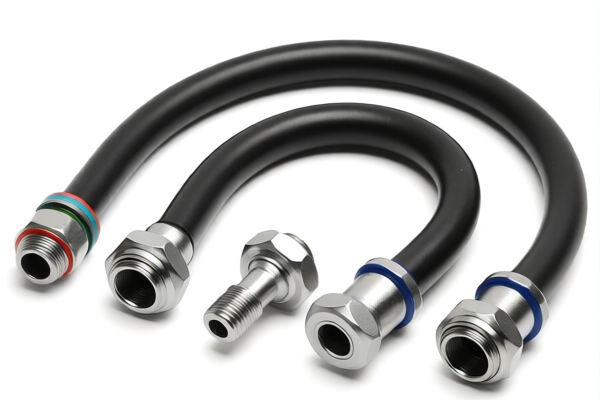
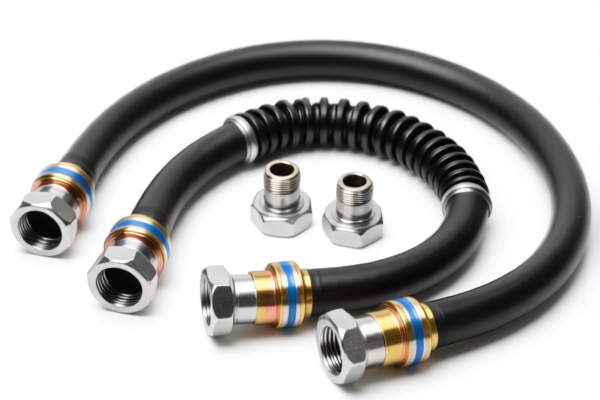
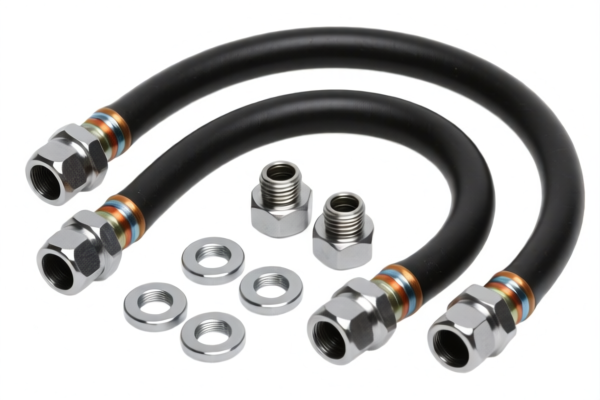
AI Analysis
🚗 Automotive Brake Hose Assemblies with Fittings
🌐 HS Code Reference & Customs Clearance Guide | 2026 Latest Tariff Analysis | Professional-Level Strategy
📌 1. Product Definition & Classification: What exactly are "Brake Hoses" in International Trade?
Automotive brake hose assemblies are critical safety components that transport hydraulic fluid under high pressure from the brake master cylinder to the wheel cylinders or calipers. In international trade, these products are strictly classified based on material composition and construction structure, which directly determines their Harmonized System (HS) code and applicable tariff rates.
There are two primary classifications for brake hoses:
1. Textile-Based Brake Hoses (Reinforced with Fabric):
These consist of an inner rubber tube reinforced with textile fibers (e.g., nylon, polyester, rayon) and protected by an outer rubber cover. They are typically used in passenger cars and light trucks.
Key Identifier: Look for textile reinforcement layers.
2. Rubber-Based Brake Hoses (Reinforced with Metal or Unreinforced):
These consist of vulcanized rubber tubes. They may be reinforced with metal braiding or wires (hard rubber) or be simple rubber tubes with fittings.
Key Identifier: Primarily rubber material, possibly combined with metal for structural integrity or fittings.
⚠️ Critical Distinction Point:
- If the hose is textile-reinforced, it falls under Chapter 59 (Textile Articles).
- If the hose is rubber-based (whether reinforced with metal or not), it falls under Chapter 40 (Rubber Articles).
- Misclassification Error: Classifying a textile hose as rubber (or vice versa) can lead to significant duty discrepancies and customs delays.
📦 2. HS Code Classification Details (2026 Latest Tariff Authority Cross-Reference)
Based on the provided data, here are the specific HS codes for automotive brake hose assemblies with fittings:
| HS Code | Product Description | Material/Construction | Applicable Scenario |
|---|---|---|---|
5909.00.10.00 |
Textile hosepiping... Of vegetable fibers | Textile (Vegetable) | Brake hoses reinforced with natural fiber textiles (e.g., cotton, jute blends). Rare in modern autos but possible in classic/vintage parts. |
5909.00.20.00 |
Textile hosepiping... Other | Textile (Synthetic/Other) | Brake hoses reinforced with synthetic textiles (nylon, polyester). Common in many standard vehicle applications. |
4009.22.00.20 |
Tubes, pipes, hoses of vulcanized rubber... Reinforced or combined only with metal | Rubber + Metal | Brake hoses reinforced with metal braiding/wires. Specific sub-code for vehicles of headings 8701-8705/8711 (passenger cars, trucks, etc.). |
4009.12.00.20 |
Tubes, pipes, hoses of vulcanized rubber... Not reinforced or combined with other materials | Rubber Only | Simple rubber brake hoses with fittings. No metal or textile reinforcement layers. Also specific to vehicles of headings 8701-8705/8711. |
🔍 Note on Vehicle Headings:
The subheadings4009.22.00.20and4009.12.00.20specifically mention "Brake hoses for the vehicles of subheadings 8701.21... or headings 8702, 8703, 8704, 8705 or 8711." This covers passenger cars, trucks, buses, and motorcycles. If the hose is for a different type of vehicle (e.g., agricultural tractors classified under 8701.10), these specific sub-codes might not apply, and broader Chapter 40 codes would be used.
💰 3. 2026 Latest Tariff Rate Details (Including Surcharge Taxes)
✅ Applicable Country: United States (US)
✅ Country of Origin: China (CN) (Assumed based on the "Add-on Tariff" context in the data)
✅ Effective Time: Current regulations (as per provided data)
🎯 1. Textile Brake Hoses (HS Code: 5909.00.10.00 / 5909.00.20.00)
| Item | Content |
|---|---|
| Base Tariff Rate | 0.0% |
| Additional Tariff (Section 301) | +25.0% |
| Total Tariff Rate | 25.0% |
| Tax Calculation | CIF Value × 25% |
| Legal Basis | Textile articles are subject to the 25% Section 301 surcharge on many Chinese imports. |
📌 Explanation:
- Although the base tariff for textile hoses is 0%, the 25% additional tariff is fully applicable.
- Total Cost Impact: For a $10,000 shipment, you will pay $2,500 in duties.
- No Exemption: These are not typically exempt from Section 301 tariffs unless specifically excluded (which is rare for brake components).
🎯 2. Rubber Brake Hoses (HS Code: 4009.22.00.20 / 4009.12.00.20)
| Item | Content |
|---|---|
| Base Tariff Rate | 0.0% |
| Additional Tariff (Section 301) | 0.0% |
| Total Tariff Rate | 0.0% |
| Tax Calculation | CIF Value × 0% = $0 |
| Legal Basis | Rubber hoses, particularly those specifically classified for automotive use, are often excluded from the 25% surcharge. |
📌 Explanation:
- Both rubber hose codes (4009.22.00.20and4009.12.00.20) have a total tariff of 0%.
- Major Advantage: This represents a significant cost saving compared to textile alternatives if the product design allows for rubber construction.
- Verification: Ensure the product description explicitly states "vulcanized rubber" and "with fittings" to qualify for this 0% rate.
🎯 3. Auto Parts (General) - HS Code: 8708.99.81.05 / 8708.99.81.80
⚠️ Important Note: The provided data includes HS codes under 8708 (Parts and accessories of motor vehicles). However, Brake Hoses are specifically classified under Chapter 40 or 59 as articles, not general parts.
- Do NOT use 8708 codes for brake hoses if they can be specifically classified under 4009 or 5909. Specific descriptions (Chapter 40/59) override general parts descriptions (Chapter 87).
- If a customs authority incorrectly classifies your brake hose as a "general part" under 8708, the tax would be 27.5% (2.5% base + 25% surcharge). This is incorrect for properly classified brake hoses.
🛠️ 4. Customs Clearance Practical Advice (Real-World Pitfall Guide)
✅ 1. Required Documentation List (Non-Negotiable)
| Document | Must Provide | Explanation |
|---|---|---|
| ✅ Product Specification Sheet | ✔️ | Must clearly state material: "Vulcanized Rubber" vs. "Textile Reinforced". |
| ✅ Cross-Section Image | ✔️ | Visual proof of reinforcement layer (Metal braid vs. Textile weave). |
| ✅ Commercial Invoice | ✔️ | Must specify "Brake Hose Assembly with Fittings" and correct HS Code. |
| ✅ Bill of Lading | ✔️ | Ensure quantity and weight match invoice. |
| ✅ Material Declaration | ✔️ | Explicitly declare % of Rubber vs. Textile/Metal to support 4009 classification. |
✅ 2. Declaration Tips (Key Mantra)
🔥 “Material First, Chapter 40/59, Not 8708! Specify 'With Fittings'!”
| Situation | Correct Declaration | Incorrect Practice |
|---|---|---|
| Rubber Hose (Reinforced) | 4009.22.00.20 - Rubber, Metal Reinforced |
Use 8708.99.81.05 → 27.5% Tax |
| Rubber Hose (Unreinforced) | 4009.12.00.20 - Rubber, No Reinforcement |
Use 8708.99.81.80 → 27.5% Tax |
| Textile Hose | 5909.00.20.00 - Textile, Other |
Missed classification → 25% Tax (but correct) |
| General Part Claim | Reject | Brake hoses have specific headings; do not use "Other Parts" |
📌 Critical Warning:
Never declare brake hoses as "Auto Parts" (8708) if they meet the specific description in Chapter 40 or 59. The specific law prevails over the general. Using 8708 will result in paying 27.5% instead of 0% or 25%, and may trigger audits for incorrect classification.
✅ 3. Special Circumstances Handling
| Situation | Handling Advice |
|---|---|
| Mixed Shipment (Rubber + Textile) | Declare separately. Rubber hoses go to 4009 (0% tax); Textile hoses go to 5909 (25% tax). Do not mix in one line item. |
| Hoses without Fittings | If fittings are separate, they may be declared under 8708 (27.5%) or 4016/5920. Ensure the main hose is declared correctly. |
| OEM vs. Aftermarket | Tax rate is the same, but ensure the invoice reflects "Aftermarket" or "OEM" as per supplier contract to avoid value disputes. |
| Origin Verification | Ensure the Certificate of Origin explicitly states "China" to apply the correct additional tariffs. If re-exported, rules of origin may change. |
🌍 5. Global Market Comparison (2026 Latest)
| Country/Region | Recommended HS Code | Base Tariff | Additional Tax | Total Tariff | Notes |
|---|---|---|---|---|---|
| 🇺🇸 USA | 4009.22.00.20 / 4009.12.00.20 |
0% | 0% | 0% | Best for rubber hoses |
| 🇺🇸 USA | 5909.00.20.00 |
0% | 25% | 25% | For textile hoses |
| 🇪🇺 EU | 4009 / 5909 | Varies | 0% | Low/0% | No Section 301 equivalent |
| 🇨🇳 China | 4009 / 5909 | 5-10% | 0% | Low | Import duty to China |
📌 Conclusion:
- USA: Rubber brake hoses from China enjoy 0% duty, while textile ones face 25%.
- EU/China: Tariffs are generally lower or different, so the US market is the critical one for this 0% vs. 25% distinction.
📌 6. Common Errors & Pitfalls Guide (Lessons Learned)
❌ Error 1: Classifying rubber brake hoses under 8708.99.81.05
👉 Consequence: Pay 27.5% tax instead of 0%. Overpayment of $2,750 per $10,000 shipment.
👉 Fix: Use 4009 codes for rubber hoses.
❌ Error 2: Failing to specify "With Fittings"
👉 Consequence: Customs may reject the specific sub-code (.20) requiring generic classification, potentially altering duty rates.
👉 Fix: Invoice must state "With Fittings" or "Assembly".
❌ Error 3: Confusing "Textile" with "Rubber"
👉 Consequence: If you have textile hoses but declare them as rubber, you risk fraud penalties and 25% tax evasion claims.
👉 Fix: Provide cross-section images proving material type.
✅ Correct Declaration Example:
"Automotive Brake Hose Assembly, Vulcanized Rubber, Metal Reinforced, With Fittings, for Passenger Cars, HS Code 4009.22.00.20, Country of Origin: China"
🎯 7. Conclusion: Precision in Classification Saves Money!
🎯 Remember the Mantra:
🔹 "Rubber = 0% (4009), Textile = 25% (5909), Parts (8708) = 27.5% (Wrong for Hoses)!"
🔹 "Material Determines Chapter, Chapter Determines Cost!"
📌 Pro Tip:
If you are sourcing rubber brake hoses, ensure your supplier provides a Material Declaration confirming "Vulcanized Rubber" and no textile content. This supports the 0% tariff classification.
If you are sourcing textile hoses, budget for the 25% additional tariff.
📣 Immediate Action:
📞 Contact your customs broker with product photos and material specs.
📄 Request a Pre-Ruling if the volume is large, to confirm 4009 classification.
🚀 Clear your goods smoothly, save 27.5%, and boost your profit margin!
✨ Professional Customs Clearance Starts with Accurate Classification!
💼 Every cent of duty saved is pure profit!
Customer Reviews
About HS Code Classification
The Harmonized System (HS) is an internationally standardized nomenclature developed by the World Customs Organization (WCO) to classify traded products. Over 200 countries use the HS system as the basis for customs tariffs, trade statistics, and import/export regulations.
Each HS code follows a hierarchical structure:
- Chapter (2 digits) — Broad category of goods (e.g., Chapter 84: Machinery and Mechanical Appliances)
- Heading (4 digits) — More specific grouping within the chapter
- Subheading (6 digits) — Internationally standardized breakdown, used by all WCO member countries
- National subdivisions (8-10 digits) — Country-specific extensions for further classification, such as US HTSUS 10-digit codes
Correct HS code classification is essential for smooth customs clearance, accurate duty payment, and compliance with trade regulations. Misclassification can lead to customs delays, overpayment of duties, or penalties.
When importing from CN to US, the applicable tariff rates may include:
- Most-Favored-Nation (MFN) rate — The standard duty rate applied to WTO members
- General rate — Applied to countries without trade agreements
- Trade remedy duties — Additional tariffs such as Section 301 (anti-dumping), Section 232 (national security), or countervailing duties
The information provided on this page is for reference purposes only. For official classification, please consult with your local customs authority or a licensed customs broker.