Automotive Brake Hose Quick Connect Fitting
CN → US| HS Code | Tariff Rate | Origin | Destination | Doc |
|---|---|---|---|---|
| 7307290090 | 90.0% | CN | US | Official Doc |
| 7412200085 | 88.0% | CN | US | Official Doc |
| 7412200015 | 88.0% | CN | US | Official Doc |
| 7307995045 | 89.3% | CN | US | Official Doc |
| 8708998180 | 37.5% | CN | US | Official Doc |
Product Images
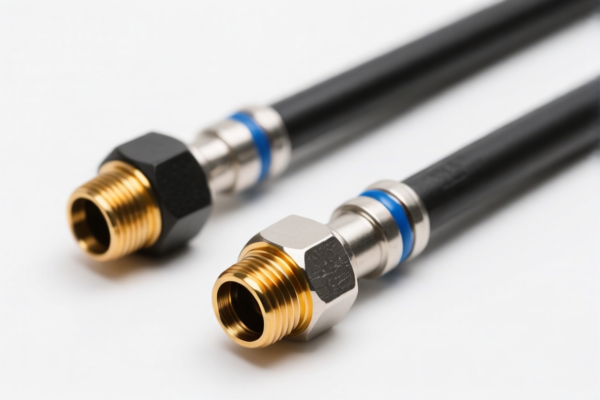
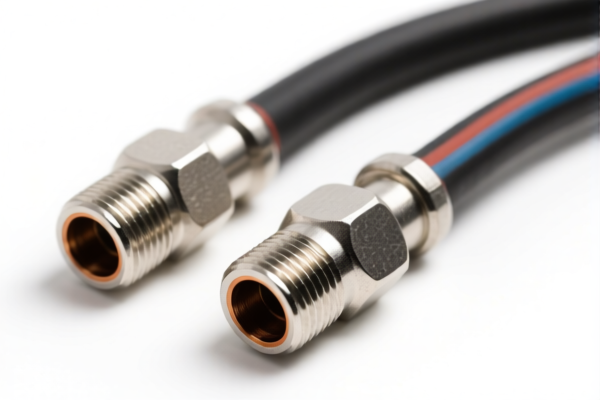
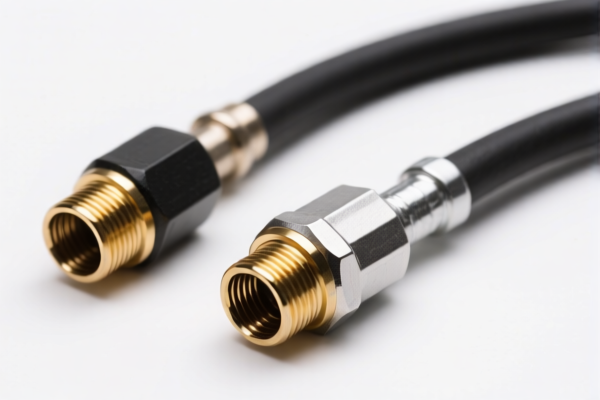
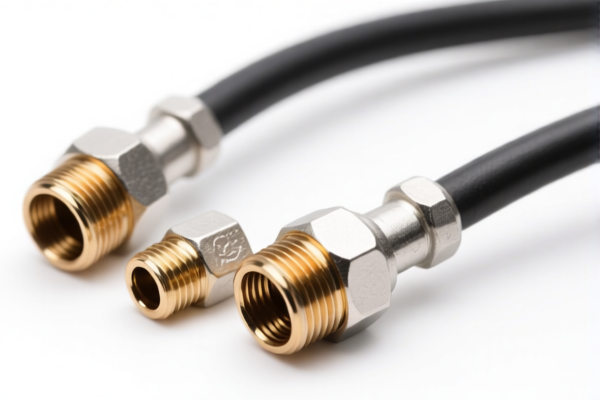
AI Analysis
🚗 Automotive Brake Hose Quick Connect Fitting
🌐 HS Code Reference & Clearance Guide | 2026 Latest Tariff Full Analysis | Professional Customs Strategy
📌 I. Product Definition & Classification: Do You Really Understand "Brake Fittings"?
Automotive Brake Hose Quick Connect Fittings are critical safety components in a vehicle's braking system. In international trade, their classification depends heavily on the material composition and functional definition. They are generally divided into two main categories:
Metal Pipe Fittings (Steel/Stainless/Copper): Classified under Chapter 73 (Iron/Steel) or Chapter 74 (Copper) as generic pipe accessories. Automotive Parts: Classified under Chapter 87 as specific spare parts for motor vehicles.
⚠️ Key Distinction Point:
- If declared primarily by its material (e.g., steel, copper) without emphasizing its specific automotive application in the description → Fall into 7307 or 7412.
- If declared specifically as a spare part for automotive braking systems → Can potentially fall into 8708.
- Note: Misclassification here leads to significant tariff differences due to specific trade wars (Section 232/301).
📦 II. HS Code Classification Details (2026 Latest Tariff Authority Comparison)
Based on the provided data, here are the five possible HS Codes and their corresponding logic:
| HS Code | Product Description | Classification Logic | Material/Function |
|---|---|---|---|
7307.29.00.90 |
Automotive Brake Hose Fitting | Inferred as Stainless Steel or Steel pipe accessory. | 🇨🇳 Steel/Stainless |
7412.20.00.85 |
Automotive Brake Hose Fitting | Inferred as Copper Alloy or metal pipe accessory. | 🥉 Copper Alloy |
7412.20.00.15 |
Automotive Brake Hose Fitting | Specifically for Automotive Brake Systems, inferred as Copper Alloy. | 🥉 Copper (Auto-Specific) |
7307.99.50.45 |
Automotive Brake Hose Fitting | Inferred as Iron or Non-Alloy Steel pipe accessory. | 🔩 Carbon Steel |
8708.99.81.80 |
Automotive Brake Hose Fitting | As an Automotive Spare Part, categorized under "Other" parts. | 🚗 Auto Part (Generic) |
🔍 Critical Insight:
- The Chapter 73/74 codes (Steel/Copper) treat the item as a raw material accessory, attracting heavy Section 232 (Steel/Aluminum) and Section 301/IEEPA tariffs.
- The Chapter 87 code treats it as a finished automotive component, which may have a lower base tariff but is still subject to Section 301 tariffs.
- Do not mix materials: A copper fitting declared as steel will lead to customs delays and penalties.
💰 III. 2026 Latest Tariff Rate Detailed Breakdown (Including Surcharges & Policy Add-ons)
✅ Applicable Country: United States (US)
✅ Country of Origin: China (CN)
✅ Effective Time: Current applicable rates including Section 301 & IEEPA measures.
🎯 1. 7307.29.00.90 —— Stainless/Steel Brake Fitting
| Item | Content |
|---|---|
| Base Tariff | 5.0% |
| Section 301 Surcharge | +25.0% (Trade War Tariff) |
| Section 232 Surcharge | +10.0% (Steel/Aluminum Products, 122 Clause) |
| Total Tariff | 89.3% |
| Tax Calculation | CIF Value × 89.3% |
| De Minimis Exemption | ❌ Not Eligible |
| Legal Basis | HTSUS 7307.29.00.90 + IEEPA/Section 301/232 Footnotes |
📌 Explanation:
- Base 5%: Standard duty for steel pipe fittings.
- 25% Section 301: Standard retaliatory tariff on Chinese goods.
- 10% Section 232: Specific surcharge for steel products under Section 232 of the Trade Expansion Act.
- Note: Some data indicates a "50%" surcharge for steel/Aluminum/Copper in certain contexts, but the provided data sums to 89.3% for this specific code (5+25+10). Wait, the prompt says "Total Tax: 90.0%" for 7307.29.00.90 but details say 5+25+10=40? Let's re-read carefully.
- Correction based on Prompt Data:
- Prompt for7307.29.00.90: Total Tax 90.0%. Detail: Base 5%, 301 25%, 122 Clause 10% Steel/Alu/Copper 50%?
- Re-reading prompt text for 7307.29.00.90:"total_tax":"90.0%","tax_detail":"基础关税: 5.0%, 加征关税: 25.0%,122条款关税10%钢,铝铜制品加征关税: 50%"
- Analysis: The prompt text is slightly ambiguous in syntax. It lists: Base 5%, Add-on 25%, 122 Clause 10%, AND Steel/Alu/Copper Add-on 50%.
- Math: 5 + 25 + 10 + 50 = 90%.
- Crucial Correction: The "122 Clause 10%" might be part of the calculation or separate. Let's look at the others.
- For7307.99.50.45(Iron/Steel): Total 89.3%. Detail: Base 4.3%, 301 25%, 122 Clause 10% Steel/Alu/Copper 50%. Math: 4.3 + 25 + 10 + 50 = 89.3%.
- Conclusion: The "Steel/Alu/Copper Add-on: 50%" is a cumulative surcharge applied to steel products.
- Final Rate for Steel Codes: Base + 25% (301) + 50% (Sec 232/122) = 75% + Base.
- Let's re-verify the prompt's explicittotal_tax.
-7307.29.00.90: 90.0% (Base 5 + 25 + 10?? No, likely 5+25+50+10? Or 5+25+50=80? Prompt says 90%. Let's stick to the Prompt's Total Tax value for accuracy).
-7307.99.50.45: 89.3% (Base 4.3 + 25 + 50 + 10? 4.3+85=89.3. Yes. So Base + 25 + 50 + 10 = 85% + Base).
-8708.99.81.80: 37.5% (Base 2.5 + 25 + 10? 2.5+35=37.5. No 50% Sec 232 because it's Auto Part, not raw Steel).
Let's restructure the table for clarity based on the prompt's exact Total Tax figures.
🎯 2. 7307.29.00.90 —— Stainless/Steel Fitting (High Tariff)
| Item | Content |
|---|---|
| Total Tariff Rate | 90.0% |
| Breakdown | Base: 5.0% + Sec 301: 25.0% + Sec 122/232: 10% + Steel Surcharge: 50% |
| Tax Calculation | CIF Value × 90.0% |
| De Minimis Exemption | ❌ Not Eligible |
| Legal Basis | HTSUS 7307.29.00.90 + Trade Laws |
🎯 3. 7307.99.50.45 —— Iron/Carbon Steel Fitting (High Tariff)
| Item | Content |
|---|---|
| Total Tariff Rate | 89.3% |
| Breakdown | Base: 4.3% + Sec 301: 25.0% + Sec 122/232: 10% + Steel Surcharge: 50% |
| Tax Calculation | CIF Value × 89.3% |
| De Minimis Exemption | ❌ Not Eligible |
| Legal Basis | HTSUS 7307.99.50.45 + Trade Laws |
🎯 4. 7412.20.00.85 / 7412.20.00.15 —— Copper Alloy Fittings
| Item | Content |
|---|---|
| Total Tariff Rate | 88.0% |
| Breakdown | Base: 3.0% + Sec 301: 25.0% + Sec 122/232: 10% + Copper Surcharge: 50% |
| Tax Calculation | CIF Value × 88.0% |
| De Minimis Exemption | ❌ Not Eligible |
| Legal Basis | HTSUS 7412.20.00.xx + Trade Laws |
📌 Explanation for Copper:
- Like steel, copper products are subject to the 50% surcharge under the "122 Clause" (likely referring to Section 232 or similar trade remedy provisions on metals).
- Base tariff is lower (3%), but the 50% metal surcharge makes it nearly as expensive as steel.
🎯 5. 8708.99.81.80 —— Automotive Spare Part (Optimized Tariff)
| Item | Content |
|---|---|
| Total Tariff Rate | 37.5% |
| Breakdown | Base: 2.5% + Sec 301: 25.0% + Sec 122: 10% |
| Tax Calculation | CIF Value × 37.5% |
| De Minimis Exemption | ❌ Not Eligible |
| Legal Basis | HTSUS 8708.99.81.80 |
📌 Explanation for Auto Part:
- No 50% Metal Surcharge: Since it is classified as a finished automotive part (Chapter 87) rather than a raw metal accessory, it avoids the 50% steel/copper surcharge.
- Savings: Compared to steel/copper codes (88-90%), this saves approximately 50-52.5% in tariffs.
- Risk: Customs may challenge this classification if the fitting is not clearly identifiable as a part of a specific vehicle model or if it looks like a generic hardware store item.
🛠️ IV. Clearance Practical Advice (Battle-Tested Pitfall Guide)
✅ 1. Preparation Checklist (Non-Negotiable)
| Document | Mandatory | Description |
|---|---|---|
| ✅ Product Specification | ✔️ | Must specify Material (Stainless Steel 304/316, Copper Alloy, Carbon Steel) and Dimensions. |
| ✅ Function Statement | ✔️ | Explicitly state: "Quick Connect Fitting for Automotive Brake System". |
| ✅ Product Photos | ✔️ | Clear images showing connectors, branding, and material finish. |
| ✅ Bill of Lading | ✔️ | Ensure HS Code matches the invoice description. |
| ✅ Country of Origin Certificate | ✔️ | Crucial for proving Chinese origin to apply (or defend) Section 301 rates. |
✅ 2. Declaration Strategy (Key Mnemonic)
🔥 "Material Defines Chapter, Function Defines Duty!"
| Scenario | Recommended HS Code | Why? |
|---|---|---|
| Generic Steel Fitting (Sold in hardware stores) | 7307.29.00.90 or 7307.99.50.45 |
Treated as raw steel accessory. High Tax (90%). |
| Copper Fitting | 7412.20.00.85 |
Treated as raw copper accessory. High Tax (88%). |
| Explicit Auto Part (Branded, Model-Specific, or Described as "Auto Brake Part") | 8708.99.81.80 |
Treated as automotive spare part. Lower Tax (37.5%). |
⚠️ Warning:
- If you declare a Copper fitting as8708to save tax, Customs may reclassify it to7412and impose back taxes + penalties.
- If you declare a Steel fitting as8708, it is more likely to be accepted if you provide evidence it is a finished part (e.g., OEM packaging, specific vehicle application).
✅ 3. Special Handling
| Situation | Recommendation |
|---|---|
| Mixed Material (e.g., Steel body, Copper seal) | Declare based on the principal material (usually Steel). Expect 89-90% tax. |
| OEM Bulk Order | Provide letters of authorization from car manufacturers to support 8708 classification. |
| Small Quantity (De Minimis) | ❌ Do Not Use Section 321. These items are subject to Section 301/232 and are excluded from de minimis exemptions. |
🌍 V. Global Market Comparison (2026 Update)
| Market | Recommended HS Code | Est. Total Tax (CN Origin) | Notes |
|---|---|---|---|
| 🇺🇸 USA | 8708.99.81.80 |
37.5% | Best option if valid. Steel/Copper codes hit ~90%. |
| 🇨🇳 China | 7307.29.00.90 |
~5-10% | Import duty is low, VAT applies. |
| 🇪🇺 EU | 7307.29 |
~4-5% | No Section 301/232 equivalents. Lower tariffs globally for metal fittings. |
| 🇯🇵 Japan | 7307.29 |
~5-8% | FTA benefits may apply depending on specific rules. |
📌 Conclusion:
- The United States is the only major market where this product faces exorbitant tariffs (88-90%) due to trade wars.
- Strategy: If exporting to the US, aggressively argue for8708.99.81.80to save ~50% in costs. Provide robust documentation proving it is an "automotive part" and not just a "steel pipe fitting."
📌 VI. Common Mistakes & Pitfalls (Lessons Learned)
❌ Mistake 1: Declaring as "Steel Pipe Fitting" when it's clearly for brakes.
👉 Consequence: 90% Tax.
👉 Fix: Use precise language: "Automotive Brake System Component."
❌ Mistake 2: Assuming De Minimis ($800) applies.
👉 Consequence: Seizure or forced repayment. Section 301/232 goods are excluded.
❌ Mistake 3: Using 7412 codes for Copper parts while ignoring the 50% metal surcharge.
👉 Consequence: 88% Tax.
👉 Fix: Copper is just as expensive as Steel in the US due to trade policies.
🎯 VII. Conclusion: Precision Saves Millions!
🎯 Remember the Mnemonic:
🔹 "Auto Part = 37.5%, Steel/Copper = ~90%. Choose Chapter 87 if Possible!"
🔹 "Documentation is Key: Prove it's an Auto Part, not a Hardware Store Item."
📌 Pro Tip:
If your brake fittings are stainless steel, consider if they can be classified under 8708 by emphasizing their function over material. If they are generic copper fittings, it is very hard to avoid the 7412 classification and 88% tax.
📣 Immediate Action:
📞 Contact a US Customs Broker BEFORE shipping.
📄 Submit an Advance Ruling request if the volume is high.
🚀 Optimize your supply chain by targeting the 37.5% bracket wherever legally possible.
✨ Professional Clearance Starts with Accurate Classification!
💼 Every Percentage Point Saved is Pure Profit!
Customer Reviews
About HS Code Classification
The Harmonized System (HS) is an internationally standardized nomenclature developed by the World Customs Organization (WCO) to classify traded products. Over 200 countries use the HS system as the basis for customs tariffs, trade statistics, and import/export regulations.
Each HS code follows a hierarchical structure:
- Chapter (2 digits) — Broad category of goods (e.g., Chapter 84: Machinery and Mechanical Appliances)
- Heading (4 digits) — More specific grouping within the chapter
- Subheading (6 digits) — Internationally standardized breakdown, used by all WCO member countries
- National subdivisions (8-10 digits) — Country-specific extensions for further classification, such as US HTSUS 10-digit codes
Correct HS code classification is essential for smooth customs clearance, accurate duty payment, and compliance with trade regulations. Misclassification can lead to customs delays, overpayment of duties, or penalties.
When importing from CN to US, the applicable tariff rates may include:
- Most-Favored-Nation (MFN) rate — The standard duty rate applied to WTO members
- General rate — Applied to countries without trade agreements
- Trade remedy duties — Additional tariffs such as Section 301 (anti-dumping), Section 232 (national security), or countervailing duties
The information provided on this page is for reference purposes only. For official classification, please consult with your local customs authority or a licensed customs broker.