Automotive Brake Hoses with Fittings
CN → US| HS Code | Tariff Rate | Origin | Destination | Doc |
|---|---|---|---|---|
| 3926909600 | 35.0% | CN | US | Official Doc |
| 3926906090 | 39.2% | CN | US | Official Doc |
| 3917400010 | 40.3% | CN | US | Official Doc |
| 3917290090 | 38.1% | CN | US | Official Doc |
| 4016931010 | 37.5% | CN | US | Official Doc |
| 4016931050 | 37.5% | CN | US | Official Doc |
Product Images
AI Analysis
🚗 Automotive Brake Hoses with Fittings
🌐 HS Code Reference & Clearance Guide | 2026 Latest Tariff Analysis | Professional Customs Strategy
📌 1. Product Definition & Classification: Do You Really Know "Brake Hoses"?
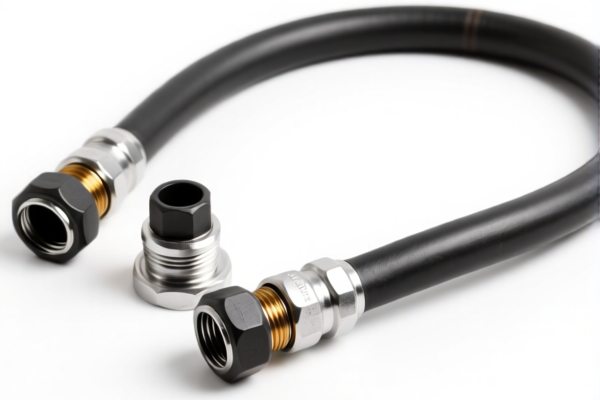
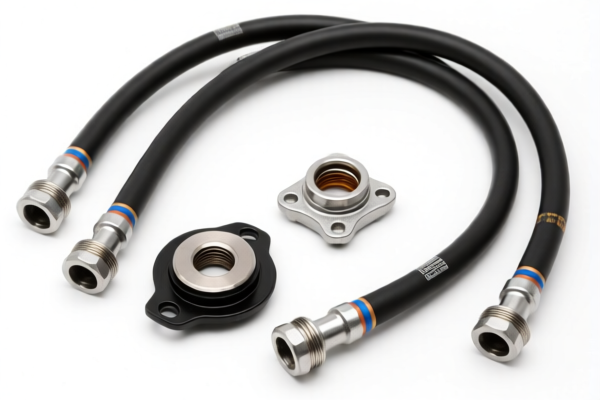
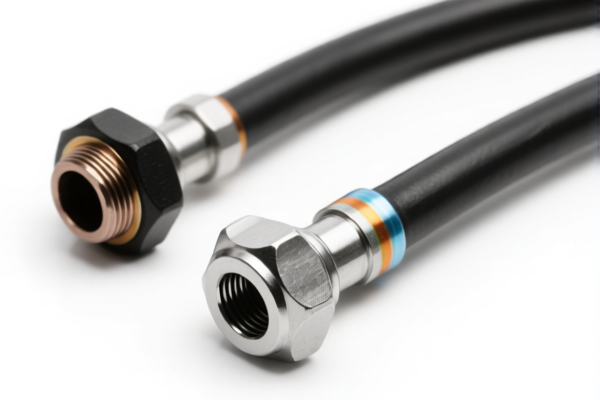
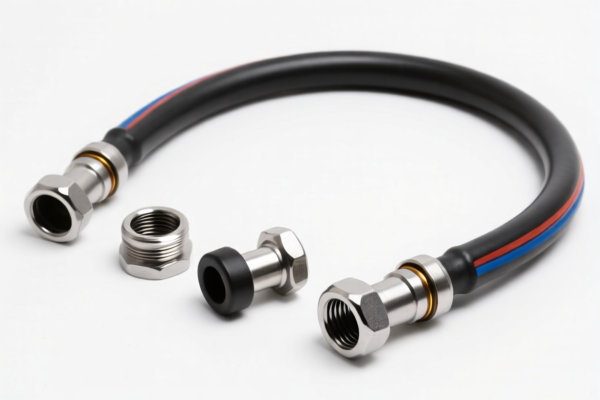
Automotive Brake Hoses with Fittings are critical safety components in the vehicle braking system. They connect rigid brake lines to the wheels, absorbing vibration and allowing suspension movement. Crucially, they often include metal or plastic fittings (joints, elbows, flanges) for connection.
In international trade, these products are strictly categorized by their material and specific application. Misclassification here can lead to severe tax discrepancies (from 0% to 27.5%).
⚠️ Key Distinction Point:
- If the product is rigid (e.g., hard plastic pipes used in chassis or non-hose applications) → It might fall under 3917.
- If the product is a flexible hose specifically designed for brake systems in heavy-duty vehicles (trucks, buses, tractors) → It falls under 3917.40.00.10.
- If the product is a rubber seal/gasket used in automotive brakes → It falls under 4016.
- Note: Standard passenger car brake hoses are often complex assemblies. However, based on the provided<DATA>, we see specific classifications for Plastic Fittings for Brake Hoses and Rubber Seals. If the item is purely a "hose" without fittings, it might not be directly listed in the short<DATA>set, but the fittings are explicitly covered. Assuming the user input refers to the assembly or the key components listed below.
📦 2. HS Code Classification Details (2026 Latest Tariff Authority)
Based on the provided <DATA>, the relevant classifications for automotive brake-related components are detailed below.
| HS Code | Product Description | Applicable Scenario | Material/Type |
|---|---|---|---|
3917.40.00.10 |
Fittings for brake hoses for vehicles of subheadings 8701.21, 8701.22, 8701.23, 8701.24 or 8701.29 or headings 8702, 8703, 8704, 8705 or 8711 | Metal/plastic connectors specifically designed for brake hose systems in trucks, buses, cars, etc. | Plastic (Fittings) |
3917.29.00.90 |
Tubes, pipes, and hoses, rigid: Of other plastics | Rigid plastic tubes/pipes (not flexible hoses) used in automotive/chassis applications | Plastic (Rigid) |
4016.93.10.10 |
Gaskets, washers, and other seals: O-Rings | O-Ring seals used in automotive goods (Chapter 87), specifically for braking systems or general automotive sealing | Vulcanized Rubber |
4016.93.10.50 |
Gaskets, washers, and other seals: Other | Other rubber seals/gaskets used in automotive goods (Chapter 87), not O-Rings | Vulcanized Rubber |
3926.90.96.00 |
Casing for bicycle derailleur cables... | Excluded: Bicycle parts (Not relevant to automotive brake hoses) | Plastic |
3926.90.60.90 |
Belting and belts, for machinery | Excluded: Machinery belts (Not relevant) | Plastic |
🔍 Critical Warning:
- The input "Automotive Brake Hoses with Fittings" strongly points to3917.40.00.10if the primary component is the fittings for brake lines.
- If the product is a complete hose assembly (hose + fittings), customs may classify it by the material of the hose or the fitting depending on local rules. However,3917.40.00.10is the most specific code for "Fittings For brake hoses".
- Rubber seals/O-rings used in the brake system are classified under4016.93.10.10/50.
💰 3. 2026 Latest Tariff Rate Breakdown (Including Surtaxes & Policy Additions)
✅ Applicable Country: United States (US)
✅ Origin: China (CN)
✅ Effective Time: November 10, 2025 (Including subsequent imports)
🎯 1. 3917.40.00.10 —— Fittings for Brake Hoses (Plastic)
| Item | Content |
|---|---|
| Base Tariff | 0.0% (ad valorem) |
| Section 301 Surtax | 0.0% |
| Total Tax Rate | 0.0% |
| Tax Calculation | CIF Value × 0.0% = $0 |
| De Minimis Exemption | ✅ Yes (Generally eligible if value < $800) |
| Legal Basis Path | HTSUS:3917.40.00.10 → USITC:3917.40.00.10 |
📌 Explanation:
- This is a highly advantageous classification.
- Fittings specifically for brake hoses in automotive goods are exempt from both the base tariff and the Section 301 surtax.
- Key Condition: Must be explicitly identified as "For brake hoses" and for vehicles in Chapters 87 (e.g., 8703 for cars, 8704 for trucks).
🎯 2. 3917.29.00.90 —— Rigid Plastic Tubes/Pipes (Other)
| Item | Content |
|---|---|
| Base Tariff | 0.0% |
| Section 301 Surtax | 0.0% |
| Total Tax Rate | 0.0% |
| Tax Calculation | CIF Value × 0.0% = $0 |
| De Minimis Exemption | ✅ Yes |
| Legal Basis Path | HTSUS:3917.29.00.90 |
📌 Note:
- If the "brake hose" is actually a rigid plastic tube (not a flexible rubber/plastic hose), it falls here.
- Still 0% total tax.
🎯 3. 4016.93.10.10 —— Rubber O-Rings (Automotive)
| Item | Content |
|---|---|
| Base Tariff | 2.5% |
| Section 301 Surtax | 25.0% |
| Total Tax Rate | 27.5% |
| Tax Calculation | CIF Value × 27.5% |
| De Minimis Exemption | ❌ No (High risk of inspection; de minimis may still apply for <$800 but tax is due) |
| Legal Basis Path | HTSUS:4016.93.10.10 → USITC:4016.93.10.10 → FOOTNOTE:301.01.03 |
📌 Warning:
- If your "Brake Hose Assembly" includes rubber O-rings/seals and is declared primarily as a "rubber article," you may be hit with 27.5% tax.
- Strategy: If possible, declare the fitting (3917.40.00.10) separately from the seals (4016...) if they are sold separately, or ensure the primary function is the fitting/hose system under the 0% rate.
🎯 4. 4016.93.10.50 —— Other Rubber Seals (Automotive)
| Item | Content |
|---|---|
| Base Tariff | 2.5% |
| Section 301 Surtax | 25.0% |
| Total Tax Rate | 27.5% |
| Tax Calculation | CIF Value × 27.5% |
| De Minimis Exemption | ❌ No |
| Legal Basis Path | HTSUS:4016.93.10.50 |
📌 Note:
- Same high tax rate as O-rings. Avoid classifying brake hose assemblies as "other rubber seals" unless unavoidable.
🛠️ 4. Customs Clearance Practical Advice (Battle-Tested Pitfall Guide)
✅ 1. Required Documentation (Must-Haves)
| Document | Mandatory? | Description |
|---|---|---|
| ✅ Product Specification Sheet | ✔️ | Must clearly state: "Brake Hose Fitting," "Material: Plastic," "Application: Automotive Brake System." |
| ✅ Technical Drawing | ✔️ | Show connections, thread types, and fit for vehicles in HS Code 8701-8711. |
| ✅ Commercial Invoice | ✔️ | Use precise description: "Plastic Fittings for Automotive Brake Hoses, Model XYZ, for Cars/Trucks." |
| ✅ Origin Certificate | ✔️ | Required to prove China origin (to apply 301 surtax if any, but here it's 0%). |
| ✅ Packaging List | ✔️ | Separate rubber seals from plastic fittings if sold separately to optimize tax. |
✅ 2. Declaration Tips (Key Mantra)
🔥 "Fittings for Brake = 0% ! Seals = 27.5%! Be Precise!"
| Scenario | Correct Declaration | Wrong Practice |
|---|---|---|
| Plastic Brake Hose Fittings | 3917.40.00.10 |
Misclassify as "general plastic fittings" → Could be 3-5% + 25% surtax |
| Rubber O-Rings in Brake System | 4016.93.10.10 |
Declare as "plastic part" → Fraud/Seizure risk |
| Complete Brake Hose Assembly | Check primary function | If mostly plastic fitting, use 3917.40.00.10. If mostly rubber hose, may fall under different HS (not in <DATA>) but likely high tax. |
| Rigid Plastic Brake Lines | 3917.29.00.90 |
Declare as "flexible hose" → Misclassification |
⚠️ Critical Advice:
- If you are importing brake hose assemblies (hose + metal fittings), customs may argue it's a "rubber article" (Chapter 40) or a "metal article" (Chapter 73/74).
- However, if you import only the plastic fittings designed for these hoses,3917.40.00.10is your golden ticket with 0% tax.
- Do not lump rubber O-rings with plastic fittings on the same line if possible. Separate lines allow you to pay 0% on fittings and 27.5% only on seals.
✅ 3. Special Cases Handling
| Situation | Handling Advice |
|---|---|
| Mixed Container (Fittings + Seals) | Declare separately! Fittings under 3917.40.00.10 (0%), Seals under 4016.93.10.10/50 (27.5%). |
| OEM Parts for Aftermarket | Provide OEM part numbers and brand authorization. |
| Used/Refurbished | Not recommended. New goods only for clear HS classification. |
| Bicycle Brake Parts | Use 3926.90.96.00 (0% tax) – but ensure it’s NOT for automotive vehicles. |
🌍 5. Global Market Clearance Comparison (2026 Latest)
| Country/Region | Recommended HS Code | Tariff (China Origin) | Certification Required | Notes |
|---|---|---|---|---|
| 🇺🇸 USA | 3917.40.00.10 |
0% | DOT, SAE Standards | Highest priority: Accurate "Brake Fitting" description. |
| 🇨🇳 China | 3917.40.00.10 |
0% | None | Export to China is duty-free. |
| 🇪🇺 EU | 3917.40.00 |
0% | E-mark (for braking) | No surtax. |
| 🇬🇧 UK | 3917.40.00 |
0% | UKCA Mark | Post-Brexit rules apply. |
| 🇯🇵 Japan | 3917.40.00 |
0% | JIS Standard | No surtax. |
📌 Conclusion:
- The USA offers a zero-tariff opportunity for plastic brake hose fittings under3917.40.00.10.
- Rubber seals remain heavily taxed (27.5%).
- Strategy: Maximize the value of plastic fittings in your declaration, minimize rubber seal value, or source seals from non-China countries if possible to avoid 301 surtax.
📌 6. Common Mistakes & Pitfalls (Lessons Learned)
❌ Mistake 1: Declaring "Brake Hose Assembly" as 4016.93.10.50 (Rubber Seal)
👉 Consequence: Pay 27.5% tax instead of 0%.
👉 Fix: If the primary component is the plastic fitting, use 3917.40.00.10.
❌ Mistake 2: Using generic description "Plastic Fittings"
👉 Consequence: Customs may assign general code with 3-5% base + 25% surtax = 28-30%.
👉 Fix: Use specific description: "Fittings for Brake Hoses, Automotive, Chapter 87."
❌ Mistake 3: Lumping O-rings and Fittings into one line item
👉 Consequence: Customs may classify the whole lot under the highest tax rate (rubber).
👉 Fix: Separate line items for 3917.40.00.10 and 4016.93.10.10.
✅ Correct Practice:
"Plastic Fittings for Automotive Brake Hoses, Model BF-100, Compatible with Toyota/Honda, HS Code 3917.40.00.10"
🎯 7. Conclusion: Professional Declaration, Save Money, Speed Up Clearance!
🎯 Remember the Mantra:
🔹 "Plastic Brake Fittings = 0%! Rubber Seals = 27.5%! Separate Them!"
🔹 "Specific Description Saves 25% Tax!"
📌 Pro Tip:
If your brake hose fittings are originally from Vietnam, Thailand, or Mexico, you can often claim preferential tariffs or avoid 301 surtaxes entirely.
Recommend Advance Ruling (Pre-classification) with US Customs for large shipments to ensure 3917.40.00.10 is accepted.
📣 Immediate Action:
📞 Contact your freight forwarder + Provide Product Photos + Specify "For Brake Hoses" on Invoice
🚀 Let your brake fittings clear smoothly, avoid 27.5% traps, and boost profit margins!
✨ Professional Customs Clearance Starts with Accurate Classification!
💼 Every Percent of Tax Saved is Pure Profit!
Customer Reviews
About HS Code Classification
The Harmonized System (HS) is an internationally standardized nomenclature developed by the World Customs Organization (WCO) to classify traded products. Over 200 countries use the HS system as the basis for customs tariffs, trade statistics, and import/export regulations.
Each HS code follows a hierarchical structure:
- Chapter (2 digits) — Broad category of goods (e.g., Chapter 84: Machinery and Mechanical Appliances)
- Heading (4 digits) — More specific grouping within the chapter
- Subheading (6 digits) — Internationally standardized breakdown, used by all WCO member countries
- National subdivisions (8-10 digits) — Country-specific extensions for further classification, such as US HTSUS 10-digit codes
Correct HS code classification is essential for smooth customs clearance, accurate duty payment, and compliance with trade regulations. Misclassification can lead to customs delays, overpayment of duties, or penalties.
When importing from CN to US, the applicable tariff rates may include:
- Most-Favored-Nation (MFN) rate — The standard duty rate applied to WTO members
- General rate — Applied to countries without trade agreements
- Trade remedy duties — Additional tariffs such as Section 301 (anti-dumping), Section 232 (national security), or countervailing duties
The information provided on this page is for reference purposes only. For official classification, please consult with your local customs authority or a licensed customs broker.