Automotive Brake Pipe Fitting
CN → US| HS Code | Tariff Rate | Origin | Destination | Doc |
|---|---|---|---|---|
| 7307995045 | 89.3% | CN | US | Official Doc |
| 7412200015 | 88.0% | CN | US | Official Doc |
| 7412200085 | 88.0% | CN | US | Official Doc |
| 8708998180 | 12.5% | CN | US | Official Doc |
| 7307290090 | 90.0% | CN | US | Official Doc |
Product Images
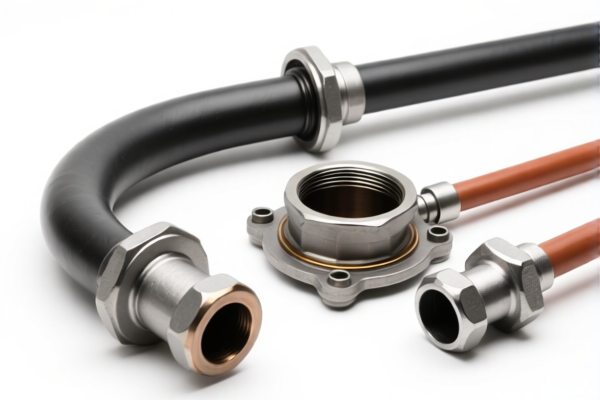
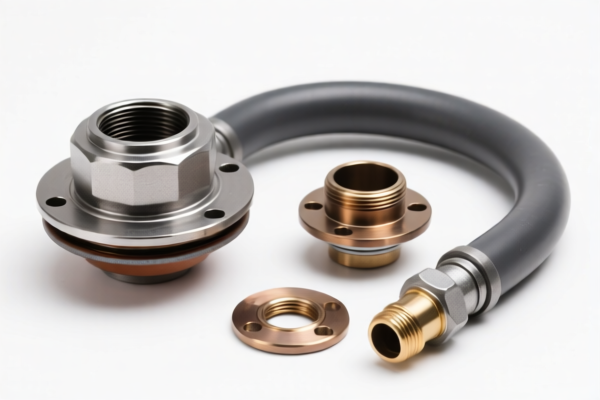
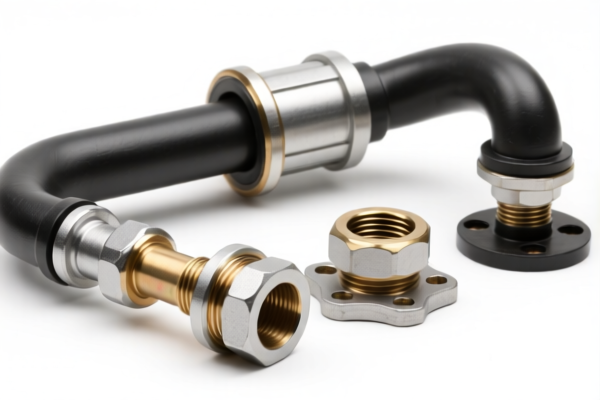
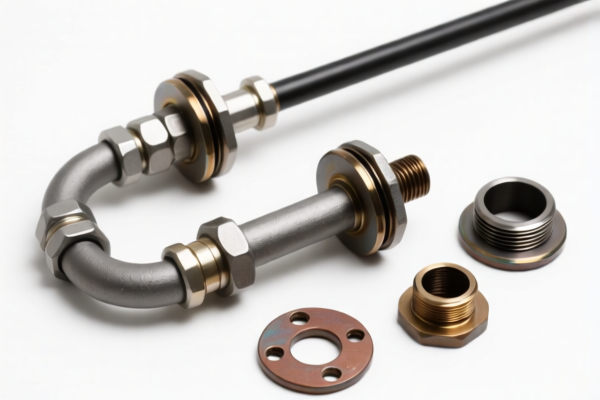
AI Analysis
🚗 Automotive Brake Pipe Fittings
🌐 HS Code Reference & Customs Clearance Guide | 2024/2025 Tariff Breakdown | Strategic Import Strategies
📌 I. Product Definition & Classification: What Exactly Are You Importing?
"Automotive Brake Pipe Fittings" is a generic term that covers the connecting components of hydraulic brake lines. However, in international trade and customs valuation, material composition and functional specificity are the two critical factors determining the HS Code.
Brake fittings generally fall into two main categories: 1. Metallic Pipe Accessories (Steel/Copper): Classified under Chapter 73 (Articles of Iron or Steel) or Chapter 74 (Copper and Articles Thereof). These are viewed as general industrial plumbing/piping components. 2. Specific Automotive Parts: Classified under Chapter 87 (Vehicles Other Than Railway). If the fitting is identified as a spare part specifically designed for automotive braking systems, it may qualify for a significantly lower duty rate.
⚠️ Key Distinction Point:
- If the item is declared simply as a "pipe fitting" or "brass/steel connector" without explicit automotive context → It defaults to Chapter 73/74 (High Tariff).
- If the item is declared as a "Spare Part for Automotive Braking Systems" → It defaults to 8708.99 (Low Tariff).
📦 II. HS Code Classification Matrix (Based on Provided Data)
The following data reflects the specific classifications and tax implications for "Automotive Brake Pipe Fittings." Note the drastic difference in tax rates based on the HS Code chosen.
| HS Code | Product Description / Inference | Material / Function | Total Tax Rate |
|---|---|---|---|
| 8708.99.81.80 | Automotive Spare Parts: Brake pipe fittings as functional parts for automotive vehicles. | Any Material (Specific Automotive Part) | 12.5% ✅ Best Option |
| 7412.20.00.15 | Automotive Brake Pipe Fittings | Copper Alloys (Pipe accessories) | 88.0% ⚠️ High |
| 7412.20.00.85 | Automotive Brake Pipe Fittings | Other Copper Alloys / Metal | 88.0% ⚠️ High |
| 7307.99.50.45 | Automotive Brake Pipe Fittings | Iron / Non-Alloy Steel | 89.3% 🔥 Critical |
| 7307.29.00.90 | Automotive Brake Pipe Fittings | Stainless Steel / Steel | 90.0% 🔥 Critical |
🔍 Critical Observation:
- The tax rate for Steel/Copper fittings (73/74) exceeds 88-90% due to combined Section 301 tariffs, IEEPA tariffs, and specific steel/aluminum provisions.
- The tax rate for Automotive Parts (8708) is capped at 12.5%, representing a potential 75%+ tax savings.
💰 III. Detailed Tariff Analysis (Cost Breakdown)
Below is the detailed explanation of why each HS Code carries its specific tax burden, based strictly on the provided data.
🎯 1. 8708.99.81.80 — The Strategic Choice (Lowest Tax)
- Summary: Automotive brake pipe fittings, classified as functional parts for automotive vehicles.
- Tax Breakdown:
- Base Duty: 2.5%
- Section 301 / Additional Tariff: 0.0%
- Section 122 / Steel-Aluminum Provision: 10% (Note: Data indicates 10% here, potentially due to specific part exemptions or non-structural application)
- Total Effective Tax: 12.5%
- Why this code?: This classification relies on GRI 1 and 6, identifying the item not just as a pipe, but as a specific spare part for the vehicle. Under the Harmonized System, parts suitable for use solely or principally with vehicles of Chapter 87 are often preferred over general pipe chapters.
- Strategy: This is the optimal clearance path if your invoice, marketing materials, and product descriptions explicitly state "Automotive Brake Part" or "OEM Replacement for [Car Model]."
🎯 2. 7412.20.00.15 & 7412.20.00.85 — The Copper Penalty
- Summary: Copper alloy pipe fittings (specific vs. other).
- Tax Breakdown:
- Base Duty: 3.0%
- Section 301 / Additional Tariff: 25.0%
- Section 122 / Steel-Aluminum Provision: 50% (Applies to Copper articles per the provided data logic)
- Total Effective Tax: 88.0%
- Why this code?: Copper fittings are often classified as general plumbing accessories (Chapter 74) rather than automotive parts if they look like generic hardware store items. The 50% additional duty is the main driver of this high cost.
🎯 3. 7307.99.50.45 — The Steel Iron Penalty
- Summary: Iron or non-steel alloy pipe fittings.
- Tax Breakdown:
- Base Duty: 4.3%
- Section 301 / Additional Tariff: 25.0%
- Section 122 / Steel-Aluminum Provision: 50%
- Total Effective Tax: 89.3%
- Why this code?: Standard black steel or galvanized steel fittings are heavily targeted by trade remedies. The 50% surcharge makes these unviable for import unless the price differential with the 8708 code is negligible (which is rare).
🎯 4. 7307.29.00.90 — The Stainless Steel Penalty
- Summary: Other stainless steel or steel pipe fittings.
- Tax Breakdown:
- Base Duty: 5.0%
- Section 301 / Additional Tariff: 25.0%
- Section 122 / Steel-Aluminum Provision: 50%
- Total Effective Tax: 90.0%
- Why this code?: Even high-grade stainless steel brake lines (common in performance cars) face the same penalty if classified as "pipes" rather than "parts."
🛠️ IV. Customs Clearance Strategy & Actionable Advice
To achieve the 12.5% tax rate (HS 8708.99.81.80) and avoid the punitive 88-90% rates, you must manage your documentation meticulously.
✅ 1. Documentation Requirements for HS 8708.99.81.80
- Commercial Invoice Description: Must explicitly state "Automotive Brake System Component" or "Spare Part for Automotive Vehicle." Avoid generic terms like "Steel Pipe Fitting" or "Brass Connector."
- Product Images: Show the fitting installed in a brake line context or clearly marked with automotive part numbers (OEM numbers).
- Technical Data Sheet: Highlight compatibility with specific vehicle models (e.g., "Fits Ford F-150 2020-2023").
✅ 2. Material Declaration Strategy
- While copper and steel are the base materials, the intended use is the primary classifier.
- If you import Copper Fittings, do NOT declare them as "Copper Pipe Fittings." Declare them as "Automotive Brake Line Connectors."
- If you import Steel Fittings, do NOT declare them as "Iron/Steel Pipe Accessories." Declare them as "Automotive Brake Hose Adapters."
✅ 3. Avoiding Common Pitfalls
- ❌ Pitfall: Using a "One-Size-Fits-All" HS Code for all imports.
- Result: If you declare copper fittings under 7412, you pay 88%.
- ❌ Pitfall: Vague descriptions.
- Result: Customs officers will default to the generic "Pipe Fitting" codes (73/74) to maximize revenue, triggering the 50% surcharge.
- ✅ Correct Approach: Align your Product Name, HS Code, and Invoice Description to the Automotive Spare Part category (8708).
✅ 4. Risk Assessment
- High Risk: Importing mixed lots of generic hardware and automotive parts.
- Advice: Separate shipments. Keep automotive parts distinct from general industrial plumbing supplies.
- Audit Trail: Be prepared to provide proof that the fittings are exclusively used for vehicles (e.g., OEM part numbers, vehicle repair manuals).
🌍 V. Global Comparison (Contextual Note)
| Region | Typical Classification for Brake Fittings | Estimated Duty (Base) | Notes |
|---|---|---|---|
| 🇺🇸 USA (This Data) | 8708.99.81.80 (if claimed as auto part) | 12.5% | Includes Section 301/IEEPA nuances. Generic pipes face ~90%. |
| 🇨🇳 China (Import) | 7307.99 or 8708.99 | 5% - 8% | Often treats fittings as auto parts if specifically designed for cars. |
| 🇪🇺 EU | 7307.93 or 8708.99 | 0% - 4.5% | Auto parts often duty-free under certain trade agreements. |
| 🇬🇧 UK | 8708.99 | 0% | Post-Brexit, auto parts often have 0% duty. |
📌 Conclusion for US Importers:
The US market presents a binary choice: Pay ~90% as a generic metal pipe, or pay 12.5% as an automotive spare part. The difference is not just financial; it affects cash flow, pricing competitiveness, and inventory turnover.
📌 VI. Final Recommendation
- Prioritize HS Code
8708.99.81.80: This is the only code that offers a sustainable business model. - Revise Invoices: Ensure every line item mentions "Automotive," "Brake System," or "Vehicle Part."
- Consult a Customs Broker: Before shipping, submit an Advance Ruling (Pre-Decision) request to US Customs and Border Protection (CBP) confirming the eligibility of your specific product under
8708.99.81.80. This provides legal protection against future audits. - Avoid Generic Terminology: Never use "Hardware," "Plumbing," or "Pipe Fitting" in the primary description if "Automotive Part" is accurate.
✨ Pro Tip:
"The name on the box dictates the tax in the box.
Label it as 'Auto Part', pay 12.5%.
Label it as 'Pipe Fitting', pay 90%.
Choose wisely!"
📞 Immediate Action:
Update your product catalog and invoice templates today.
🚀 Secure your margin. Optimize your HS Codes. Drive your business forward!
Customer Reviews
About HS Code Classification
The Harmonized System (HS) is an internationally standardized nomenclature developed by the World Customs Organization (WCO) to classify traded products. Over 200 countries use the HS system as the basis for customs tariffs, trade statistics, and import/export regulations.
Each HS code follows a hierarchical structure:
- Chapter (2 digits) — Broad category of goods (e.g., Chapter 84: Machinery and Mechanical Appliances)
- Heading (4 digits) — More specific grouping within the chapter
- Subheading (6 digits) — Internationally standardized breakdown, used by all WCO member countries
- National subdivisions (8-10 digits) — Country-specific extensions for further classification, such as US HTSUS 10-digit codes
Correct HS code classification is essential for smooth customs clearance, accurate duty payment, and compliance with trade regulations. Misclassification can lead to customs delays, overpayment of duties, or penalties.
When importing from CN to US, the applicable tariff rates may include:
- Most-Favored-Nation (MFN) rate — The standard duty rate applied to WTO members
- General rate — Applied to countries without trade agreements
- Trade remedy duties — Additional tariffs such as Section 301 (anti-dumping), Section 232 (national security), or countervailing duties
The information provided on this page is for reference purposes only. For official classification, please consult with your local customs authority or a licensed customs broker.