Automotive Brake Rubber Hose
CN → US| HS Code | Tariff Rate | Origin | Destination | Doc |
|---|---|---|---|---|
| 4016931010 | 37.5% | CN | US | Official Doc |
| 6813200015 | 35.0% | CN | US | Official Doc |
| 4016931050 | 37.5% | CN | US | Official Doc |
| 6813810050 | 35.0% | CN | US | Official Doc |
Product Images
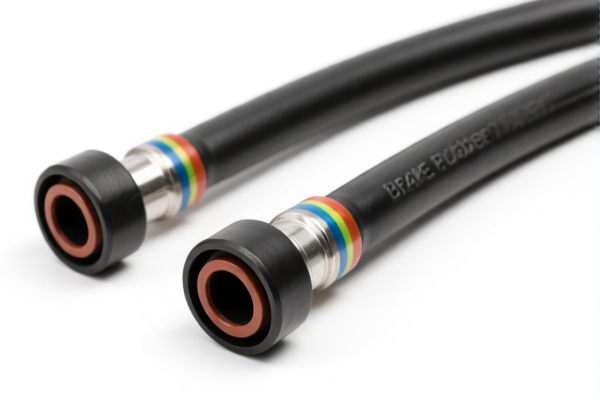
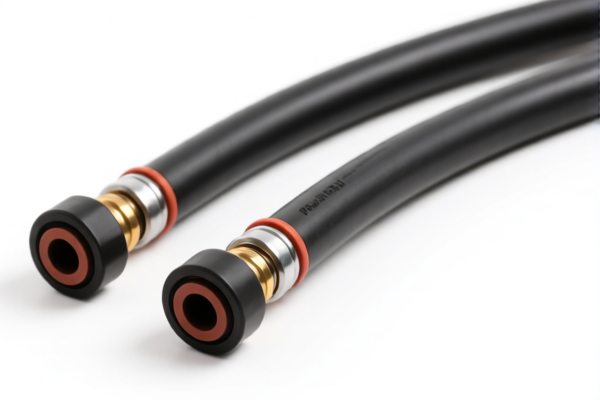
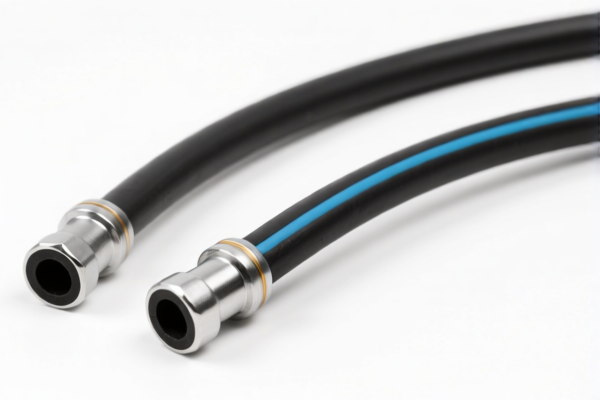
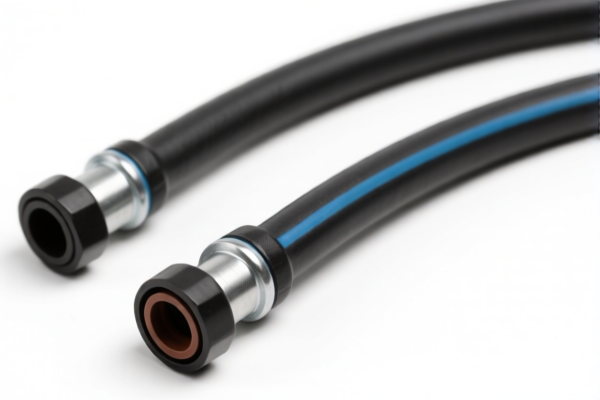
AI Analysis
🚗 Automotive Brake Rubber Hose (刹车橡胶管)
🌐 HS Code Reference & Clearance Guide | 2026 Latest Tariff Analysis | Professional Customs Strategy
📌 I. Product Definition & Classification: What Exactly is a "Brake Rubber Hose"?
An Automotive Brake Rubber Hose is a critical component of a vehicle's hydraulic braking system. It connects the rigid brake lines to the wheel cylinders or calipers, allowing for flexibility during suspension movement while maintaining high pressure resistance.
In international trade, classification depends heavily on the material composition (pure rubber vs. composite friction material) and the specific function (fluid transport vs. friction braking pad).
⚠️ Key Distinction Point:
- If it is a flexible tube for transmitting brake fluid → It is a Rubber Part (Chapter 40).
- If it is a brake pad/shoe made of rubber-based composite → It is a Friction Material (Chapter 68).
Note: The term "Hose" strictly implies a tubular structure for fluid transfer, strongly pointing to Chapter 40. However, market data often includes confusion with "Brake Pads" (friction blocks), leading to dual classification possibilities.
📦 II. HS Code Classification Details (2026 Latest Tariff Authority Comparison)
Based on the provided data, two primary classification paths exist for items described as "Brake Rubber" or similar, though "Hose" technically aligns best with Rubber Parts.
| HS Code | Product Description | Application Scenario | Material Conflict? |
|---|---|---|---|
4016.93.10.10 |
Other Vulcanized Rubber Articles, Other (Specifically for Ch. 87 Auto Parts) | Fluid Brake Hoses, Rubber Seals, Gaskets for Auto | ❌ No Conflict Matches "Rubber" material & "Auto Part" use. |
4016.93.10.50 |
Other Vulcanized Rubber Articles, Other (General Auto Parts) | Rubber Parts/Accessories (Default inference for unspecified rubber auto components) | ❌ No Conflict Matches "Rubber" material & "Ch. 87 Auto" scope. |
6813.20.00.15 |
Friction Material Based on Mineral/Cellulose Substrates (Other) | Brake Pads/Shoes where Rubber is a binder, not the main transport structure | ⚠️ Potential Conflict Rubber is a binder, but "Hose" is not a friction block. |
6813.81.00.50 |
Friction Material Without Asbestos | Brake Linings/Pads (Rubber-based composite) | ⚠️ Potential Conflict Assumes "Brake Rubber" = Brake Pad. |
🔍 Critical Reminder:
- "Hose" (Tube) implies fluid transport. It does not generate friction. Therefore, Chapter 40 (Rubber Products) is the technically correct classification for actual hoses.
- Chapter 68 (Friction Materials) applies only if the item is a Brake Pad/Shoe where rubber acts as a binding agent for friction particles.
- Misclassification Risk: Declaring a rubber hose as a "friction material" (6813) or vice versa can lead to customs delays or penalty due to duty rate differences (25% vs. 35-37.5% total).
💰 III. 2026 Latest Tariff Rate Breakdown (Including Surtaxes & Policy Add-ons)
✅ Applicable Country: USA (US)
✅ Origin: China (CN)
✅ Effective Date: From Nov 10, 2025 (and subsequent imports)
🎯 1. 4016.93.10.10 & 4016.93.10.50 — Rubber Parts for Automobiles
These codes fall under "Other vulcanized rubber articles," specifically inferred as auto parts.
| Item | Details |
|---|---|
| Base Tariff | 2.5% (ad valorem) |
| Section 301 Surcharge | +25.0% (USITC Footnote 9903.88.01) |
| IEEPA Surcharge | +10.0% (Against China/HK products, effective Nov 10, 2025) |
| Total Tax Rate | 37.5% |
| Calculation Method | CIF Value × 37.5% |
| De Minimis Exemption | ❌ Not Eligible (deny_de_minimis) |
| Legal Basis Path | IEEPA:9903.01.25 → IEEPA:9903.01.24 → USITC:4016.93.10.10/50 → FOOTNOTE:9903.88.01 |
📌 Explanation:
- Base 2.5%: Standard MFN rate for rubber parts.
- 301 Clause 25%: The primary trade war tariff on Chinese rubber/auto components.
- IEEPA 10%: Additional levy under the International Emergency Economic Powers Act.
- Total 37.5%: A significant cost burden. High-value rubber hoses or bulk shipments must account for this in pricing.
🎯 2. 6813.20.00.15 & 6813.81.00.50 — Friction Materials (If Misclassified or Ambiguous)
Note: These apply if the item is interpreted as a "Brake Pad" or "Friction Block" rather than a fluid hose.
| Item | Details |
|---|---|
| Base Tariff | 0.0% |
| Section 301 Surcharge | +25.0% |
| IEEPA Surcharge | +10.0% |
| Total Tax Rate | 35.0% |
| Calculation Method | CIF Value × 35.0% |
| De Minimis Exemption | ❌ Not Eligible (deny_de_minimis) |
| Legal Basis Path | IEEPA:9901.25 → IEEPA:9903.01.24 → USITC:6813.20/81 → FOOTNOTE:9903.88.01 |
📌 Note:
- While the base tariff is lower (0% vs 2.5%), the 301 + IEEPA surcharges remain identical.
- Difference: Only 2.5% lower than the rubber classification.
- Risk: Customs may dispute this if the item is clearly a "hose" (tube) and not a "pad" (block), leading to audits.
🛠️ IV. Customs Clearance Practical Advice (Battle-Tested Pitfall Guide)
✅ 1. Required Documentation List (Non-Negotiable)
| Document | Mandatory? | Description |
|---|---|---|
| ✅ Product Specification Sheet | ✔️ | Must specify: Material (Vulcanized Rubber), Inner Diameter, Max Pressure, Temperature Resistance. |
| ✅ Product Photos | ✔️ | Clear images of the cross-section and ends (metal fittings/rubber tube). |
| ✅ Commercial Invoice | ✔️ | Must clearly state "Automotive Brake Hose" or "Hydraulic Brake Line", NOT just "Rubber Part". |
| ✅ Certificate of Origin (CO) | ✔️ | Proof of Chinese origin triggers the IEEPA/301 tariffs. |
| ✅ Packing List | ✔️ | Show unit weights and dimensions. |
| ✅ Test Report | ✔️ | ISO 3900 or SAE J1401 standards for brake hoses (proves functional intent). |
✅ 2. Declaration Tips (Key Mantras)
🔥 "Hose is Tube, Pad is Block; Don't Mix Fluids with Friction!"
| Scenario | Correct Declaration | Wrong Practice | Consequence |
|---|---|---|---|
| Flexible Tube for Brake Fluid | 4016.93.10.10 |
Misdeclare as 6813 (Friction) |
Customs audit → Delay + Potential Penalty |
| Brake Pad/Pad Block (Rubber-bound) | 6813.20.00.15 or 6813.81.00.50 |
Misdeclare as 4016 (Rubber Part) |
Slight tax difference (2.5%), but functional mismatch risk |
| OEM Brake Hose Kit | Include Fittings + Hose | Declare only as "Rubber Tube" | Missing parts may be taxed separately or rejected |
✅ 3. Special Circumstances Handling
| Situation | Handling Advice |
|---|---|
| OEM Custom Hose | Provide customer PO and design drawings. Clearly mark "For [Car Model] Brake System". |
| Brake Hose with Metal Fittings | Declare as One Unit. Do not split into "Rubber Hose" + "Metal Fitting". The primary character is the rubber hose. |
| Aftermarket vs. OEM | No tax difference, but Labeling must match the HS Code description precisely. |
| Asbestos Content | If using old friction materials, ensure No Asbestos declaration. If rubber-based, it's naturally asbestos-free. |
🌍 V. Global Market Comparison (2026 Latest)
| Country/Region | Recommended HS Code | Tariff Rate | Certification Required | Note |
|---|---|---|---|---|
| 🇺🇸 USA | 4016.93.10.10 |
37.5% | SAE J1401, DOT | High tariff due to 301 + IEEPA. |
| 🇨🇳 China | 4016.93.10.10 |
5% - 10% | CCC (if applicable) | No surtaxes. |
| 🇪🇺 EU | 4016.93.00 |
3.7% - 4.5% | ECE R23, DOT | No major surtaxes. |
| 🇲🇽 Mexico | 4016.93.01 |
0% - 5% | NOM Standards | Potential USMCA benefits if originating. |
| 🇨🇦 Canada | 4016.93.90 |
5% - 10% | CMVSS Standards | No surtaxes. |
📌 Conclusion:
- USA is the most expensive market for brake hoses due to the 37.5% total tariff.
- China/EU offer much lower entry barriers.
- Supply Chain Strategy: Consider sourcing rubber hoses from non-China origins (e.g., Thailand, Vietnam) if targeting the US, to potentially avoid the 10% IEEPA + 25% 301 surcharges (verify specific country eligibility).
📌 VI. Common Mistakes & Pitfall Guide (Lessons Learned)
❌ Mistake 1: Calling it "Rubber Part" without specifying "Brake Hose"
👉 Result: Customs may reclassify as general rubber goods (4016.99), leading to 25% - 50% duty volatility.
❌ Mistake 2: Mixing "Brake Pads" and "Brake Hoses" in one HS Code
👉 Result: Customs Rejection. They have different material logic (Friction vs. Fluid Containment).
❌ Mistake 3: Ignoring the IEEPA 10% Surcharge
👉 Result: Underpaying duties by 10% → Back taxes + Interest.
❌ Mistake 4: Using "Automotive Accessories" as a generic term
👉 Result: Vague descriptions trigger manual inspection → Delays.
✅ Correct Approach:
"Vulcanized Rubber Hydraulic Brake Hose, 12mm ID, SAE J1401 Certified, For Toyota Camry 2020, OEM Part # 04419-33080"
🎯 VII. Conclusion: Precision is Profit
🎯 Remember the Mantras:
🔹 "Hose = 4016 (37.5%); Pad = 6813 (35%)"
🔹 "IEEPA 10% + 301 25% = 35-37.5% Total"
🔹 "Describe 'Rubber Hose', Not Just 'Rubber Part'!"
📌 Pro Tip:
If your brake hoses are originating from Vietnam, Mexico, or Thailand, investigate USMCA/Generalized System of Preferences (GSP) eligibility. Even small tariff reductions can boost margins significantly in the US market.
Recommend Advance Ruling if the product is a hybrid (e.g., hose with complex metal fittings) to avoid post-entry audits.
📣 Immediate Action:
📞 Contact a Licensed Customs Broker
📸 Provide Cross-Section Photos
📝 Apply for HS Code Pre-Ruling if unsure between4016and6813.
🚀 Ensure Smooth Clearance, Avoid Surprises, Protect Your Margins!
✨ Professional Clearance Starts with Accurate Classification!
💼 Every Percent Saved is Pure Profit!
Customer Reviews
About HS Code Classification
The Harmonized System (HS) is an internationally standardized nomenclature developed by the World Customs Organization (WCO) to classify traded products. Over 200 countries use the HS system as the basis for customs tariffs, trade statistics, and import/export regulations.
Each HS code follows a hierarchical structure:
- Chapter (2 digits) — Broad category of goods (e.g., Chapter 84: Machinery and Mechanical Appliances)
- Heading (4 digits) — More specific grouping within the chapter
- Subheading (6 digits) — Internationally standardized breakdown, used by all WCO member countries
- National subdivisions (8-10 digits) — Country-specific extensions for further classification, such as US HTSUS 10-digit codes
Correct HS code classification is essential for smooth customs clearance, accurate duty payment, and compliance with trade regulations. Misclassification can lead to customs delays, overpayment of duties, or penalties.
When importing from CN to US, the applicable tariff rates may include:
- Most-Favored-Nation (MFN) rate — The standard duty rate applied to WTO members
- General rate — Applied to countries without trade agreements
- Trade remedy duties — Additional tariffs such as Section 301 (anti-dumping), Section 232 (national security), or countervailing duties
The information provided on this page is for reference purposes only. For official classification, please consult with your local customs authority or a licensed customs broker.