Automotive Brake Rubber Hoses
CN → US| HS Code | Tariff Rate | Origin | Destination | Doc |
|---|---|---|---|---|
| 4009110000 | 37.5% | CN | US | Official Doc |
| 4009120050 | 20.0% | CN | US | Official Doc |
| 5909002000 | 38.3% | CN | US | Official Doc |
| 4009120020 | 20.0% | CN | US | Official Doc |
| 4009220020 | 37.5% | CN | US | Official Doc |
| 8708998105 | 37.5% | CN | US | Official Doc |
Product Images
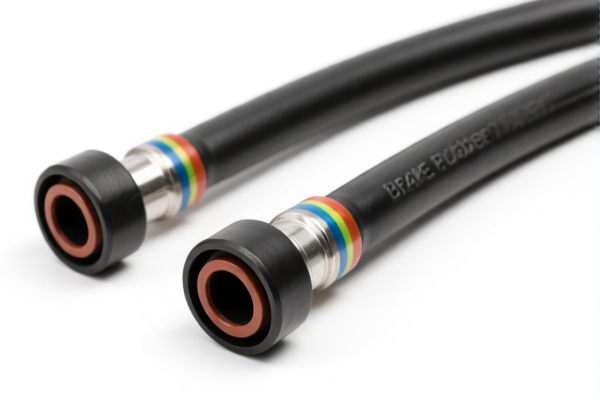
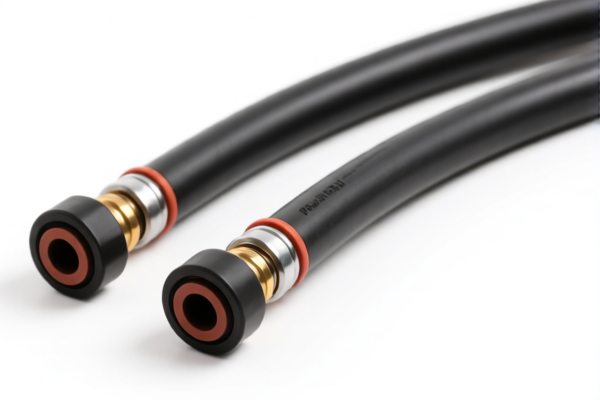
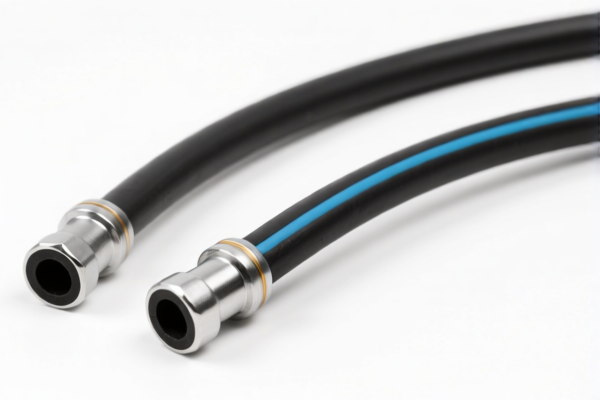
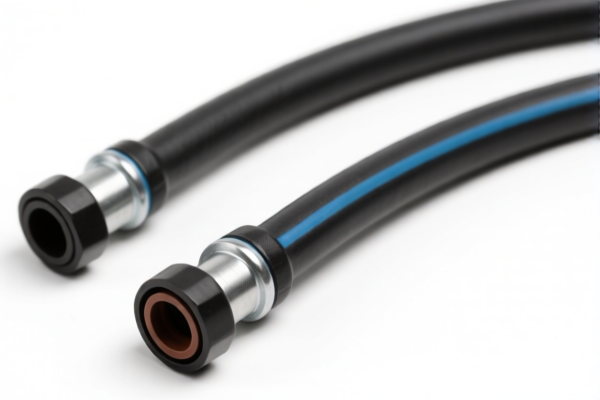
AI Analysis
🚗 Automotive Brake Rubber Hoses: HS Code Classification & US Import Strategy (2026)
🌐 HS Code Reference & Customs Clearance Guide | 2026 Tariff Full Analysis | Professional Clearance Strategy
📌 I. Product Definition & Classification: Do You Really Understand "Brake Hoses"?
Automotive brake rubber hoses are critical safety components in vehicle braking systems, responsible for transmitting brake fluid under high pressure. In international trade, these are not simply "rubber tubes." They are highly regulated safety parts, often distinguished by their attachments (fittings), specific application (brake systems), and material composition (vulcanized rubber).
Key Distinctions: * General Rubber Hoses (4009 Series): Simple tubes without complex fittings or specific automotive integration. * Brake Hose Assemblies (4009/8708 Series): Hoses specifically designed for brake systems, often with metal fittings, connectors, or specific valve integrations.
⚠️ Critical Classification Point:
- If it is a simple rubber tube without specific brake fittings or complex attachments → Likely 4009.11.00.00.
- If it is a brake hose assembly with fittings, connectors, or designed specifically for braking → Likely 4009.12.00.20, 4009.22.00.20, or 8708.99.81.05.
- If it is a textile-reinforced rubber hose (less common for brakes but possible) → Likely 5909.00.20.00.
📦 II. HS Code Classification Details (2026 Latest Tariff Authority Comparison)
| HS Code | Product Description | Application Scenario | Key Feature |
|---|---|---|---|
4009.11.00.00 |
Rubber hoses, vulcanized rubber, without fittings | Basic rubber tubing, simple connections | ❌ No attachments |
4009.12.00.50 |
Rubber hoses, with fittings, other than brake hoses | General industrial rubber hoses with connectors | ✅ With fittings |
4009.12.00.20 |
Automotive brake rubber hoses & fittings | Specific brake system hoses with attachments | ✅ With fittings |
4009.22.00.20 |
Automotive brake rubber hoses, vulcanized, with fittings | Heavy-duty or specific vehicle brake lines | ✅ With fittings |
5909.00.20.00 |
Textile hose and similar goods (rubber reinforced) | Rubber hoses with textile reinforcement | ✅ Textile layer |
8708.99.81.05 |
Brake system parts for motor vehicles | Complete brake hose assemblies for vehicles | ✅ Vehicle part |
🔍 Key Reminder:
- Brake hoses are safety-critical parts. Misclassification can lead to severe customs penalties.
- Attachments matter: If the hose has metal fittings, connectors, or valves, it often falls under 4009.12 or 4009.22, not the simpler 4009.11.
- Part vs. Product: If declared as a "vehicle part" (e.g., for replacement), it may fall under 8708.99, but 4009 is more specific for the rubber hose itself.
💰 III. 2026 Latest Tariff Rate Breakdown (Including Additional Taxes & Policy Surcharges)
✅ Applicable Country: United States (US)
✅ Origin: China (CN)
✅ Effective Date: 2025/2026 (Current Trade Restrictions Apply)
🎯 1. 4009.11.00.00 —— Rubber Hoses, Vulcanized, Without Attachments
| Item | Content |
|---|---|
| Base Tariff | 2.5% (ad valorem) |
| Section 301 Additional Duty | +25% |
| IEEPA 122 Tariff | +10% (China-specific) |
| Total Tariff Rate | 37.5% |
| Tax Calculation | CIF Value × 37.5% |
| De Minimis Eligibility | ❌ Not Eligible (Section 301 & IEEPA exclude de minimis) |
| Legal Basis Path | USITC:4009.11.00.00 → Section 301 Footnote 9903.88.01 → IEEPA:9903.01.25 |
📌 Explanation:
- Base Tariff (2.5%): Standard MFN rate for rubber hoses.
- Section 301 Duty (25%): Applied to most Chinese-made rubber products.
- IEEPA Duty (10%): Additional surcharge for Chinese goods under IEEPA Section 122.
- Total: 37.5% is a high tariff, making cost optimization crucial.
🎯 2. 4009.12.00.50 —— Rubber Hoses, With Fittings, Not for Brakes
| Item | Content |
|---|---|
| Base Tariff | 2.5% |
| Section 301 Additional Duty | +7.5% |
| IEEPA 122 Tariff | +10% |
| Total Tariff Rate | 20.0% |
| Tax Calculation | CIF Value × 20.0% |
| De Minimis Eligibility | ❌ Not Eligible |
| Legal Basis Path | USITC:4009.12.00.50 → Section 301 Footnote 9903.88.01 → IEEPA:9903.01.24 |
📌 Note:
- This code applies to non-brake rubber hoses with fittings (e.g., hydraulic, pneumatic).
- Lower total rate (20%) compared to brake-specific hoses, but cannot be used for brake hoses to avoid misclassification penalties.
🎯 3. 4009.12.00.20 & 4009.22.00.20 —— Automotive Brake Rubber Hoses
| Item | Content |
|---|---|
| Base Tariff | 2.5% |
| Section 301 Additional Duty | +7.5% (for 4009.12) or +25% (for 4009.22) |
| IEEPA 122 Tariff | +10% |
| Total Tariff Rate | 20.0% (for 4009.12.00.20) or 37.5% (for 4009.22.00.20) |
| Tax Calculation | CIF Value × Rate |
| De Minimis Eligibility | ❌ Not Eligible |
| Legal Basis Path | USITC:4009.12.00.20 / 4009.22.00.20 → Section 301 → IEEPA |
📌 Key Distinction:
- 4009.12.00.20 (20% total): Brake hoses with lighter fittings or specific brake designs.
- 4009.22.00.20 (37.5% total): Brake hoses for specific vehicle types (e.g., heavy-duty) with more complex fittings.
- Must prove brake-specific use to qualify for these codes.
🎯 4. 5909.00.20.00 —— Textile Reinforced Rubber Hoses
| Item | Content |
|---|---|
| Base Tariff | 3.3% |
| Section 301 Additional Duty | +25% |
| IEEPA 122 Tariff | +10% |
| Total Tariff Rate | 38.3% |
| Tax Calculation | CIF Value × 38.3% |
| De Minimis Eligibility | ❌ Not Eligible |
| Legal Basis Path | USITC:5909.00.20.00 → Section 301 → IEEPA |
📌 Note:
- This is for textile-reinforced rubber hoses (e.g., fire hoses, industrial hoses).
- Highest total rate (38.3%). Rarely used for standard automotive brake hoses unless specifically reinforced with textile.
🎯 5. 8708.99.81.05 —— Brake System Parts for Motor Vehicles
| Item | Content |
|---|---|
| Base Tariff | 2.5% |
| Section 301 Additional Duty | +25% |
| IEEPA 122 Tariff | +10% |
| Total Tariff Rate | 37.5% |
| Tax Calculation | CIF Value × 37.5% |
| De Minimis Eligibility | ❌ Not Eligible |
| Legal Basis Path | USITC:8708.99.81.05 → Section 301 → IEEPA |
📌 Note:
- This code is used when declaring brake hoses as "vehicle parts" rather than "rubber products."
- Same total rate (37.5%) as 4009.11.00.00 and 4009.22.00.20.
- Use only if the hose is clearly identified as a spare part for a specific vehicle model.
🛠️ IV. Customs Clearance Practical Advice (Real-World Pitfall Guide)
✅ 1. Preparation Checklist (No Exceptions)
| Document | Required | Explanation |
|---|---|---|
| ✅ Product Spec Sheet | ✔️ | Must include material (vulcanized rubber), dimensions, pressure rating, and fittings type. |
| ✅ Brake System Certification | ✔️ | DOT (Department of Transportation) compliance, SAE standards, or OEM approval. |
| ✅ Product Photos | ✔️ | Clear images of the hose, fittings/attachments, and any labels/marks. |
| ✅ Commercial Invoice | ✔️ | Must state "Automotive Brake Rubber Hose" and HS Code. Avoid vague terms like "rubber tube." |
| ✅ Packing List | ✔️ | Detail quantity, weight, and packaging. |
| ✅ Certificate of Origin (CO) | ✔️ | Essential for proving origin (China) and applicable tariffs. |
✅ 2. Declaration Tips (Key Mnemonic)
🔥 "Brake Hose = Safety Part; Attachments Matter; Don't Guess, Specify!"
| Scenario | Correct Declaration | Wrong Practice |
|---|---|---|
| Hose with metal fittings | 4009.12.00.20 (20%) or 4009.22.00.20 (37.5%) |
Declare as "rubber tube" (4009.11) → Misclassification Penalty |
| Simple hose, no fittings | 4009.11.00.00 (37.5%) |
Declare as "brake hose" (4009.12) → Unnecessary Higher Rate? (Check specs) |
| Brake hose as vehicle part | 8708.99.81.05 (37.5%) |
Declare as "rubber product" → Possible Delay if not clearly a part |
| Textile-reinforced hose | 5909.00.20.00 (38.3%) |
Declare as standard rubber hose → Misclassification |
✅ 3. Special Cases
| Situation | Handling Advice |
|---|---|
| OEM Brake Hoses | Provide OEM part numbers and blueprints. Show it's designed for brake systems. |
| Aftermarket Brake Hoses | Clearly state "Aftermarket Replacement Brake Hose." Include compliance certifications (e.g., SAE J1401). |
| Hoses with Integrated Valves | Likely fall under 4009.22.00.20 (37.5%) due to complexity. |
| Hydraulic vs. Brake | Do not confuse brake hoses with hydraulic hoses. Brake hoses have higher pressure ratings and specific materials. |
🌍 V. Global Market Comparison (2026 Latest)
| Country/Region | Recommended HS Code | Tariff Rate (China Origin) | Certification Required | Notes |
|---|---|---|---|---|
| 🇺🇸 USA | 4009.12.00.20 or 8708.99.81.05 |
20% - 37.5% | DOT, SAE | High additional tariffs (301 + IEEPA) |
| 🇨🇳 China | 4009.12.00.20 |
~3% - 5% | CCC (if applicable) | No additional sanctions |
| 🇪🇺 EU | 4009.12.00.20 |
0% - 3% | E-mark (if applicable) | No additional tariffs |
| 🇲🇽 Mexico | 4009.12.00.20 |
0% - 5% | NOM | USMCA benefits may apply if assembled in NA |
📌 Conclusion:
- USA has the highest effective tariff due to Section 301 and IEEPA.
- EU and China have lower or no additional tariffs.
- Mexico may offer benefits under USMCA if final assembly occurs in North America.
📌 VI. Common Mistakes & Pitfall Guide (Lessons Learned)
❌ Mistake 1: Declaring brake hoses as "rubber tubes" (4009.11.00.00) when they have fittings.
👉 Consequence: Misclassification → Penalties + Retroactive Tariffs.
❌ Mistake 2: Not specifying "brake" in the description.
👉 Consequence: Customs may classify under general rubber hoses, leading to delays or audits.
❌ Mistake 3: Assuming de minimis exemption applies.
👉 Consequence: Section 301 and IEEPA duties apply even to small shipments. No exemption!
❌ Mistake 4: Confusing brake hoses with hydraulic hoses.
👉 Consequence: Brake hoses have higher pressure standards. Misdeclaration can lead to safety recalls.
✅ Correct Approach:
"Automotive Brake Rubber Hose, Vulcanized Rubber, With Metal Fittings, SAE J1401 Certified, Model XYZ, For Replacement Use"
🎯 VII. Conclusion: Professional Declaration Saves Money & Time!
🎯 Remember:
🔹 "Brake Hoses Have Fittings; Attachments Change the Code."
🔹 "USA Tariffs Are High; 301 + IEEPA = 37.5% Max."
🔹 "Safety Parts Require Certs; DOT/SAE Are Mandatory."
📌 Pro Tip:
- If you are importing brake hoses for OEM assembly, consider declaring under 8708.99.81.05 to align with vehicle parts.
- If for aftermarket, ensure SAE/DOT certification is clearly stated to avoid safety-related holds.
- Always request a Pre-Ruling (Advance Ruling) from US Customs for large shipments to confirm HS Code and tariff rate.
📣 Immediate Action:
📞 Contact a licensed customs broker + Provide product specs + Request HS Code Pre-Ruling
🚀 Ensure DOT/SAE compliance to avoid safety-related delays
💼 Accurate classification = Lower costs + Faster clearance!
✨ Professional Customs Clearance Starts with Accurate Classification!
💼 Every cent saved is a cent earned!
Customer Reviews
About HS Code Classification
The Harmonized System (HS) is an internationally standardized nomenclature developed by the World Customs Organization (WCO) to classify traded products. Over 200 countries use the HS system as the basis for customs tariffs, trade statistics, and import/export regulations.
Each HS code follows a hierarchical structure:
- Chapter (2 digits) — Broad category of goods (e.g., Chapter 84: Machinery and Mechanical Appliances)
- Heading (4 digits) — More specific grouping within the chapter
- Subheading (6 digits) — Internationally standardized breakdown, used by all WCO member countries
- National subdivisions (8-10 digits) — Country-specific extensions for further classification, such as US HTSUS 10-digit codes
Correct HS code classification is essential for smooth customs clearance, accurate duty payment, and compliance with trade regulations. Misclassification can lead to customs delays, overpayment of duties, or penalties.
When importing from CN to US, the applicable tariff rates may include:
- Most-Favored-Nation (MFN) rate — The standard duty rate applied to WTO members
- General rate — Applied to countries without trade agreements
- Trade remedy duties — Additional tariffs such as Section 301 (anti-dumping), Section 232 (national security), or countervailing duties
The information provided on this page is for reference purposes only. For official classification, please consult with your local customs authority or a licensed customs broker.