Automotive Enamel Paint
CN → US| HS Code | Tariff Rate | Origin | Destination | Doc |
|---|---|---|---|---|
| 3208100000 | 38.7% | CN | US | Official Doc |
| 3209900000 | 40.9% | CN | US | Official Doc |
| 3208200000 | 38.6% | CN | US | Official Doc |
| 3209100000 | 40.1% | CN | US | Official Doc |
Product Images

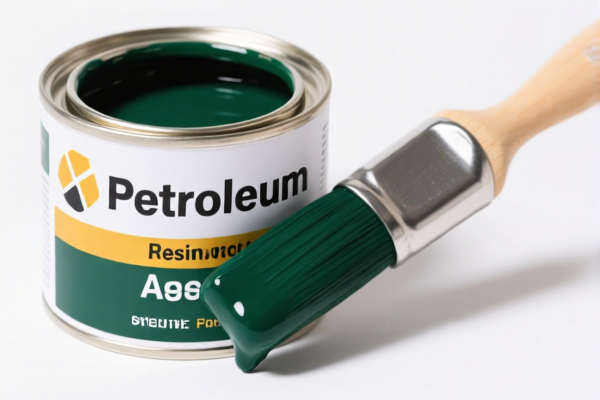
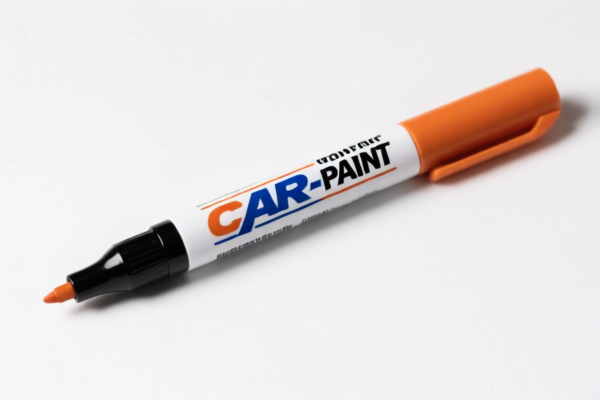
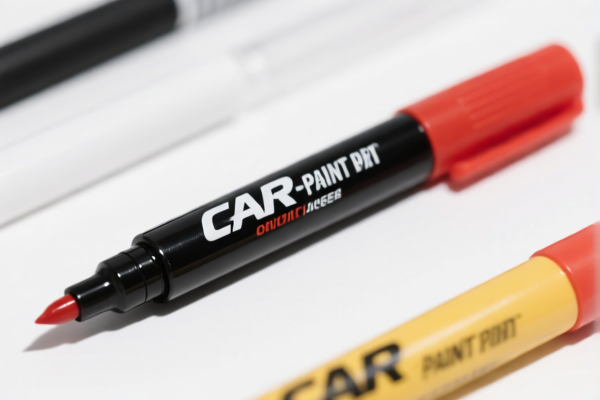
AI Analysis
🎨 Automotive Enamel Paint: HS Code Classification & 2026 Customs Clearance Strategy
🌐 HS Code Reference & Customs Guide | 2026 Latest Tariff Analysis | Professional Clearance Strategy
📌 一、Product Definition & Classification: What is "Automotive Enamel Paint"?
Automotive enamel paint refers to high-performance coatings used for automotive bodywork, offering durability, gloss, and weather resistance. In international trade, these are primarily classified under Chapter 32: Extracts, Tanning or Dyeing Extracts; Tannins and Their Derivatives; Dyes, Pigments and Other Coloring Matter; Preparations Based on Dyes or Coloring Matter; Inks and Writing or Drawing Inks and Paste.
Key components include: * Base Resin: Polyester, Acrylic, Vinyl, or other synthetic resins forming the film. * Medium: Solvent-based or water-based (acrylic/vinyl emulsions). * Application: Automotive refinishing, OEM finishing, or industrial automotive coatings.
⚠️ Key Distinction Point:
- Solvent-based coatings (e.g., polyester-based) → Typically fall under 3208.xx.xx
- Water-based or other medium coatings (e.g., acrylic/vinyl emulsions) → Typically fall under 3209.xx.xx
- Misclassification Risk: Confusing solvent-based vs. water-based can lead to significant duty differences due to the "Section 301" and "Section 122" tariffs applied differently in some contexts, though in this dataset, the structure is consistent.
📦 二、HS Code Classification Details (2026 Latest Tariff Authority Cross-Reference)
| HS Code | Product Description | Application Scenario | Base Tariff | Additional Tariffs | Total Tax Rate |
|---|---|---|---|---|---|
3208.10.00.00 |
Paints & varnishes based on polyester or other synthetic resins (Solvent-based) | Automotive enamel, polyester-based clear coats, high-gloss base coats | 3.7% | +25% (Sec 301), +10% (Sec 122) | 38.7% |
3208.20.00.00 |
Paints & varnishes based on acrylic or vinyl polymers (Solvent-based) | Acrylic enamel, vinyl-based automotive primers | 3.6% | +25% (Sec 301), +10% (Sec 122) | 38.6% |
3209.10.00.00 |
Paints & varnishes based on acrylic or vinyl polymers (Water-based/Other) | Waterborne acrylic automotive paints, eco-friendly enamels | 5.1% | +25% (Sec 301), +10% (Sec 122) | 40.1% |
3209.90.00.00 |
Paints & varnishes based on other resins, water-based or other medium | Other water-based automotive coatings, specialized media | 5.9% | +25% (Sec 301), +10% (Sec 122) | 40.9% |
🔍 Important Reminder:
- Solvent-based (3208) generally has a lower base duty (3.6%-3.7%) than Water-based (3209) (5.1%-5.9%).
- However, all four HS codes listed above are subject to the same additional tariffs: 25% (Section 301) and 10% (Section 122), resulting in high total effective rates.
- Do NOT confuse with3208.90or3209.90non-automotive specific codes unless the product clearly falls outside automotive use.
💰 三、2026 Latest Tariff Rate Breakdown (Including Surtaxes, Policy Surcharges)
✅ Applicable Country: United States (US)
✅ Country of Origin: China (CN)
✅ Effective Date: As per current Section 301 and 122 listings
🎯 1. 3208.10.00.00 – Polyester-Based Automotive Paints (Solvent)
| Item | Content |
|---|---|
| Base Tariff | 3.7% (ad valorem) |
| USITC Surtax | +25.0% (Section 301) |
| Section 122 Surtax | +10.0% (List 4A/122) |
| Total Effective Rate | 38.7% |
| Tax Calculation | CIF Value × 38.7% |
| De Minimis Eligibility | ❌ Not Eligible (High-risk category for low-value shipments) |
| Legal Authority Path | HTS:3208.10.00.00 → Section 301: Footnote 9903.88.01 → Section 122: 19 CFR 146 |
📌 Explanation:
- The 3.7% base duty is standard for polyester resins.
- The 25% Section 301 tariff is mandatory for Chinese-origin chemical preparations.
- The 10% Section 122 tariff applies to certain automotive-related chemicals.
- Total 38.7% is a significant cost factor. Must be factored into landed cost.
🎯 2. 3208.20.00.00 – Acrylic/Vinyl-Based Automotive Paints (Solvent)
| Item | Content |
|---|---|
| Base Tariff | 3.6% |
| USITC Surtax | +25.0% |
| Section 122 Surtax | +10.0% |
| Total Effective Rate | 38.6% |
| Tax Calculation | CIF Value × 38.6% |
| De Minimis Eligibility | ❌ Not Eligible |
| Legal Authority Path | HTS:3208.20.00.00 → Section 301 → Section 122 |
📌 Note:
- Slightly lower base duty than 3208.10 due to different resin classification.
- Same surcharges apply. Total rate is 38.6%, nearly identical to 3208.10.
🎯 3. 3209.10.00.00 – Acrylic/Vinyl-Based Automotive Paints (Water-Based)
| Item | Content |
|---|---|
| Base Tariff | 5.1% |
| USITC Surtax | +25.0% |
| Section 122 Surtax | +10.0% |
| Total Effective Rate | 40.1% |
| Tax Calculation | CIF Value × 40.1% |
| De Minimis Eligibility | ❌ Not Eligible |
| Legal Authority Path | HTS:3209.10.00.00 → Section 301 → Section 122 |
📌 Note:
- Water-based paints have a higher base duty (5.1%) due to different chemical processing classification.
- Total 40.1% is higher than solvent-based counterparts.
🎯 4. 3209.90.00.00 – Other Water-Based/Other Medium Automotive Paints
| Item | Content |
|---|---|
| Base Tariff | 5.9% |
| USITC Surtax | +25.0% |
| Section 122 Surtax | +10.0% |
| Total Effective Rate | 40.9% |
| Tax Calculation | CIF Value × 40.9% |
| De Minimis Eligibility | ❌ Not Eligible |
| Legal Authority Path | HTS:3209.90.00.00 → Section 301 → Section 122 |
📌 Note:
- Highest base duty (5.9%) for "other" water-based coatings.
- Total 40.9% is the highest among the four HS codes.
🛠️ 四、Customs Clearance Practical Advice (Real-World Pitfall Guide)
✅ 1. Required Documentation Checklist (All Mandatory)
| Document | Required | Description |
|---|---|---|
| ✅ Product Specification Sheet | ✔️ | Must specify resin type (polyester, acrylic, vinyl), medium (solvent/water), and VOC content |
| ✅ MSDS (Material Safety Data Sheet) | ✔️ | Critical for chemical clearance; must match HS code classification |
| ✅ Commercial Invoice | ✔️ | Clearly state "Automotive Enamel Paint," HS Code, and CIF value |
| ✅ Bill of Lading/Air Waybill | ✔️ | Standard shipping documents |
| ✅ Certificate of Origin (CO) | ✔️ | To confirm Chinese origin (if applicable) |
| ✅ EPA/CPD Compliance Documents | ✔️ | Environmental compliance certificates may be required by CBP |
| ✅ Packing List | ✔️ | Detail quantity, net/gross weight, and packaging type |
✅ 2. Declaration Tips (Key Mnemonics)
🔥 “Resin Type Defines Code, Medium Determines Subsection, Always Declare VOC!”
| Scenario | Correct Declaration | Incorrect Practice |
|---|---|---|
| Polyester-based solvent paint | 3208.10.00.00 |
Misclassified as 3208.90 → Higher scrutiny |
| Acrylic-based solvent paint | 3208.20.00.00 |
Misclassified as 3209.10 → Wrong base duty |
| Water-based acrylic paint | 3209.10.00.00 |
Misclassified as 3208.20 → 40.1% vs 38.6% |
| Other water-based paint | 3209.90.00.00 |
Misclassified as 3209.10 → Wrong base duty |
✅ 3. Special Situation Handling
| Situation | Handling Advice |
|---|---|
| Mixed Shipments | Separate HS codes in declaration; do not consolidate different resin types under one code |
| OEM Custom Paints | Provide formulation sheet or chemical analysis to prove resin type |
| Small Quantity Samples | Even under $800, chemical imports are not eligible for de minimis if classified under these HS codes due to Section 301/122 |
| Re-export Claims | If re-exporting, ensure original import was correctly declared to avoid double taxation |
🌍 五、Global Market Comparison (2026 Latest)
| Country/Region | Recommended HS Code | Tariff (China Origin) | Certification | Remarks |
|---|---|---|---|---|
| 🇺🇸 USA | 3208.10/20.00/3209.10/90.00 |
38.6% - 40.9% | EPA, CPD | High tariffs; strict VOC compliance |
| 🇨🇳 China | 3208.10/20.00/3209.10/90.00 |
5% - 9% | GB/T | No additional surtaxes |
| 🇪🇺 EU | 3208.10/20.00/3209.10/90.00 |
4.5% - 6.5% | REACH, CLP | REACH registration required |
| 🇯🇵 Japan | 3208.10/20.00/3209.10/90.00 |
5.5% - 8.0% | JIS | VOC limits apply |
📌 Conclusion:
- USA has the highest effective tariff due to Section 301 and 122 surcharges.
- VOC content is critical for EPA compliance in the US; non-compliant paints will be rejected.
- Consider alternative sourcing (e.g., Southeast Asia) if tariff burden is unsustainable.
📌 六、Common Errors & Pitfalls (Lessons Learned)
❌ Error 1: Declaring "Automotive Paint" without specifying resin type or medium
👉 Consequence: CBP will classify under "Other," leading to 40.9% rate and delays.
❌ Error 2: Using "3208.90" for acrylic-based paints
👉 Consequence: Incorrect classification → Potential penalties, audit, or reassessment.
❌ Error 3: Ignoring VOC content in declaration
👉 Consequence: EPA non-compliance → Seizure or return of goods.
❌ Error 4: Assuming de minimis applies to chemical shipments
👉 Consequence: Small shipments still subject to full tariffs and inspections.
✅ Correct Approach:
“Automotive Enamel Paint, Acrylic-Based, Solvent Medium, VOC < 420g/L, EPA Compliant, HS 3208.20.00.00”
🎯 七、Conclusion: Precise Classification Saves Costs!
🎯 Remember the Key Points:
🔹 “Resin + Medium = HS Code”
🔹 “Polyester/Acrylic + Solvent = 3208.xx”
🔹 “Acrylic/Vinyl + Water = 3209.xx”
🔹 “Total Tariff ≈ 38.6% - 40.9%”
🔹 “VOC Compliance is Mandatory for USA”
📌 Pro Tip:
If your automotive paint is originating from Vietnam, Mexico, or Thailand, you may be eligible for IEEPA exemptions or lower tariffs.
Apply for an Advance Ruling before shipping to avoid clearance surprises.
📣 Immediate Action:
📞 Contact a licensed customs broker + Provide MSDS + Apply for HS Code Advance Ruling
🚀 Ensure smooth customs clearance, avoid penalties, and optimize landed costs.
✨ Professional clearance starts with accurate classification!
💼 Every percentage point of duty matters in your profit margin!
Customer Reviews
About HS Code Classification
The Harmonized System (HS) is an internationally standardized nomenclature developed by the World Customs Organization (WCO) to classify traded products. Over 200 countries use the HS system as the basis for customs tariffs, trade statistics, and import/export regulations.
Each HS code follows a hierarchical structure:
- Chapter (2 digits) — Broad category of goods (e.g., Chapter 84: Machinery and Mechanical Appliances)
- Heading (4 digits) — More specific grouping within the chapter
- Subheading (6 digits) — Internationally standardized breakdown, used by all WCO member countries
- National subdivisions (8-10 digits) — Country-specific extensions for further classification, such as US HTSUS 10-digit codes
Correct HS code classification is essential for smooth customs clearance, accurate duty payment, and compliance with trade regulations. Misclassification can lead to customs delays, overpayment of duties, or penalties.
When importing from CN to US, the applicable tariff rates may include:
- Most-Favored-Nation (MFN) rate — The standard duty rate applied to WTO members
- General rate — Applied to countries without trade agreements
- Trade remedy duties — Additional tariffs such as Section 301 (anti-dumping), Section 232 (national security), or countervailing duties
The information provided on this page is for reference purposes only. For official classification, please consult with your local customs authority or a licensed customs broker.