Automotive Interior Boot Surface Leather
CN → US| HS Code | Tariff Rate | Origin | Destination | Doc |
|---|---|---|---|---|
| 4114207000 | 36.6% | CN | US | Official Doc |
| 4114100000 | 38.2% | CN | US | Official Doc |
| 3921131100 | 39.2% | CN | US | Official Doc |
| 3921131500 | 41.5% | CN | US | Official Doc |
Product Images
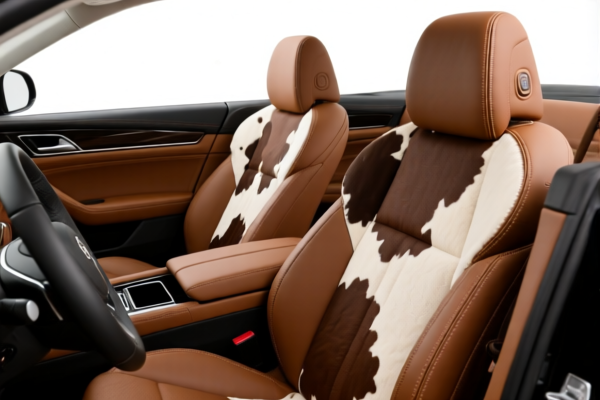
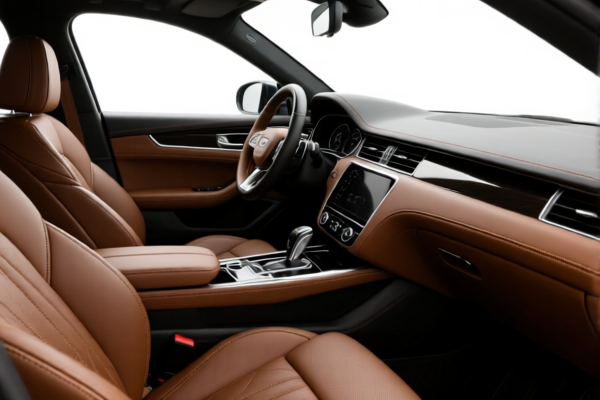
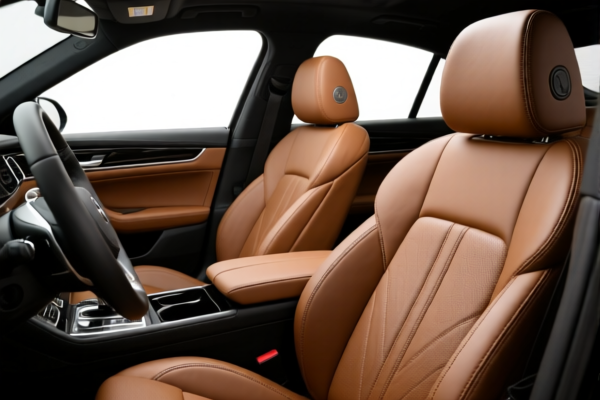
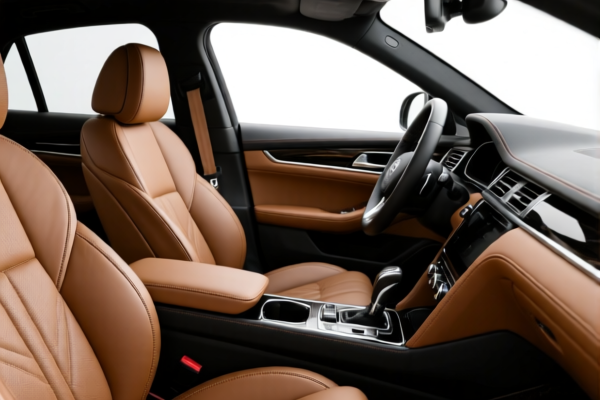
AI Analysis
🚗 Automotive Interior Boot Surface Leather
🌐 HS Code Reference & Customs Clearance Guide | 2026 Latest Tariff Analysis | Professional-Level Compliance Strategy
📌 I. Product Definition & Classification: Do You Really Understand "Boot Surface Leather"?
Automotive interior boot surface leather refers to the high-quality leather panels used to cover the cargo area (trunk/boot) of vehicles. It serves both aesthetic and protective functions. In international trade, this product is primarily classified under Chapter 41 (Leather), specifically focusing on processed leather types such as patent leather or metallized leather, rather than raw hides.
Key Distinctions: * Patent/Laminated Leather: Often used for durability, water resistance, and a glossy finish in premium SUVs and luxury vehicles. * Metallized Leather: Used for high-end decorative accents or specific reflective properties. * Chamois Leather: Softer, suede-like leather, less common for boot surfaces but possible for soft liners.
⚠️ Critical Classification Point:
- If the leather is treated to have a patent finish or is laminated with another material → 4114.20
- If it is standard chamois (suede) used for lining → 4114.10
- Do NOT confuse with "parts of vehicles" (Chapter 87). Unless it is a pre-cut, molded seat cover with integrated airbag sensors, plain leather sheets for interior surfacing are classified as Leather.
📦 II. HS Code Classification Details (2026 Latest Tariff Concordance)
Based on the provided dataset, here are the precise HS Codes for "Automotive Interior Boot Surface Leather":
| HS Code | Product Description | Applicable Scenario | Key Characteristics |
|---|---|---|---|
4114.20.70.00 |
Patent Laminated Leather; Metallized Leather: Other | Premium SUV boots, luxury sedan trunks | High durability, water-resistant, glossy or metallic finish |
4114.10.00.00 |
Chamois (Including Combination Chamois) Leather | Soft boot liners, protective covers | Suede-like texture, soft, non-reflective |
🔍 Important Note:
- The dataset does not include codes for "Cellular Polyurethane" (e.g.,3921.13...) because those are plastic-based, not leather. If your product is synthetic leather (PU/PVC), it must be classified under Chapter 39, not Chapter 41.
- Pure Leather Products Only: The codes below apply only if the material is genuine animal hide processed into patent, laminated, or chamois leather.
💰 III. 2026 Latest Tariff Rate Breakdown (Including Additional Taxes & Policy Add-ons)
✅ Applicable Country: United States (US)
✅ Origin: China (CN)
✅ Effective Date: 2025-11-10 onwards (including subsequent imports)
🎯 1. 4114.20.70.00 —— Patent Laminated Leather; Metallized Leather
| Item | Content |
|---|---|
| Base Tariff Rate | 0.0% (ad valorem) |
| Section 301 Additional Tariff | 0.0% |
| IEEPA Additional Tariff | 0.0% |
| Total Tariff Rate | 0.0% |
| Tax Calculation | CIF Value × 0% = $0 |
| De Minimis Eligibility | ✅ Yes (if value < $800, under current thresholds) |
| Legal Basis Path | USITC:4114.20.70.00 → Footnote: N/A (No Section 301/IEEPA) |
📌 Explanation:
- This specific subtype of patent/metallic leather enjoys zero tariffs.
- It is not subject to the 25% Section 301 tariff or the 10% IEEPA tariff on many other leather goods.
- Cost Advantage: This is a highly competitive classification for importers.
🎯 2. 4114.10.00.00 —— Chamois Leather
| Item | Content |
|---|---|
| Base Tariff Rate | 0.0% (ad valorem) |
| Section 301 Additional Tariff | 0.0% |
| IEEPA Additional Tariff | 0.0% |
| Total Tariff Rate | 0.0% |
| Tax Calculation | CIF Value × 0% = $0 |
| De Minimis Eligibility | ✅ Yes (if value < $800) |
| Legal Basis Path | USITC:4114.10.00.00 → Footnote: N/A (No Section 301/IEEPA) |
📌 Explanation:
- Chamois leather is also duty-free for Chinese origins.
- Suitable for soft, non-reflective boot liners.
🛠️ IV. Customs Clearance Practical Advice (Real-World Pitfall Guide)
✅ 1. Required Documentation Checklist (Non-negotiable)
| Document | Mandatory? | Description |
|---|---|---|
| ✅ Product Specification Sheet | ✔️ | Must specify: Material (Leather vs. Synthetic), Finish (Patent/Metallic/Chamois), Thickness, Width, Length |
| ✅ Material Composition Statement | ✔️ | Crucial: Confirm it is Genuine Leather. If it is PU/PVC, it must be classified under Chapter 39 (e.g., 3921.13...), which may have different tariffs! |
| ✅ Product Photos (Clear) | ✔️ | Show surface texture, edges, and any logos/branding. For "metallic" or "patent" types, reflectivity must be visible. |
| ✅ Commercial Invoice | ✔️ | Must describe as "Automotive Interior Boot Surface Leather, Patent/Chamois Finish" |
| ✅ Packing List | ✔️ | List quantity, weight, and dimensions. Ensure no mixed shipments with plastic films. |
| ✅ Origin Certificate (CO) | ✔️ | To prove origin from China for tariff application |
✅ 2. Declaration Tips (Key Mnemonic)
🔥 “Leather Not Plastic, Patent/Chamois Clear, Chapter 41 is Key, Don’t Confuse with Films!”
| Situation | Correct Declaration | Incorrect Practice |
|---|---|---|
| Genuine Leather (Patent/Metallic) | 4114.20.70.00 |
Misdeclare as 3921.13 (Plastic) → Audit Risk |
| Genuine Leather (Chamois) | 4114.10.00.00 |
Misdeclare as 4104 (Chrome Tanned) → Wrong Rate |
| Synthetic Leather (PU/PVC) | 3921.13.11.00 or 3921.13.15.00 |
Declare as Leather → Misclassification Penalty |
| Mixed Material (Leather + Textile) | Check textile weight > 70% → May go to 3921.13.11.00 |
Ignore textile component |
✅ 3. Special Case Handling
| Situation | Handling Advice |
|---|---|
| Synthetic Leather (PU/PVC) | If your "boot surface leather" is actually polyurethane-based, it falls under HS Code 3921.13. Note: 3921.13.11.00 has a 29.2% total tax (4.2% Base + 25% Section 301), while 3921.13.15.00 is 0%. Classification depends on textile content. |
| Pre-cut/Molded Parts | If the leather is pre-cut with adhesives and designed specifically for a car model’s boot, consider if it qualifies as a "part of a vehicle" (Chapter 87). However, plain sheets/panels are usually Chapter 41. |
| Textile-Combined Products | If the leather is combined with textile backing and man-made fibers >70% by weight, it may fall under 3921.13.11.00 (29.2% tax) or 3921.13.15.00 (0% tax). Verify composition! |
🌍 V. Global Main Market Customs Comparison (2026 Latest)
| Country/Region | Recommended HS Code | Tariff | Certification Requirements | Notes |
|---|---|---|---|---|
| 🇺🇸 United States | 4114.20.70.00 / 4114.10.00.00 |
0% | None (for leather) | Zero duty advantage |
| 🇨🇳 China | 4114.20.70.00 |
~5-10% | None | Export market focus |
| 🇪🇺 European Union | 4114.20.70.00 |
0-4% | REACH Compliance | Low tariff |
| 🇬🇧 United Kingdom | 4114.20.70.00 |
0-4% | UK REACH | Post-Brexit rules |
| 🇯🇵 Japan | 4114.20.70.00 |
0% | JIS Standards | Zero duty |
📌 Conclusion:
- US Importers Benefit: Zero tariffs on patent and chamois leather from China.
- Synthetic Alternatives Risk: If you mistakenly declare synthetic leather as genuine, or misclassify under3921.13.11.00, you face 29.2% in duties. Accuracy is critical!
📌 VI. Common Mistakes & Pitfall Guide (Lessons Learned)
❌ Mistake 1: Declaring Synthetic Leather (PU) as Genuine Leather
👉 Consequence: Misclassification → Customs audit, fines, or forced reclassification to 3921.13.11.00 with 29.2% tariff.
❌ Mistake 2: Ignoring Textile Backing in Composite Materials
👉 Consequence: If textile fibers >70% by weight, the product may be classified as 3921.13.11.00 (29.2% tax) instead of leather. Check composition!
❌ Mistake 3: Using Generic Descriptions Like "Car Leather"
👉 Consequence: Vague descriptions → Customs delay, possible detention, or assignment of highest applicable duty.
✅ Correct Practice:
"Automotive Interior Boot Surface Leather, Patent Finish, Genuine Cowhide, Unspecified Dimensions, HS Code 4114.20.70.00"
🎯 VII. Conclusion: Professional Declaration, Cost Savings, Efficiency!
🎯 Remember Mnemonic:
🔹 "Genuine Leather = 0% Duty, Synthetic Leather = Risk of 29.2%, Declare Clearly, Avoid Fines!"
🔹 "Patent/Metallic/Chamois = Chapter 41, PU/PVC = Chapter 39, Know the Difference!"
📌 Pro Tip:
If your product is synthetic leather but you want to achieve 0% tariff, explore if it qualifies under
3921.13.15.00(Other Cellular PU, 0% tax) rather than3921.13.11.00(29.2% tax). Material composition and textile content are key.
📣 Immediate Action:
📞 Contact Professional Customs Broker + Provide Material Composition Report + Apply for Advance Ruling if unsure between Chapter 39 and 41
🚀 Ensure your Automotive Interior Boot Surface Leather clears customs smoothly, efficiently, and cost-effectively!
✨ Professional Clearance Starts with Accurate Classification!
💼 Every Cent of Cost Deserves Precise Calculation!
Customer Reviews
About HS Code Classification
The Harmonized System (HS) is an internationally standardized nomenclature developed by the World Customs Organization (WCO) to classify traded products. Over 200 countries use the HS system as the basis for customs tariffs, trade statistics, and import/export regulations.
Each HS code follows a hierarchical structure:
- Chapter (2 digits) — Broad category of goods (e.g., Chapter 84: Machinery and Mechanical Appliances)
- Heading (4 digits) — More specific grouping within the chapter
- Subheading (6 digits) — Internationally standardized breakdown, used by all WCO member countries
- National subdivisions (8-10 digits) — Country-specific extensions for further classification, such as US HTSUS 10-digit codes
Correct HS code classification is essential for smooth customs clearance, accurate duty payment, and compliance with trade regulations. Misclassification can lead to customs delays, overpayment of duties, or penalties.
When importing from CN to US, the applicable tariff rates may include:
- Most-Favored-Nation (MFN) rate — The standard duty rate applied to WTO members
- General rate — Applied to countries without trade agreements
- Trade remedy duties — Additional tariffs such as Section 301 (anti-dumping), Section 232 (national security), or countervailing duties
The information provided on this page is for reference purposes only. For official classification, please consult with your local customs authority or a licensed customs broker.