Automotive Interior Buffalo Split Leather
CN → US| HS Code | Tariff Rate | Origin | Destination | Doc |
|---|---|---|---|---|
| 9401806030 | 35.0% | CN | US | Official Doc |
| 4205008000 | 35.0% | CN | US | Official Doc |
| 4205001000 | 35.0% | CN | US | Official Doc |
| 4107915000 | 12.8% | CN | US | Official Doc |
Product Images
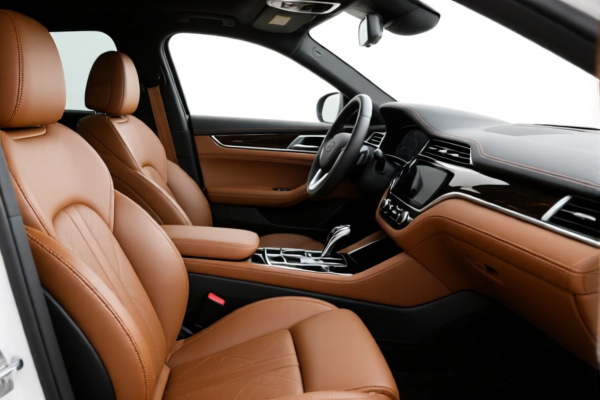
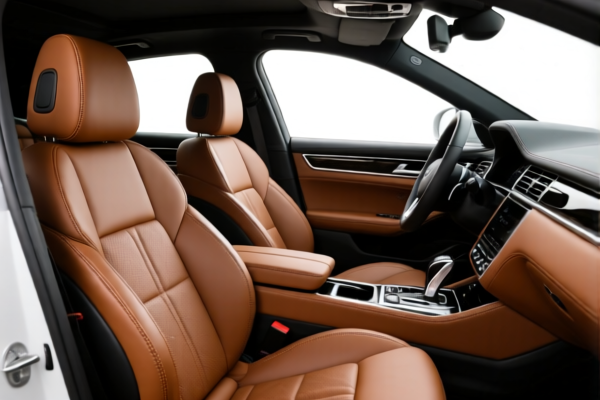
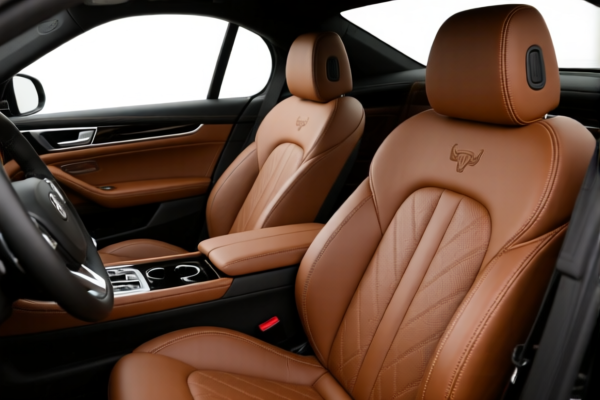
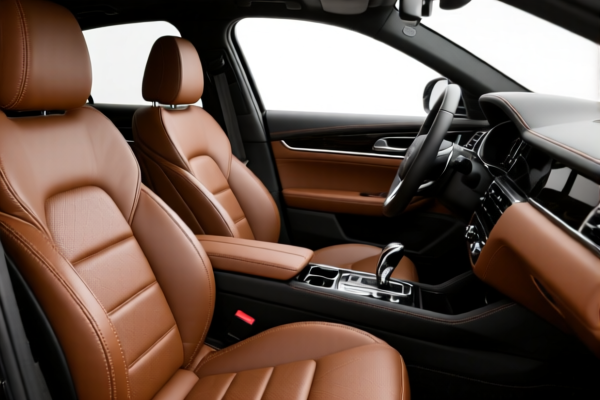
AI Analysis
🚤 Automotive & Yachting Interior: Buffalo & Horse Split Leather (Yacht Upholstery)
🌐 HS Code Reference & Customs Clearance Guide | 2026 Latest Tariff Analysis | Professional Clearance Strategy
📌 One, Product Definition & Classification: What Exactly is "Yacht Interior Leather"?
Buffalo and Horse Split Leather for Yacht Interiors represents a niche but high-value segment of automotive and marine upholstery. In international trade, the classification hinges on two critical factors:
1. Material State: Is it a raw material (leather) or a manufactured good (upholstery/trim)?
2. End Use: Is it specifically designed for seating (chairs) or general interior decoration?
⚠️ Key Distinction Point:
- If the product is specifically shaped/molded for seats and constitutes a seat component → Falls under Chapter 94 (Furniture/Seats).
- If the product is general-purpose leather sheets/pieces used for various interior trims (walls, decks, non-seat accents) → Falls under Chapter 42 (Articles of Leather).
- If the product is raw/processed leather intended for further manufacturing → Falls under Chapter 41 (Raw/Hide).
📦 Two, HS Code Classification Details (2026 Latest Tariff Authority Comparison)
| HS Code | Product Description | Applicability Scenario | Key Matching Logic |
|---|---|---|---|
9401.80.60.30 |
Other Seats & Parts (Yacht Interior Upholstery) | Specific seat components, shaped upholstery matching "Other Seats" material compatibility. | Functional: Treated as a seat component/accessory. Matches material compatibility for "Other Seats". |
4205.00.80.00 |
Other Articles of Leather (General Trim) | General interior leather goods, trim pieces, accessories not specifically seats. | Material: Explicitly contains "Leather". Fits the catch-all category for "Other Leather Articles" with no material conflict. |
4205.00.10.00 |
Other Articles of Leather (Specific Sub-category) | Non-specific purpose leather goods for yacht interiors (not seat-specific). | Material & Use: Matches "Leather Articles" material requirement; usage is general interior, not specific seat. |
4107.91.50.00 |
Other Tanned Leather (Raw/Processing Stage) | Full-grain or split leather intended for upholstery manufacturing (not yet formed into final goods). | Material & Form: Matches "Upholstery Leather" characteristics (Buffalo/Horse hide). |
🔍 Focus Reminder:
- If the leather is pre-formed for seats or tightly integrated as a seat part → Prioritize9401.80.60.30.
- If the leather is general trim/decor → Prioritize4205.00.80.00or4205.00.10.00.
- If the leather is raw/hides for further processing → Use4107.91.50.00.
💰 Three, 2026 Latest Tariff Rate Breakdown (Including Additional Duties & Policy Surcharges)
✅ Applicable Country: USA (US)
✅ Country of Origin: China (CN)
✅ Effective Date: November 10, 2025 (Including subsequent imports)
🎯 1. 9401.80.60.30 —— Yacht Interior Seat Components
| Item | Content |
|---|---|
| Base Tariff | 0% (ad valorem) |
| USITC Additional Duty | +25% (Under USITC Footnote provisions, Section 301) |
| IEEPA Additional Duty | +10% (Targeting China/HK products, effective Nov 10, 2025) |
| Total Tariff Rate | 35.0% |
| Tax Calculation | CIF Value × 35% |
| De Minimis Exemption | ❌ Not Eligible (deny_de_minimis) |
| Legal Basis Path | IEEPA:9903.01.25 → IEEPA:9903.01.24 → USITC:9401.80.60.30 → FOOTNOTE:9903.88.01 |
📌 Explanation:
- This classification treats the item as a "Seat" accessory.
- The 25% is the standard Section 301 retaliatory tariff.
- The 10% is the new IEEPA surcharge for Chinese-origin goods.
- Total 35% is significant. Misclassification as raw leather could lead to audits.
🎯 2. 4205.00.80.00 —— Other Leather Articles (General Interior Trim)
| Item | Content |
|---|---|
| Base Tariff | 0% |
| USITC Additional Duty | +25% |
| IEEPA Additional Duty | +10% |
| Total Tariff Rate | 35.0% |
| Tax Calculation | CIF Value × 35% |
| De Minimis Exemption | ❌ Not Eligible |
| Legal Basis Path | IEEPA:9903.01.25 → IEEPA:9903.01.24 → USITC:4205.00.80.00 → FOOTNOTE:9903.88.01 |
📌 Note:
- Despite being "Other Articles of Leather," the Section 301 and IEEPA surcharges still apply fully.
- The "Leather" designation does not exempt it from high-profile retaliatory tariffs.
- Risk: Customs may scrutinize whether it truly fits "Other" vs. "Upholstery" vs. "Seat."
🎯 3. 4205.00.10.00 —— Other Leather Articles (Specific Sub-category)
| Item | Content |
|---|---|
| Base Tariff | 0% |
| USITC Additional Duty | +25% |
| IEEPA Additional Duty | +10% |
| Total Tariff Rate | 35.0% |
| Tax Calculation | CIF Value × 35% |
| De Minimis Exemption | ❌ Not Eligible |
| Legal Basis Path | IEEPA:9903.01.25 → IEEPA:9903.01.24 → USITC:4205.00.10.00 → FOOTNOTE:9903.88.01 |
📌 Note:
- Similar to4205.00.80.00, but a more specific sub-category for leather goods.
- Tariff burden remains 35%. No advantage in tax rate over the general "Other" category.
🎯 4. 4107.91.50.00 —— Tanned Leather (Raw/Processing Stage)
| Item | Content |
|---|---|
| Base Tariff | 2.8% |
| USITC Additional Duty | +0.0% (Note: Specific footnote may waive Section 301 for certain raw hides, but check latest updates) |
| IEEPA Additional Duty | +10% |
| Total Tariff Rate | 12.8% |
| Tax Calculation | CIF Value × 12.8% |
| De Minimis Exemption | ❌ Not Eligible |
| Legal Basis Path | IEEPA:9903.01.24 → USITC:4107.91.50.00 → FOOTNOTE:9903.88.01 (Check specific footnote exemptions for raw materials) |
📌 Critical Analysis:
- Significant Savings: Only 12.8% total tax vs. 35% for finished goods.
- High Compliance Risk: This code is for raw/processed leather, not finished interior parts.
- Danger: If you ship finished seat covers or trim pieces, customs will reclassify to Chapter 94 or 42, leading to back taxes + penalties.
- Use Case: Only for uncut hides or leather rolls intended for further manufacturing.
🛠️ Four, Customs Clearance Practical Advice (Combat-Ready Pitfall Avoidance Guide)
✅ 1. Preparation Checklist (Missing Documents = Delays)
| Document | Required | Explanation |
|---|---|---|
| ✅ Product Specification Sheet | ✔️ | Must detail material (Buffalo/Horse Split), dimensions, thickness, and end-use (Yacht Interior). |
| ✅ Technical Drawings/Photos | ✔️ | Clearly show if it is a finished part (shaped) or raw material (rolls/sheets). |
| ✅ Commercial Invoice | ✔️ | Describe as "Yacht Interior Trim Leather" or "Buffalo Split Leather for Upholstery." Avoid vague terms. |
| ✅ Origin Certificate | ✔️ | Crucial for determining IEEPA applicability. |
| ✅ Manufacturing Process Description | ✔️ | Explain if the leather is tanned, split, and finished. |
✅ 2. Declaration Tips (Key Mantra)
🔥 “Finished Goods Pay 35%, Raw Materials Pay 12.8% – Be Honest or Pay Twice!”
| Scenario | Correct Declaration | Wrong Action | Consequence |
|---|---|---|---|
| Pre-shaped seat covers | 9401.80.60.30 |
Misdeclare as 4107.91.50.00 |
Heavy Penalty: Back taxes + Fraud Investigation |
| Leather rolls for yacht trim | 4205.00.80.00 |
Misdeclare as 4107.91.50.00 |
Reclassification: Up to 35% + Fees |
| Raw Tanned Hides | 4107.91.50.00 |
Misdeclare as 4205.00.80.00 |
Overpayment: Pay 35% instead of 12.8% |
| Mixed Shipment (Parts + Raw) | Split Declaration | Bundle together | Confusion: Entire shipment held for audit |
✅ 3. Special Cases Handling
| Situation | Advice |
|---|---|
| OEM Custom Yacht Parts | Provide OEM drawings. If custom-molded for a specific seat, lean towards 9401.80.60.30. |
| Leather with Fabric Backing | If the fabric is dominant, classification may shift to textiles. If leather is surface-deciding, stay in Chapter 42/94. |
| "Upholstery" vs. "Interior" | "Upholstery" often implies seats (9401). "Interior Trim" (walls, ceilings) may fit 4205. Be precise. |
| Origin Denial | If using Chinese leather for US assembly, ensure the IEEPA 10% is accounted for in costing. |
🌍 Five, Global Market Clearance Comparison (2026 Latest)
| Country/Region | Recommended HS Code | Tariff (China Origin) | Certification | Notes |
|---|---|---|---|---|
| 🇺🇸 USA | 4205.00.80.00 / 9401.80.60.30 |
35% | None specific | High Tax Zone: IEEPA + Section 301 apply. |
| 🇨🇳 China | 4205.00.80.00 |
~5-10% | None | Lower import duties for processing. |
| 🇪🇺 EU | 4205.00.80.00 |
~0-6% | REACH (Chemical Compliance) | No Section 301/IEEPA. Much lower risk. |
| 🇬🇧 UK | 4205.00.80.00 |
~0-6% | UKCA | Post-Brexit rules similar to EU but independent. |
| 🇦🇺 Australia | 4205.00.80.00 |
~5% | None | Competitive rate, no US-style surcharges. |
📌 Conclusion:
- USA is the most expensive market for Chinese-origin leather goods due to political tariffs.
- EU/UK are safer for volume, provided REACH chemical compliance is met.
- Strategy: If shipping to USA, ensure precise classification to avoid fraud allegations. If shipping to EU, ensure chemical compliance.
📌 Six, Common Errors & Pitfall Guide (Lessons Learned)
❌ Error 1: Shipping finished seat cushions as "Raw Leather" (4107.91.50.00)
👉 Result: Customs seizure, back taxes at 35%, plus storage fees. Cost: 22.2% difference + penalties.
❌ Error 2: Calling it "Yacht Part" without specifying material
👉 Result: Customs default to highest duty rate or hold for detailed inspection. Delay: 2-4 weeks.
❌ Error 3: Ignoring IEEPA 10% on raw materials
👉 Result: Budgeting error. Raw leather is 12.8%, not 2.8%. Profit Margin Erosion.
✅ Correct Approach:
"Buffalo Split Leather, Tanned, Cut to Shape for Yacht Seat Upholstery, Model Y-200, Made in China"
🎯 Seven, Conclusion: Precision Classification Saves Cost!
🎯 Remember the Mantra:
🔹 "Finished Parts = 35%, Raw Hides = 12.8% – Choose Wisely!"
🔹 "Chapter 94 is for Seats, Chapter 42 is for Trims, Chapter 41 is for Raw!"
📌 Pro Tip:
If your leather is finished but you suspect ambiguity, consider Advance Ruling from US Customs (CBP). It provides legal certainty.
For raw leather, ensure the tanning process complies with environmental standards to avoid Chapter 41 rejections.
📣 Immediate Action:
📞 Contact a licensed Customs Broker + Provide Product Images + File CBP Advance Ruling
🚀 Secure your margin, avoid audits, and keep your yachts sailing smoothly!
✨ Professional Clearance Starts with Accurate Classification!
💼 Every percentage point of tariff matters in the marine industry!
Customer Reviews
About HS Code Classification
The Harmonized System (HS) is an internationally standardized nomenclature developed by the World Customs Organization (WCO) to classify traded products. Over 200 countries use the HS system as the basis for customs tariffs, trade statistics, and import/export regulations.
Each HS code follows a hierarchical structure:
- Chapter (2 digits) — Broad category of goods (e.g., Chapter 84: Machinery and Mechanical Appliances)
- Heading (4 digits) — More specific grouping within the chapter
- Subheading (6 digits) — Internationally standardized breakdown, used by all WCO member countries
- National subdivisions (8-10 digits) — Country-specific extensions for further classification, such as US HTSUS 10-digit codes
Correct HS code classification is essential for smooth customs clearance, accurate duty payment, and compliance with trade regulations. Misclassification can lead to customs delays, overpayment of duties, or penalties.
When importing from CN to US, the applicable tariff rates may include:
- Most-Favored-Nation (MFN) rate — The standard duty rate applied to WTO members
- General rate — Applied to countries without trade agreements
- Trade remedy duties — Additional tariffs such as Section 301 (anti-dumping), Section 232 (national security), or countervailing duties
The information provided on this page is for reference purposes only. For official classification, please consult with your local customs authority or a licensed customs broker.