Automotive PBT Resin
CN → US| HS Code | Tariff Rate | Origin | Destination | Doc |
|---|---|---|---|---|
| 3907995050 | 41.5% | CN | US | Official Doc |
| 3907995010 | 41.5% | CN | US | Official Doc |
| 3907995050 | 41.5% | CN | US | Official Doc |
| 3907995010 | 41.5% | CN | US | Official Doc |
| 3907995050 | 41.5% | CN | US | Official Doc |
Product Images
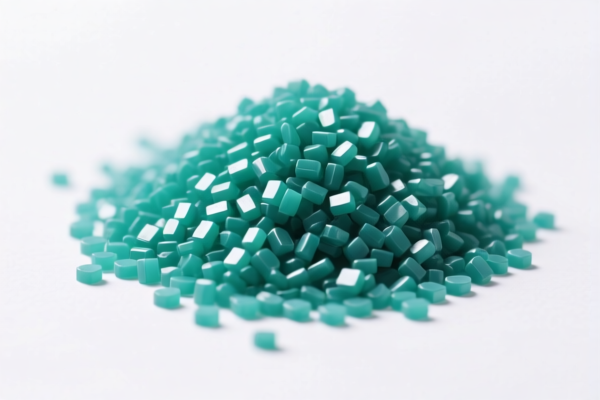
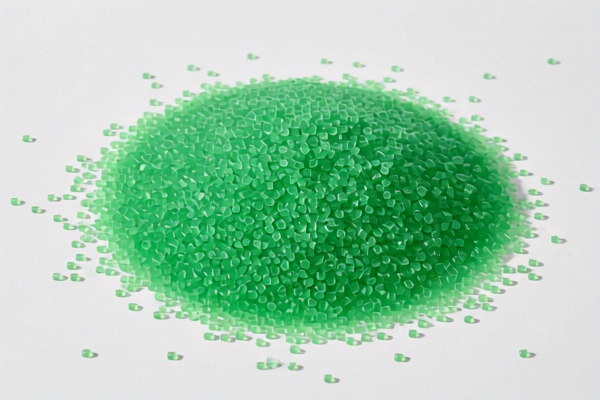
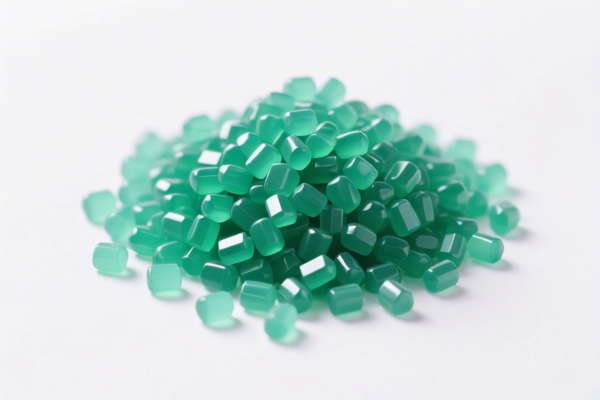
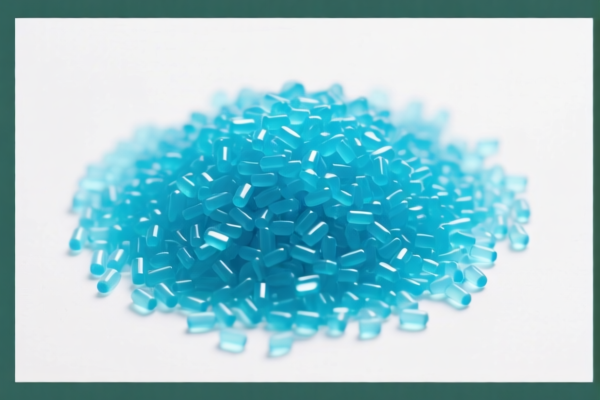
AI Analysis
🚗 Automotive PBT Resin (Polybutylene Terephthalate)
🌐 HS Code Reference & Customs Clearance Guide | 2026 Latest Tariff Analysis | Professional Clearance Strategy
📌 I. Product Definition & Classification: Do You Really Understand "PBT Resin"?
PBT Resin is a semi-crystalline thermoplastic polyester renowned for its high impact resistance, chemical stability, and dimensional stability. In international trade, it is primarily classified under Chapter 39 (Plastics and Articles Thereof), specifically as Primary Forms of polyesters.
Key Distinctions in Classification: * Polyester Category (3907.99.50.50): Covers PBT resins classified broadly under other polyesters, often used for general automotive components or mixed polyester applications. * Specific PBT Category (3907.99.50.10): Specifically targets PBT (Polybutylene Terephthalate) in primary form, aligning with designated material categories for precise regulatory tracking.
⚠️ Key Classification Point:
- Both codes refer to Primary Forms (granules, pellets, powders), not finished automotive parts.
- If the product is a finished part (e.g., a molded connector or bumper), it may fall under Chapter 87 (Vehicles), but the provided data strictly covers resin/raw material.
- The HS codes 3907.99.50.10 and 3907.99.50.50 are the correct entries for raw PBT resin inputs.
📦 II. HS Code Classification Details (2026 Latest Tariff Authority Comparison)
| HS Code | Product Description | Applicable Scenario | Material Specifics |
|---|---|---|---|
3907.99.50.10 |
PBT Resin (Polybutylene Terephthalate) in primary form | High-purity PBT raw materials, specified material category | ✅ Specific to PBT |
3907.99.50.50 |
PBT Resin, Automotive Use, Polyester Category | Automotive-specific PBT, broader polyester classification | ✅ Polyester Family |
🔍 Important Note:
- Both codes apply to primary forms (raw resin).
- 3907.99.50.10 is more specific to PBT as a distinct chemical entity.
- 3907.99.50.50 is used for PBT classified under the broader "other polyester" category, often with automotive application context.
- No finished parts are included in these codes.
💰 III. 2026 Latest Tariff Rate Breakdown (Including Additional Taxes & Policy Surcharges)
✅ Applicable Country: United States (US)
✅ Origin: China (CN)
✅ Effective Time: Current rates as per 2025/2026 trade policy
🎯 1. 3907.99.50.10 —— PBT Resin (Primary Form)
| Item | Content |
|---|---|
| Base Tariff | 6.5% (ad valorem) |
| Section 301 Surcharge | +25.0% |
| Section 122 Surcharge | +10.0% |
| Total Tariff Rate | 41.5% |
| Tax Calculation | CIF Value × 41.5% |
| De Minimis Exemption | ❌ Not Available (deny_de_minimis) |
| Legal Path | Base: 6.5% → Sec 301: 25% → Sec 122: 10% |
📌 Explanation:
- Base Tariff (6.5%): Standard Most Favored Nation (MFN) rate for plastics.
- Section 301 Surcharge (25%): Imposed under the US Trade Act of 1974, Section 301, targeting Chinese imports.
- Section 122 Surcharge (10%): Additional duty under Section 122 of the Trade Expansion Act of 1962, applicable to specific Chinese goods.
- Total 41.5%: This is a very high effective tariff, significantly impacting cost margins.
🎯 2. 3907.99.50.50 —— PBT Resin (Automotive/Polyester Category)
| Item | Content |
|---|---|
| Base Tariff | 6.5% (ad valorem) |
| Section 301 Surcharge | +25.0% |
| Section 122 Surcharge | +10.0% |
| Total Tariff Rate | 41.5% |
| Tax Calculation | CIF Value × 41.5% |
| De Minimis Exemption | ❌ Not Available (deny_de_minimis) |
| Legal Path | Base: 6.5% → Sec 301: 25% → Sec 122: 10% |
📌 Note:
- Tax structure is identical to3907.99.50.10.
- Both codes are subject to the same punitive tariff layers due to Chinese origin.
- No preferential treatment is available under current trade policies.
🛠️ IV. Customs Clearance Practical Advice (实战避坑指南)
✅ 1. Required Documentation Checklist (No Exceptions)
| Document | Mandatory | Description |
|---|---|---|
| ✅ Product Specification Sheet | ✔️ | Must detail: Molecular weight, melt flow index, additive content, color, grade. |
| ✅ Certificate of Analysis (COA) | ✔️ | From manufacturer confirming PBT composition and primary form status. |
| ✅ Commercial Invoice | ✔️ | Clearly state "PBT Resin (Polybutylene Terephthalate), Primary Form" + HS Code. |
| ✅ Packing List | ✔️ | Net/Gross weight, number of bags, pallets. |
| ✅ Bill of Lading/Air Waybill | ✔️ | Standard shipping document. |
| ✅ Fumigation Certificate | ✔️ | If packaging is wood, to prevent pest control delays. |
✅ 2. Declaration Tips (Critical Mnemonic)
🔥 "Primary Form Only, No Parts, 41.5% Hit!"
| Situation | Correct Declaration | Wrong Practice |
|---|---|---|
| PBT Resin Granules/Pellets | 3907.99.50.10 or 3907.99.50.50 |
Declare as "Automotive Part" → Wrong Chapter |
| Finished PBT Connector | Chapter 87 or 85 (Not in DATA) | Misdeclare as resin → Risk of Fraud/Seizure |
| Mixed Plastic Resin | Specify % of PBT vs. other polyesters | Vague description → Delay for Inspection |
| PBT Powder | 3907.99.50.10/.50 |
Declare as "Chemical" → Wrong Classification |
✅ 3. Special Cases Handling
| Situation | Handling Advice |
|---|---|
| OEM Custom Resin | Provide formulation sheet if additives exceed standard limits. |
| Recycled PBT | Must declare as "Recycled Plastic"; may have different HS code or additional environmental checks. |
| Fillers/Reinforcements | If >20% glass fiber, ensure classification still fits "Primary Form"; may trigger additional scrutiny. |
| Origin Marking | Clearly mark "Made in China" to avoid origin misdeclaration penalties. |
🌍 V. Global Main Market Clearance Comparison (2026 Latest)
| Country/Region | Recommended HS Code | Tariff Rate | Certification Requirements | Notes |
|---|---|---|---|---|
| 🇺🇸 USA | 3907.99.50.10 / .50 |
41.5% (China Origin) | None specific | High tariff due to Sec 301 & 122 |
| 🇨🇳 China | 3907.99.50 |
~6.5% | None | Lower domestic cost |
| 🇪🇺 EU | 3907.99.99 |
6.5% | REACH Compliance | No Section 301 equivalent |
| 🇯🇵 Japan | 3907.99.90 |
6.0% | None | Low base rate |
| 🇨🇦 Canada | 3907.99.90 |
6.5% | None | No major surcharges |
📌 Conclusion:
- USA imposes the highest burden on PBT resin from China due to multiple surcharges.
- EU and Asia offer significantly lower tariff entry points, but compliance (e.g., REACH) is key.
- For US-bound goods, cost optimization strategies (e.g., supply chain relocation, duty drawback programs) are critical.
📌 VI. Common Mistakes & Pitfalls (Blood Lessons)
❌ Mistake 1: Declaring finished automotive parts as "Resin"
👉 Consequence: False declaration → Seizure + Heavy Fines + Legal Action
❌ Mistake 2: Ignoring Section 122 Surcharge
👉 Consequence: Underpayment by 10% → Back Taxes + Interest + Penalties
❌ Mistake 3: Using vague descriptions like "Plastic Granules"
👉 Consequence: Customs inspection delay → Demurrage Costs + Storage Fees
❌ Mistake 4: Assuming De Minimis Exemption applies
👉 Consequence: Small shipments still taxed → Unexpected Costs
✅ Correct Approach:
"PBT Resin, Polybutylene Terephthalate, Primary Form, Pellets, Grade XYZ, Made in China, HS Code 3907.99.50.10"
🎯 VII. Conclusion: Professional Declaration, Save Costs, Ensure Compliance!
🎯 Remember Mnemonic:
🔹 "Primary Form, PBT Resin, 41.5% Hit!"
🔹 "No Parts, No Parts, HS 3907, Sec 301 & 122 Apply!"
📌 Pro Tip:
If your PBT resin is shipped from Vietnam, Mexico, or Malaysia, you may qualify for lower or zero tariffs under USMCA or ASEAN FTAs.
Recommendation: Apply for a Pre-Ruling (Advance Ruling) from US Customs (CBP) to confirm HS Code and tariff liability before shipment.
📣 Immediate Action:
📞 Contact a licensed customs broker + Provide Product Specs + Apply for CBP Pre-Ruling
🚀 Ensure your PBT resin clears customs smoothly, reduces costs, and avoids delays!
✨ Professional Clearance Starts with Accurate Classification!
💼 Every cent of cost deserves precise calculation!
Customer Reviews
About HS Code Classification
The Harmonized System (HS) is an internationally standardized nomenclature developed by the World Customs Organization (WCO) to classify traded products. Over 200 countries use the HS system as the basis for customs tariffs, trade statistics, and import/export regulations.
Each HS code follows a hierarchical structure:
- Chapter (2 digits) — Broad category of goods (e.g., Chapter 84: Machinery and Mechanical Appliances)
- Heading (4 digits) — More specific grouping within the chapter
- Subheading (6 digits) — Internationally standardized breakdown, used by all WCO member countries
- National subdivisions (8-10 digits) — Country-specific extensions for further classification, such as US HTSUS 10-digit codes
Correct HS code classification is essential for smooth customs clearance, accurate duty payment, and compliance with trade regulations. Misclassification can lead to customs delays, overpayment of duties, or penalties.
When importing from CN to US, the applicable tariff rates may include:
- Most-Favored-Nation (MFN) rate — The standard duty rate applied to WTO members
- General rate — Applied to countries without trade agreements
- Trade remedy duties — Additional tariffs such as Section 301 (anti-dumping), Section 232 (national security), or countervailing duties
The information provided on this page is for reference purposes only. For official classification, please consult with your local customs authority or a licensed customs broker.