Automotive Plastic Film
CN → US| HS Code | Tariff Rate | Origin | Destination | Doc |
|---|---|---|---|---|
| 3919905060 | 40.8% | CN | US | Official Doc |
| 3920992000 | 39.2% | CN | US | Official Doc |
| 3920620090 | 39.2% | CN | US | Official Doc |
| 5903902000 | 35.0% | CN | US | Official Doc |
Product Images
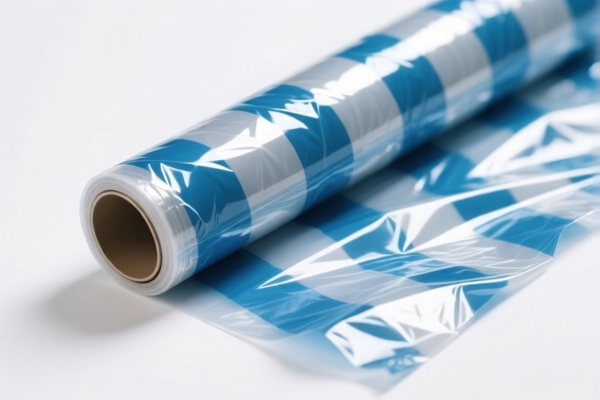
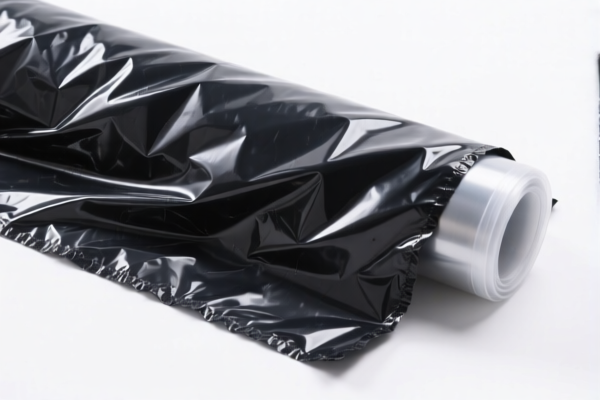
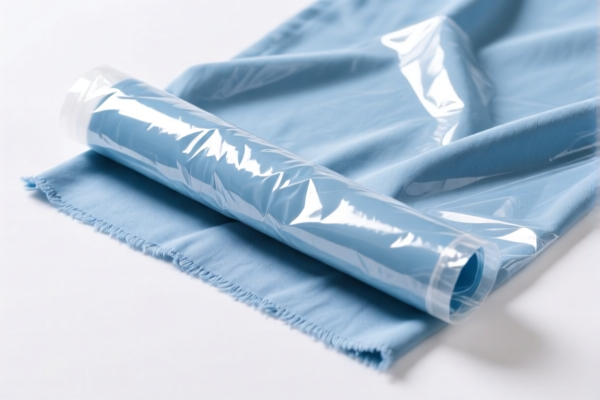
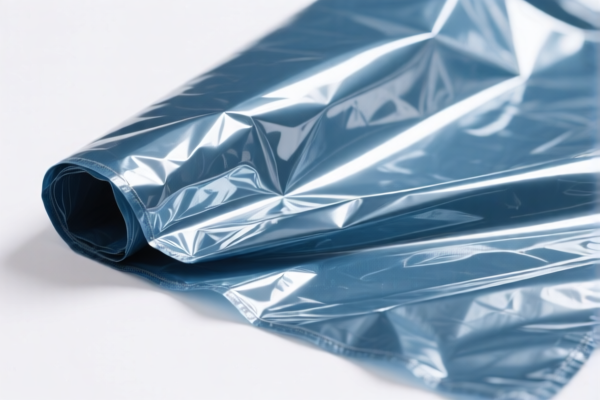
AI Analysis
🚗 Automotive Plastic Film (Plastic Films for Automotive Use)
🌐 HS Code Reference & Clearance Guide | 2026 Latest Tariff Analysis | Professional Customs Strategy
📌 Part 1: Product Definition & Classification: What is "Automotive Plastic Film"?
Automotive Plastic Film refers to thin plastic sheets or membranes specifically designed or used in the automotive industry. These films serve various functions, including interior decoration, window tinting, protective layers, headlight covers, or packaging components. In international trade, they are classified based on their material composition (e.g., PET, PVC, PE) and structure (e.g., coated, uncoated, textile-backed).
The key to correct classification lies in distinguishing whether the film is a plain plastic film (Chapter 39) or a textile fabric coated with plastic (Chapter 59).
⚠️ Key Distinction Point: - If the product is purely plastic (even if it has multiple layers like PET/PE), it generally falls under Chapter 39 (Plastics and Articles Thereof). - If the product consists of a textile fabric (woven, non-woven) that is impregnated, coated, covered, or laminated with plastic (where the plastic gives it its essential character), it falls under Chapter 59 (Textile Fabrics Impregnated, Coated, Covered or Laminated with Plastic).
📦 Part 2: HS Code Classification Details (2026 Latest Tariff Authority Comparison)
| HS Code | Product Description | Application Scenario | Material/Structure |
|---|---|---|---|
3919.90.50.60 |
Self-adhesive plates, sheets, film, foil, tape, strip and other flat shapes, of plastics | Adhesive films, protective tapes for auto body | ✅ Plastic (General "Other" Category) |
3920.99.20.00 |
Other plates, sheets, film, foil and strip, of plastics (not self-adhesive) | Non-adhesive plastic sheets for interiors/exteriors | ✅ Plastic (General "Other" Category) |
3920.62.00.90 |
Other plates, sheets, film, foil and strip, of polymers of ethylene terephthalate (PET) | PET-based automotive films, polyester films | ✅ Plastic (Polyester/PET specific) |
5903.90.20.00 |
Textile fabrics impregnated, coated, covered or laminated with plastic (of man-made fibers, other than those of heading 59.03) | Plastic-coated textile films for car interiors/liners | ✅ Textile + Plastic Coating |
🔍 Critical Reminder: - Chapter 39 Codes (
3919,3920): Apply to films made primarily of plastic materials (PET, PVC, PE, etc.). Even if multi-layered, if the plastic defines the character, it goes here. - Chapter 59 Code (5903): Applies ONLY if there is a textile base (fabric) coated with plastic. If you are shipping pure plastic film, do not use5903. - Sub-category Differences:3919is for self-adhesive (tapes/strips).3920is for non-adhesive sheets/films.3920.62is specific to PET.3920.99is the "catch-all" for other plastics.
💰 Part 3: 2026 Latest Tariff Rate Breakdown (Including Surcharges & Policy Add-ons)
✅ Applicable Country: United States (US)
✅ Country of Origin: China (CN)
✅ Effective Date: 2025/2026 (Current Trade Policy)
🎯 1. 3919.90.50.60 —— Self-Adhesive Plastic Film (Other)
| Item | Content |
|---|---|
| Basic Tariff | 5.8% (ad valorem) |
| Section 301 Surcharge | +25.0% (USITC Footnote) |
| Section 122 / IEEPA Surcharge | +10.0% (Targeted on Chinese products) |
| Total Tax Rate | 40.8% |
| Tax Calculation | CIF Value × 40.8% |
| De Minimis Exemption | ❌ Not Eligible (High tariff items excluded from $800 de minimis) |
| Legal Pathway | Base: 3919.90.50.60 → Sec 301: 25% → Sec 122/IEEPA: 10% |
📌 Explanation: - This code is often used for adhesive automotive films (e.g., window tint adhesives, protective paint protection films with backing). - The total burden of 40.8% is significant. Ensure your product description clearly states "Self-Adhesive" to justify
3919vs3920.
🎯 2. 3920.99.20.00 —— Other Plastic Film/Sheets (Not Self-Adhesive)
| Item | Content |
|---|---|
| Basic Tariff | 4.2% (ad valorem) |
| Section 301 Surcharge | +25.0% (USITC Footnote) |
| Section 122 / IEEPA Surcharge | +10.0% (Targeted on Chinese products) |
| Total Tax Rate | 39.2% |
| Tax Calculation | CIF Value × 39.2% |
| De Minimis Exemption | ❌ Not Eligible |
| Legal Pathway | Base: 3920.99.20.00 → Sec 301: 25% → Sec 122/IEEPA: 10% |
📌 Note: - This is the "Catch-All" for non-adhesive plastic films made of plastics other than PET (e.g., PVC, PP, PE). - If your film is not PET and not self-adhesive, this is likely your code. - Slightly lower total tax than
3919due to a lower base rate (4.2% vs 5.8%).
🎯 3. 3920.62.00.90 —— PET Plastic Film/Sheets (Not Self-Adhesive)
| Item | Content |
|---|---|
| Basic Tariff | 4.2% (ad valorem) |
| Section 301 Surcharge | +25.0% (USITC Footnote) |
| Section 122 / IEEPA Surcharge | +10.0% (Targeted on Chinese products) |
| Total Tax Rate | 39.2% |
| Tax Calculation | CIF Value × 39.2% |
| De Minimis Exemption | ❌ Not Eligible |
| Legal Pathway | Base: 3920.62.00.90 → Sec 301: 25% → Sec 122/IEEPA: 10% |
📌 Note: - Specifically for Polyethylene Terephthalate (PET) films. - Common in automotive headlight covers, interior panels, and high-strength protective films. - Tax rate is identical to
3920.99.20.00because the base rate is the same (4.2%). The specificity of the material does not change the duty for Chinese imports under current Section 301/122 rules.
🎯 4. 5903.90.20.00 —— Plastic-Coated Textile Fabric
| Item | Content |
|---|---|
| Basic Tariff | 0.0% (ad valorem) |
| Section 301 Surcharge | +25.0% (USITC Footnote) |
| Section 122 / IEEPA Surcharge | +10.0% (Targeted on Chinese products) |
| Total Tax Rate | 35.0% |
| Tax Calculation | CIF Value × 35.0% |
| De Minimis Exemption | ❌ Not Eligible |
| Legal Pathway | Base: 5903.90.20.00 → Sec 301: 25% → Sec 122/IEEPA: 10% |
📌 Critical Note: - This code has the lowest total tax rate (35.0%) because the base tariff is 0%. - HOWEVER, this is ONLY for products that are TEXTILE FABRIC coated with plastic. - If you ship pure plastic film under this code, you risk misclassification penalties, seizure, or forced reclassification to Chapter 39 (higher tax). - Use this ONLY if your product has a woven/non-woven fabric backing with a plastic coating/lamination.
🛠️ Part 4: Customs Clearance Practical Advice (Battle-Tested Pitfall Guide)
✅ 1. Documentation Checklist (All Required)
| Document | Required? | Explanation |
|---|---|---|
| ✅ Product Specification Sheet | ✔️ | Must detail material composition (e.g., "50% PET, 50% PE"), thickness, width, and usage (automotive). |
| ✅ Structure Diagram | ✔️ | Crucial to prove if it is Pure Plastic (Ch 39) or Textile-Coated (Ch 59). |
| ✅ Product Photos | ✔️ | Clear images showing cross-section, label, and any adhesive backing. |
| ✅ Commercial Invoice | ✔️ | Must specify "Plastic Film for Automotive Use" and clearly state HS Code. |
| ✅ Packing List | ✔️ | Include net/gross weight and dimensions. |
| ✅ Certificate of Origin (CO) | ✔️ | To confirm China origin for surcharge calculation. |
✅ 2. Declaration Tips (Key Mantras)
🔥 “Material Dictates Chapter, Adhesion Dictates Subheading!”
| Scenario | Correct HS Code | Common Mistake |
|---|---|---|
| Pure PET Film (No fabric) | 3920.62.00.90 |
Misclassifying as 5903 (if no fabric) → Penalty |
| Pure PVC/PP Film (No fabric) | 3920.99.20.00 |
Using 3919 (if not self-adhesive) → Wrong subheading |
| Self-Adhesive Film (Any plastic) | 3919.90.50.60 |
Using 3920 → Misdeclaration |
| Plastic-Coated Fabric (e.g., interior lining) | 5903.90.20.00 |
Using 3920 → Misses "Textile" aspect, potentially lower tax but higher risk if fabric is dominant |
✅ 3. Special Situation Handling
| Situation | Handling Advice |
|---|---|
| Multi-layer Films | If one layer is plastic and another is fabric, the essential character determines the code. If plastic coating dominates, 5903. If plastic layers dominate without fabric base, 3920. |
| Automotive Interior Trim | Often 5903 if it's a fabric-backed vinyl. Provide cross-section proof. |
| Window Tint Film | Usually 3920.62.00.90 (PET) if it’s a clear polyester film. If it has an adhesive backing, it might be 3919. |
| Headlight Covers | Typically 3920 (Polycarbonate or PET sheets). |
🌍 Part 5: Global Market Comparison (2026 Latest)
| Country/Region | Recommended HS Code | Tariff (China Origin) | Certification | Remarks |
|---|---|---|---|---|
| 🇺🇸 USA | 3920.99.20.00 / 3919.90.50.60 |
39.2% - 40.8% | FCC (if electronic components included), RoHS | High Section 301 & 122 tariffs apply. |
| 🇪🇺 EU | 3920.62.00.00 / 5903.90.20 |
0% - 6% | REACH, RoHS | No Section 301/122. Standard MFN rates apply. |
| 🇨🇳 China | 3920.99.20.00 |
4.2% | CCC (if applicable) | Low base tariff, no US surcharges. |
| 🇲🇽 Mexico | 3920.99.20.00 |
0% - 5% | NOM | USMCA benefits may apply if rules of origin met. |
📌 Conclusion: - USA: Tariffs are very high due to Section 301 (+25%) and Section 122 (+10%). Total cost is nearly 40%. - EU/China: Much more favorable. No punitive surcharges. - Strategy: If importing to the US, verify if your product can be classified under
5903(35%) vs3920(39.2%). However, accuracy is paramount. Misclassifying pure plastic film as coated textile to save 4% can lead to severe customs audits.
📌 Part 6: Common Errors & Pitfalls (Lessons Learned)
❌ Error 1: Declaring Pure Plastic Film as 5903 (Coated Textile) to save 4% tax.
👉 Consequence: Customs rejects declaration, imposes penalties, and reclassifies to Chapter 39. Risk of seizure.
❌ Error 2: Declaring Self-Adhesive Film as 3920 (Non-adhesive).
👉 Consequence: Wrong HS Code. While the base rate might be similar, it indicates lack of knowledge. May lead to delays.
❌ Error 3: Ignoring Section 122 Tariff. 👉 Consequence: All these codes are subject to the 10% IEEPA/Sec 122 surcharge for Chinese goods. Failing to include this in cost calculation leads to budget overruns.
❌ Error 4: Assuming De Minimis ($800) applies. 👉 Consequence: No. Items under these HS codes with >0% total duty (especially those over 20%) are generally excluded from the de minimis exemption for China-origin goods in the US.
✅ Correct Action:
“Automotive Plastic Film, 50um, PET, Non-Adhesive, 1220mm Width, Used for Interior Trims”
🎯 Part 7: Conclusion: Professional Declaration, Cost Control, Risk Mitigation!
🎯 Remember the Mantra:
🔹 “Plastic Base? Check Chapter 39. Fabric Base? Check Chapter 59. Adhesive? Check 3919. No Adhesive? Check 3920.”
🔹 “US Tariff = Base + 25% + 10%. Always calculate 40% budget for US imports!”
📌 Tips: - If you have mixed shipments (some adhesive, some non-adhesive), declare them separately. - Pre-Ruling: Consider applying for an Advance Ruling (CBP Ruling) if your product structure is complex (e.g., multi-layer with unclear essential character). - Supply Chain: For US market, consider sourcing from Vietnam, Thailand, or Mexico if possible, to avoid Section 301/122 tariffs (though rules of origin must be strictly met).
📣 Immediate Action:
📞 Consult with a licensed customs broker.
📄 Provide cross-section photos and material specs.
🚀 Ensure your commercial invoice clearly matches the HS Code definition.
✨ Professional Clearance, Starting with Accurate Classification!
💼 Your Every Cent of Cost Deserves Precise Calculation!
Customer Reviews
About HS Code Classification
The Harmonized System (HS) is an internationally standardized nomenclature developed by the World Customs Organization (WCO) to classify traded products. Over 200 countries use the HS system as the basis for customs tariffs, trade statistics, and import/export regulations.
Each HS code follows a hierarchical structure:
- Chapter (2 digits) — Broad category of goods (e.g., Chapter 84: Machinery and Mechanical Appliances)
- Heading (4 digits) — More specific grouping within the chapter
- Subheading (6 digits) — Internationally standardized breakdown, used by all WCO member countries
- National subdivisions (8-10 digits) — Country-specific extensions for further classification, such as US HTSUS 10-digit codes
Correct HS code classification is essential for smooth customs clearance, accurate duty payment, and compliance with trade regulations. Misclassification can lead to customs delays, overpayment of duties, or penalties.
When importing from CN to US, the applicable tariff rates may include:
- Most-Favored-Nation (MFN) rate — The standard duty rate applied to WTO members
- General rate — Applied to countries without trade agreements
- Trade remedy duties — Additional tariffs such as Section 301 (anti-dumping), Section 232 (national security), or countervailing duties
The information provided on this page is for reference purposes only. For official classification, please consult with your local customs authority or a licensed customs broker.