Automotive Radial Tires
CN → US| HS Code | Tariff Rate | Origin | Destination | Doc |
|---|---|---|---|---|
| 4011201005 | 39.0% | CN | US | Official Doc |
| 4011201015 | 39.0% | CN | US | Official Doc |
| 4012909000 | 37.7% | CN | US | Official Doc |
| 4013100020 | 38.7% | CN | US | Official Doc |
| 4011400000 | 35.0% | CN | US | Official Doc |
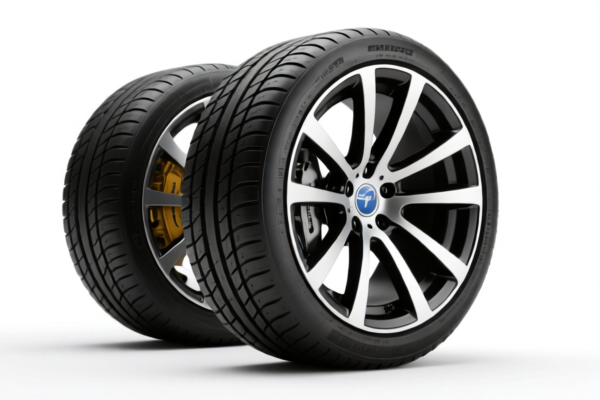
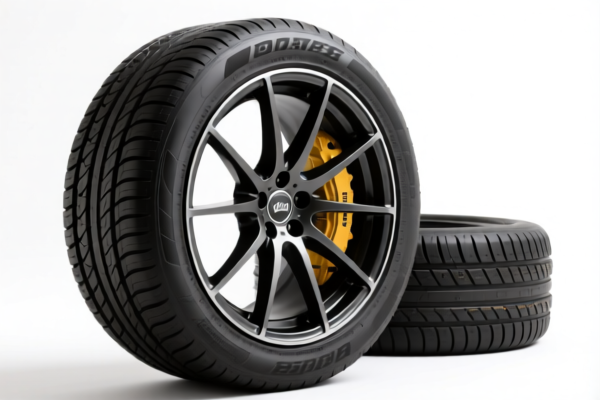
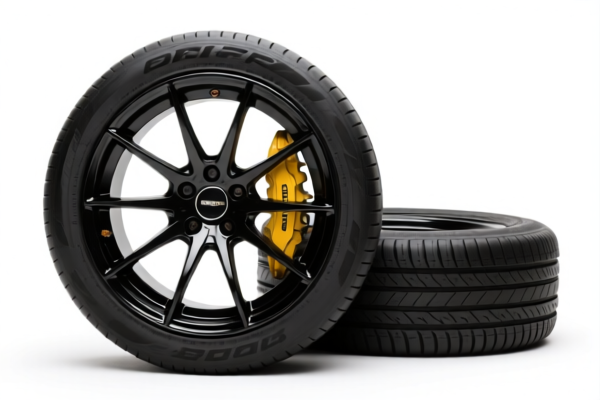
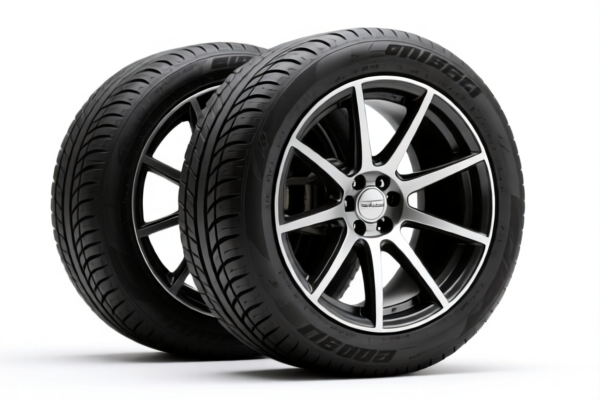
Product Images
AI Analysis
🚛 Automotive Radial Tires (Truck & Bus/Car)
🌐 HS Code Reference & Customs Clearance Guide | 2026 Latest Tariff Analysis | Professional-Level Clearance Strategy
📌 I. Product Definition & Classification: Do You Really Understand "Automotive Radial Tires"?
Automotive radial tires are critical components in global logistics and passenger transport, characterized by their radial ply construction which offers better heat dissipation, fuel efficiency, and handling stability compared to bias-ply tires. In international trade, they are strictly categorized by vehicle type (Truck/Bus vs. Car/Passenger) and construction type (Radial vs. Non-Radial).
Key Distinction Points:
- Radial Structure: Identified by "R" in size codes (e.g., 295/80R22.5) and specific chemical/material analysis; must be distinguished from bias-ply tires.
- Application Specificity:
- Truck/Bus Tires: Heavy-duty, large diameter, specific tread patterns for long-haul.
- Motorcycle Tires: Smaller, specialized for two-wheel stability.
- Inner Tubes: Often declared separately or with the tire, depending on customs jurisdiction and product configuration.
⚠️ Critical Classification Note:
- Misclassifying a Truck Radial Tire as a general "Rubber Tire" can lead to severe penalties due to significant tariff differences (up to 39% vs. lower base rates for other rubber goods).
- "Radial" is a structural definition. If the tire is not radial (i.e., bias-ply), it falls under different sub-headings (e.g., 4011.10 or 4011.20 non-radial variants, though the provided data focuses on radial).
📦 II. HS Code Classification Details (2026 Latest Tariff Authority Comparison)
| HS Code | Product Description | Application/Scenario | Structure Feature | Total Tax Rate (China→US) |
|---|---|---|---|---|
4011.20.10.05 |
Truck/Bus Radial Pneumatic Tires | Heavy-duty trucks, buses, commercial vehicles | Radial (Suburban/Truck) | 39.0% |
4011.20.10.15 |
Other Radial Tires for Trucks/Buses (General Classification) | General truck/bus tires meeting radial criteria | Radial (R) | 39.0% |
4012.90.90.00 |
Retreaded Tires or Other Rubber Tires (Solid/Padded) | Retreads, solid tires, or non-pneumatic rubber tires | Non-Pneumatic or Retreaded | 37.7% |
4013.10.00.20 |
Pneumatic Rubber Inner Tubes (for Vehicles) | Inner tubes for truck/bus tires (if declared separately) | Inner Tube Only | 38.7% |
4011.40.00.00 |
Motorcycle Radial Pneumatic Tires | Motorcycles, scooters, light two-wheelers | Radial (Motorcycle) | 35.0% |
🔍 Key Insight:
-4011.20.10is the primary category for new radial truck/bus tires.
-4011.40.00is exclusive to motorcycle tires. Do not confuse with car tires (which often fall under4011.10or4011.20depending on exact size/type, but motorcycle is distinct here).
-4013.10.00is for inner tubes, not the tire itself. If the tire includes an inner tube, verify if it’s declared as a unit or separate components.
💰 III. 2026 Latest Tariff Rate Breakdown (Including Surtaxes, Policy Add-ons)
✅ Applicable Country: United States (US)
✅ Origin: China (CN)
✅ Effective Date: Ongoing (Includes Section 301 & IEEPA surcharges)
🎯 1. 4011.20.10.05 & 4011.20.10.15 —— Truck/Bus Radial Tires
| Item | Detail |
|---|---|
| Base Tariff | 4.0% (Standard Most-Favored-Nation rate) |
| Section 301 Surtax | +25% (USITC Footnote 9903.88.01 / Trade Act Section 301) |
| IEEPA Surtax | +10% (Billed under IEEPA for specific Chinese rubber products, effective Nov 10, 2025) |
| Total Tariff Rate | 39.0% |
| Tax Calculation | CIF Value × 39.0% |
| De Minimis Exemption? | ❌ No (Denied for goods subject to Section 301) |
| Legal Basis Path | USITC:4011.20.10 → SECTION_301:4011.20.10 → IEEPA:9903.01.25 |
📌 Explanation:
- The 25% Section 301 duty is the dominant cost driver for Chinese rubber products.
- The 10% IEEPA surcharge is an additional layer targeting specific Chinese exports.
- Combined 39% is extremely high. Many importers use duty drawback or FTZ (Foreign Trade Zone) strategies to mitigate this.
🎯 2. 4012.90.90.00 —— Retreaded/Other Rubber Tires
| Item | Detail |
|---|---|
| Base Tariff | 2.7% |
| Section 301 Surtax | +25% |
| IEEPA Surtax | +10% |
| Total Tariff Rate | 37.7% |
| Tax Calculation | CIF Value × 37.7% |
| De Minimis Exemption? | ❌ No |
| Legal Basis Path | USITC:4012.90.90 → SECTION_301:4012.90.90 → IEEPA:9903.01.25 |
📌 Note:
- Retreaded tires have a slightly lower base rate (2.7% vs. 4.0%) but still face full surtaxes.
- Ensure "Retreaded" status is clearly documented with a certificate of retreading to avoid being classified as "New" (which has different HS codes and higher base rates).
🎯 3. 4013.10.00.20 —— Inner Tubes
| Item | Detail |
|---|---|
| Base Tariff | 3.7% |
| Section 301 Surtax | +25% |
| IEEPA Surtax | +10% |
| Total Tariff Rate | 38.7% |
| Tax Calculation | CIF Value × 38.7% |
| De Minimis Exemption? | ❌ No |
| Legal Basis Path | USITC:4013.10.00 → SECTION_301:4013.10.00 → IEEPA:9903.01.25 |
📌 Note:
- Inner tubes are often shipped with tires. If declared separately, this code applies.
- If declared as part of a tire kit, ensure the primary item (tire) determines the classification, or split the value accurately to avoid misdeclaration.
🎯 4. 4011.40.00.00 —— Motorcycle Radial Tires
| Item | Detail |
|---|---|
| Base Tariff | 0.0% |
| Section 301 Surtax | +25% |
| IEEPA Surtax | +10% |
| Total Tariff Rate | 35.0% |
| Tax Calculation | CIF Value × 35.0% |
| De Minimis Exemption? | ❌ No |
| Legal Basis Path | USITC:4011.40.00 → SECTION_301:4011.40.00 → IEEPA:9903.01.25 |
📌 Note:
- Lower base tariff (0%) makes motorcycle tires slightly more cost-effective than truck tires, but the surtaxes still bring the total to 35%.
- Ensure the HS code explicitly states "Motorcycle" to avoid being misclassified as Car/Truck tires.
🛠️ IV. Customs Clearance Practical Advice (Field Avoidance Guide)
✅ 1. Required Documentation Checklist (All or Nothing)
| Document | Required? | Explanation |
|---|---|---|
| ✅ Product Specification Sheet | ✔️ | Must include size, load index, speed rating, and ply structure (Radial). |
| ✅ Certificate of Origin (CO) | ✔️ | Essential for determining origin. Must state "Made in China" if applicable. |
| ✅ Commercial Invoice | ✔️ | Must clearly state "Radial Tire," HS Code, and unit price. |
| ✅ Packing List | ✔️ | Detail number of tires, tubes (if any), and packaging type. |
| ✅ Third-Party Test Report | ✔️ | DOT (US Department of Transportation) certification is mandatory for tires sold in the US. |
| ✅ Retreading Certificate | ✔️ | (Only for 4012.90.90.00) Proof that the tire is retreaded, not new. |
✅ 2. Declaration Tips (Key Mantra)
🔥 "Radial is Key, DOT is Mandatory, Surtax is High!"
| Scenario | Correct Declaration | Wrong Action |
|---|---|---|
| New Truck Radial Tire | HS: 4011.20.10.05, Name: "Truck Radial Pneumatic Tire, DOT Certified" |
Declare as "Rubber Part" → 39% + Penalties |
| Retreaded Tire | HS: 4012.90.90.00, Name: "Retreaded Radial Tire" |
Declare as "New Tire" → Misclassification Fraud |
| Inner Tube + Tire Set | Declare Tire as primary, Tube as accessory or separate if value significant | Bundle incorrectly → Audit Risk |
| Motorcycle Tire | HS: 4011.40.00.00, Name: "Motorcycle Radial Tire" |
Declare as "Car Tire" → Higher Base Tax |
✅ 3. Special Case Handling
| Situation | Handling Advice |
|---|---|
| DOT Certification Missing | DO NOT IMPORT. US Customs will seize or destroy tires without valid DOT markings/certification. |
| High-Value Imports | Consider Foreign Trade Zones (FTZ) or Duty Drawback programs to reclaim the 25% Section 301 duty if re-exported. |
| Misclassification Dispute | If unsure if a tire is "Radial," submit a Binding Ruling Request to US CBP before shipment. |
| Chinese Origin Proof | Ensure the CO matches the invoice exactly. Any discrepancy triggers audits. |
🌍 V. Global Market Customs Comparison (2026 Latest)
| Country/Region | Recommended HS Code | Tariff (China Origin) | Certification Requirement | Notes |
|---|---|---|---|---|
| 🇺🇸 USA | 4011.20.10.05 |
39.0% (301 + IEEPA) | DOT + FMVSS | Highest effective tariff due to surtaxes. |
| 🇨🇳 China | 4011.20.10.00 |
4.0% - 7.5% (Import) | CCC (if applicable) | Low import duty, high local production. |
| 🇪🇺 EU | 4011.20.10 |
0% (Most-Favored-Nation) | E-Mark (ECE R54) | No Section 301 equivalent, but strict safety regs. |
| 🇨🇦 Canada | 4011.20.10.00 |
0% (Under USMCA/CUSMA if Canadian origin) | Transport Canada | Similar to US but no Section 301. |
📌 Conclusion:
- The USA imposes the highest landed cost due to Section 301 (25%) and IEEPA (10%).
- DOT Certification is non-negotiable for US entry. No DOT = No Entry.
- Retreaded tires (4012.90.90.00) offer a slight tariff advantage (37.7% vs 39.0%) but require strict documentation.
📌 VI. Common Errors & Pitfalls (Blood Lessons)
❌ Error 1: Declaring a New Tire as Retreaded
👉 Consequence: Seizure of goods, fines, and loss of importer record. Retreading process is verifiable by chemical analysis and tread depth.
❌ Error 2: Missing DOT Certification on Invoice/Packing List
👉 Consequence: Goods held at port, returned, or destroyed. US law strictly prohibits tires without valid DOT codes.
❌ Error 3: Misclassifying Motorcycle Tires as Car/Truck Tires
👉 Consequence: Incorrect tax calculation. While base rates differ, surtaxes apply to all. However, wrong HS code triggers audits.
❌ Error 4: Ignoring IEEPA Surcharges
👉 Consequence: Under-declaring tax by 10%. US CBP audits rubber products frequently. Expect a 39% total cost, not just the base rate.
✅ Correct Practice:
"Radial Truck Tire, 295/80R22.5, DOT Certified, Model XYZ, HS 4011.20.10.05, Origin: China, CIF: $500/unit"
🎯 VII. Conclusion: Professional Declaration, Save Time & Money!
🎯 Remember the Mantra:
🔹 "Radial Structure, DOT Mark, 39% Total Cost!"
🔹 "HS Code 4011.20 for Trucks, 4011.40 for Motorcycles!"
🔹 "Retreaded is 4012.90, but Documentation is Key!"
📌 Pro Tip:
If your tires are originating from Vietnam, Thailand, or Malaysia, you may be eligible for lower tariffs or IEEPA exemptions. Ensure your supply chain and CO clearly reflect non-Chinese origin to avoid the 35-39% surcharge.
📣 Immediate Action:
📞 Contact a licensed customs broker + Provide DOT Certification + Verify HS Code before shipment.
🚀 Ensure your tires clear US Customs smoothly, avoid seizures, and protect your margins!
✨ Professional Clearance Starts with Accurate Classification!
💼 Every dollar of tariff saved is a dollar of profit kept!
Customer Reviews
About HS Code Classification
The Harmonized System (HS) is an internationally standardized nomenclature developed by the World Customs Organization (WCO) to classify traded products. Over 200 countries use the HS system as the basis for customs tariffs, trade statistics, and import/export regulations.
Each HS code follows a hierarchical structure:
- Chapter (2 digits) — Broad category of goods (e.g., Chapter 84: Machinery and Mechanical Appliances)
- Heading (4 digits) — More specific grouping within the chapter
- Subheading (6 digits) — Internationally standardized breakdown, used by all WCO member countries
- National subdivisions (8-10 digits) — Country-specific extensions for further classification, such as US HTSUS 10-digit codes
Correct HS code classification is essential for smooth customs clearance, accurate duty payment, and compliance with trade regulations. Misclassification can lead to customs delays, overpayment of duties, or penalties.
When importing from CN to US, the applicable tariff rates may include:
- Most-Favored-Nation (MFN) rate — The standard duty rate applied to WTO members
- General rate — Applied to countries without trade agreements
- Trade remedy duties — Additional tariffs such as Section 301 (anti-dumping), Section 232 (national security), or countervailing duties
The information provided on this page is for reference purposes only. For official classification, please consult with your local customs authority or a licensed customs broker.