Automotive Reinforced Rubber Hose and Fittings
CN → US| HS Code | Tariff Rate | Origin | Destination | Doc |
|---|---|---|---|---|
| 4009120020 | 20.0% | CN | US | Official Doc |
| 4009220020 | 37.5% | CN | US | Official Doc |
| 8708998105 | 37.5% | CN | US | Official Doc |
| 8708995500 | 37.5% | CN | US | Official Doc |
| 4009420050 | 20.0% | CN | US | Official Doc |
Product Images
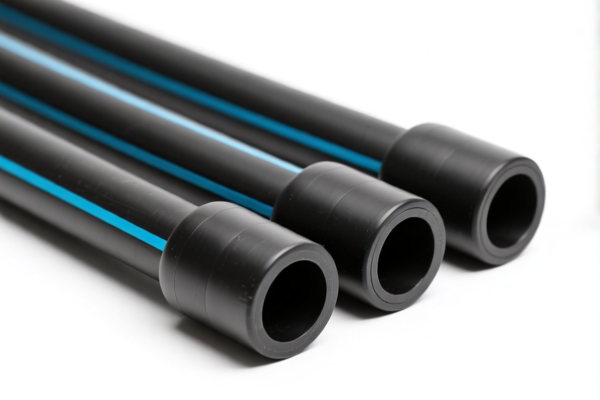
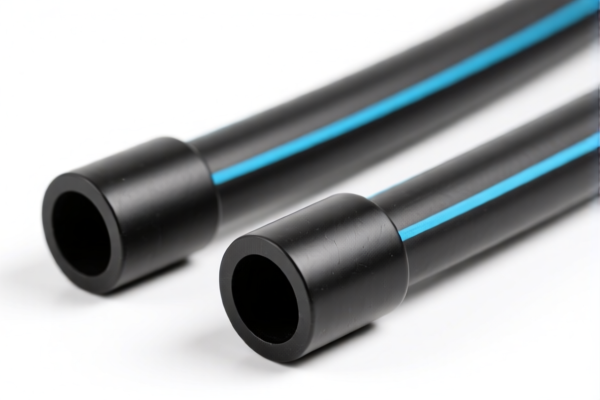
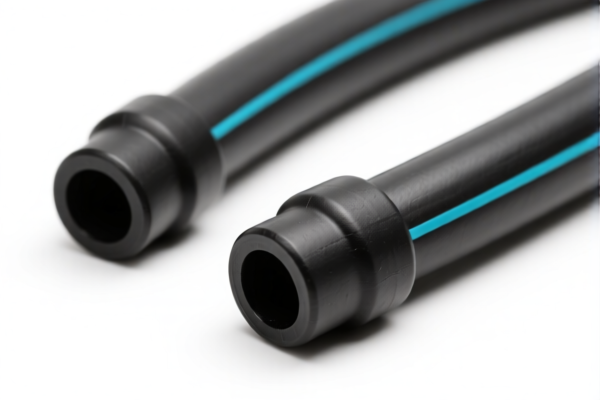
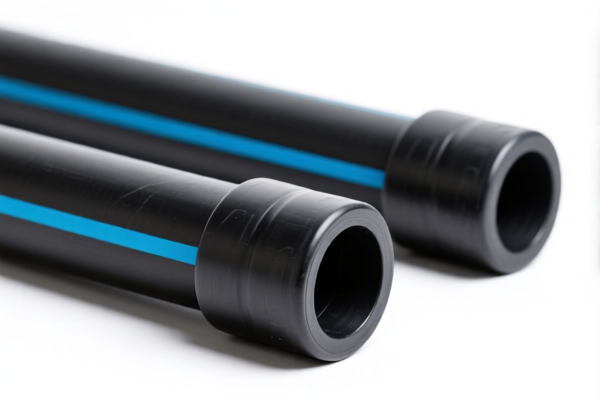
AI Analysis
🚗 Automotive Brake & Fuel Rubber Hoses with Fittings
🌐 HS Code Reference & Customs Clearance Guide | 2026 Latest Tariff Analysis | Professional Level Customs Strategy
📌 Part 1: Product Definition & Classification: Do You Really Understand "Rubber Hoses"?
Automotive reinforced rubber hoses with fittings are critical safety components in vehicles, primarily used for transmitting brake fluid, fuel, air, or hydraulic pressure. In international trade, their classification depends heavily on material structure (reinforcement), specific usage (e.g., braking vs. general), and presence of fittings.
Key Distinction Points: * Brake Hoses (Specific Use) If the hose is specifically designed for vehicle braking systems and has fittings, it may be classified under Ch 40 (Rubber Articles) or Ch 87 (Vehicles Parts) depending on the exact construction and tariff rules. * General Reinforced Hoses: Generic rubber hoses with reinforcement (like textile or metal) but not specifically for braking fall under 4009.42. * Fittings/Accessories: If the item is primarily the fitting with a short hose attached, customs may scrutinize whether it’s a "part of the vehicle" or a "general purpose hose."
⚠️ Critical Classification Logic:
- If it’s a brake hose with fittings → Likely 4009.12 or 8708.99
- If it’s a general reinforced rubber hose with fittings → 4009.42
- If it’s considered a vehicle part rather than a raw material/hose → 8708.99
📦 Part 2: HS Code Classification Details (2026 Tariff Authority Comparison)
| HS Code | Product Description | Application Scenario | Key Classification Criteria |
|---|---|---|---|
4009.12.00.20 |
Rubber hoses & fittings, for vehicle brakes, vulcanized rubber, with accessories | Brake lines in passenger vehicles | ✅ Specific for braking ✅ With fittings ✅ Rubber material |
4009.22.00.20 |
Specific vehicle brake rubber hoses, vulcanized rubber, with fitting accessories | Commercial vehicle brake systems | ✅ Specific for braking ✅ Higher tax bracket due to "specific vehicle" classification |
8708.99.81.05 |
Rubber hoses with fittings for vehicle brakes, material compatible with rubber/plastic | Brake assemblies where material is mixed or unspecified but functional | ✅ Classified as a part of the vehicle ✅ Not strictly as a raw rubber hose |
8708.99.55.00 |
Rubber-containing vehicle brake system parts/accessories, matching hose characteristics | Brake components with significant rubber content | ✅ Classified as Vehicle Parts ✅ Rubber is a key feature but not the primary identity |
4009.42.00.50 |
Reinforced rubber tubes with fittings, rubber material, reinforced form, with accessories | General industrial/automotive rubber hoses (non-brake specific) | ✅ Reinforced structure ✅ Not specifically for braking ✅ General rubber hose category |
🔍 Key Reminder:
- Brake hoses are often scrutinized for safety. If the HS code is wrong, customs may delay clearance.
- 4009 vs. 8708: If the hose is sold as a standalone product (e.g., repair part), 4009 is common. If it’s sold as an assembly integrated into the vehicle, 8708 might apply.
- Fittings matter: Hoses with integrated metal fittings are treated differently than bare hoses.
💰 Part 3: 2026 Latest Tariff Rate Details (Including Additional Taxes & Policies)
✅ Applicable Country: United States (US)
✅ Origin: China (CN)
✅ Effective Date: 2025 November 10 onwards (including subsequent imports)
🎯 1. 4009.12.00.20 — Brake Rubber Hoses & Fittings (Specific Use)
| Item | Content |
|---|---|
| Base Tariff | 2.5% |
| Section 301 Surcharge | +7.5% |
| Section 122 Tariff | +10% |
| Total Tax Rate | 20.0% |
| Tax Calculation | CIF Value × 20% |
| De Minimis Eligibility | ❌ No (deny_de_minimis) |
| Legal Basis Path | IEEPA:9903.01.25 → USITC:4009.12.00.20 → FOOTNOTE:122 |
📌 Explanation:
- This is a specific brake hose with fittings.
- The 7.5% Section 301 is lower than other categories due to its specific classification under "rubber hoses."
- Section 122 adds another 10%, bringing the total to 20%.
🎯 2. 4009.22.00.20 — Specific Vehicle Brake Rubber Hoses
| Item | Content |
|---|---|
| Base Tariff | 2.5% |
| Section 301 Surcharge | +25.0% |
| Section 122 Tariff | +10% |
| Total Tax Rate | 37.5% |
| Tax Calculation | CIF Value × 37.5% |
| De Minimis Eligibility | ❌ No |
| Legal Basis Path | IEEPA:9903.01.25 → USITC:4009.22.00.20 → FOOTNOTE:301 |
📌 Note:
- This code is for specific vehicle brake hoses (often commercial or heavier-duty).
- The Section 301 rate is 25%, which is significantly higher than4009.12.
- Total 37.5% makes this a high-cost category. Misclassification here can lead to large tax differences.
🎯 3. 8708.99.81.05 — Vehicle Brake Hose with Fittings (Part of Vehicle)
| Item | Content |
|---|---|
| Base Tariff | 2.5% |
| Section 301 Surcharge | +25.0% |
| Section 122 Tariff | +10% |
| Total Tax Rate | 37.5% |
| Tax Calculation | CIF Value × 37.5% |
| De Minimis Eligibility | ❌ No |
| Legal Basis Path | IEEPA:9903.01.25 → USITC:8708.99.81.05 → FOOTNOTE:301 |
📌 Explanation:
- Classified as a vehicle part rather than a raw rubber product.
- Same high tax rate as4009.22.
- Used when the hose is considered an integral part of the braking system assembly.
🎯 4. 8708.99.55.00 — Rubber-Containing Brake System Parts
| Item | Content |
|---|---|
| Base Tariff | 2.5% |
| Section 301 Surcharge | +25.0% |
| Section 122 Tariff | +10% |
| Total Tax Rate | 37.5% |
| Tax Calculation | CIF Value × 37.5% |
| De Minimis Eligibility | ❌ No |
| Legal Basis Path | IEEPA:9903.01.25 → USITC:8708.99.55.00 → FOOTNOTE:301 |
📌 Note:
- Similar to8708.99.81.05, this is for brake system components with rubber.
- 37.5% total tariff.
- Use this if the product is marketed as a "brake system part" rather than a "hose."
🎯 5. 4009.42.00.50 — Reinforced Rubber Hoses with Fittings (General)
| Item | Content |
|---|---|
| Base Tariff | 2.5% |
| Section 301 Surcharge | +7.5% |
| Section 122 Tariff | +10% |
| Total Tax Rate | 20.0% |
| Tax Calculation | CIF Value × 20% |
| De Minimis Eligibility | ❌ No |
| Legal Basis Path | IEEPA:9903.01.25 → USITC:4009.42.00.50 → FOOTNOTE:122 |
📌 Explanation:
- This is for general reinforced rubber hoses (not specifically for braking).
- Same 20% rate as4009.12because the Section 301 rate is 7.5%, not 25%.
- Use this if the hose is not exclusively for brakes (e.g., fuel lines, air lines, general hydraulic).
🛠️ Part 4: Customs Clearance Practical Advice (Real-World Pitfall Avoidance Guide)
✅ 1. Documentation Checklist (Missing Items = Delays)
| Document | Required | Notes |
|---|---|---|
| ✅ Product Specification Sheet | ✔️ | Must include: Material, Reinforcement Type, Fitting Material, Pressure Rating |
| ✅ Product Photos (with Fittings) | ✔️ | Clear view of fittings, labels, and any safety markings |
| ✅ Commercial Invoice | ✔️ | Must specify "Rubber Hose with Fittings" and exact HS Code |
| ✅ Packing List | ✔️ | Show quantity per box, weight, and dimensions |
| ✅ Certificate of Origin (CO) | ✔️ | If origin is not China, may reduce tariffs |
| ✅ Third-Party Test Report | ✔️ | DOT, SAE, or ISO standards compliance (especially for brake hoses) |
✅ 2. Declaration Tips (Key Mantras)
🔥 “Material + Use + Fittings = Correct HS!”
| Scenario | Correct Declaration | Wrong Practice |
|---|---|---|
| Brake hose with metal fittings | 4009.12.00.20 or 8708.99.81.05 |
Declare as "rubber tube" → 20% vs 37.5% risk |
| General reinforced rubber hose | 4009.42.00.50 |
Declare as "brake hose" → 20% vs 37.5% overpayment |
| Brake hose assembly (integrated) | 8708.99.55.00 |
Declare as "loose hose" → Customs may reclassify |
| Non-brake rubber hose | 4009.42.00.50 |
Declare as "brake hose" → Unnecessary high tax |
📌 Key Reminder:
- Brake hoses are high-risk items. Customs may request DOT certification or SAE J1401 compliance.
- If the hose is not for braking, do not use brake-specific HS codes.
- Fittings are key: If the fitting is the primary value, the product might be classified differently.
✅ 3. Special Handling Cases
| Case | Handling Advice |
|---|---|
| OEM Brake Hoses | Provide OEM part number + design drawing. Avoid "generic" descriptions. |
| Mixed Materials (Rubber+Plastic) | Declare as "Rubber Hose with Plastic Fittings" and use 4009.42.00.50 if not brake-specific. |
| Brake Hoses for Aftermarket | Must include safety warnings and installation instructions. |
| Brake Hoses for Military/Government | May require NIST or ITAR compliance. Check with customs broker. |
🌍 Part 5: Global Market Comparison (2026 Latest)
| Country/Region | Recommended HS Code | Tariff | Certification | Notes |
|---|---|---|---|---|
| 🇺🇸 USA | 4009.12.00.20 / 8708.99.81.05 |
20% - 37.5% | DOT, SAE, FCC (if electronic) | High scrutiny on brake hoses |
| 🇨🇳 China | 4009.12.00.20 |
5% | CCC | No additional tariffs |
| 🇪🇺 EU | 4009.12.00.20 |
0% - 4% | E-mark, REACH | No additional tariffs |
| 🇦🇺 Australia | 4009.12.00.20 |
5% | SAA | No additional tariffs |
| 🇯🇵 Japan | 4009.12.00.20 |
0% | JIS | No additional tariffs |
📌 Conclusion:
- USA is the highest tariff market for automotive rubber hoses.
- EU, Japan, Australia have low or zero tariffs.
- Certification is critical: Brake hoses require safety certifications in all markets.
📌 Part 6: Common Errors & Pitfalls (Lessons Learned)
❌ Error 1: Declaring a brake hose as a general rubber hose (4009.42)
👉 Consequence: Customs may reclassify to 4009.12 or 8708.99 → Back taxes + penalties!
❌ Error 2: Declaring a general hose as a brake hose (4009.12)
👉 Consequence: Overpayment of tariffs (20% vs 20%? Wait, 4009.42 is also 20%, but 4009.22 is 37.5%!) → Risk of audit.
❌ Error 3: Missing Fitting Description in invoice
👉 Consequence: Customs cannot determine if it’s a "hose" or "part" → Delays.
❌ Error 4: Not providing Safety Certifications (DOT/SAE)
👉 Consequence: Seizure or return of goods, especially for brake hoses.
✅ Correct Practice:
"Automotive Brake Hose, Vulcanized Rubber, Reinforced with Textile, with Metal Fittings, DOT-Approved, Model XYZ"
🎯 Part 7: Conclusion: Precision Classification Saves Money!
🎯 Remember the Mantra:
🔹 "Brake Hose + Fittings = 4009.12 (20%) or 8708.99 (37.5%)"
🔹 "General Hose + Fittings = 4009.42 (20%)"
🔹 "Always Include DOT/SAE Certs for Brake Hoses!"
📌 Pro Tip:
If your hoses are originating from Vietnam, Mexico, Thailand, or Malaysia, you may qualify for IEEPA exemptions, reducing tariffs to 0% - 5%.
Apply for an Advance Ruling (Pre-classification) before shipment to avoid customs risks.
📣 Immediate Action:
📞 Contact a professional customs broker + Provide product photos + Apply for HS Code Advance Ruling
🚀 Let your automotive hoses clear customs smoothly, save costs, and boost profits!
✨ Professional clearance starts with accurate classification!
💼 Every cent of cost deserves precise calculation!
Customer Reviews
About HS Code Classification
The Harmonized System (HS) is an internationally standardized nomenclature developed by the World Customs Organization (WCO) to classify traded products. Over 200 countries use the HS system as the basis for customs tariffs, trade statistics, and import/export regulations.
Each HS code follows a hierarchical structure:
- Chapter (2 digits) — Broad category of goods (e.g., Chapter 84: Machinery and Mechanical Appliances)
- Heading (4 digits) — More specific grouping within the chapter
- Subheading (6 digits) — Internationally standardized breakdown, used by all WCO member countries
- National subdivisions (8-10 digits) — Country-specific extensions for further classification, such as US HTSUS 10-digit codes
Correct HS code classification is essential for smooth customs clearance, accurate duty payment, and compliance with trade regulations. Misclassification can lead to customs delays, overpayment of duties, or penalties.
When importing from CN to US, the applicable tariff rates may include:
- Most-Favored-Nation (MFN) rate — The standard duty rate applied to WTO members
- General rate — Applied to countries without trade agreements
- Trade remedy duties — Additional tariffs such as Section 301 (anti-dumping), Section 232 (national security), or countervailing duties
The information provided on this page is for reference purposes only. For official classification, please consult with your local customs authority or a licensed customs broker.