Automotive Reinforced Rubber Tubes with Fittings
CN → US| HS Code | Tariff Rate | Origin | Destination | Doc |
|---|---|---|---|---|
| 4016935020 | 37.5% | CN | US | Official Doc |
| 4009120020 | 20.0% | CN | US | Official Doc |
| 4009120050 | 20.0% | CN | US | Official Doc |
| 4016996050 | 37.5% | CN | US | Official Doc |
Product Images
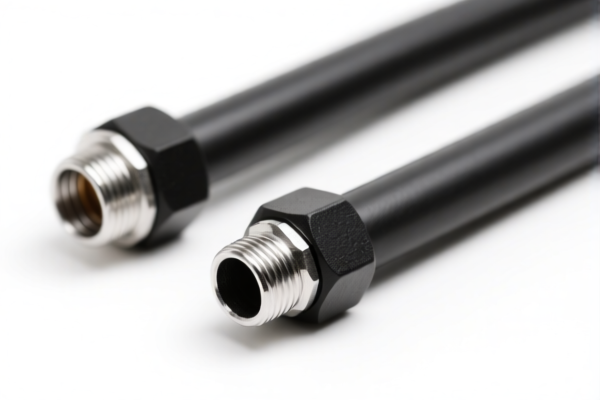
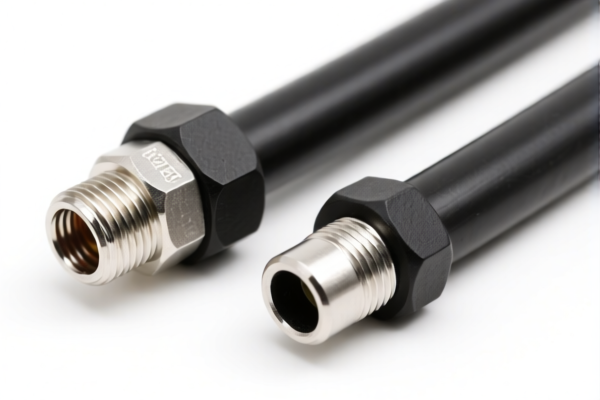


AI Analysis
🚗🔥 Automotive Reinforced Rubber Tubes with Fittings (The Ultimate Guide to HS Codes & 2026 Tax Strategy)
🌐 HS Code Classification & Customs Clearance Manual | 2026 Taxation Analysis | Expert Logistics Strategy
📌 一、Product Definition: Are You Sure What "Automotive Tube" Means?
Automotive rubber tubes with fittings are the arteries of the modern vehicle, transporting fuel, coolant, brake fluid, air, and vacuum under high pressure and extreme temperatures. In international trade, they are not treated as a single generic item. Their classification depends entirely on construction, material composition, and accessory integration.
The Two Key Categories: 1. Hardened/Reinforced Tubes with Fittings (Pre-assembled): Tubes where the rubber is reinforced (braided or spiral) and pre-installed with metal/ceramic fittings for specific vehicle applications. * Target: Fuel lines, brake lines, turbo hoses. * HS Focus: 4009 (Moulded or pre-assembled tubing). 2. General Rubber Tubing (Loose or Specific Accessories): Standard rubber tubes (sometimes with fittings) that don't fit the specific "automotive pre-assembled" definition, or general purpose rubber parts used in sealing. * Target: Non-automotive rubber tubes, general sealing components. * HS Focus: 4016 (Other vulcanized rubber articles).
⚠️ Critical Distinction:
- With Pre-installed Fittings for Specific Vehicle Use → Must归类 (Classify) under 4009 series. - General Rubber Parts / Sealing Components / "兜底" (Catch-all) → Fall under 4016 series. - Vulcanized Rubber Specifics → If the product is a molded rubber article not specifically a tube, look at 4016.93/4016.99.
📦 二、HS Code Classification Details (2026 Authoritative Tax Schedule)
Based on the provided data, here is the precise breakdown for Automotive Reinforced Rubber Tubes with Fittings:
| HS Code | Product Description (Summary) | Material/Structure Match | Key Feature |
|---|---|---|---|
| 4009.12.00.20 | Rubber Tubes, Matching Tubing with Accessories | Pre-assembled with fittings | Fitted Tubes (Specific automotive use) |
| 4009.12.00.50 | Rubber Tubes, Matching Tubing with Accessories & Catch-all Category | Pre-assembled + Fallback Category | Fitted Tubes + General Fallback |
| 4016.93.50.20 | Rubber Tubes, Matching Vulcanized Rubber Materials & Sealing Components | Vulcanized Rubber + Sealing | Vulcanized Parts / Sealing |
| 4016.99.60.50 | Rubber Tubes, Matching Vulcanized Rubber Articles & Catch-all Category | Vulcanized Rubber + Fallback | General Vulcanized Items |
🔍 Classification Logic:
- If your tube is a reinforced automotive hose with permanently attached metal/ceramic fittings, it belongs to 4009.12.xx. - If the item is a rubber component (like a gasket, seal, or a tube without specific automotive fittings) or falls into a general vulcanized rubber category, it belongs to 4016.93.xx or 4016.99.xx.
💰 三、2026 Customs Duty & Tax Rate Breakdown (Detailed & Critical)
✅ Applicable Market: United States (US)
✅ Origin: China (CN)
✅ Effective Date: Current & Projected 2026 Tax Regime
✅ Structure: Base Tariff + Section 301 (Added) + Section 122 (Countermeasures)
🎯 Scenario A: Automotive Tubes with Fittings (4009.12.00.20 / 50)
Best for: Pre-assembled fuel/brake hoses.
| Tax Component | Rate | Legal Basis / Description |
|---|---|---|
| Base Tariff | 2.5% | Standard MFN Duty for Rubber Tubes. |
| Section 301 "Added" Tariff | 7.5% | Additional tariff on specific rubber articles from China. |
| Section 122 Tariff | 10.0% | Crucial: New "122 Clause" Tariff (Countermeasures). |
| TOTAL TAX RATE | 20.0% | (2.5% + 7.5% + 10.0%) |
📌 Explanation:
- Total: 20%. This is the "Fitted Tube" rate. - The 10% Section 122 tariff is a significant new cost driver for Chinese-origin rubber products. - Applicable Codes:4009.12.00.20(Specific) and4009.12.00.50(Catch-all).
🎯 Scenario B: General Vulcanized Rubber Parts / Sealing (4016.93.50.20 / 4016.99.60.50)
Best for: General rubber seals, non-specific tubing, or fallback categories.
| Tax Component | Rate | Legal Basis / Description |
|---|---|---|
| Base Tariff | 2.5% | Standard MFN Duty for Other Rubber Articles. |
| Section 301 "Added" Tariff | 25.0% | High Rate: Applied to broader rubber articles and specific components. |
| Section 122 Tariff | 10.0% | Crucial: New "122 Clause" Tariff (Countermeasures). |
| TOTAL TAX RATE | 37.5% | (2.5% + 25.0% + 10.0%) |
📌 Explanation:
- Total: 37.5%. This is the "Vulcanized/Sealing/Fallback" rate. - Warning: If your product is a reinforced tube with fittings but is misclassified into a general "vulcanized article" bucket (e.g.,4016instead of4009), you MUST pay this higher 37.5% rate. - Applicable Codes:4016.93.50.20(Sealing/Vulcanized) and4016.99.60.50(Catch-all Vulcanized).
🛠️ 四、Customs Clearance Practical Guide (Avoiding the 17.5% Pitfall)
✅ 1. Material & Structure Verification (The "Fitting" Test)
Before shipping, you must answer "Yes/No" to this critical question:
"Are the metal/ceramic fittings permanently attached (crimped, molded, or bonded) to the rubber tube for a specific automotive application?"
| Answer | Correct HS Code | Total Tax | Risk if Wrong |
|---|---|---|---|
| YES (Pre-assembled) | 4009.12.00.20 / 50 | 20.0% | ⚠️ Risk: If you claim 20% but it's actually general rubber, you face penalties. |
| NO (Loose fittings / General seal) | 4016.93.50.20 / 99.60.50 | 37.5% | ⚠️ Risk: If you claim 37.5% but it's pre-assembled, you overpay by 17.5%! |
✅ 2. Required Documentation for US Customs (CBP)
| Document | Requirement | Why It Matters |
|---|---|---|
| Technical Drawing | Must show the fitted connection (crimped/bonded). | Proves it's a "Tube with Fittings" (4009), not just "Rubber" (4016). |
| Material Certificate | Specify "Vulcanized Rubber" + "Reinforced Fabric". | Determines if it falls under 4016.93 or 4016.99. |
| Product Photo (Assembly) | Clear image of the tube + fitted end. | Visual proof of pre-assembly is critical for 4009 classification. |
| Bill of Materials (BOM) | List of rubber compound, reinforcement layers, and metal fittings. | Helps Customs verify the "122 Clause" applicability. |
| Commercial Invoice | Must describe as "Automotive Rubber Hose Assembly" or "Sealing Component". | Mismatched description triggers manual inspection. |
✅ 3. Strategic Shipping Advice
- The 122 Clause is a Game Changer: The 10% Section 122 tariff applies to BOTH 20% and 37.5% scenarios. It is non-negotiable for Chinese-origin goods.
- Optimization: If you sell general rubber seals (4016), you cannot reclassify them as "tubes with fittings" (4009) to save money. However, if you manufacture pre-assembled automotive hoses, ensure your documentation explicitly states "Fitted" to avoid the 37.5% penalty.
- Cost Calculation Example:
- Item Value: $10,000
- If 4009 (20% Tax): Duty = $2,000
- If 4016 (37.5% Tax): Duty = $3,750
- Difference: $1,750 (17.5% of value lost by misclassification).
🌍 五、Global Tax Comparison (2026 Snapshot)
| Region | Recommended HS Code | Estimated Duty | 122 Clause? | Notes |
|---|---|---|---|---|
| 🇺🇸 USA | 4009.12.00 or 4016.93/99 | 20.0% or 37.5% | ✅ YES (10%) | Highest complexity; strict "fitted" definition. |
| 🇪🇺 EU | 4009 or 4016 | 4.5% - 6.0% | ❌ No | Generally lower duties, no Section 122. |
| 🇨🇦 Canada | 4009 or 4016 | 5.0% - 8.0% | ❌ No | CUSMA may apply for some rubber articles. |
| 🇲🇽 Mexico | 4009 or 4016 | 4.0% - 6.0% | ❌ No | UFLPA compliance required. |
📌 六、Common Pitfalls & "Blood & Tears" Lessons
❌ Pitfall 1: Calling "Fitted Tubes" General "Rubber Parts"
* Mistake: Declaring as 4016.99.60.50 (General) instead of 4009.12.00.20 (Fitted).
* Consequence: You OVERPAY by 17.5% ($1,750 per $10k shipment).
* Fix: Ensure your invoice says "Rubber Hose Assembly with Fittings" and provide assembly photos.
❌ Pitfall 2: Ignoring the "122 Clause" (10%) * Mistake: Assuming only Section 301 (25% or 7.5%) applies. * Consequence: Underpayment leads to fines and shipment hold at US ports. * Fix: Always calculate Base + Section 301 + 10% Section 122.
❌ Pitfall 3: Misunderstanding "Sealing Components"
* Mistake: Trying to classify a general gasket as a "tube with fittings".
* Consequence: Customs rejects the claim, forces reclassification to 4016.93.50.20 (37.5%).
* Fix: If it's a seal/gasket, accept the 37.5% rate or restructure the product to include actual tubing.
🎯 七、Conclusion: Precision Classification = Profit Protection
🔹 Rule of Thumb:
- Pre-assembled with Fittings? → Go for 4009.12.00 → 20.0% Total. - General Seal/Vulcanized Article? → 4016.93/99 → 37.5% Total.🔹 Remember: The 10% Section 122 Tariff is mandatory for Chinese goods. Do not ignore it!
🔹 Pro Tip: If your product is a Tube with Fittings, do NOT let it slip into the "Sealing" or "General" category. The 17.5% difference can destroy your profit margin on high-volume orders.
📣 Immediate Action Required:
📞 Contact your Freight Forwarder to verify the "Fitting Assembly" status.
📄 Prepare Technical Drawings showing the connection method (Crimp/Bond).
🚀 Apply for Pre-Ruling (if applicable) to lock in the 20.0% rate before shipping.
✨ Expert Customs Clearance Starts with Exact HS Codes!
💼 Every 0.1% of tax saving is pure profit!
Customer Reviews
About HS Code Classification
The Harmonized System (HS) is an internationally standardized nomenclature developed by the World Customs Organization (WCO) to classify traded products. Over 200 countries use the HS system as the basis for customs tariffs, trade statistics, and import/export regulations.
Each HS code follows a hierarchical structure:
- Chapter (2 digits) — Broad category of goods (e.g., Chapter 84: Machinery and Mechanical Appliances)
- Heading (4 digits) — More specific grouping within the chapter
- Subheading (6 digits) — Internationally standardized breakdown, used by all WCO member countries
- National subdivisions (8-10 digits) — Country-specific extensions for further classification, such as US HTSUS 10-digit codes
Correct HS code classification is essential for smooth customs clearance, accurate duty payment, and compliance with trade regulations. Misclassification can lead to customs delays, overpayment of duties, or penalties.
When importing from CN to US, the applicable tariff rates may include:
- Most-Favored-Nation (MFN) rate — The standard duty rate applied to WTO members
- General rate — Applied to countries without trade agreements
- Trade remedy duties — Additional tariffs such as Section 301 (anti-dumping), Section 232 (national security), or countervailing duties
The information provided on this page is for reference purposes only. For official classification, please consult with your local customs authority or a licensed customs broker.