Automotive Relay Disassembly Clamp
CN → US| HS Code | Tariff Rate | Origin | Destination | Doc |
|---|---|---|---|---|
| 8479899560 | 37.5% | CN | US | Official Doc |
| 8466208065 | 38.7% | CN | US | Official Doc |
| 8477800100 | 38.1% | CN | US | Official Doc |
| 8466208040 | 38.7% | CN | US | Official Doc |
| 8479896500 | 20.3% | CN | US | Official Doc |
Product Images
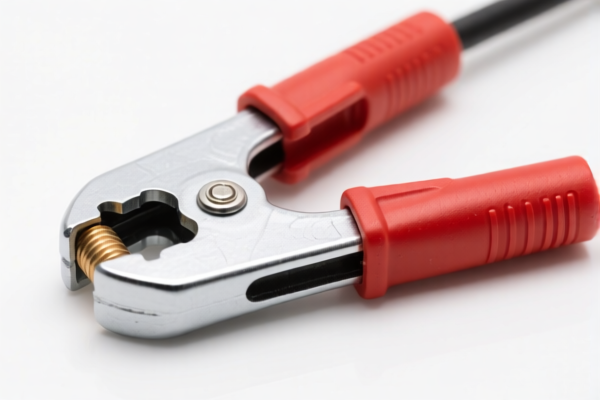
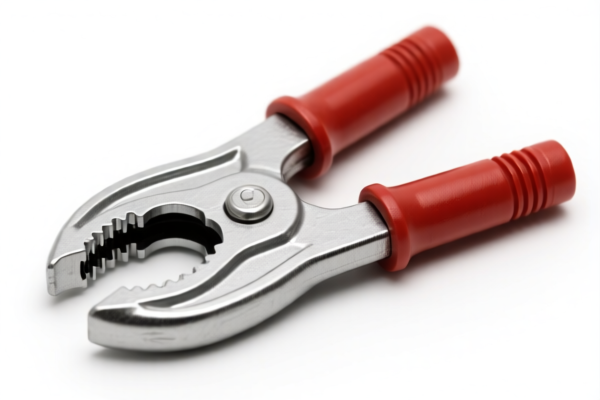
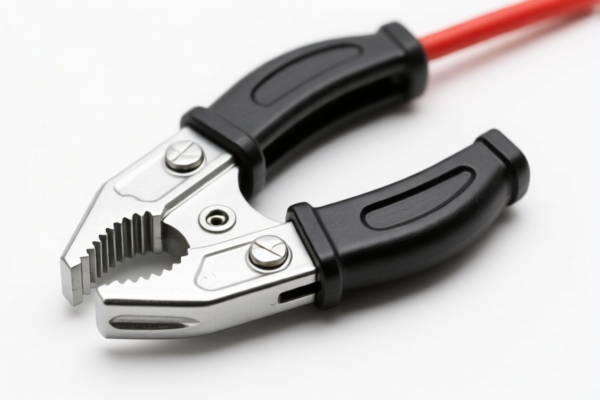
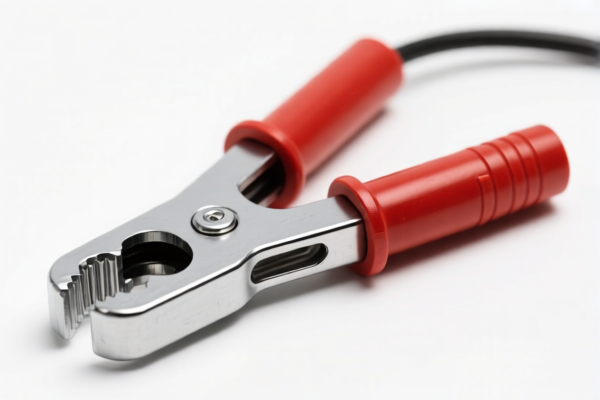
AI Analysis
🛠️ Automotive Relay Disassembly Clamp (Automotive Repair Jigs & Fixtures)
🌐 HS Code Reference & Customs Clearance Guide | 2026 Latest Tariff Analysis | Professional Strategy for High-Cost Imports
📌 I. Product Definition & Classification: Do You Know What an "Automotive Disassembly Clamp" Is?
An Automotive Relay Disassembly Clamp is a specialized tool used in automotive maintenance and repair processes. It falls under the category of mechanical appliances/tools specifically designed for clamping, holding, or manipulating components during the dismantling or assembly of vehicle relays and related mechanical systems.
In international trade, its classification depends heavily on: 1. Specific Function: Is it purely for holding (fixture/clamp) or does it have independent mechanical operation? 2. Material Composition: Metal, plastic, or hybrid? 3. Power Source: Manual, pneumatic, or electric?
⚠️ Key Distinction:
- If the device is a passive fixture used to hold parts in place during repair → Likely 8466.20 or 8479.89.
- If it is an active tool with a specific dedicated function in automotive repair → Likely 8479.89.
- If it has self-contained electric motor functionality → Likely 8479.89.65.
📦 II. HS Code Classification Details (2026 Latest Tariff Authority Comparison)
Based on the provided data, here are the 5 most likely HS Codes for this product, ranked by relevance and clarity:
| HS Code | Product Description | Applicable Scenario | Tax Rate | Conflict Check |
|---|---|---|---|---|
8479.89.95.60 |
Automotive Repair Mechanical Tool (Disassembly Clamp) | Specifically for automotive repair processes; defined as a mechanical appliance for repair. | 37.5% | ✅ No material conflict. Fits "Automotive Repair Machinery" definition. |
8466.20.80.65 |
Fixture / Workholding Device | General industrial clamping; inferred metal/plastic material. | 38.7% | ✅ Consistent with "workholding fixtures"; no material conflict. |
8466.20.80.40 |
Fixture & Fastening Device | Tool category; consistent with workholding logic. | 38.7% | ✅ No material conflict; fits tool classification. |
8477.80.01.00 |
Mechanical Tool / Equipment (General) | Fallback category for mechanical tools if specific automotive repair classification is rejected. | 38.1% | ✅ No obvious material conflict; "Other Machinery" catch-all. |
8479.89.65.00 |
Tool / Fixture with Self-Contained Motor | Independent mechanical device; inferred metal/plastic. | 20.3% | ✅ No conflict with "Electric Machinery with Self-Contained Motor". |
🔍 Critical Insight:
-8479.89.95.60is the most precise if the tool is explicitly marketed and used for automotive repair.
-8479.89.65.00offers the lowest tax burden (20.3%) but requires the device to have a self-contained electric motor. If it's manual/pneumatic, this code is incorrect and risks customs penalties.
-8466.20codes are safer if the device is considered a generic industrial fixture rather than a dedicated automotive repair tool.
💰 III. 2026 Latest Tariff Rate Breakdown (Including Surtaxes & Policy Add-ons)
✅ Applicable Country: United States (US)
✅ Origin: China (CN)
✅ Effective Time: Post-November 2025 (Current 2026 Trade Policy)
🎯 1. 8479.89.95.60 —— Best Fit for Automotive Repair Tool
| Item | Content |
|---|---|
| Base Tariff | 2.5% (General Ad Valorem) |
| Section 301 Surcharge | +25.0% (USITC Footnote for Chinese Origin) |
| Section 122 Tariff | +10.0% (Specific to certain mechanical/appliance categories from China) |
| Total Tax Rate | 37.5% |
| Calculation Method | CIF Value × 37.5% |
| De Minimis Exemption | ❌ Not Eligible (Section 301 & 122 taxes are not exempt under $800) |
| Legal Path | HS:8479.89.95.60 → USITC:301Footnote → IEEPA:122 |
📌 Explanation:
- This code is specifically tailored for automotive repair mechanical appliances.
- The 25% Section 301 tariff is standard for most Chinese machinery/tools.
- The 10% Section 122 tariff is a specific additional levy on certain mechanical items.
- Total 37.5% is significant but justified by the specific "automotive repair" function.
🎯 2. 8466.20.80.65 & 8466.20.80.40 —— Generic Fixture Classifications
| Item | Content |
|---|---|
| Base Tariff | 3.7% |
| Section 301 Surcharge | +25.0% |
| Section 122 Tariff | +10.0% |
| Total Tax Rate | 38.7% |
| Calculation Method | CIF Value × 38.7% |
| De Minimis Exemption | ❌ Not Eligible |
📌 Explanation:
- These codes treat the product as a generic workholding fixture.
- The tax rate is slightly higher (38.7%) than the automotive-specific code due to a higher base rate (3.7% vs 2.5%).
- Use this if customs rejects the "automotive repair" function and classifies it as a general industrial tool.
🎯 3. 8477.80.01.00 —— Fallback Mechanical Tool
| Item | Content |
|---|---|
| Base Tariff | 3.1% |
| Section 301 Surcharge | +25.0% |
| Section 122 Tariff | +10.0% |
| Total Tax Rate | 38.1% |
| Calculation Method | CIF Value × 38.1% |
| De Minimis Exemption | ❌ Not Eligible |
📌 Explanation:
- A "catch-all" for mechanical tools not elsewhere specified.
- Slightly cheaper than8466.20but more ambiguous.
🎯 4. 8479.89.65.00 —— Lowest Tax (Conditional on Electric Motor)
| Item | Content |
|---|---|
| Base Tariff | 2.8% |
| Section 301 Surcharge | +7.5% (Reduced Section 301 for certain machinery) |
| Section 122 Tariff | +10.0% |
| Total Tax Rate | 20.3% |
| Calculation Method | CIF Value × 20.3% |
| De Minimis Exemption | ❌ Not Eligible |
📌 ⚠️ Critical Warning:
- This code is ONLY valid if the clamp has a self-contained electric motor.
- If it is manual, pneumatic, or hydraulic without an integrated electric motor, using this code constitutes misclassification, leading to:
- Back taxes (difference between 20.3% and actual rate)
- Penalties (up to 3x the tax amount)
- Cargo detention
- Recommendation: Only use this if the product spec sheet explicitly states "Motorized" or "Electrically Driven".
🛠️ IV. Customs Clearance Practical Advice (Avoid These Pitfalls)
✅ 1. Required Documentation Checklist
| Document | Required | Notes |
|---|---|---|
| ✅ Product Specification Sheet | ✔️ | Must clearly state: Material, Power Source (Manual/Electric), Function (Clamping/Disassembly). |
| ✅ Photos (Clear & Detailed) | ✔️ | Show the clamp in use, labels, and any motor/electrical components if applicable. |
| ✅ Commercial Invoice | ✔️ | Description: "Automotive Relay Disassembly Clamp, Manual/Electric, Model XYZ". |
| ✅ Packing List | ✔️ | Indicate if any batteries, power cords, or accessories are included. |
| ✅ Certification | ✔️ | CE, UL, or other safety certs if electric. |
| ✅ Origin Certificate | ✔️ | Prove Chinese origin to apply correct Section 301/122 tariffs. |
✅ 2. Declaration Strategy
🔥 "Be Precise, Don't Guess, Match the Function!"
| Scenario | Recommended HS Code | Risk |
|---|---|---|
| Automotive-specific tool (Manual/Pneumatic) | 8479.89.95.60 |
Low risk if function is clear. |
| General industrial fixture | 8466.20.80.65 |
Medium risk if claimed as "automotive". |
| Motorized Clamp | 8479.89.65.00 |
High risk if not truly motorized. |
| Ambiguous Tool | 8477.80.01.00 |
Medium risk as fallback. |
✅ 3. Special Handling Tips
- Do Not Split Declarations: Declare the clamp as a single unit. Do not split into "clamp" and "accessories" to avoid higher component taxes.
- Material Declaration: Clearly state material (e.g., "Steel, Aluminum, Plastic"). Misdeclaring material can lead to rejection.
- Function Statement: Use terms like "Automotive Repair Tool" or "Workholding Fixture for Relay Maintenance" in the description to guide customs officers.
🌍 V. Global Market Clearance Comparison (2026)
| Market | Recommended HS Code | Estimated Tax (China Origin) | Key Requirement |
|---|---|---|---|
| 🇺🇸 USA | 8479.89.95.60 |
37.5% | Section 301 + 122 taxes apply. |
| 🇨🇳 China | 8479.89.95.60 |
~5-10% | Standard import VAT. |
| 🇪🇺 EU | 8479.89.65 (if motorized) |
~2.7-4.7% | CE Marking required. |
| 🇬🇧 UK | 8479.89.65 |
~3-6% | UKCA Marking. |
📌 Note: The US is the highest-cost market due to Section 301 and 122 tariffs. Plan pricing accordingly.
📌 VI. Common Mistakes & Pitfalls
❌ Mistake 1: Declaring a manual clamp as 8479.89.65.00 (Motorized)
👉 Result: Customs audit, back taxes, penalty.
✅ Fix: Verify power source. If no motor, use 8479.89.95.60 or 8466.20.
❌ Mistake 2: Vague Description "Repair Tool"
👉 Result: Customs reclassifies to highest duty rate.
✅ Fix: Use specific description: "Automotive Relay Disassembly Fixture, Manual, Steel/Plastic".
❌ Mistake 3: Ignoring Section 122 Tariff
👉 Result: Underpayment by 10%.
✅ Fix: Always include 122 tariff in cost calculation for Chinese machinery/tools.
🎯 VII. Conclusion: Optimize Cost & Compliance
🎯 Key Takeaway:
- For non-motorized automotive relay disassembly clamps, 8479.89.95.60 (37.5%) is the most accurate and defensible classification.
- For motorized versions, 8479.89.65.00 (20.3%) offers significant savings if fully compliant.
- Avoid 8466.20 unless you cannot prove the automotive-specific function, as it carries a slightly higher tax rate.
📌 Pro Tip:
Apply for a Customs Ruling (Pre-classification) from CBP if unsure. It provides legal certainty and protects against future audits.
✨ Professional Clearance Starts with Accurate Classification!
💼 Save Money, Avoid Delays, Stay Compliant!
Customer Reviews
About HS Code Classification
The Harmonized System (HS) is an internationally standardized nomenclature developed by the World Customs Organization (WCO) to classify traded products. Over 200 countries use the HS system as the basis for customs tariffs, trade statistics, and import/export regulations.
Each HS code follows a hierarchical structure:
- Chapter (2 digits) — Broad category of goods (e.g., Chapter 84: Machinery and Mechanical Appliances)
- Heading (4 digits) — More specific grouping within the chapter
- Subheading (6 digits) — Internationally standardized breakdown, used by all WCO member countries
- National subdivisions (8-10 digits) — Country-specific extensions for further classification, such as US HTSUS 10-digit codes
Correct HS code classification is essential for smooth customs clearance, accurate duty payment, and compliance with trade regulations. Misclassification can lead to customs delays, overpayment of duties, or penalties.
When importing from CN to US, the applicable tariff rates may include:
- Most-Favored-Nation (MFN) rate — The standard duty rate applied to WTO members
- General rate — Applied to countries without trade agreements
- Trade remedy duties — Additional tariffs such as Section 301 (anti-dumping), Section 232 (national security), or countervailing duties
The information provided on this page is for reference purposes only. For official classification, please consult with your local customs authority or a licensed customs broker.