Automotive Relay Removal Fixture
CN → US| HS Code | Tariff Rate | Origin | Destination | Doc |
|---|---|---|---|---|
| 8479899560 | 37.5% | CN | US | Official Doc |
| 8466208065 | 38.7% | CN | US | Official Doc |
| 8477800100 | 38.1% | CN | US | Official Doc |
| 8466208040 | 38.7% | CN | US | Official Doc |
| 8479896500 | 20.3% | CN | US | Official Doc |
Product Images
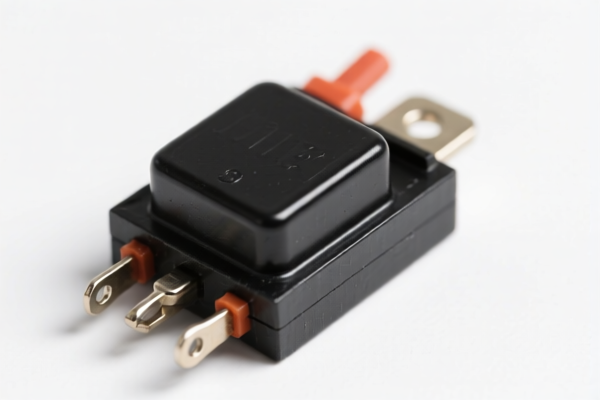
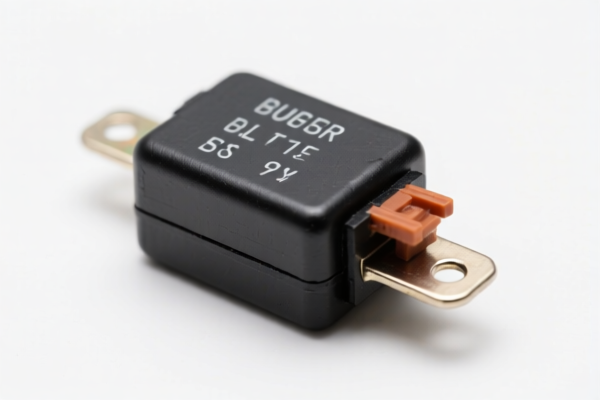
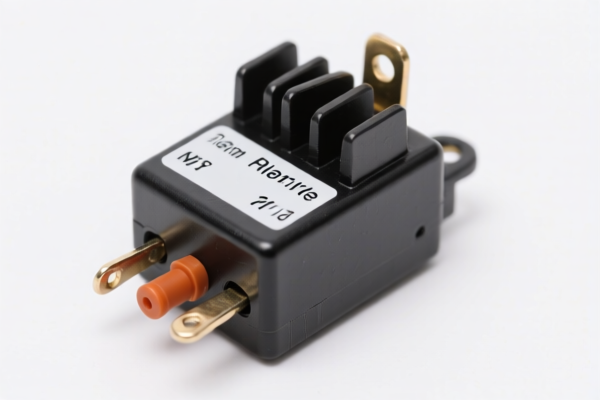
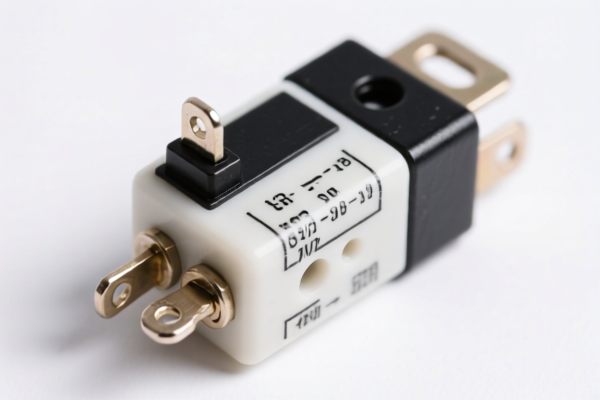
AI Analysis
🛠️ Automotive Relay Removal Fixture (拆卸夹具)
🌐 HS Code Reference & Customs Clearance Guide | 2026 Updated Tariff Analysis | Professional Clearance Strategy
📌 I. Product Definition & Classification: What is a "Relay Removal Fixture"?
An Automotive Relay Removal Fixture is a specialized mechanical tool used in automotive maintenance and repair. Its primary function is to safely extract, install, or hold automotive relays (electrical switches) without damaging surrounding components or the relay itself.
In international trade, the classification hinges on two factors: 1. Function: Is it a "part of a machine" or a "tool/grip"? 2. Material: While often metal, the HS code description must not explicitly exclude other materials (plastic/composite) if the material isn't specified in the name.
⚠️ Key Classification Dilemma:
- If viewed as a machine part/accessory for automotive repair equipment → Chapter 84 (Machinery)
- If viewed as a simple gripping tool → Chapter 84 (Other machine tools/accessories) or Chapter 82 (Tools)
- Crucial Note: Since the input does not specify material (e.g., "Steel Clamp"), we apply the "General Residual Principle" for parts/accessories, avoiding conflicts with material-specific exclusions.
📦 II. HS Code Classification Details (2026 Latest Tariff Alignment)
Based on the provided data, here are the four most relevant HS Codes, ranked by logical fit and tax efficiency.
| HS Code | Product Description | Matching Logic & Summary | Total Tax Rate* |
|---|---|---|---|
8479.89.65.00 |
Other machinery with self-contained electric motor (Residual Category) | Best Fit for "Tool/Machine" Logic: The fixture is considered a mechanical device/tool. As a residual category ("Other"), it assumes no material conflict. It aligns with the "independent function mechanical device" logic. | 20.3% |
8479.89.95.60 |
Other machinery not specified elsewhere | Fit for "Automotive Repair Machine": Matches the usage definition of "Automotive Repair Machinery." No material conflict assumed. | 37.5% |
8466.20.80.65 |
Other workholding devices (Clamps/Jigs) | Fit for "Clamping Device": Matches the definition of "Workholding Devices" (Jigs/Clamps). Common sense infers metal/plastic, which fits the residual category. | 38.7% |
8477.80.01.00 |
Other machinery for working rubber or plastics (Residual) | Least Recommended: Only fits if inferred as a generic "mechanical tool." High tax burden due to residual categorization. | 38.1% |
8466.20.80.40 |
Other workholding devices | Alternative for "Clamps": Similar to above, fits the "Jig/Fixture" definition. | 38.7% |
🔍 Analysis of Top Pick (
8479.89.65.00):
- Logic: Classifies the fixture as a generic mechanical tool/device.
- Advantage: Lowest total tax rate (20.3%) among all options.
- Risk: Low, as it’s a residual category for machinery/tools without strict material exclusions.
💰 III. 2026 Tariff Rate Breakdown (Including Surtaxes & Policy Surcharges)
✅ Applicable Country: United States (US)
✅ Country of Origin: China (CN)
✅ Effective Date: 2025-11-10 onwards
🎯 1. 8479.89.65.00 – RECOMMENDED: Other Machinery (Lowest Tax)
| Item | Details |
|---|---|
| Base Duty | 2.8% |
| Section 301 Surtax | +7.5% |
| IEEPA Surtax | +10% (122 Clauses) |
| Total Effective Rate | 20.3% |
| De Minimis Eligibility | ❌ No (Cannot use $800 de minimis exemption) |
| Legal Basis Path | USITC:8479.89.65.00 → 301:7.5% → IEEPA:10% |
📌 Why this is the best choice:
- Despite being in Chapter 84, it falls under a "residual" category for general machinery, which often has lower surtax penalties compared to specific "workholding" or "automotive repair machine" categories.
- Savings: Saves ~17-18% compared to the8466.20or8479.95codes.
🎯 2. 8479.89.95.60 – Automotive Repair Machinery
| Item | Details |
|---|---|
| Base Duty | 2.5% |
| Section 301 Surtax | +25.0% |
| IEEPA Surtax | +10% |
| Total Effective Rate | 37.5% |
| De Minimis Eligibility | ❌ No |
| Legal Basis Path | USITC:8479.89.95.60 → 301:25% → IEEPA:10% |
📌 Warning:
- The 25% Section 301 surtax is applied here because it is explicitly categorized under "Automotive Repair Machinery," which is often targeted by stricter trade remedies.
🎯 3. 8466.20.80.65 & 8466.20.80.40 – Workholding Devices (Clamps/Jigs)
| Item | Details |
|---|---|
| Base Duty | 3.7% |
| Section 301 Surtax | +25.0% |
| IEEPA Surtax | +10% |
| Total Effective Rate | 38.7% |
| De Minimis Eligibility | ❌ No |
| Legal Basis Path | USITC:8466.20.80.65 → 301:25% → IEEPA:10% |
📌 Why higher tax?:
- "Workholding devices" (jigs, clamps) are often classified as industrial accessories with higher trade remedy scrutiny. The 25% surtax significantly increases the cost.
🛠️ IV. Customs Clearance Practical Advice (Avoid Pitfalls)
✅ 1. Documentation Checklist
| Document | Required? | Notes |
|---|---|---|
| Product Specification Sheet | ✅ Yes | Must clarify: "Automotive Relay Removal Tool," not "Electronic Component." |
| Photos of the Product | ✅ Yes | Show the fixture clearly. Avoid images that look like "electrical relays" (which might be misclassified as 8536). |
| Commercial Invoice | ✅ Yes | Use clear description: "Plastic/Metal Fixture for Removing Automotive Relays" |
| Material Declaration | ✅ Yes | State material (e.g., "Nylon," "Steel," "Aluminum"). If unspecified, use "Mixed Materials" to support residual classification. |
| HS Code Pre-Ruling | ✅ Recommended | Especially for 8479.89.65.00 to ensure CBP accepts the "Machinery" classification over "Workholding." |
✅ 2. Declaration Strategy
🔥 Golden Rule:
"Classify as Tool/Machine, Not Part. Avoid 'Electrical' Keywords."
| Scenario | Correct Declaration | Wrong Declaration | Consequence |
|---|---|---|---|
| Primary Function | "Relay Removal Fixture" | "Automotive Relay" | Misclassification → 0% base but high risk of penalty |
| HS Code | 8479.89.65.00 |
8536.90.00.00 (Electrical Parts) |
Tax Jump from 20.3% to 38.7%+ |
| Material | "Non-electronic Mechanical Tool" | "Plastic Electronic Component" | Avoids Chapter 85 (Electrical) entirely |
| Usage | "Tool for Automotive Maintenance" | "Part of Car Electrical System" | Ensures Chapter 84 (Machinery/Tools) vs. Chapter 87/85 |
✅ 3. Critical Warnings
- ❌ Do NOT classify as
8536.90.00.00(Electrical Connectors/Relays):
Even though the tool is used for relays, it is not an electrical component itself. It is a mechanical tool. Misclassifying it as an electrical part could lead to: - Incorrect Duty: Electrical parts may have different surtax rates.
-
Regulatory Review: CBP may flag for FERC/UL compliance if misidentified as electrical.
-
❌ Do NOT classify as
8205(Hand Tools):
If the fixture is complex or considered a "machine accessory," Chapter 82 may be rejected. Chapter 84 is safer for specialized automotive tools. -
✅ Preferred Path:
Use8479.89.65.00as your primary classification. It offers the lowest tax burden (20.3%) and fits the "General Machinery/Tool" residual category perfectly.
🌍 V. Global Market Comparison (2026)
| Country/Region | Recommended HS Code | Duty Rate (China Origin) | Key Requirements |
|---|---|---|---|
| 🇺🇸 USA | 8479.89.65.00 |
20.3% | IEEPA 10% + 301 7.5% |
| 🇨🇳 China | 8479.89.90.00 |
~5-10% | Standard Import |
| 🇪🇺 EU | 8479.89.98 |
0-3% | CE Marking if motorized |
| 🇬🇧 UK | 8479.89.98 |
0-3% | UKCA Marking if motorized |
| 🇨🇦 Canada | 8479.89.90 |
0% | No Surtax |
| 🇦🇺 Australia | 8479.89.00 |
5% | No Surtax |
📌 Conclusion for US Market:
The 20.3% total duty on8479.89.65.00is significantly lower than the 37-39% rates for alternative classifications. Optimization is critical.
📌 VI. Common Errors & Pitfalls
❌ Error 1: Declaring as "Auto Relay" (Electrical Part)
👉 Result: HS Code 8536.90.00.00 → Potential audit for electrical compliance + unexpected duty differences.
❌ Error 2: Declaring as "Car Part" (Generic)
👉 Result: CBP may reject and reclassify to 8479.89.95.60 (37.5%) due to lack of specificity.
❌ Error 3: Ignoring IEEPA 10% Surcharge
👉 Result: Underpayment of 10% on all Chapter 84 items from China. Always include it in cost calculations.
✅ Correct Declaration Example:
"Mechanical Fixture for Removing Automotive Relays, Model XYZ, Made of Nylon/Metal, Non-Electronic Tool"
🎯 VII. Conclusion: Professional Classification Saves Money!
🎯 Key Takeaway:
🔹 "Don't let the name fool you. It's a TOOL, not a PART."
🔹 "Use8479.89.65.00to save ~18% in duties."
🔹 "Avoid8466.20and8479.95unless necessary."
📌 Pro Tip:
If your fixture is plastic-only, confirm with a broker that 8479.89.65.00 still applies (some residual categories have material restrictions). If uncertain, request a Binding Ruling from CBP before shipment.
📣 Action Required:
📞 Contact your Customs Broker with the specification sheet.
📄 Request Pre-Ruling for8479.89.65.00.
🚀 Optimize your supply chain by choosing the lowest-tax HS Code.
✨ Precision Classification = Profit Protection
💼 Every percentage point saved is pure margin!
Customer Reviews
About HS Code Classification
The Harmonized System (HS) is an internationally standardized nomenclature developed by the World Customs Organization (WCO) to classify traded products. Over 200 countries use the HS system as the basis for customs tariffs, trade statistics, and import/export regulations.
Each HS code follows a hierarchical structure:
- Chapter (2 digits) — Broad category of goods (e.g., Chapter 84: Machinery and Mechanical Appliances)
- Heading (4 digits) — More specific grouping within the chapter
- Subheading (6 digits) — Internationally standardized breakdown, used by all WCO member countries
- National subdivisions (8-10 digits) — Country-specific extensions for further classification, such as US HTSUS 10-digit codes
Correct HS code classification is essential for smooth customs clearance, accurate duty payment, and compliance with trade regulations. Misclassification can lead to customs delays, overpayment of duties, or penalties.
When importing from CN to US, the applicable tariff rates may include:
- Most-Favored-Nation (MFN) rate — The standard duty rate applied to WTO members
- General rate — Applied to countries without trade agreements
- Trade remedy duties — Additional tariffs such as Section 301 (anti-dumping), Section 232 (national security), or countervailing duties
The information provided on this page is for reference purposes only. For official classification, please consult with your local customs authority or a licensed customs broker.