Automotive Relay Tester
CN → US| HS Code | Tariff Rate | Origin | Destination | Doc |
|---|---|---|---|---|
| 9031808085 | 35.0% | CN | US | Official Doc |
| 9030333800 | 35.0% | CN | US | Official Doc |
| 9031808060 | 35.0% | CN | US | Official Doc |
| 9030390100 | 35.0% | CN | US | Official Doc |
| 8536410020 | 37.7% | CN | US | Official Doc |
Product Images
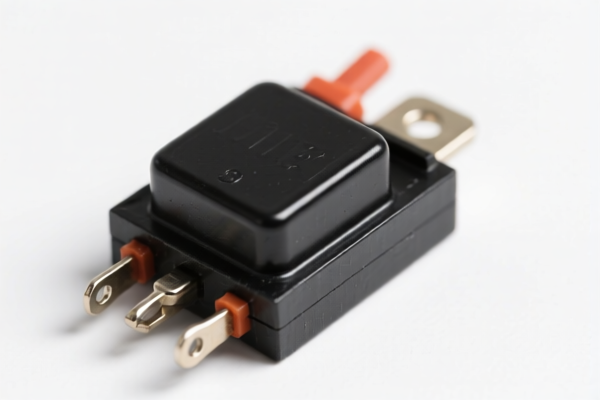
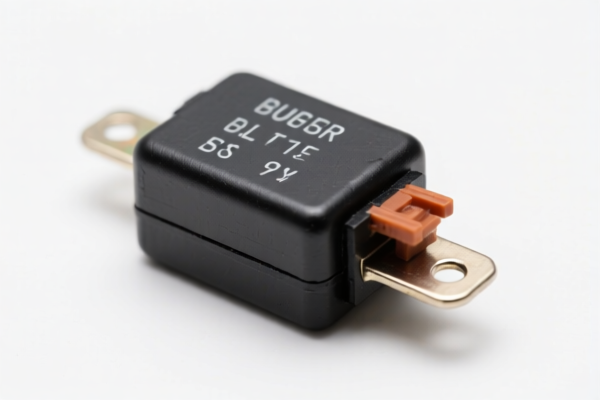
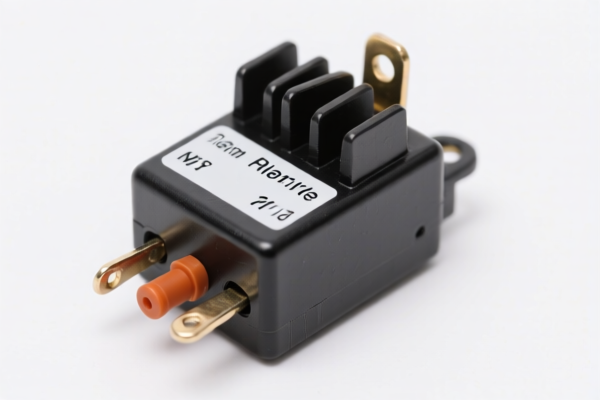
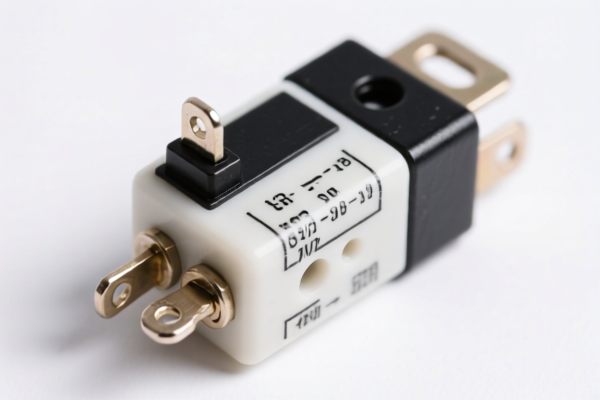
AI Analysis
🚗 Automotive Relay Tester: HS Code Classification & 2026 US Customs Clearance Guide
🌐 HS Code Reference & Customs Strategy | 2026 Latest Tariff Analysis | Professional Clearance Guide
📌 1. Product Definition & Classification: What Exactly is an "Automotive Relay Tester"?
An Automotive Relay Tester is a specialized diagnostic instrument used to verify the electrical performance, switching speed, coil resistance, and contact integrity of relays used in vehicle electrical systems.
In international trade, classification depends heavily on functionality and specificity: * Dedicated Testers (9030/9031 Series): If the device is designed specifically to measure electrical parameters (current, voltage, resistance, timing) or test circuit integrity, it is classified as a measuring or inspecting instrument. * Automotive Switches/Relays (8536 Series): If the item is the relay itself (the component being tested) rather than the device testing it, it falls under electrical circuits switches and protection apparatus.
⚠️ Critical Distinction:
- If the product is a handheld/tabletop instrument used to test relays → HS Code 9030 or 9031.
- If the product is the relay component used in cars → HS Code 8536.
(Note: The provided data includes both scenarios. Below we analyze the most common scenario: the Tester Instrument.)
📦 2. HS Code Classification Details (2026 Latest Tariff Alignment)
Based on the provided data, here are the applicable HS Codes for Relay Testers and Automotive Relays:
| HS Code | Product Description | Application Scenario | Classification Logic |
|---|---|---|---|
9030.33.38.00 |
Relay Tester (No Data Recording) | Electrical parameter measurement (V/I/R) without data logging. | Fits "Instruments for measuring/checking voltage or current, not incorporating data recording." |
9030.39.01.00 |
Relay Tester (With Data Display/Record) | Advanced testers with LCD screens or data logging capabilities. | Fits "Other instruments for measuring/checking electrical quantities, incorporating data recording or display devices." |
9031.80.80.85 |
General Purpose Relay Tester | Classified as a general measuring/inspecting instrument. | Used when specific electrical subheadings (9030) are too narrow; relies on "Usage Match." |
9031.80.80.60 |
Electrical Characteristic Tester | Testing electrical characteristics of internal combustion engines or related equipment. | Focuses on "Testing electrical characteristics" within broader mechanical/electrical testing devices. |
8536.41.00.20 |
Automotive Relay (The Component) | The actual relay switch used in low-voltage automotive systems. | Classified as an electrical switch/protection device for low voltage (<1000V). NOT a tester. |
🔍 Key Insight:
- Most dedicated relay testers fall under 9030 (Measuring/Checking Instruments).
-9030.33.38.00is for basic testers (no data storage).
-9030.39.01.00is for smart testers (with display/recording).
- Do not confuse the tester (instrument) with the relay (component). The component8536.41.00.20has a different tax rate.
💰 3. 2026 US Tariff Rate Breakdown (Including Supplementary Duties)
✅ Applicable Country: United States (US)
✅ Country of Origin: China (CN)
✅ Effective Date: November 10, 2025 onwards
🎯 1. 9030.33.38.00 – Relay Tester (No Data Recording)
This is the most common code for basic relay testers.
| Item | Detail |
|---|---|
| Base Tariff | 0.0% (General Rate) |
| Section 301 Additional Duty | +25.0% (25% tariff on Chinese goods) |
| IEEPA Section 122 Duty | +10.0% (Specific additional duty on Chinese imports) |
| Total Tax Rate | 35.0% |
| Calculation Method | CIF Value × 35% |
| De Minimis Exemption | ❌ Not Eligible (deny_de_minimis applies to Section 301 goods) |
| Legal Pathway | USITC:9030.33.38.00 → Section 301: 25% → IEEPA: 10% |
📌 Explanation:
- 0% Base: Standard MFN rate for measuring instruments is often zero.
- 25% Section 301: Applies to all Chinese-made instruments in this category.
- 10% IEEPA: Additional levy under International Emergency Economic Powers Act.
- Total: 35%. This is a high-cost clearance item.
🎯 2. 9030.39.01.00 – Relay Tester (With Data Display/Recording)
| Item | Detail |
|---|---|
| Base Tariff | 0.0% |
| Section 301 Additional Duty | +25.0% |
| IEEPA Section 122 Duty | +10.0% |
| Total Tax Rate | 35.0% |
| Calculation Method | CIF Value × 35% |
| De Minimis Exemption | ❌ Not Eligible |
📌 Note:
- Even with advanced features (LCD screen, data storage), the base duty remains 0%, but the supplementary duties remain 35%.
- Classification as "9030.39" vs "9030.33" depends on whether it records data. If it just displays but doesn't store to memory, it might still qualify for9030.33. Check technical specs carefully.
🎯 3. 9031.80.80.85 & 9031.80.80.60 – General/Engine Electrical Testers
| Item | Detail |
|---|---|
| Base Tariff | 0.0% |
| Section 301 Additional Duty | +25.0% |
| IEEPA Section 122 Duty | +10.0% |
| Total Tax Rate | 35.0% |
📌 Note:
- These codes are fallbacks if the device doesn't fit neatly into 9030.
- Same 35% total tax. No advantage in duty rate.
🎯 4. 8536.41.00.20 – Automotive Relay (Component Only)
⚠️ If you are importing the RELAY, not the TESTER.
| Item | Detail |
|---|---|
| Base Tariff | 2.7% |
| Section 301 Additional Duty | +25.0% |
| IEEPA Section 122 Duty | +10.0% |
| Total Tax Rate | 37.7% |
| Calculation Method | CIF Value × 37.7% |
📌 Critical Warning:
- The component (Relay) has a higher total tax (37.7%) than the instrument (Tester, 35%).
- Do not misdeclare a Tester as a Relay to save money; customs will reject based on product description.
- Conversely, do not declare a Relay as a Tester; it will be misclassified.
🛠️ 4. Customs Clearance Practical Advice (Risk Mitigation)
✅ 1. Documentation Checklist (Mandatory)
| Document | Required? | Purpose |
|---|---|---|
| ✅ Product Specification Sheet | ✔️ | Must clearly state: "Instrument for testing relays," "Measures Voltage/Current," "Model No." |
| ✅ User Manual | ✔️ | Prove it is a tester, not a component. Highlight functions like "Test Coil Resistance," "Switching Time." |
| ✅ Photos (Front/Back/Interface) | ✔️ | Show probes, screens, or connectors. Prove it has no internal relays being sold. |
| ✅ Commercial Invoice | ✔️ | Description: "ELECTRICAL RELAY TESTER, MODEL XYZ, FOR DIAGNOSTIC PURPOSES" |
| ✅ Certificate of Origin | ✔️ | Required for Section 301 and IEEPA calculation. |
| ✅ FCC Certification (if US Market) | ✔️ | Electronic testing equipment may require FCC ID for electromagnetic compatibility. |
✅ 2. Classification Strategy (Key Rules)
🔥 Golden Rule: "Function Determines Code, Not Just Name!"
| Scenario | Correct HS Code | Risk if Wrong |
|---|---|---|
| Basic Relay Tester (No data storage) | 9030.33.38.00 |
Misclassifying as 9031 may cause delays for clarification. |
| Smart Relay Tester (LCD/Data Log) | 9030.39.01.00 |
Misclassifying as 9030.33 is illegal if it has data recording. |
| Automotive Relay Component | 8536.41.00.20 |
If declared as Tester, will be seized/rejected for false declaration. |
| Mixed Shipment (Tester + Relays) | Split Declaration | Must declare Tester under 9030 and Relays under 8536 separately. |
✅ 3. Special Cases & Pitfalls
| Situation | Recommendation |
|---|---|
| OEM Custom Testers | Provide design drawings showing circuit board as measurement module, not switching module. |
| Tester + Spare Relays Box | Declare Tester as 9030... and Relays as 8536... separately. Do not lump into one line. |
| "Multi-Function" Tester | If it tests relays, sensors, and batteries, argue for 9030 (primary function) or 9031 (general instrument). Avoid 8536. |
| Used/Refurbished Testers | Same HS Code applies. Ensure condition is declared accurately to avoid "waste" classification. |
🌍 5. Global Market Comparison (2026 Outlook)
| Market | Recommended HS Code | Base Duty | US 301/IEEPA Impact | Total Cost for Chinese Origin |
|---|---|---|---|---|
| 🇺🇸 USA | 9030.33.38.00 / 9030.39.01.00 |
0% | +35% (25% + 10%) | High (35%) |
| 🇨🇳 China | 9030.33.38.00 |
0% | N/A | 0% |
| 🇪🇺 EU | 9030.33.38.00 |
0% | N/A (No Section 301) | 0% |
| 🇬🇧 UK | 9030.33.38.00 |
0% | N/A | 0% |
| 🇯🇵 Japan | 9030.33.38.00 |
0% | N/A | 0% |
📌 Conclusion:
- The US market is significantly more expensive for Chinese-made Relay Testers due to 35% total duty.
- EU, UK, Japan, and China have 0% duty for these instruments.
- Strategy: If targeting the US, consider supply chain diversification (e.g., assemble in Vietnam/Mexico) to avoid Section 301 and IEEPA duties, or factor the 35% into pricing.
📌 6. Common Errors & How to Avoid Them (Lessons Learned)
❌ Error 1: Declaring a Tester as a Relay (8536) to save time.
👉 Result: Customs inspection reveals it's an instrument. Penalty + Rejection.
👉 Fix: Always use keywords: "Tester," "Instrument," "Diagnoser."
❌ Error 2: Ignoring the IEEPA 10% Duty.
👉 Result: Unexpected cost increase. Many importers only account for 25% (Section 301).
👉 Fix: Calculate 35% total, not 25%.
❌ Error 3: Misclassifying Data-Recording testers as Non-Recording.
👉 Result: 9030.33 vs 9030.39. While tax rate is same here, incorrect code causes customs delays.
👉 Fix: Check if device stores data to USB/Internal Memory. If yes, use 9030.39.01.00.
🎯 7. Conclusion: Professional Clearance for Maximum Efficiency
🎯 Key Takeaway:
🔹 Relay Testers (9030 Series): 35% Total Duty (0% Base + 25% 301 + 10% IEEPA).
🔹 Automotive Relays (8536): 37.7% Total Duty (2.7% Base + 25% 301 + 10% IEEPA).
🔹 Always Declare Clearly: Use "Test Instrument" in commercial invoices.
📌 Pro Tip:
For US imports, Apply for an Advance Ruling with CBP if your product has unique features. This locks in the HS Code and prevents surprise duties later.
📣 Immediate Action Required:
📞 Contact a Licensed Customs Broker
📄 Prepare Tech Specs Highlighting "Measurement Function"
🚀 Budget for 35% Duty if Shipping from China to US
✨ Precise Classification = Cost Savings + Smooth Clearance!
💼 Don't let 35% duty eat your margin!
Customer Reviews
About HS Code Classification
The Harmonized System (HS) is an internationally standardized nomenclature developed by the World Customs Organization (WCO) to classify traded products. Over 200 countries use the HS system as the basis for customs tariffs, trade statistics, and import/export regulations.
Each HS code follows a hierarchical structure:
- Chapter (2 digits) — Broad category of goods (e.g., Chapter 84: Machinery and Mechanical Appliances)
- Heading (4 digits) — More specific grouping within the chapter
- Subheading (6 digits) — Internationally standardized breakdown, used by all WCO member countries
- National subdivisions (8-10 digits) — Country-specific extensions for further classification, such as US HTSUS 10-digit codes
Correct HS code classification is essential for smooth customs clearance, accurate duty payment, and compliance with trade regulations. Misclassification can lead to customs delays, overpayment of duties, or penalties.
When importing from CN to US, the applicable tariff rates may include:
- Most-Favored-Nation (MFN) rate — The standard duty rate applied to WTO members
- General rate — Applied to countries without trade agreements
- Trade remedy duties — Additional tariffs such as Section 301 (anti-dumping), Section 232 (national security), or countervailing duties
The information provided on this page is for reference purposes only. For official classification, please consult with your local customs authority or a licensed customs broker.