Automotive Transmission Rubber Gasket
CN → US| HS Code | Tariff Rate | Origin | Destination | Doc |
|---|---|---|---|---|
| 3926904510 | 38.5% | CN | US | Official Doc |
| 8484900000 | 37.5% | CN | US | Official Doc |
| 4016935010 | 37.5% | CN | US | Official Doc |
| 4016931010 | 37.5% | CN | US | Official Doc |
Product Images
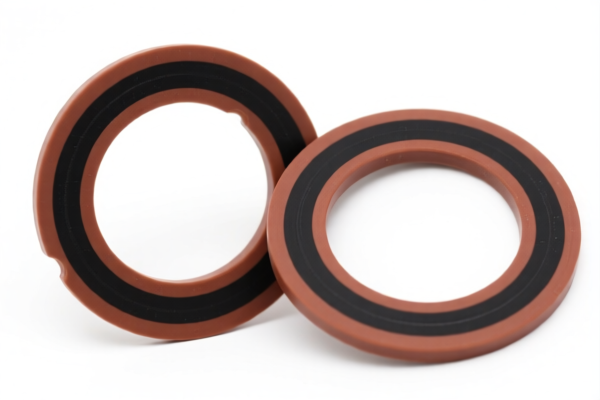
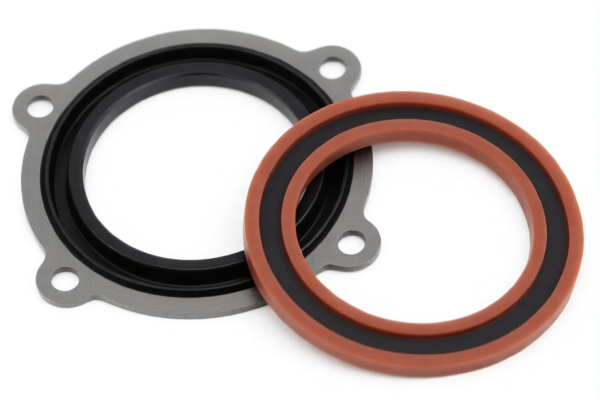
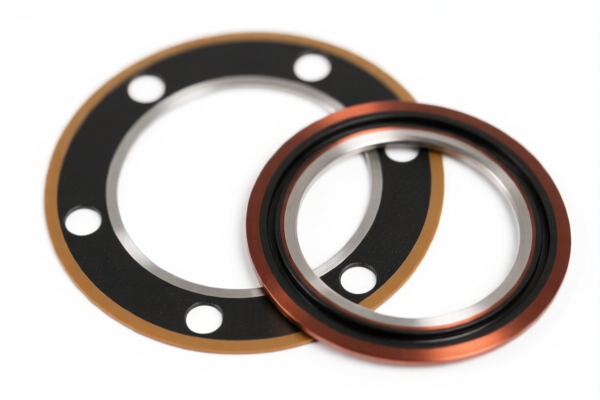
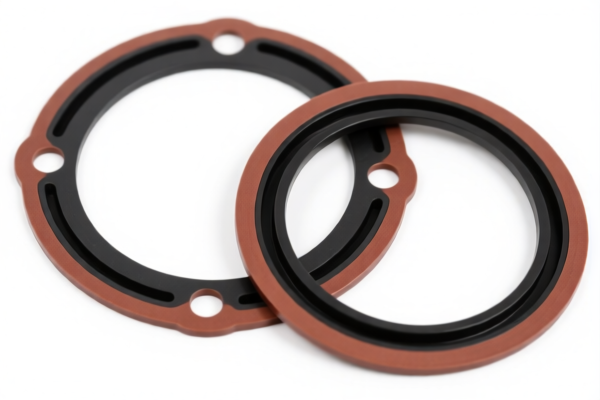
AI Analysis
🚗 Automotive Transmission Rubber Gasket
🌐 HS Code Reference & Customs Clearance Guide | 2026 Latest Tariff Analysis | Professional Clearance Strategy
📌 1. Product Definition & Classification: Do You Really Know "Transmission Gaskets"?
The Automotive Transmission Rubber Gasket is a critical sealing component in vehicle powertrains, designed to prevent fluid leakage between transmission housing parts. In international trade, its classification depends heavily on the material composition (Rubber vs. Synthetic Rubber/Plastic) and the structural form (Gasket vs. Mechanical Seal). Misclassification can lead to significant tariff differences due to US-China trade policies (Section 301 and IEEPA).
⚠️ Key Distinction Point:
- If the gasket is primarily made of natural or synthetic rubber (e.g., NBR, EPDM, Silicone) → It falls under Chapter 40 (Rubber).
- If the gasket is made of plastic or synthetic rubber composites that do not meet the specific definition of rubber articles → It may fall under Chapter 39 (Plastics).
- If the gasket is part of a mechanical seal assembly (not just a simple flat gasket) → It may fall under Chapter 84 (Machinery).
📦 2. HS Code Classification Details (2026 Latest Tariff Authority Comparison)
Based on the provided data, here are the specific HS Codes and their corresponding rationales:
| HS Code | Product Description | Applicability Scenario | Material/Function Basis |
|---|---|---|---|
3926.90.45.10 |
Plastic/Synthetic Rubber Gaskets, Washers, and Seals | Gaskets made of plastic-based composites or synthetic rubber blends classified as plastic articles | 🟡 Plastic/Composite Summary: Classified under plastic/synthetic rubber products as gaskets/washers. |
8484.90.00.00 |
Other Gaskets and Similar Joints (for Machinery) | Gaskets specifically used as mechanical seals in transmission systems, excluding those of specific metal/non-metal types | 🔧 Mechanical Seal Summary: Classified under mechanical seals, other washers. |
4016.93.50.10 |
Vulcanized Rubber Gaskets, Washers, and Other Seals | Gaskets made of vulcanized rubber (non-hard rubber), including specific transmission seals | 🟥 Vulcanized Rubber Summary: Classified as vulcanized rubber material gaskets/washers. |
4016.93.10.10 |
Rubber Gaskets and Seals | General rubber gaskets for mechanical uses, excluding specific hard rubber or molded parts | 🟦 Rubber Summary: Classified as rubber material gaskets/seals. |
4016.93.50.10 |
Vulcanized Rubber Gaskets, Washers, and Other Seals | Duplicate entry for vulcanized rubber seals (reinforces this category for most transmission gaskets) | 🟥 Vulcanized Rubber Summary: Same as above. |
🔍 Important Reminder:
- Most automotive transmission gaskets are made of NBR (Nitrile Butadiene Rubber) or EPDM, which are vulcanized rubber. Therefore,4016.93.xxxxxis the most common and accurate classification.
-8484.90.00.00is typically for mechanical seals (face seals, lip seals) used in pumps or compressors, not simple flat gaskets. Use with caution.
-3926.90.45.10applies only if the material is primarily plastic or a blend that doesn't qualify as "rubber" under Chapter 40.
💰 3. 2026 Latest Tariff Rate Breakdown (Including Additional Taxes & Policy Surcharges)
✅ Applicable Country: United States (US)
✅ Origin: China (CN)
✅ Effective Time: November 10, 2025 onwards (including subsequent imports)
🎯 1. 3926.90.45.10 —— Plastic/Synthetic Rubber Gaskets
| Item | Content |
|---|---|
| Base Tariff Rate | 3.5% (ad valorem) |
| Section 301 Additional Tariff | +25.0% |
| IEEPA Additional Tariff (122) | +10.0% |
| Total Effective Tariff | 38.5% |
| Tax Calculation | CIF Value × 38.5% |
| De Minimis Exemption | ❌ Not Eligible (deny_de_minimis) |
| Legal Basis Path | Section 301: Footnote 9903.88.01 → IEEPA: 122 → USITC: 3926.90.45.10 |
📌 Explanation:
- Although the base rate is low (3.5%), the 35% in additional taxes makes this category expensive.
- This applies if the gasket is misclassified as plastic or a non-rubber composite.
🎯 2. 8484.90.00.00 —— Other Gaskets for Machinery
| Item | Content |
|---|---|
| Base Tariff Rate | 2.5% (ad valorem) |
| Section 301 Additional Tariff | +25.0% |
| IEEPA Additional Tariff (122) | +10.0% |
| Total Effective Tariff | 37.5% |
| Tax Calculation | CIF Value × 37.5% |
| De Minimis Exemption | ❌ Not Eligible (deny_de_minimis) |
| Legal Basis Path | Section 301: Footnote 9903.88.01 → IEEPA: 122 → USITC: 8484.90.00.00 |
📌 Note:
- This classification is risky for simple rubber gaskets. If the goods are deemed "rubber gaskets" (Chapter 40), declaring them under Chapter 84 may lead to customs audits, penalties, or reclassification.
- Only use if the item is a complex mechanical seal assembly (e.g., lip seals, face seals) and not a simple flat gasket.
🎯 3. 4016.93.50.10 & 4016.93.10.10 —— Rubber Gaskets & Seals
| Item | Content |
|---|---|
| Base Tariff Rate | 2.5% (ad valorem) |
| Section 301 Additional Tariff | +25.0% |
| IEEPA Additional Tariff (122) | +10.0% |
| Total Effective Tariff | 37.5% |
| Tax Calculation | CIF Value × 37.5% |
| De Minimis Exemption | ❌ Not Eligible (deny_de_minimis) |
| Legal Basis Path | Section 301: Footnote 9903.88.01 → IEEPA: 122 → USITC: 4016.93.xxxxx |
📌 Explanation:
- This is the most accurate classification for vulcanized rubber transmission gaskets.
- The total tax rate is 37.5%, which is slightly lower than the plastic-based gasket (38.5%).
- Chapter 40 is the correct chapter for natural or synthetic rubber goods. Ensure your product specification clearly states "Vulcanized Rubber" (e.g., NBR, EPDM).
🛠️ 4. Customs Clearance Practical Advice (Battle-Proven Pitfall Avoidance Guide)
✅ 1. Required Documentation Checklist (None Can Be Omitted)
| Document | Mandatory | Description |
|---|---|---|
| ✅ Product Specification Sheet | ✔️ | Must state: Material (e.g., "NBR Rubber"), Hardness (Shore A), Temperature Resistance, Fluid Compatibility. |
| ✅ Technical Drawing | ✔️ | Show dimensions, cross-section, and seal type (flat gasket vs. O-ring vs. lip seal). |
| ✅ Material Certification | ✔️ | Third-party lab report confirming Rubber Content (to support Chapter 40 vs. Chapter 39). |
| ✅ Commercial Invoice | ✔️ | Clearly describe as "Rubber Gasket for Automotive Transmission", NOT "Part" or "Accessory". |
| ✅ Packing List | ✔️ | Include net weight, gross weight, and HS Code per line item. |
| ✅ Origin Certificate (CO) | ✔️ | If applicable, for potential preferential treatment (though limited for US-China). |
✅ 2. Declaration Tips (Key Mnemonic)
🔥 “Material Determines Chapter, Rubber is 40, Plastic is 39, Seal is 84!”
| Scenario | Correct Declaration | Wrong Practice |
|---|---|---|
| Flat Rubber Gasket (NBR/EPDM) | 4016.93.10.10 or 4016.93.50.10 |
Misdeclared as "Plastic Gasket" → 38.5% |
| Complex Mechanical Lip Seal | 8484.90.00.00 |
Declared as "Rubber Gasket" → Potential audit for misclassification |
| Plastic/Synthetic Composite Gasket | 3926.90.45.10 |
Declared as "Rubber" → Rejected by Customs |
| Gasket + Bolts Sold Together | Declare Gasket Separately | Bundle with hardware → Higher tax on entire set |
⚠️ Critical Warning:
- Do NOT declare rubber gaskets under8484.90.00.00unless they are mechanical seals (e.g., rotary shaft seals). Simple flat gaskets MUST go under Chapter 40.
- Do NOT use "Gasket" as a generic term. Specify "Rubber Gasket" or "Vulcanized Rubber Seal" in the description.
✅ 3. Special Circumstances Handling
| Situation | Handling Advice |
|---|---|
| OEM Transmission Gasket Set | Declare as "Rubber Gasket Kit for Transmission". Include a parts list. Do not bundle with metal hardware if possible. |
| Hybrid Material Gasket (Rubber + Plastic Insert) | Consult a customs broker. If rubber >50% by weight/value, Chapter 40 is preferred. If plastic dominates, Chapter 39. |
| Gaskets for Aftermarket vs. OEM | No difference in HS code, but ensure the description matches the end-use (e.g., "For Replacement Transmission Repair"). |
| High-Performance Silicone Gaskets | Still falls under Chapter 40 (Silicone is a synthetic rubber). Use 4016.93.10.10 or 4016.93.50.10. |
🌍 5. Global Major Market Comparison (2026 Latest)
| Country/Region | Recommended HS Code | Tariff (China Origin) | Certification | Notes |
|---|---|---|---|---|
| 🇺🇸 USA | 4016.93.xxxxx |
37.5% | None | High additional taxes (301 + IEEPA). |
| 🇨🇳 China | 4016.93.xxxxx |
5-10% | CCC (if applicable) | No additional tariffs for imports into China. |
| 🇪🇺 EU | 4016.93.50 |
0% (if under quota) | REACH, RoHS | No additional tariffs. Very competitive. |
| 🇨🇦 Canada | 4016.93.50 |
0% (CUSMA) | None | Preferential rate if meeting CUSMA rules. |
| 🇲🇽 Mexico | 4016.93.50 |
0% (USMCA) | None | Preferential rate under USMCA. |
📌 Conclusion:
- USA is the most expensive market due to 37.5% total tariff.
- EU, Canada, Mexico offer zero or low tariffs for rubber gaskets.
- Consider supply chain diversification if shipping to the US is cost-prohibitive.
📌 6. Common Mistakes & Pitfall Guide (Lessons Learned)
❌ Mistake 1: Declaring rubber gaskets as "Plastic Parts" (3926.90.45.10)
👉 Consequence: Higher tariff (38.5% vs 37.5%) + Potential customs audit for misclassification.
❌ Mistake 2: Declaring simple flat gaskets under 8484.90.00.00
👉 Consequence: Customs may reject the declaration, demand re-classification, and impose penalties.
❌ Mistake 3: Failing to specify "Vulcanized Rubber"
👉 Consequence: Customs may default to the highest tax rate or assign an incorrect HS code, leading to delays.
❌ Mistake 4: Ignoring the 122 IEEPA Tariff
👉 Consequence: Underestimating landed cost by 10%. Total cost calculation must include all surcharges.
✅ Correct Declaration Example:
"VULCANIZED NBR RUBBER GASKET, SHAPE: FLAT, HARDNESS: 70 SHORE A, FOR AUTOMOTIVE TRANSMISSION, HS CODE: 4016.93.10.10"
🎯 7. Conclusion: Professional Declaration, Save Time, Reduce Costs!
🎯 Remember the Mantra:
🔹 "Rubber is Chapter 40, Plastic is Chapter 39, Seal is Chapter 84!"
🔹 "Total Tax = 37.5%, Do Not Forget IEEPA & Section 301!"
🔹 "HS Code Defines Your Cost, Misclassification Costs You Thousands!"
📌 Pro Tip:
If your gaskets are sourced from Vietnam, Mexico, or Malaysia, you may qualify for lower or zero tariffs under trade agreements (e.g., USMCA, EVFTA).
Recommendation: Apply for an Advance Ruling from US Customs if your product is unique or complex.
📣 Take Action Now:
📞 Contact a Professional Customs Broker + Provide Product Specs + Apply for HS Code Advance Ruling
🚀 Ensure Smooth Customs Clearance, Efficient Export, and Maximized Profit!
✨ Professional Clearance Starts with Accurate Classification!
💼 Every Cent of Your Cost Deserves Precision!
Customer Reviews
About HS Code Classification
The Harmonized System (HS) is an internationally standardized nomenclature developed by the World Customs Organization (WCO) to classify traded products. Over 200 countries use the HS system as the basis for customs tariffs, trade statistics, and import/export regulations.
Each HS code follows a hierarchical structure:
- Chapter (2 digits) — Broad category of goods (e.g., Chapter 84: Machinery and Mechanical Appliances)
- Heading (4 digits) — More specific grouping within the chapter
- Subheading (6 digits) — Internationally standardized breakdown, used by all WCO member countries
- National subdivisions (8-10 digits) — Country-specific extensions for further classification, such as US HTSUS 10-digit codes
Correct HS code classification is essential for smooth customs clearance, accurate duty payment, and compliance with trade regulations. Misclassification can lead to customs delays, overpayment of duties, or penalties.
When importing from CN to US, the applicable tariff rates may include:
- Most-Favored-Nation (MFN) rate — The standard duty rate applied to WTO members
- General rate — Applied to countries without trade agreements
- Trade remedy duties — Additional tariffs such as Section 301 (anti-dumping), Section 232 (national security), or countervailing duties
The information provided on this page is for reference purposes only. For official classification, please consult with your local customs authority or a licensed customs broker.