Automotive Transparent Tape
CN → US| HS Code | Tariff Rate | Origin | Destination | Doc |
|---|---|---|---|---|
| 3919102040 | 40.8% | CN | US | Official Doc |
| 3919905040 | 40.8% | CN | US | Official Doc |
| 3919102040 | 40.8% | CN | US | Official Doc |
| 3919905040 | 40.8% | CN | US | Official Doc |
| 3919102040 | 40.8% | CN | US | Official Doc |
Product Images
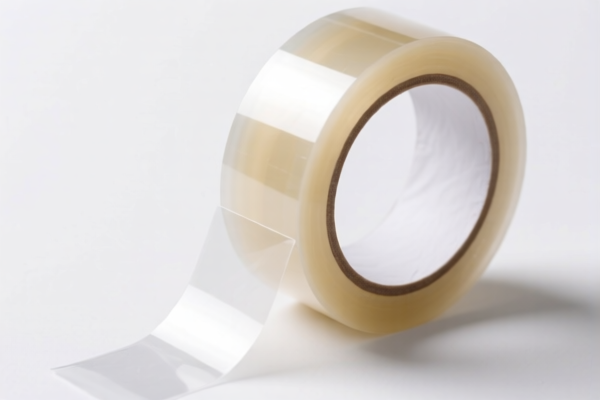
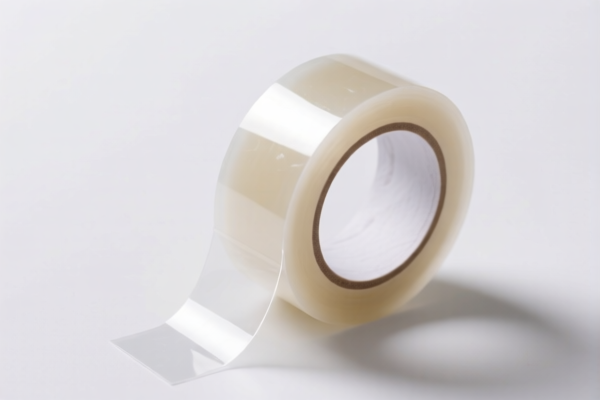
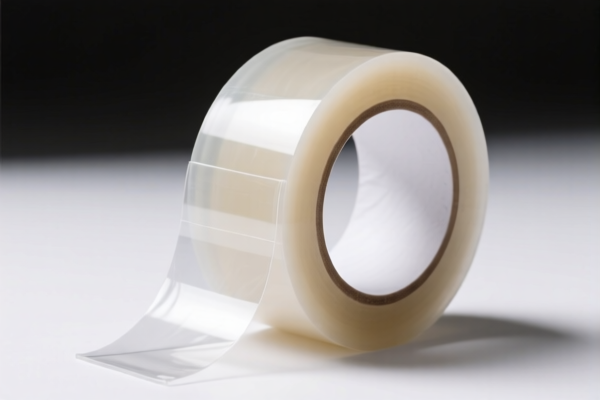
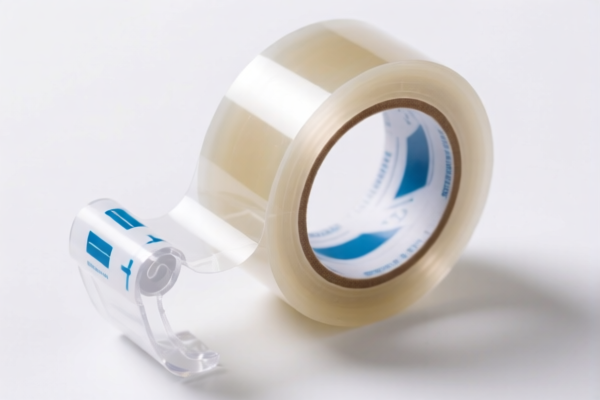
AI Analysis
🚗 Automotive Transparent Tape (Auto Industry Adhesive Tape)
🌐 HS Code Reference & Customs Clearance Guide | 2026 Latest Tariff Analysis | Professional Customs Strategy
📌 I. Product Definition & Classification: Do You Truly Understand "Automotive Transparent Tape"?
Automotive Transparent Tape is a critical consumable in the automotive industry, used for masking, protection, bonding, and temporary fixing. In international trade, its classification hinges on material, form, and end-use.
Key Characteristics: * Material: Primarily Plastic (e.g., PET, PVC, PE) or clear cellulose. * Form: Flat, self-adhesive roll/strip ("Tape"). * End-Use: Automotive applications (painting masking, assembly protection). Note: The automotive use does not conflict with its classification as a general plastic tape unless it is a specialized functional adhesive not covered under general tape headings.
⚠️ Critical Distinction:
- If the tape is transparent/plastic and in flat self-adhesive form, it falls under Chapter 39 (Plastics).
- Automotive use is generally not a differentiating factor for HS Code classification unless the product is a specific "specialized industrial adhesive" that might fall under different headings (e.g., 3506), but standard transparent tapes remain in 3919.
📦 II. HS Code Classification Details (2026 Latest Tariff Authority Comparison)
| HS Code | Product Description | Applicable Scenario | Material/Form Match |
|---|---|---|---|
3919.10.20.40 |
Self-adhesive plates, sheets, film, foil, tape, strip and other shapes of plastics, whether or not in rolls | Transparent Tape (Auto Industry). Matches material (Plastic) and form (Tape). No conflict with automotive use. | ✅ Exact Match |
3919.90.50.40 |
Other self-adhesive plates, sheets, film, foil, tape, strip and other shapes of plastics, whether or not in rolls | Transparent Tape (Auto Industry). Form fits "Strip/Tape", material inferred as Plastic. Automotive use does not affect classification. | ✅ Acceptable Match |
3919.10.20.40 |
Self-adhesive tapes of plastics | Transparent Repair Tape. Matches material (Transparent/Plastic) and form (Tape). Assumed compliant if length/width data is unavailable. | ✅ Exact Match |
3919.90.50.40 |
Other self-adhesive plastic products | Transparent Tape (Auto Industry). Form and use fit classification explanations. Material inferred as Plastic. Automotive use is not a conflict. | ✅ Acceptable Match |
3919.10.20.40 |
Self-adhesive plates, sheets, film, foil, tape, strip and other shapes of plastics | General Transparent Tape. No length/width data provided, but material and form characteristics are consistent. | ✅ Exact Match |
🔍 Key Reminder:
- Both3919.10.20.40and3919.90.50.40result in the SAME total tax rate (40.8%) due to identical tariff structures for these subheadings under current US-China trade policies.
- The choice between "10" and "90" often depends on specific width or backing details, but for standard transparent automotive tape, either is typically defensible.
- Automotive Use: Does NOT change the HS code to an automotive-specific part (like 8708), because it is a raw material/consumable, not a manufactured part of the vehicle itself.
💰 III. 2026 Latest Tariff Rate Details (Including Surtaxes, Policy Surcharges)
✅ Applicable Country: United States (US)
✅ Origin: China (CN)
✅ Effective Date: Ongoing (as of 2026)
🎯 1. 3919.10.20.40 & 3919.90.50.40 —— Self-Adhesive Plastic Tape (Plastic Tape)
| Item | Content |
|---|---|
| Base Duty Rate | 5.8% (Ad Valorem) |
| Section 301 Surcharge | +25.0% (Under USITC Footnote 9903.88.01 / IEEPA) |
| 122 Clause Surcharge | +10.0% (Specific provision for certain plastic products/materials) |
| Total Duty Rate | 40.8% |
| Tax Calculation | CIF Value × 40.8% |
| De Minimis Exemption | ❌ Not Eligible (deny_de_minimis) |
| Legal Authority Path | USITC:3919.10.20.40 / USITC:3919.90.50.40 → FOOTNOTE:9903.88.01 → IEEPA:9903.01.25 → 122 Clause Policy |
📌 Explanation:
- "Base Duty 5.8%": Standard MFN (Most Favored Nation) rate for self-adhesive plastic tapes.
- "Section 301 Surcharges 25%": Additional tariffs imposed on Chinese imports under Section 301 of the Trade Act.
- "122 Clause Surcharges 10%": A specific additional tariff applied to certain plastic materials and products to protect domestic manufacturing.
- Total 40.8%: This is a high-cost import category. Pre-calculating landed cost is essential.
- No De Minimis: Values under $800 (Section 321) do NOT apply due to the specific exclusions for these HS codes.
🛠️ IV. Customs Clearance Practical Advice (Battle-Tested Pitfall Avoidance Guide)
✅ 1. Required Documentation Checklist (All Mandatory)
| Document | Must Provide | Explanation |
|---|---|---|
| ✅ Product Specification Sheet | ✔️ | Must clearly state: Material (e.g., PET, PVC), Thickness, Width, Adhesive Type. |
| ✅ HS Code Justification | ✔️ | Explain why it fits 3919.10 vs 3919.90 if questioned (e.g., width, backing paper). |
| ✅ Commercial Invoice | ✔️ | Clearly describe as "Transparent Plastic Self-Adhesive Tape for Automotive Use." Avoid vague terms like "Glu Tape." |
| ✅ Certificate of Origin (CO) | ✔️ | Critical for verifying Chinese origin to apply correct Section 301 rates. |
| ✅ Packing List | ✔️ | Detail gross/net weights. Ensure no mixed items (e.g., tape + glue gun) that would split classification. |
| ✅ Material Safety Data Sheet (MSDS) | ✔️ | Required for adhesive products to confirm chemical composition and safety compliance. |
✅ 2. Declaration Tips (Key Mnemonics)
🔥 "Transparent Plastic, Self-Adhesive, Flat Form = 3919!"
| Scenario | Correct Declaration | Incorrect Practice |
|---|---|---|
| Standard Transparent Tape | 3919.10.20.40 or 3919.90.50.40 |
Misdeclare as "Paper Tape" (3919.10.00) → Risk of penalty. |
| Automotive Masking Tape | 3919.10.20.40 (if plastic backing) |
Misdeclare as "Automotive Part" (8708) → Incorrect chapter. |
| Reinforced Tape (with fiberglass/paper) | May still be 3919 if plastic is primary |
If heavily reinforced, could be challenged. Provide composition proof. |
| Clear Repair Tape | 3919.10.20.40 |
Do not declare as "Medical Tape" (3005) unless specifically for medical use. |
✅ 3. Special Circumstances Handling
| Scenario | Handling Advice |
|---|---|
| Mixed Batches (Plastic + Paper Tape) | Declare Separately. Do not lump together. Paper tape has different rates. Split invoices are safest. |
| Custom Printed Tape (Branding) | Still 3919. Printing does not change classification. Ensure description includes "Printed Plastic Tape." |
| High-Value Industrial Rolls | Ensure declared value includes all freight/insurance (CIF). Under-declaration leads to severe penalties. |
| Origin Marking | Must clearly mark "Made in China" on packaging and products to comply with Country of Origin laws. |
🌍 V. Global Market Clearance Comparison (2026 Latest)
| Country/Region | Recommended HS Code | Duty Rate (China Origin) | Certification Requirements | Notes |
|---|---|---|---|---|
| 🇺🇸 USA | 3919.10.20.40 / 3919.90.50.40 |
40.8% (5.8% Base + 25% 301 + 10% 122) | No specific FCC/UL needed for tape itself. | Highest duty rate. Pre-calculate landed cost. |
| 🇨🇳 China | 3919.10.20.40 |
5.8% | No additional surcharges. | Low duty. |
| 🇪🇺 EU | 3919.10.90 |
4.0% (General) | REACH Compliance (Chemical substances). | No Section 301 equivalent. |
| 🇲🇽 Mexico | 3919.10.90 |
5.0% (if USMCA compliant) | NOM Certification if applicable. | USMCA may reduce duty to 0% if rules of origin met. |
| 🇻🇳 Vietnam | 3919.10.90 |
Varies | TCVN Standards. | Potential for lower duties if processed locally. |
📌 Conclusion:
- The USA is the most challenging market for Chinese-made transparent tape due to the 40.8% total duty.
- EU and China offer significantly lower duty burdens.
- If exporting to the US, consider supply chain diversification (e.g., Vietnam, Mexico) to mitigate Section 301 and 122 clause impacts, provided USMCA/USMCA rules are met.
📌 VI. Common Errors & Pitfall Avoidance Guide (Lessons Learned)
❌ Error 1: Declaring as "Plastic Sheet" (3920) instead of "Tape" (3919)
👉 Consequence: Incorrect classification. While duties might be similar, it raises red flags for customs audits.
❌ Error 2: Omitting "Self-Adhesive" in description
👉 Consequence: Customs may misclassify as non-adhesive plastic films, leading to delays and re-inspection.
❌ Error 3: Assuming "Automotive Use" qualifies for duty exemption
👉 Consequence: No exemption. Automotive parts (8708) are different from raw materials/consumables (3919).
❌ Error 4: Ignoring the 122 Clause Surcharges
👉 Consequence: Underestimating landed cost by 10%. Budgeting errors lead to margin erosion.
✅ Correct Practice:
"Transparent Self-Adhesive Plastic Tape, Roll, 50mm Width, PET Material, for Automotive Painting Masking, Model XYZ, Made in China"
🎯 VII. Conclusion: Professional Declaration, Cost Control, Efficiency!
🎯 Remember the Mnemonic:
🔹 "Plastic + Self-Adhesive + Flat = 3919!"
🔹 "China Origin = 40.8% Total Duty (Base 5.8% + 301 25% + 122 10%)"
🔹 "No De Minimis! No Exemption for Auto Use!"
📌 Pro Tip:
- If your tape is exported to the US, ensure early engagement with a customs broker to confirm the exact subheading (3919.10 vs 3919.90) based on precise width/backing details.
- Consider Applying for an Advance Ruling (Pre-Ruling) from CBP to lock in the classification and avoid post-import audits.
- For large volumes, evaluate bonded warehouses or FTZ (Foreign Trade Zones) to defer duty payments until the goods enter US commerce.
📣 Immediate Action:
📞 Contact a licensed customs broker + Provide detailed product specs + Calculate Landed Cost with 40.8% Duty
🚀 Ensure Transparent, Accurate, and Compliant clearance for your Automotive Transparent Tape!
✨ Professional Customs Clearance Starts with Accurate Classification!
💼 Every Cent of Duty Counts in Your Profit Margin!
Customer Reviews
About HS Code Classification
The Harmonized System (HS) is an internationally standardized nomenclature developed by the World Customs Organization (WCO) to classify traded products. Over 200 countries use the HS system as the basis for customs tariffs, trade statistics, and import/export regulations.
Each HS code follows a hierarchical structure:
- Chapter (2 digits) — Broad category of goods (e.g., Chapter 84: Machinery and Mechanical Appliances)
- Heading (4 digits) — More specific grouping within the chapter
- Subheading (6 digits) — Internationally standardized breakdown, used by all WCO member countries
- National subdivisions (8-10 digits) — Country-specific extensions for further classification, such as US HTSUS 10-digit codes
Correct HS code classification is essential for smooth customs clearance, accurate duty payment, and compliance with trade regulations. Misclassification can lead to customs delays, overpayment of duties, or penalties.
When importing from CN to US, the applicable tariff rates may include:
- Most-Favored-Nation (MFN) rate — The standard duty rate applied to WTO members
- General rate — Applied to countries without trade agreements
- Trade remedy duties — Additional tariffs such as Section 301 (anti-dumping), Section 232 (national security), or countervailing duties
The information provided on this page is for reference purposes only. For official classification, please consult with your local customs authority or a licensed customs broker.