Automotive V Belt
CN → US| HS Code | Tariff Rate | Origin | Destination | Doc |
|---|---|---|---|---|
| 3926905500 | 40.1% | CN | US | Official Doc |
| 3926906010 | 39.2% | CN | US | Official Doc |
| 4010316000 | 37.8% | CN | US | Official Doc |
| 4010392000 | 37.8% | CN | US | Official Doc |
Product Images
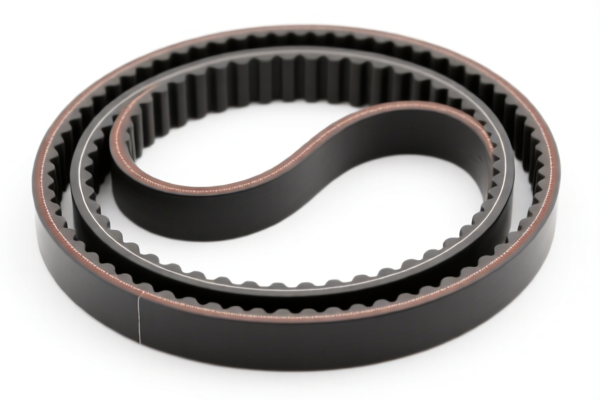
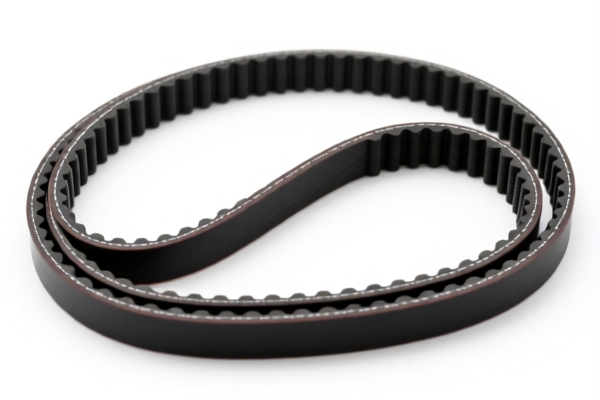
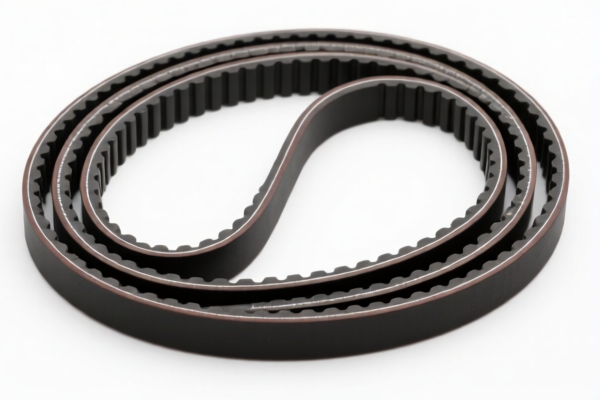
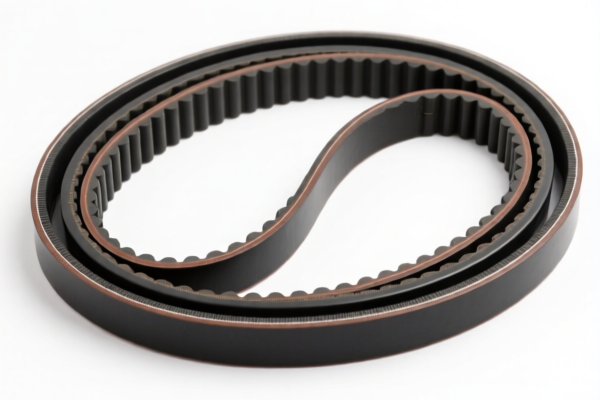
AI Analysis
🚗 Automotive V-Belts & Transmission Belting
🌐 HS Code Reference & Customs Clearance Guide | 2026 Latest Tariff Analysis | Professional Clearance Strategy
📌 I. Product Definition & Classification: Do You Really Understand "V-Belts"?
Automotive V-belts are critical power transmission components used in engines, alternators, water pumps, and air conditioning compressors. In international trade, they are strictly categorized based on material composition (Vulcanized Rubber vs. Plastics/Composite) and structure (Endless/Continous vs. Sectional).
1. Vulcanized Rubber V-Belts (The Standard):
Made primarily of rubber compounds. These are the most common automotive belts. They are further divided by outside circumference and cross-section.
2. Plastic/Composite V-Belts:
Made from materials of headings 3901–3914 (Plastics). These are less common but exist for specific chemical or lightweight applications. They contain textile fibers for reinforcement.
⚠️ Key Distinction Point:
- If the belt is made of Vulcanized Rubber and has an outside circumference >60cm but ≤180cm, it falls under HS 4010.
- If the belt is made of Plastics/Composites containing textile fibers, it falls under HS 3926.
- Note: "Synchronous belts" (toothed belts) are treated differently depending on material, but traditional "V-belts" are trapezoidal.
📦 II. HS Code Classification Details (2026 Latest Tariff Authority Comparison)
| HS Code | Product Description | Application Scenario | Material Type | Tax Rate (China to US) |
|---|---|---|---|---|
4010.31.60.00 |
Endless Transmission Belts of Trapezoidal Cross Section (V-belts), V-ribbed, Outside Circumference >60cm but ≤180cm | Automotive main drive belts, industrial conveyor belts | Vulcanized Rubber | 27.8% (Base 2.8% + Additional 25.0%) |
4010.39.20.00 |
Other Transmission Belts of Trapezoidal Cross Section (V-belts and belting) | General purpose V-belts, shorter belts, non-standard sizes | Vulcanized Rubber | 0.0% (Base 0.0% + Additional 0.0%) |
3926.90.55.00 |
Belting and Belts for Machinery: Containing Textile Fibers: V-Belts | Plastic/composite V-belts with textile reinforcement | Plastics/Composite | 30.1% (Base 5.1% + Additional 25.0%) |
3926.90.60.10 |
Other: Synchronous Belts | Toothed timing belts made of plastic/composite materials | Plastics/Composite | 0.0% (Base 0.0% + Additional 0.0%) |
🔍 Critical Note:
- HS 4010.31.60.00 is highly specific to longer V-belts (>60cm). Many automotive serpentine belts or longer drive belts fall here.
- HS 4010.39.20.00 is the "catch-all" for other rubber V-belts. Crucially, this code has 0% additional tariff! This makes it a preferred classification if the product dimensions allow.
- HS 3926.90.55.00 applies only if the belt is not primarily vulcanized rubber but rather plastic-based with textile fiber. This is rare for standard automotive use but common for chemical-resistant industrial belts.
💰 III. 2026 Latest Tariff Rate Breakdown (Including Surtax & Policy Add-ons)
✅ Applicable Country: United States (US)
✅ Origin: China (CN)
✅ Effective Date: 2025/2026 Tariff Year
🎯 1. 4010.31.60.00 —— Rubber V-Belts (Circumference 60-180cm)
| Item | Content |
|---|---|
| Base Tariff | 2.8% (ad valorem) |
| USITC Additional Tariff (Section 301) | +25.0% |
| Total Tariff | 27.8% |
| Tax Calculation | CIF Value × 27.8% |
| De Minimis Eligibility | ❌ No (Deny de minimis for Section 301 goods) |
| Legal Basis | USITC:4010.31.60.00 → FOOTNOTE:Section301 |
📌 Explanation:
- This code attracts the full 25% Section 301 surtax on top of the 2.8% base rate.
- High Cost Warning: This is a high-duty item. Importers must factor in nearly 28% additional cost.
🎯 2. 4010.39.20.00 —— Other Rubber V-Belts (Non-Specific Size/Circumference)
| Item | Content |
|---|---|
| Base Tariff | 0.0% |
| USITC Additional Tariff (Section 301) | 0.0% |
| Total Tariff | 0.0% |
| Tax Calculation | CIF Value × 0.0% |
| De Minimis Eligibility | ✅ Yes (If under $800, may qualify for de minimis entry, subject to current CBP enforcement) |
| Legal Basis | USITC:4010.39.20.00 |
📌 Strategy:
- Zero Tariff Advantage: This is the most favorable code for standard rubber V-belts.
- Why 0%? Certain subcategories of rubber belting are excluded from Section 301 surtaxes or have preferential rates.
- Caution: Do not force this code if the product clearly fits4010.31.60.00(i.e., circumference is between 60-180cm). Misclassification can lead to audits.
🎯 3. 3926.90.55.00 —— Plastic/Composite V-Belts
| Item | Content |
|---|---|
| Base Tariff | 5.1% |
| USITC Additional Tariff (Section 301) | +25.0% |
| Total Tariff | 30.1% |
| Tax Calculation | CIF Value × 30.1% |
| De Minimis Eligibility | ❌ No |
| Legal Basis | USITC:3926.90.55.00 → FOOTNOTE:Section301 |
📌 Explanation:
- If your product is made of plastic/composite materials (not rubber), you cannot use the 0% rubber code.
- This code is heavily taxed. Ensure material composition is accurately documented.
🎯 4. 3926.90.60.10 —— Plastic Synchronous Belts
| Item | Content |
|---|---|
| Base Tariff | 0.0% |
| USITC Additional Tariff (Section 301) | 0.0% |
| Total Tariff | 0.0% |
| Tax Calculation | CIF Value × 0.0% |
| De Minimis Eligibility | ✅ Yes |
| Legal Basis | USITC:3926.90.60.10 |
📌 Strategy:
- If you sell toothed (synchronous) belts made of plastic/composite, they also enjoy 0% tariff.
- Differentiation: V-belts (trapezoidal) vs. Synchronous (toothed). Ensure the cross-section is correctly identified.
🛠️ IV. Customs Clearance Operational Advice (Practical Pitfall Guide)
✅ 1. Preparation Checklist (Missing Documents = Delay)
| Document | Required | Purpose |
|---|---|---|
| ✅ Product Specification Sheet | ✔️ | Must state: Material (Rubber vs. Plastic), Cross-section (Trapezoidal/V-ribbed), Outside Circumference, Number of ribs. |
| ✅ Cross-Section Diagram | ✔️ | Crucial for distinguishing V-belt (4010.31/39) from other types. |
| ✅ Composition Statement | ✔️ | Explicitly state % of vulcanized rubber vs. plastic/textile fiber. |
| ✅ Commercial Invoice | ✔️ | Clearly describe as "Automotive V-Belt" or "Transmission Belt," NOT "Rubber Hose" or "General Part." |
| ✅ Packing List | ✔️ | Match quantities and weights. |
✅ 2. Declaration Tips (Key Mnemonics)
🔥 “Material First, Size Second, Type Third!”
| Scenario | Correct Declaration | Wrong Practice |
|---|---|---|
| Rubber V-belt, Circumference 70cm | 4010.31.60.00 (27.8% Tax) |
Declaring as 4010.39.20.00 (0%) → Audit Risk! |
| Rubber V-belt, Circumference 50cm | 4010.39.20.00 (0% Tax) |
Declaring as 3926... → Wrong Material |
| Plastic Synchronous Belt | 3926.90.60.10 (0% Tax) |
Declaring as V-belt → Wrong Shape |
| Rubber V-belt, Circumference 200cm | Check Other Subheadings | Not covered in provided data (likely 4010.31.80 or 4010.39.90) |
✅ 3. Special Situation Handling
| Situation | Handling Advice |
|---|---|
| Mixed Packs (Rubber + Plastic) | Split Declaration. Do not mix HS codes in one line item. |
| OEM Automotive Parts | Provide OEM part numbers and vehicle compatibility to support "Automotive Use" description, but material defines HS Code, not end-use. |
| V-Ribbed vs. Classical V-Belt | Both fall under 4010.31 if circumference matches. Ensure "V-Ribbed" is specified if applicable. |
| Plastic Belts with Textile Fiber | Must declare as 3926.90.55.00 if V-shaped. Do not misclassify as rubber. |
🌍 V. Global Market Comparison (2026 Latest)
| Country/Region | Recommended HS Code | Tariff (China Origin) | Certification | Notes |
|---|---|---|---|---|
| 🇺🇸 USA | 4010.39.20.00 (if eligible) |
0% | None specific | Best Option: Aim for this code if circumference <60cm or >180cm. |
| 🇺🇸 USA | 4010.31.60.00 |
27.8% | None specific | Avoid if possible. High cost. |
| 🇨🇳 China | 4010.39.20.00 |
~3-4% | CCC (if for auto safety) | Lower base rates. |
| 🇪🇺 EU | 4010.31 / 4010.39 |
0-4% | CE (if machinery accessory) | No Section 301 surtax. |
📌 Conclusion:
- The US market is highly sensitive to the 25% Section 301 surtax.
- Strategic Classification: If your V-belt’s outside circumference is less than 60cm or greater than 180cm, and it is rubber, it falls under4010.39.20.00with 0% additional tariff.
- Do Not force a fit into4010.31.60.00if dimensions don’t match, but do leverage the 0% rate for eligible products.
📌 VI. Common Errors & Pitfalls (Blood & Tears Lessons)
❌ Error 1: Declaring a 70cm Rubber V-Belt as 4010.39.20.00 (0%)
👉 Consequence: 27.8% tax evasion risk. CBP audits will demand back payment + penalties.
✅ Fix: Accurately measure and declare 4010.31.60.00.
❌ Error 2: Calling a Plastic Synchronous Belt a "V-Belt"
👉 Consequence: Wrong HS Code (3926.90.55 vs 3926.90.60).
✅ Fix: Clearly state "Synchronous" or "Timing Belt" vs "V-Belt."
❌ Error 3: Ignoring Material Composition
👉 Consequence: Plastic belts misdeclared as Rubber.
✅ Fix: Provide material safety data sheets (MSDS) or composition analysis.
🎯 VII. Conclusion: Professional Classification Saves Money!
🎯 Remember the Mantra:
🔹 "Rubber + Long (>60cm) = 27.8% Tax"
🔹 "Rubber + Short/Others = 0% Tax"
🔹 "Plastic V-Belt = 30.1% Tax"
🔹 "Plastic Sync Belt = 0% Tax"🔹 "HS Code Determines Survival, Tariff Difference is Life!"
📌 Pro Tip:
If your automotive V-belt is imported into the US, always verify the outside circumference. If it is under 60cm, you can legally claim 0% tariff under 4010.39.20.00. This can save 27.8% on every unit. Consult a customs broker to validate dimensions before shipment.
📣 Immediate Action:
📞 Contact a Licensed Customs Broker
📏 Measure Outside Circumference Accurately
📋 Apply for Advance Ruling if unsure🚀 Clear Customs Smoothly, Maximize Profit!
✨ Professional Clearance Starts with Accurate Classification!
💼 Every Dollar Saved is Pure Profit!
Customer Reviews
About HS Code Classification
The Harmonized System (HS) is an internationally standardized nomenclature developed by the World Customs Organization (WCO) to classify traded products. Over 200 countries use the HS system as the basis for customs tariffs, trade statistics, and import/export regulations.
Each HS code follows a hierarchical structure:
- Chapter (2 digits) — Broad category of goods (e.g., Chapter 84: Machinery and Mechanical Appliances)
- Heading (4 digits) — More specific grouping within the chapter
- Subheading (6 digits) — Internationally standardized breakdown, used by all WCO member countries
- National subdivisions (8-10 digits) — Country-specific extensions for further classification, such as US HTSUS 10-digit codes
Correct HS code classification is essential for smooth customs clearance, accurate duty payment, and compliance with trade regulations. Misclassification can lead to customs delays, overpayment of duties, or penalties.
When importing from CN to US, the applicable tariff rates may include:
- Most-Favored-Nation (MFN) rate — The standard duty rate applied to WTO members
- General rate — Applied to countries without trade agreements
- Trade remedy duties — Additional tariffs such as Section 301 (anti-dumping), Section 232 (national security), or countervailing duties
The information provided on this page is for reference purposes only. For official classification, please consult with your local customs authority or a licensed customs broker.