Automotive Wire
CN → US| HS Code | Tariff Rate | Origin | Destination | Doc |
|---|---|---|---|---|
| 3926909989 | 22.8% | CN | US | Official Doc |
| 8544300000 | 40.0% | CN | US | Official Doc |
| 8544493080 | 40.3% | CN | US | Official Doc |
| 3926909600 | 35.0% | CN | US | Official Doc |
| 8708998180 | 12.5% | CN | US | Official Doc |
Product Images
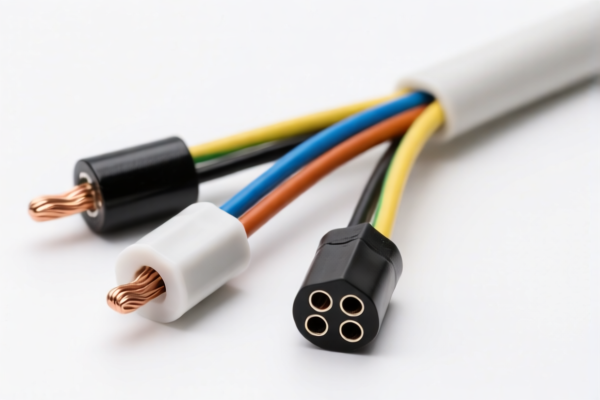
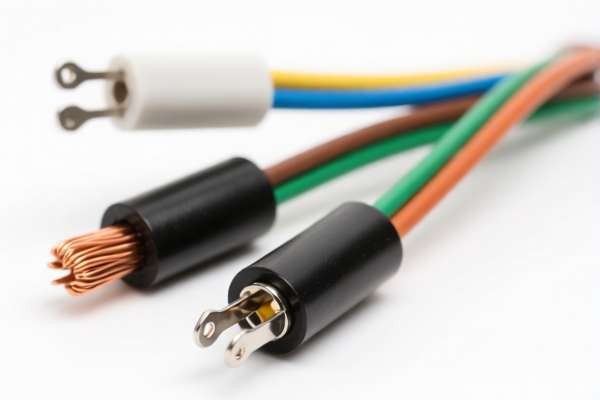
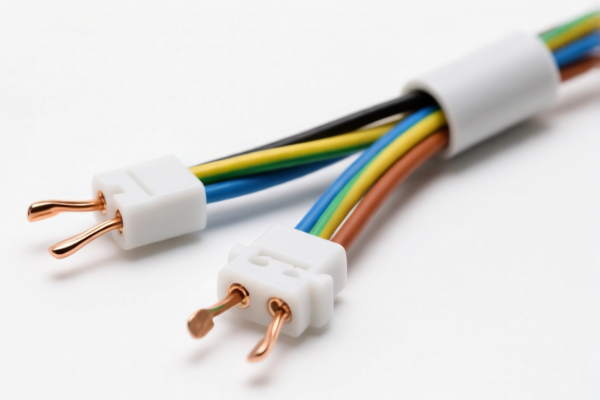
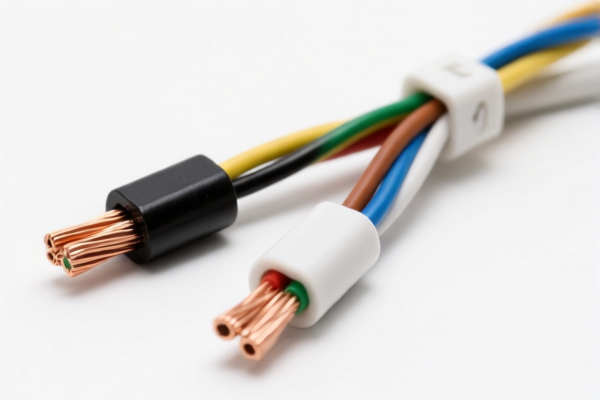
AI Analysis
🔌 Automotive Wire & Cable Harnesses (Automotive Electrical Wiring)
🌐 HS Code Reference & Customs Clearance Guide | 2026 Latest Tariff Analysis | Professional Strategy for High-Tariff Goods
📌 I. Product Definition: What Exactly is "Automotive Wire"?
Automotive wires are not just simple cables; they are critical components of a vehicle's nervous system. In international trade, their classification is highly contentious because they straddle the line between plastics (insulation), electronics (conductors), and auto parts.
The classification depends entirely on how the product is presented and its primary function: 1. Raw Wire Strands: Individual copper wires with plastic insulation (no connectors, no harness assembly). 2. Wire Harnesses: Assembled bundles of wires, connectors, and terminals specifically designed for a specific vehicle model. 3. Plastic Extrusions: The outer jacket or protective sheathing (often treated as plastic goods if stripped of conductive value).
⚠️ Critical Distinction:
- If it is a finished harness ready for installation → Often classified as Auto Parts.
- If it is insulated wire → Often classified as Electrical Conductors or Plastic Products.
- Misclassification leads to massive tariff discrepancies (from 12.5% to 40.3%)!
📦 II. HS Code Classification Breakdown (2026 Data Analysis)
Based on the provided data, here are the four most common HS Codes for Automotive Wires, ranked by total tax burden.
| HS Code | Product Description | Summary Rationale | Total Tax Rate | Key Tariff Components |
|---|---|---|---|---|
8708.99.81.80 |
Other Parts & Accessories of Motor Vehicles | Classified as an auto part/assembly. | 12.5% | Base: 2.5% Add-on: 0.0% Sec 301: 10% |
3926.90.99.89 |
Other Plastic Articles | Classified by material (plastic外皮/jacket). | 22.8% | Base: 5.3% Add-on: 7.5% Sec 301: 10% |
3926.90.96.00 |
Other Plastic Articles & Wire Sheathing | Classified by outer shell/plastic housing. | 35.0% | Base: 0.0% Add-on: 25.0% Sec 301: 10% |
8544.30.00.00 |
Coaxial Cable & Other Cables for Vehicles | Classified by form & vehicle application. | 40.0% | Base: 5.0% Add-on: 25.0% Sec 301: 10% |
8544.49.30.80 |
Insulated Electrical Conductors | Classified by copper conductor core. | 40.3% | Base: 5.3% Add-on: 25.0% Sec 301: 10% |
🔍 Key Insight:
- Lowest Tax (12.5%):8708.99.81.80– This is the sweet spot if you can argue the product is a complete "Auto Part" (harness) rather than just raw wire or plastic. - Highest Tax (40.3%):8544.49.30.80– Applying when the focus is strictly on the copper conductor aspect.
💰 III. Detailed Tariff Breakdown (USA Import from China)
✅ Target Market: United States (US)
✅ Origin: China (CN)
✅ Effective Date: Post-November 2025 (Current Regime)
🎯 1. The "Gold Standard": Auto Parts Classification
HS Code: 8708.99.81.80
Total Tax: 12.5%
| Component | Rate | Explanation |
|---|---|---|
| Base Tariff | 2.5% | Standard MFN rate for auto parts accessories. |
| Section 301 (Add-on) | 0.0% | Crucial Advantage: Certain auto parts enjoy a lower or zero additional tariff rate under specific exclusions or subheading nuances. |
| Section 122 / IEEPA | 10.0% | Additional surcharge targeting Chinese imports. |
| TOTAL | 12.5% | Lowest liability in the dataset. |
📌 Strategy: To claim this, the item must be clearly identifiable as a component of the motor vehicle (e.g., a pre-cut harness with connectors, not just spools of wire).
🎯 2. The "Plastic Material" Route
HS Code: 3926.90.99.89
Total Tax: 22.8%
| Component | Rate | Explanation |
|---|---|---|
| Base Tariff | 5.3% | Rate for general plastic articles. |
| Section 301 (Add-on) | 7.5% | Reduced additional duty compared to electrical goods. |
| Section 122 / IEEPA | 10.0% | Standard surcharge. |
| TOTAL | 22.8% | Moderate liability. |
📌 Strategy: Use this if the product is primarily sold as plastic insulation material or if the copper value is minimal/negligible in the final assembly. Note that
3926.90.96.00jumps to 35% due to a higher add-on (25%), so avoid96.00if possible.
🎯 3. The "Electrical/Conductor" Route (High Risk)
HS Codes: 8544.30.00.00 & 8544.49.30.80
Total Tax: 40.0% - 40.3%
| Component | Rate | Explanation |
|---|---|---|
| Base Tariff | 5.0% - 5.3% | Standard for electrical machinery/conductors. |
| Section 301 (Add-on) | 25.0% | Heavy Penalty: Electrical goods often face the highest "trade war" tariffs. |
| Section 122 / IEEPA | 10.0% | Standard surcharge. |
| TOTAL | ~40.0% | Highest liability. |
📌 Risk Alert: Classifying automotive wire as "Insulated Conductors" (
8544) triggers the 25% Section 301 tariff. This is often the default classification for raw wire, making it expensive.
🛠️ IV. Customs Clearance Practical Advice
✅ 1. Documentation Checklist (Must-Haves)
| Document | Requirement | Purpose |
|---|---|---|
| Commercial Invoice | Must specify "Automotive Wire Harness" or "Insulated Cable" clearly. Avoid vague terms like "Wire". | Determines HS Code initial scan. |
| Bill of Materials (BOM) | Detail: Copper weight vs. Plastic weight vs. Connector cost. | Justifies classification (Part vs. Material). |
| Product Photos | Show connectors, terminals, and assembly. | Proves it is a "Harness" (Part) not just "Wire" (Material). |
| Technical Spec Sheet | Voltage rating, temperature resistance, application (e.g., "For Engine Compartment"). | Supports "Auto Part" argument under Ch 87. |
| Country of Origin | Certify China origin. | Triggers Section 301/122 tariffs. |
✅ 2. Classification Strategy: How to Lower Taxes?
🔥 Rule of Thumb: "Part > Plastic > Conductor" for tax efficiency.
| Scenario | Recommended HS Code | Tax Rate | Why? |
|---|---|---|---|
| Pre-assembled Harness with connectors & terminals | 8708.99.81.80 |
12.5% | Defined as an "Auto Part". Lowest tax. |
| Spools of Wire with minimal processing | 3926.90.99.89 |
22.8% | Classified by plastic insulation. Medium tax. |
| Raw Copper Wire with plastic coating | 8544.49.30.80 |
40.3% | Classified by electrical function. Highest tax. |
⚠️ Warning:
- Do NOT classify a complete harness as8544.30.00.00(40%) if it can be reasonably argued as an auto part (8708).
- Do NOT classify simple plastic tubing as3926.90.96.00(35%) if it is3926.90.99.89(22.8%). Check subheading nuances!
✅ 3. Common Mistakes & Pitfalls
❌ Mistake 1: Shipping "Automotive Wire" without specifying if it's a harness or raw wire.
👉 Result: Customs may default to the highest tax rate (8544 at 40%) for safety.
❌ Mistake 2: Using "Wire" in the description for a Connector Assembly.
👉 Result: Rejected under HS 8708, forced to reclassify, causing delays.
❌ Mistake 3: Ignoring the Section 301 (25%) Add-on in electrical goods.
👉 Result: Underestimating landed cost by 25-27%.
✅ Correct Approach:
"Automotive Wire Harness, Assembled with Connectors, for Vehicle Model XYZ, Voltage 12V, Certified ISO/TS 16949."
🌍 V. Global Market Comparison (2026)
| Market | Recommended HS | Est. Total Tax (China Origin) | Key Requirement |
|---|---|---|---|
| 🇺🇸 USA | 8708.99.81.80 |
12.5% | Strict "Auto Part" definition. Avoid 8544. |
| 🇨🇳 China | 8708.99.90.00 |
~2.5-5% | Domestic trade, low tariff. |
| 🇪🇺 EU | 8708.99.50 |
~0-2.5% | No Section 301. CE Certification needed. |
| 🇲🇽 Mexico | 8708.99.01 |
~0% (if USMCA compliant) | Must meet Regional Value Content rules. |
📌 Conclusion:
- The USA is the most expensive market due to Section 301 and IEEPA tariffs.
- Classification Strategy is Critical: A difference of 27.8% (12.5% vs 40.3%) exists between treating the item as an Auto Part vs. an Electrical Conductor.
📌 VI. Final Recommendations for Importers
- Pre-Ruling Application: Apply for a US CBP Pre-Ruling if you are unsure. Submit samples and technical drawings to confirm if your product qualifies as an "Auto Part" (
8708). - Supply Chain Diversification: If the 12.5% auto part rate is not achievable, consider sourcing from Mexico (USMCA) or Vietnam to avoid the 10% IEEPA tariff.
- Documentation Precision: Ensure invoices describe the product as "Automotive Harness/Assembly" rather than generic "Wire" or "Cable" to steer customs toward the lower-tariff auto part classification.
🎯 VII. Summary Cheat Sheet
🔹 Best Case:
8708.99.81.80→ 12.5% (Auto Part)
🔹 Middle Case:3926.90.99.89→ 22.8% (Plastic Article)
🔹 Worst Case:8544.49.30.80→ 40.3% (Electrical Conductor)💡 Pro Tip:
"Don't let your wire get stuck in the 40% bracket. Prove it's a Part, not just a Conductor!"
📣 Action Item:
Review your product's physical state. If it has connectors and is pre-assembled, fight for HS 8708. If it is bare spools, accept HS 3926 or 8544 accordingly. Always consult a licensed customs broker for final classification.
✨ Smart Classification Saves Money.
💼 Precision in Paperwork = Efficiency in Clearance.
Customer Reviews
About HS Code Classification
The Harmonized System (HS) is an internationally standardized nomenclature developed by the World Customs Organization (WCO) to classify traded products. Over 200 countries use the HS system as the basis for customs tariffs, trade statistics, and import/export regulations.
Each HS code follows a hierarchical structure:
- Chapter (2 digits) — Broad category of goods (e.g., Chapter 84: Machinery and Mechanical Appliances)
- Heading (4 digits) — More specific grouping within the chapter
- Subheading (6 digits) — Internationally standardized breakdown, used by all WCO member countries
- National subdivisions (8-10 digits) — Country-specific extensions for further classification, such as US HTSUS 10-digit codes
Correct HS code classification is essential for smooth customs clearance, accurate duty payment, and compliance with trade regulations. Misclassification can lead to customs delays, overpayment of duties, or penalties.
When importing from CN to US, the applicable tariff rates may include:
- Most-Favored-Nation (MFN) rate — The standard duty rate applied to WTO members
- General rate — Applied to countries without trade agreements
- Trade remedy duties — Additional tariffs such as Section 301 (anti-dumping), Section 232 (national security), or countervailing duties
The information provided on this page is for reference purposes only. For official classification, please consult with your local customs authority or a licensed customs broker.