Automotive Work Light
CN → US| HS Code | Tariff Rate | Origin | Destination | Doc |
|---|---|---|---|---|
| 8512202040 | 35.0% | CN | US | Official Doc |
| 8531200040 | 35.0% | CN | US | Official Doc |
| 8531809051 | 17.5% | CN | US | Official Doc |
| 8512202080 | 35.0% | CN | US | Official Doc |
| 9405428440 | 38.9% | CN | US | Official Doc |
Product Images
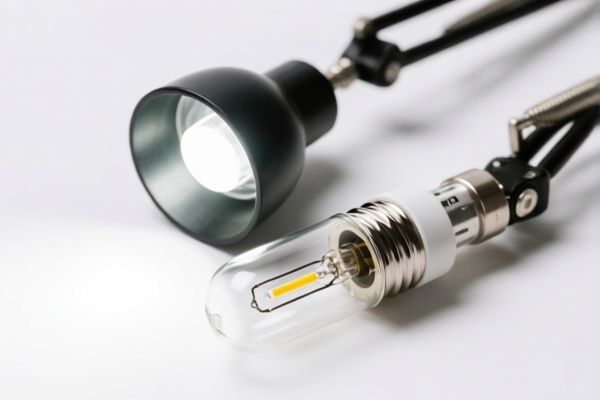


AI Analysis
🔦 Automotive Work Light (Off-Road/Utility Lighting)
🌐 HS Code Reference & Customs Clearance Guide | 2026 Latest Tariff Analysis | Professional Strategy
📌 Part I: Product Definition & Classification: What Exactly is an "Automotive Work Light"?
Automotive Work Lights are high-intensity lighting devices designed for off-road use, utility vehicles, construction equipment, or as auxiliary lighting for standard vehicles. Unlike standard vehicle tail lights or brake lights, these are often intended for illumination of the surrounding environment rather than just signaling.
In international trade, they are primarily categorized under two main headings depending on their electrical function and intended mounting/application: 1. Vehicle-Specific Lighting (Chapter 8512): If classified strictly as part of a vehicle's electrical lighting system (e.g., roof-mounted bars for trucks, auxiliary driving lights). 2. General Electrical Signal/Indication Devices (Chapter 8531): If viewed as standalone electrical indicators or signal apparatus, especially if they are modular, universal-fit, or used in industrial settings.
⚠️ Key Distinction Point:
- If the product is specifically designed and marketed for installation on vehicles (with vehicle-specific connectors, mounting brackets, or voltage compatibility for 12V/24V automotive systems) → It often leans toward 8512 or 8531 (Signal/Indicator).
- If it is a generic lamp that happens to be used in cars but lacks specific vehicle integration → It may be misclassified under 9405 (Lamps/Decorative Lighting). This is a critical error to avoid.
📦 Part II: HS Code Classification Details (Based on Provided Data)
The provided data lists four possible HS Codes for "Automotive Work Lights." Here is the detailed breakdown of why each applies and the associated tax implications.
| HS Code | Summary Description | Taxation Profile | Key Classification Logic |
|---|---|---|---|
| 8512.20.20.40 | Lighting equipment for vehicles; matches automotive lighting category. | 35.0% | Classified as a lighting device specifically for vehicles. The "20" subheading refers to "Self-contained electric lighting equipment." |
| 8531.20.00.40 | Electromechanical visual signaling devices; fits indicator panel/signal equipment. | 35.0% | Classified as a signal/indicator device. If the light is primarily for signaling (e.g., flashing work bar) rather than pure illumination, it falls here. |
| 8531.80.90.51 | Other electrical signaling devices; "catch-all" for other apparatus. | 17.5% | A lower-tax alternative if the device can be argued as a generic electrical signaling apparatus not specifically "vehicle-specific" under the stricter 8512 definition. |
| 8512.20.20.80 | Electrical lighting equipment for vehicle配套 (matching/supplementary). | 35.0% | Similar to 8512.20.20.40, this is another variant within the vehicle lighting category, potentially differing by specific technical specifications or minor tariff line nuances. |
| 9405.42.84.40 | Lamp fittings and lighting accessories; matches other electric lamps. | 38.9% | High Risk Classification. Treats the item as a decorative or general-purpose lamp. Usually incorrect for functional work lights, leading to higher duties and potential re-classification penalties. |
💰 Part III: Detailed Tariff Analysis (US Market Context)
✅ Applicable Country: United States (US)
✅ Origin: China (CN)
✅ Policy Context: Includes Base Tariffs, Section 301 Additional Duties (25%), and Section 122 Duties (10%).
🎯 1. Primary Classifications (8512 & 8531 Series)
HS Codes: 8512.20.20.40, 8531.20.00.40, 8512.20.20.80
Total Tax Rate: 35.0%
| Item | Details |
|---|---|
| Base Duty | 0.0% |
| Section 301 Additional Duty | 25.0% |
| Section 122 Duty | 10.0% |
| Total Effective Rate | 35.0% |
📌 Explanation:
- Base (0%): These electrical vehicle components generally have no base MFN duty.
- Section 301 (25%): Applies to most Chinese-made electrical lighting and signaling goods.
- Section 122 (10%): Applies specifically to goods originating from China that are imported in significant volumes, adding an extra 10% on top of the Section 301 rate.
- Strategy: These are the most accurate classifications for functional automotive work lights. While the rate is high, it is the standard for genuine vehicle accessories.
🎯 2. Alternative Classification (8531.80.90.51)
HS Code: 8531.80.90.51
Total Tax Rate: 17.5%
| Item | Details |
|---|---|
| Base Duty | 0.0% |
| Section 301 Additional Duty | 7.5% |
| Section 122 Duty | 10.0% |
| Total Effective Rate | 17.5% |
📌 Explanation:
- This classification benefits from a reduced Section 301 rate of 7.5% (instead of 25%).
- Risk: This usually applies to "other electrical signaling apparatus." To qualify, you must prove the product is not specifically "for vehicles" in a technical sense, or falls under a sub-category with preferential treatment. This requires strong technical documentation to avoid customs disputes.
🎯 3. Incorrect/Risky Classification (9405 Series)
HS Code: 9405.42.84.40
Total Tax Rate: 38.9%
| Item | Details |
|---|---|
| Base Duty | 3.9% |
| Section 301 Additional Duty | 25.0% |
| Section 122 Duty | 10.0% |
| Total Effective Rate | 38.9% |
📌 Explanation:
- Base (3.9%): General lamps attract a base duty.
- Section 301 (25%): Still applies.
- Section 122 (10%): Still applies.
- Risk: This is the highest tax rate in the list. Furthermore, classifying a functional work light as a "lamp" (9405) is likely incorrect under General Rule of Interpretation (GRI) 1, as it is specifically designed for vehicle use. This could lead to under-declaration penalties if customs re-classes it to 8512/8531 later.
🛠️ Part IV: Customs Clearance Practical Advice
✅ 1. Preparation Checklist (Must-Haves)
| Document | Requirement | Reason |
|---|---|---|
| Product Specifications | ✔️ Detail: Voltage (12V/24V), Wattage, Lumens, IP Rating, Mounting Type. | Proves it is a vehicle accessory, not a general home lamp. |
| Photographs | ✔️ Show product mounted on a vehicle or with vehicle-specific connectors (e.g., Deutsch connectors, spade terminals). | Visual evidence supports 8512 classification. |
| Intended Use Statement | ✔️ Explicitly state: "For use on off-road vehicles, trucks, construction machinery, or as auxiliary vehicle lighting." | Prevents classification as 9405 (Decorative/General). |
| Technical Drawing | ✔️ Highlight electrical interface and housing material. | Helps determine if it's a signal device (8531) or lighting (8512). |
| Commercial Invoice | ✔️ Use precise terminology: "LED Work Light for Trucks" NOT "LED Lamp." | Avoids ambiguity. |
✅ 2. Classification Strategy & Pitfalls
| Scenario | Recommended HS Code | Why? | Pitfall to Avoid |
|---|---|---|---|
| Standard Truck Roof Light | 8512.20.20.40 or 8512.20.20.80 |
It is a lighting device specifically for vehicles. | Do not use 9405.42.84.40 → Higher tax (38.9%) & misclassification risk. |
| Universal Flashing Beacon | 8531.20.00.40 |
It functions as a signal/indicator device. | Do not under-declare. Ensure it’s not marketed as "decorative." |
| Industrial/Stationary Work Light | 8531.80.90.51 |
If it can be argued as general electrical apparatus (not vehicle-specific). | Only use if you can justify the 7.5% Section 301 rate. Must have strong technical proof it’s not vehicle-exclusive. |
✅ 3. Critical Customs Tips
- Avoid "Lamp" Terminology: Never describe the product as "Lamp" or "Decorative Light" in marketing materials or invoices if it’s a work light. Use "Work Light," "Auxiliary Lighting," or "Signal Device."
- Connector Type Matters: If the product has vehicle-specific connectors (e.g., 2-pin, 4-pin, Deutsch), it strongly supports 8512. If it has standard screw terminals or plugs, it might support 8531 or even 9405 (though 9405 is risky).
- Pre-Ruling Application: Given the high stakes (35% vs 17.5% vs 38.9%), consider applying for a Binding Tariff Information (BTI) or Advance Ruling from US Customs and Border Protection (CBP) if importing large volumes. This locks in the correct classification and protects against audits.
- Section 122 Awareness: Remember that 10% is an additional layer on top of Section 301. It is not optional. Factor this into your cost model.
🌍 Part V: Global Market Comparison (2026 Outlook)
| Market | Likely HS Code | Estimated Duty (China Origin) | Notes |
|---|---|---|---|
| 🇺🇸 USA | 8512 or 8531 |
17.5% - 38.9% | High tariffs due to Section 301 & 122. Classification accuracy is critical. |
| 🇨🇳 China (Import) | 8512 or 8531 |
~0% - 5% | Lower base duties, no Section 301/122. |
| 🇪🇺 EU | 8512 |
0% | Generally duty-free for automotive parts, but requires ECE certification. |
| 🇬🇧 UK | 8512 |
0% | Post-Brexit tariff-free for many automotive accessories. |
📌 Conclusion:
The US market is the most challenging due to the叠加 (stacked) tariffs.
- Best Case:8531.80.90.51(17.5%) – Requires careful justification.
- Standard Case:8512/8531variants (35%) – Safe, accurate, but expensive.
- Worst Case:9405(38.9%) – Avoid at all costs.
📌 Part VI: Common Errors & Avoidance Guide
❌ Error 1: Describing the product as "LED Lamp" on the commercial invoice.
👉 Consequence: Customs may classify it under 9405, leading to a 38.9% duty and potential rejection for misdescription.
❌ Error 2: Assuming all work lights are the same.
👉 Consequence: Failing to distinguish between signal devices (8531) and lighting devices (8512) can lead to audits and back-taxes if the classification doesn't match the product's primary function.
❌ Error 3: Ignoring Section 122.
👉 Consequence: Underestimating costs by 10%. Always include the 10% Section 122 duty in your CIF calculation.
✅ Correct Action:
"LED Auxiliary Work Light for Trucks, 12V/24V, IP68, with Deutsch Connectors"
HS Code:8512.20.20.40(or8531.20.00.40if signaling function is dominant)
🎯 Part VII: Final Recommendation
🎯 Summary:
For Automotive Work Lights, the most defensible and common classifications are under 8512 (Vehicle Lighting) or 8531 (Signal Devices).
- Rate: 35.0% is the standard safe rate.
- Optimization: If you can prove the product is a general electrical signaling apparatus not exclusive to vehicles, you might qualify for 17.5% under 8531.80.90.51, but this carries higher audit risk.
- Avoid: 9405 (38.9%) unless the product is truly a general-purpose lamp, which is unlikely for "Automotive Work Lights."
📢 Immediate Action:
1. Review Product Specs: Does it have vehicle-specific connectors?
2. Choose HS Code: Stick to 8512 or 8531 variants.
3. Document Everything: Keep photos, specs, and intended use statements ready for CBP inspection.
4. Calculate Cost: Budget for 35% total duties (0% Base + 25% Sec 301 + 10% Sec 122).
✨ Professional Customs Clearance Starts with Accurate Classification!
💼 Every dollar saved on duty is pure profit!
Customer Reviews
About HS Code Classification
The Harmonized System (HS) is an internationally standardized nomenclature developed by the World Customs Organization (WCO) to classify traded products. Over 200 countries use the HS system as the basis for customs tariffs, trade statistics, and import/export regulations.
Each HS code follows a hierarchical structure:
- Chapter (2 digits) — Broad category of goods (e.g., Chapter 84: Machinery and Mechanical Appliances)
- Heading (4 digits) — More specific grouping within the chapter
- Subheading (6 digits) — Internationally standardized breakdown, used by all WCO member countries
- National subdivisions (8-10 digits) — Country-specific extensions for further classification, such as US HTSUS 10-digit codes
Correct HS code classification is essential for smooth customs clearance, accurate duty payment, and compliance with trade regulations. Misclassification can lead to customs delays, overpayment of duties, or penalties.
When importing from CN to US, the applicable tariff rates may include:
- Most-Favored-Nation (MFN) rate — The standard duty rate applied to WTO members
- General rate — Applied to countries without trade agreements
- Trade remedy duties — Additional tariffs such as Section 301 (anti-dumping), Section 232 (national security), or countervailing duties
The information provided on this page is for reference purposes only. For official classification, please consult with your local customs authority or a licensed customs broker.