Autumn Sweatpants
CN → US| HS Code | Tariff Rate | Origin | Destination | Doc |
|---|---|---|---|---|
| 6103431520 | 38.2% | CN | US | Official Doc |
| 6203431310 | 45.4% | CN | US | Official Doc |
| 6104632028 | 45.7% | CN | US | Official Doc |
| 6203439011 | 45.4% | CN | US | Official Doc |
| 6203431320 | 45.4% | CN | US | Official Doc |
Product Images
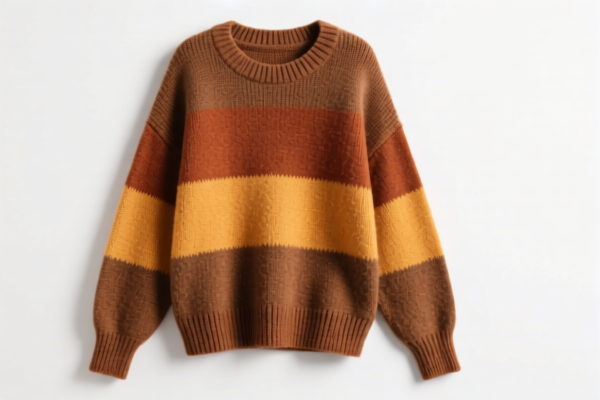



AI Analysis
👖 Autumn Sweatpants (Casual/Activewear Trousers)
🌐 HS Code Reference & Customs Clearance Guide | 2026 Latest Tariff Analysis | Professional Clearance Strategy
📌 I. Product Definition & Classification: Do You Truly Understand "Sweatpants"?
Autumn Sweatpants are essential apparel for casual wear, home leisure, and light sports activities. In international trade, they are primarily classified under Chapter 61 (Knitted) or Chapter 62 (Non-Knitted). The specific HS Code depends heavily on:
1. Material Composition: Synthetic fibers vs. Cotton.
2. Construction Method: Knitted vs. Weaved.
3. Target Gender: Women/Men (Note: The provided data predominantly reflects codes often associated with women's or unisex classifications, specifically 6104 which typically denotes "Women's or girls' suits...").
⚠️ Key Distinction Point:
- If made of Synthetic Fibers (Polyester, Nylon, etc.) → Typically falls under 6104.63 (Knitted) or 6203.43 (Non-knitted).
- If made of Cotton → Typically falls under 6203.42 (Non-knitted).
- Crucial Note: Misclassifying the material or knit/weave status can lead to significant tariff discrepancies due to US additional duties.
📦 II. HS Code Classification Details (2026 Latest Tariff Reference)
Based on the provided data, here are the potential HS Codes for Autumn Sweatpants, categorized by material and construction.
| HS Code | Product Description | Material Inference | Usage/Context | Total Tax Rate |
|---|---|---|---|---|
6104.63.20.11 |
Women’s Knitted Trousers/Sweatpants | Synthetic Fibers | Sports/Casual | 45.7% |
6203.42.07.16 |
Men’s/Unisex Non-Knitted Trousers | Cotton | Casual/Leisure | 34.1% |
6103.43.15.20 |
Men’s Knitted Trousers/Sweatpants | Synthetic Fibers | Sports/Outdoor | 38.2% |
6203.43.13.10 |
Men’s Non-Knitted Trousers/Sweatpants | Synthetic/Blend | Sports/Outdoor | 45.4% |
6104.63.20.28 |
Women’s Knitted Trousers (Other) | Synthetic/Cotton | Sports/Breeches-style | 45.7% |
🔍 Key Observation:
- Section 61 (Knitted) items generally face higher base tariffs (28.2%) when made of synthetic fibers.
- Section 62 (Non-Knitted) items vary more significantly based on material (Cotton vs. Synthetic).
- Tax Rates Range: From 34.1% to 45.7%. This variance is driven by the combination of base duties and US-specific additional tariffs.
💰 III. 2026 Latest Tariff Breakdown (Including Additional Duties)
✅ Applicable Country: United States (US)
✅ Origin: China (CN)
✅ Effective Time: Post-2025 (Including Section 301 & IEEPA provisions)
The total tax rate is composed of three layers: 1. Base Tariff (Most Favored Nation - MFN): Standard tariff for the product type. 2. Section 301 Additional Duty (7.5%): Tariff imposed on Chinese goods under US Trade Act Section 301. 3. IEEPA / Section 122 Duty (10%): Additional tariff under the International Emergency Economic Powers Act (IEEPA), specifically targeting certain categories or recent executive actions.
🎯 1. High-Tariff Scenario: Synthetic Knitted/Woven Pants
Applicable Codes: 6104.63.20.11, 6104.63.20.28, 6203.43.13.10
| Component | Rate | Source/Logic |
|---|---|---|
| Base Tariff | 27.9% - 28.2% | Standard MFN rate for synthetic trousers (Knitted/Non-knitted) |
| Section 301 Duty | +7.5% | US Additional Duty on Chinese goods (List 3/4) |
| IEEPA/122 Duty | +10% | Additional tariff under IEEPA or Section 122 provisions |
| TOTAL TAX | 45.4% - 45.7% | High Cost |
📌 Explanation:
- Synthetics (Polyester/Nylon) are heavily taxed.
- The 10% IEEPA duty is a significant added cost on top of the already high base and Section 301 duties.
- Total ~45.7% means for every $100 of CIF value, you pay ~$45.7 in duties alone.
🎯 2. Mid-Tariff Scenario: Synthetic Non-Knitted (Section 61 vs 62 Nuance)
Applicable Code: 6103.43.15.20 (Note: Data shows lower Section 301 duty here)
| Component | Rate | Source/Logic |
|---|---|---|
| Base Tariff | 28.2% | Standard MFN rate |
| Section 301 Duty | 0.0% | Specific subheading may be exempt or excluded from the 7.5% bracket |
| IEEPA/122 Duty | +10% | Additional tariff under IEEPA |
| TOTAL TAX | 38.2% | Moderate-High Cost |
📌 Explanation:
- This code saves the 7.5% Section 301 duty, reducing the total from ~45% to 38.2%.
- However, the 10% IEEPA duty remains.
- Strategy: Verify if your specific knit/wave structure qualifies for this lower Section 301 rate.
🎯 3. Lowest-Tariff Scenario: Cotton Non-Knitted
Applicable Code: 6203.42.07.16
| Component | Rate | Source/Logic |
|---|---|---|
| Base Tariff | 16.6% | Standard MFN rate for Cotton Trousers (Lower than synthetic) |
| Section 301 Duty | +7.5% | US Additional Duty on Chinese goods |
| IEEPA/122 Duty | +10% | Additional tariff under IEEPA |
| TOTAL TAX | 34.1% | Lowest among options |
📌 Explanation:
- Cotton attracts a significantly lower base tariff (16.6% vs 28.2%).
- Despite the 10% IEEPA duty, the total is 34.1%, which is ~11.6% lower than the synthetic options.
- Strategy: If feasible, sourcing or labeling as Cotton (or high cotton blend) can yield substantial savings.
🛠️ IV. Customs Clearance Practical Advice (Real-World Pitfall Guide)
✅ 1. Documentation Checklist (Non-Negotiable)
| Document | Mandatory? | Purpose |
|---|---|---|
| ✅ Commercial Invoice | ✔️ | Must clearly state "Sweatpants," material composition (% Cotton/Synthetic), and HS Code. |
| ✅ Packing List | ✔️ | Must match invoice details; include weight and dimensions. |
| ✅ Product Composition Label | ✔️ | Photos of the care label showing fiber content (e.g., "80% Polyester, 20% Spandex") are critical for material verification. |
| ✅ Brand Authorization | ✔️ | If branded, proof of authorization to avoid IPR (Intellectual Property Rights) holds. |
| ✅ Bill of Lading/Air Waybill | ✔️ | Proof of shipment and contract. |
✅ 2. Classification Strategy (Key Mnemonic)
🔥 “Material First, Then Knit/Weave, Then Tax!”
| Scenario | Correct Approach | Risk if Wrong |
|---|---|---|
| 100% Cotton | Aim for 6203.42 or 6103.41 (if knitted) → Lower Base Tariff (16.6%) |
Mislabeling as synthetic → +11.6% tax hike |
| 100% Polyester | 6104.63 or 6203.43 → Higher Base Tariff (28.2%) |
Mislabeling as cotton → Customs Audit, Penalties, Retroactive Taxes |
| Blend (e.g., 60% Poly/40% Cotton) | Classify based on chief material (Polyester) → Synthetic Rates | Ambiguity → Customs may seize for re-classification |
| Knitted vs. Non-Knitted | Knitted = Ch 61; Non-Knitted = Ch 62. Check fabric structure! | Wrong Chapter → Rejection of entry |
✅ 3. Special Considerations for US Customs
- IEEPA 10% Duty is Universal: Based on the data, all listed codes incur a 10% IEEPA/122 duty. You cannot avoid this through classification alone.
- Section 301 (7.5%) Avoidance: The code
6103.43.15.20shows 0% Section 301. This is a rare exception. Investigate if your product (e.g., men's synthetic knit trousers) qualifies for this specific subheading to save 7.5%. - Cotton Advantage: If you have control over material sourcing, switching from Polyester to Cotton reduces the base tariff by ~11.6%, leading to a ~11.6% total tax reduction.
🌍 V. Global Market Comparison (2026 Outlook)
| Market | Recommended HS Code | Estimated Tax (China Origin) | Key Requirement |
|---|---|---|---|
| 🇺🇸 USA | 6203.42.07.16 (Cotton) |
34.1% | CBP Precise Material Declaration |
| 🇺🇸 USA | 6104.63.20.11 (Synth) |
45.7% | IPR Clearance, Detailed Specs |
| 🇪🇺 EU | 6203.42 / 6103.43 | ~12-16% | CE Labeling, REACH Compliance |
| 🇨🇳 China | 6203.42 / 6103.43 | ~10-15% | CCC (if applicable), Quality Inspection |
| 🇬🇧 UK | 6203.42 / 6103.43 | ~12-16% | UKCA Marking, Post-Brexit Rules |
📌 Conclusion:
- The US market is the most costly due to the 10% IEEPA + 7.5% Section 301 (mostly) + High Base Tariffs.
- Cotton is the most tax-efficient material choice for the US.
- Synthetics incur the highest burden.
📌 VI. Common Errors & Pitfalls (Lessons Learned)
❌ Error 1: Claiming "Sweatpants" are "Athletic Wear" to qualify for lower duties.
👉 Reality: US Customs classifies by Material and Construction, not just "Use." Unless specifically exempted, athletic wear follows standard textile rules.
❌ Error 2: Ignoring the 10% IEEPA Duty.
👉 Reality: This is a new/additional layer on top of Section 301. Budgeting for only 25-30% will lead to cash flow issues.
❌ Error 3: Misidentifying Knitted vs. Non-Knitted.
👉 Reality: A close-up photo of the fabric weave is required. Guessing leads to classification errors and fines.
❌ Error 4: Using "Track Pants" or "Joggers" ambiguously.
👉 Reality: Use clear terms like "Sweatpants, Cotton, Non-Knitted, Men's" on invoices to avoid queries.
✅ Correct Practice:
"Men’s Sweatpants, 60% Cotton/40% Polyester, Non-Knitted, Elastic Waist, Side Pockets. HS: 6203.43.13.10."
🎯 VII. Conclusion: Strategic Cost Optimization
🎯 Key Takeaways:
🔹 "Cotton Saves, Synthetics Cost." → Prefer Cotton blends to lower the 28.2% base to 16.6%.
🔹 "Watch the 10% IEEPA." → It’s unavoidable; plan for it in all cost calculations.
🔹 "Verify Section 301 Exemptions." → Check if6103.43.15.20applies to your specific knit structure to save the 7.5%.
📌 Pro Tip:
If your sweatpants are made in Vietnam or Thailand, you may avoid the 10% IEEPA and 7.5% Section 301 duties entirely, reducing total tax to ~12-16%. Consider supply chain diversification if volumes are high.
📣 Action Item:
📞 Consult a US Customs Broker to verify the specific material composition and knit/weave structure for your exact product.
🚀 Optimize Material Choice (Cotton vs. Synthetic) to save up to 11.6% in duties.
✨ Smart Classification, Higher Margins!
💼 Don’t let hidden tariffs eat your profits!
Customer Reviews
About HS Code Classification
The Harmonized System (HS) is an internationally standardized nomenclature developed by the World Customs Organization (WCO) to classify traded products. Over 200 countries use the HS system as the basis for customs tariffs, trade statistics, and import/export regulations.
Each HS code follows a hierarchical structure:
- Chapter (2 digits) — Broad category of goods (e.g., Chapter 84: Machinery and Mechanical Appliances)
- Heading (4 digits) — More specific grouping within the chapter
- Subheading (6 digits) — Internationally standardized breakdown, used by all WCO member countries
- National subdivisions (8-10 digits) — Country-specific extensions for further classification, such as US HTSUS 10-digit codes
Correct HS code classification is essential for smooth customs clearance, accurate duty payment, and compliance with trade regulations. Misclassification can lead to customs delays, overpayment of duties, or penalties.
When importing from CN to US, the applicable tariff rates may include:
- Most-Favored-Nation (MFN) rate — The standard duty rate applied to WTO members
- General rate — Applied to countries without trade agreements
- Trade remedy duties — Additional tariffs such as Section 301 (anti-dumping), Section 232 (national security), or countervailing duties
The information provided on this page is for reference purposes only. For official classification, please consult with your local customs authority or a licensed customs broker.