Auxin Solution
CN → US| HS Code | Tariff Rate | Origin | Destination | Doc |
|---|---|---|---|---|
| 3003391000 | 10.0% | CN | US | Official Doc |
| 3822900000 | 10.0% | CN | US | Official Doc |
| 3822190080 | 10.0% | CN | US | Official Doc |
| 3003395000 | 10.0% | CN | US | Official Doc |
| 3808931500 | 41.5% | CN | US | Official Doc |
Product Images
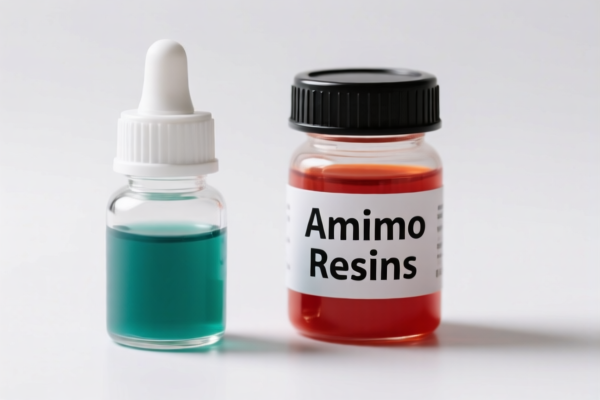
AI Analysis
🌱 Auxin Solution: The Hormonal Key to Plant Growth
🌐 HS Code Reference & Customs Clearance Guide | 2026 Tax Rate Full Analysis | Professional Clearance Strategy
📌 I. Product Definition & Classification: Do You Really Understand "Auxin Solution"?
Auxin Solution is a critical biological agent in modern agriculture, horticulture, and plant research. It is a liquid containing auxin, a plant hormone essential for regulating growth, root formation, fruit development, and stem elongation.
In international trade, "Auxin Solution" is a generic name that creates significant classification challenges because its final destination determines its HS Code:
- Pharmaceutical/Biological Classification: Used for research, lab diagnostics, or as a raw material for hormone-based drugs.
- Agricultural Chemical Classification: Used as a Plant Growth Regulator (PGR) sold directly to farmers for crop treatment.
⚠️ Critical Distinction: * If used as a laboratory reagent or diagnostic tool → Chapter 38 (Chemical Products). * If formulated as a crop treatment agent → Chapter 3808 (Pesticides/PGRs). * If classified as a hormone mixture → Chapter 3003 (Pharmaceuticals).
📦 II. HS Code Classification Details (2026 Latest Tariff Reference)
| HS Code | Product Description (Based on Data) | Applicable Scenario | Total Tax Rate |
|---|---|---|---|
3003.39.10.00 |
Hormone Class Substance: Artificially synthesized natural hormone mixture. | Pharmaceutical intermediates, research-grade hormone mixtures. | 10.0% |
3822.90.00.00 |
Chemical Reagent / Product: Diagnostic or laboratory reagent. | Lab testing, diagnostic kits, scientific research. | 10.0% |
3822.19.00.80 |
Chemical Reagent (Liquid): Other diagnostic/laboratory reagents. | Specialized liquid reagents for lab analysis. | 10.0% |
3003.39.50.00 |
Medicated Mixture: Unmeasured mixture containing hormones. | Bulk hormone mixtures, not yet in dosage forms (tablets/injections). | 10.0% |
3808.93.15.00 |
Plant Growth Regulator Preparation: Contains specific PGRs. | Commercial Agriculture: Sold for direct crop application. | 41.5% |
🔍 Key Insight: * Tax Disparity Alert: There is a 31.5% gap between classifying it as a "Lab Reagent/Hormone" (10%) vs. a "Plant Growth Regulator" (41.5%). * Misclassification can lead to massive unexpected costs or customs penalties.
💰 III. 2026 Tariff Rate Deep Dive (Detailed Tax Breakdown)
✅ Applicable Market: United States (US)
✅ Origin: China (CN)
✅ Policy Context: Section 301 & Section 232 (122 Clause) tariffs apply.
🎯 Scenario A: Low-Tax Classification (Lab/Pharma Uses)
Codes: 3003.39.10.00, 3822.90.00.00, 3822.19.00.80, 3003.39.50.00
| Tax Item | Rate | Details |
|---|---|---|
| Base Duty (MFN) | 0.0% | Most "chemicals" and "hormones" have 0% base tariff. |
| Section 301 / 232 (China Specific) | 0.0% | No extra "Section 301" surcharge for these specific subheadings in the provided data. |
| "122 Clause" Surcharge | +10.0% | Crucial: This is the specific additional tariff applied to this chemical/pharma category. |
| TOTAL TAX | 10.0% | Calculation: CIF Value × 10%. |
📌 Explanation: * For these codes, the tax structure is simple: 0% Base + 10% Special Clause. * This applies if you can prove the solution is for diagnostic use, lab research, or pharmaceutical manufacturing (not direct field application).
🎯 Scenario B: High-Tax Classification (Agricultural Use)
Code: 3808.93.15.00 (Plant Growth Regulators)
| Tax Item | Rate | Details |
|---|---|---|
| Base Duty (MFN) | 6.5% | Standard tariff for pesticide/chemical preparations. |
| Section 301 / 232 (China Specific) | +25.0% | Heavy Surcharge: Applied to agricultural chemicals from China. |
| "122 Clause" Surcharge | +10.0% | Additional policy tax. |
| TOTAL TAX | 41.5% | Calculation: CIF Value × 41.5%. |
📌 Explanation: * If Customs determines the product is a commercial plant growth agent, the tax skyrockets. * Cost Impact: A $10,000 shipment becomes a $4,150 tax bill. This can eat up the entire profit margin of agricultural exporters.
🛠️ IV. Practical Customs Clearance Advice (Avoiding Pitfalls)
✅ 1. Material Checklist (Non-Negotiable)
| Document | Requirement | Purpose |
|---|---|---|
| Certificate of Analysis (COA) | ✔️ Mandatory | Must state the Concentration and Intended Use (e.g., "For Lab Use Only" vs. "For Agricultural Application"). |
| Product Specification Sheet | ✔️ | Must explicitly state: "Auxin" (Chemical Name) and formulation type. |
| Declaration of Intended Use | ✔️ | Critical: A signed statement confirming whether it is for Research, Medical, or Agricultural use. |
| Safety Data Sheet (SDS) | ✔️ | To prove chemical properties (liquid, pH, solubility). |
| Packaging Photos | ✔️ | Show if it is a "Lab Reagent Bottle" (small, sterile) vs. "Agri-Spray Can" (large, marked for field use). |
| Labeling | ✔️ | Labels must NOT say "For Crop Application" if you want to claim the 10% rate. |
✅ 2. Declaration Strategy (The "Golden Rule")
🔥 Strategy: "Define the Destination, Not the Chemistry"
| Scenario | Correct Declaration | Wrong Declaration (Risky) |
|---|---|---|
| Lab/Research Use | "Auxin Solution, Lab Reagent, Diagnostic Use" | "Plant Growth Agent", "Agricultural Chemical" |
| Agricultural Use | "Auxin-based Plant Growth Regulator, for Field Use" | "Lab Reagent", "Chemical Intermediate" |
| Bulk Pharmaceutical | "Hormone Mixture, Unmeasured, Pharmaceutical Grade" | "Fertilizer", "Crop Spray" |
📌 Why it matters: * If you declare it as a Lab Reagent (
3822or3003), the tax is 10%. * If you declare it as a PGR (3808), the tax is 41.5%. * Customs officers look at the label and marketing materials. If the box says "Grow More Fruits!" but you declare "Lab Chemical," you will be fined.
✅ 3. Special Situations & Handling
| Situation | Handling Advice |
|---|---|
| OEM for Research Institutes | Provide the end-user contract from the University/Lab. This validates the 10% tax rate. |
| Bulk Liquid for Formulation | If shipping to a company that mixes it into sprays, classify as Intermediate (3003/3822) ONLY if the contract specifies it is for manufacturing, not direct sale. |
| Mixed Shipments | If shipping both Lab Reagents and Agri-Chemicals together, declare separately. Do not mix; otherwise, the whole shipment may be taxed at the higher rate (41.5%). |
| "Unmeasured Mixture" | For 3003.39.50.00, ensure the solution is not pre-packaged in individual dosage forms (like ampoules) which might trigger different rules. |
🌍 V. Global Market Comparison (2026)
| Market | Recommended HS Code | Tax Rate (China Origin) | Key Requirement |
|---|---|---|---|
| 🇺🇸 USA | 3822.90.00.00 (Lab) OR 3808.93.15.00 (Agri) |
10% (Lab) or 41.5% (Agri) | Strict Labeling: Must prove "Lab Use" to get 10%. |
| 🇪🇺 EU | Varies by PGR rules | Typically 2-4% (Agri) | REACH Registration mandatory. |
| 🇯🇵 Japan | 3808.93 (Agri) |
1-5% | JAS Certification needed for Agri. |
| 🇦🇺 Australia | 3808.93 |
5-10% | APVMA Approval required for Agri. |
📌 Conclusion: * The US is the most aggressive market regarding agricultural chemicals with the "122 Clause" and Section 301 tariffs. * Differentiation is Key: The 10% rate is available, but only if the product is clearly positioned as a scientific tool, not a farming spray.
📌 VI. Common Errors & Avoidance Guide
❌ Error 1: Calling it "Fertilizer" or "Crop Spray"
👉 Consequence: Auto-classified to 3808.93.15.00 → 41.5% Tax.
✅ Fix: Use terms like "Auxin Solution," "Plant Hormone Reagent," "Lab Chemical."
❌ Error 2: Mixing Agri and Lab Products in One Shipment 👉 Consequence: Customs audits the whole lot, taxes all at 41.5%. ✅ Fix: Split shipments. One for Lab (10%), one for Agri (41.5%).
❌ Error 3: Missing "Intended Use" in Docs 👉 Consequence: Customs assumes highest risk (Agri) → High Tax. ✅ Fix: Include a Letter of Undertaking from the buyer stating: "This shipment is for Research/Lab use ONLY."
❌ Error 4: Incorrect Chemical Naming 👉 Consequence: Classification confusion. ✅ Fix: Always list the IUPAC name (e.g., Indole-3-acetic acid) on the invoice.
🎯 VII. Conclusion: Precision Classification = Cost Savings
🎯 Remember:
🔹 "Lab Use = 10%, Agri Use = 41.5%"
🔹 "One word on the label ('Spray') can cost you 31.5% more!"
🔹 "HS Code determines your margin, not just the product quality."
📌 Pro Tip:
If your product is pure synthetic auxin for research, ensure the label says "For Research Use Only" (RUO). This is the safest path to the 10% tax bracket. If it's for farmers, prepare for the 41.5% cost or explore duty-free zones.
📣 Act Now:
📞 Contact your Customs Broker with the COA and Intended Use Letter.
🚀 Apply for an HS Code Pre-Ruling from CBP to lock in the 10% rate before shipment!
✨ Professional Clearing Starts with Precise Classification!
💼 Every percentage point matters in your bottom line!
Customer Reviews
About HS Code Classification
The Harmonized System (HS) is an internationally standardized nomenclature developed by the World Customs Organization (WCO) to classify traded products. Over 200 countries use the HS system as the basis for customs tariffs, trade statistics, and import/export regulations.
Each HS code follows a hierarchical structure:
- Chapter (2 digits) — Broad category of goods (e.g., Chapter 84: Machinery and Mechanical Appliances)
- Heading (4 digits) — More specific grouping within the chapter
- Subheading (6 digits) — Internationally standardized breakdown, used by all WCO member countries
- National subdivisions (8-10 digits) — Country-specific extensions for further classification, such as US HTSUS 10-digit codes
Correct HS code classification is essential for smooth customs clearance, accurate duty payment, and compliance with trade regulations. Misclassification can lead to customs delays, overpayment of duties, or penalties.
When importing from CN to US, the applicable tariff rates may include:
- Most-Favored-Nation (MFN) rate — The standard duty rate applied to WTO members
- General rate — Applied to countries without trade agreements
- Trade remedy duties — Additional tariffs such as Section 301 (anti-dumping), Section 232 (national security), or countervailing duties
The information provided on this page is for reference purposes only. For official classification, please consult with your local customs authority or a licensed customs broker.