Avalsor J11 Pro Vacuum Cleaner Accessories Red Universal Host
CN → US| HS Code | Tariff Rate | Origin | Destination | Doc |
|---|---|---|---|---|
| 8508190000 | 35.0% | CN | US | Official Doc |
| 8508700000 | 85.0% | CN | US | Official Doc |
| 8479909596 | 85.0% | CN | US | Official Doc |
Product Images
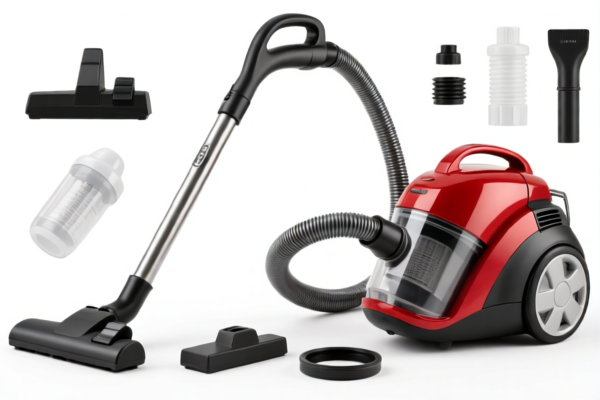
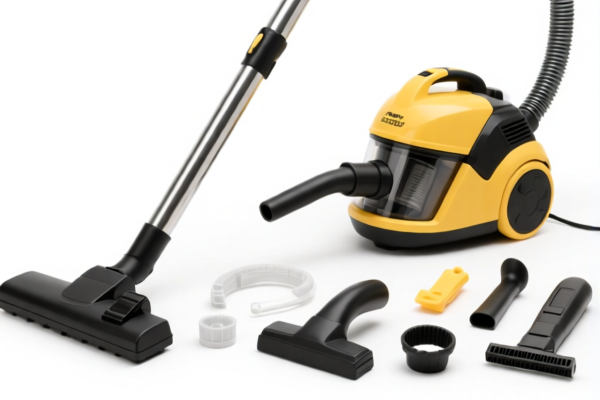
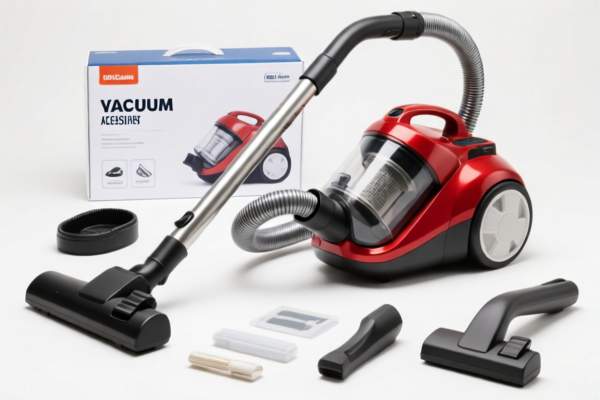
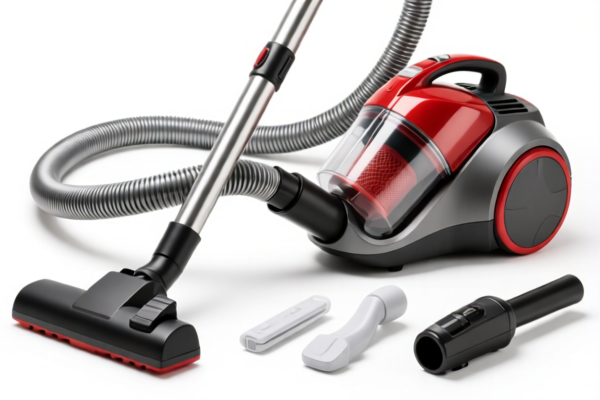
AI Analysis
🧹 Avalsor J11 Pro Vacuum Cleaner (Red Universal Host)
🌐 HS Code Reference & Customs Clearance Guide | 2026 Latest Tariff Analysis | Professional Entry Strategies
📌 I. Product Definition & Classification: Do You Really Understand "Vacuum Cleaners"?
The Avalsor J11 Pro is a cordless or handheld vacuum cleaning appliance, marketed as a "Universal Host" with specific accessories. In international trade, vacuum cleaners are strictly categorized based on their motor type, power source, and functionality.
Cordless/Handheld Vacuums: Typically classified under 8508 (Electro-mechanical appliances with self-contained electric motor).
Accessories/Parts: If declared separately, they fall under 8508.70 (Parts and accessories). However, when shipped as a complete set (Host + Essential Accessories), customs authorities often demand classification of the main machine (Host) or the composite good, depending on the country's ruling.
⚠️ Key Distinction:
- If imported as a complete unit (Host + standard accessories like nozzle/hose), it is generally classified as a Vacuum Cleaner Host under 8508.19 or 8508.70 depending on specific country interpretation (e.g., US vs. China).
- If imported as spare parts only, it falls under 8508.70.
- Warning: Misclassifying a complete machine as "parts" can lead to severe penalties or misdeclaration of tax rates.
📦 II. HS Code Classification Details (Based on Provided Data )
According to the provided data, three potential HS Codes are identified for this product. Below is the detailed breakdown of why each code applies and its corresponding tax implications.
| HS Code | Product Description (From Data) | Summary & Applicability | Material/Function Notes |
|---|---|---|---|
| 8508.19.00.00 | Vacuum Cleaner Host | "Vacuum cleaner host, accessories fall within parts category, no material conflict." | ✅ Best for complete units where the host is the primary function. No specific material restrictions noted. |
| 8508.70.00.00 | Vacuum Cleaner Host & Accessories | "Host and accessories match, consistent use, no material conflict." | ✅ Applies when Host + Accessories are declared together. High tax due to steel/aluminum/copper content. |
| 8479.90.95.96 | Other Machinery/Appliances | "Machinery with independent functions, belongs to other categories, no material conflict." | ⚠️ Used if the device has specialized functions beyond standard cleaning (e.g., industrial/heavy-duty). High tax due to steel/aluminum/copper content. |
🔍 Important Reminder:
- 8508.19.00.00 is the most common for standard consumer vacuum cleaners.
- 8508.70.00.00 and 8479.90.95.96 trigger additional tariffs (up to 85%) due to material composition (Steel, Aluminum, Copper).
- Do not mix declarations: Declare the Host as the main item. Accessories should be listed as "Parts" or included in the same line item if allowed.
💰 III. 2026 Latest Tariff Rate Breakdown (Including Surtaxes & Policy Add-ons)
✅ Applicable Country: United States (US) (Inferred from tax structure: 25% + 10% + 50% material surcharge)
✅ Origin: China (CN) (Implied by 10% Section 122 and 25% Section 301-style tariffs)
✅ Effective Date: 2026 (Current Data)
🎯 1. 8508.19.00.00 —— Vacuum Cleaner Host (Standard Classification)
| Item | Content |
|---|---|
| Base Tariff | 0.0% |
| Section 301 Surtax | +25.0% |
| Section 122 Tariff | +10.0% |
| Total Tax Rate | 35.0% |
| Material Surcharge | None (No steel/aluminum/copper penalty noted) |
| Calculation | CIF Value × 35% |
| De Minimis Exemption | ❌ Not Applicable (High risk of inspection) |
| Legal Basis Path | Section 301: 25% → Section 122: 10% → USITC: 8508.19.00.00 |
📌 Explanation:
- This is the most favorable classification for a standard vacuum cleaner host.
- The total tax is 35%, which is high but manageable compared to material-heavy classifications.
- No additional steel/aluminum/copper tax applies here, assuming the host is primarily plastic/electronic.
🎯 2. 8508.70.00.00 —— Vacuum Cleaner Host & Accessories (Material-Specific)
| Item | Content |
|---|---|
| Base Tariff | 0.0% |
| Section 301 Surtax | +25.0% |
| Section 122 Tariff | +10.0% |
| Steel/Aluminum/Copper Surcharge | +50.0% |
| Total Tax Rate | 85.0% |
| Calculation | CIF Value × 85% |
| De Minimis Exemption | ❌ Not Applicable |
| Legal Basis Path | Section 301: 25% → Section 122: 10% → Material Surcharge: 50% → USITC: 8508.70.00.00 |
📌 Warning:
- If the vacuum cleaner contains significant steel, aluminum, or copper components (e.g., motor housing, nozzles, hoses), this surcharge applies.
- Total tax of 85% is extremely high. Avoid this classification if possible by ensuring the primary classification is 8508.19 (Host) and proving the materials are mostly plastic/electronic.
🎯 3. 8479.90.95.96 —— Other Machinery with Independent Functions
| Item | Content |
|---|---|
| Base Tariff | 0.0% |
| Section 301 Surtax | +25.0% |
| Section 122 Tariff | +10.0% |
| Steel/Aluminum/Copper Surcharge | +50.0% |
| Total Tax Rate | 85.0% |
| Calculation | CIF Value × 85% |
| De Minimis Exemption | ❌ Not Applicable |
| Legal Basis Path | Section 301: 25% → Section 122: 10% → Material Surcharge: 50% → USITC: 8479.90.95.96 |
📌 Note:
- This code is used if the vacuum cleaner has specialized industrial functions or is considered "other machinery."
- It carries the same 85% tax as 8508.70 due to material content.
- Not recommended for standard consumer vacuums unless specifically designed for industrial use.
🛠️ IV. Customs Clearance Practical Advice (Real-World Pitfall Avoidance)
✅ 1. Preparation Checklist (Essential Documents)
| Document | Required | Notes |
|---|---|---|
| Product Specifications | ✔️ | Include model (J11 Pro), power (Watts/Volts), battery type (if cordless), and dimensions. |
| Material Breakdown | ✔️ | Critical: Specify % of plastic, steel, aluminum, and copper. Prove low metal content to avoid 50% surcharge. |
| Product Photos | ✔️ | Clear images of the host, accessories, and labels (FCC, CE, UL if applicable). |
| Bill of Materials (BOM) | ✔️ | Detailed list of all components to justify HS Code classification. |
| Commercial Invoice | ✔️ | Clearly state "Vacuum Cleaner Host, Model J11 Pro" and not "Parts" or "Machinery." |
| Packing List | ✔️ | Show that accessories are included with the host to avoid separate declaration. |
✅ 2. Declaration Strategy (Key Tips)
🔥 "Classify as Host, Not Parts; Prove Low Metal Content!"
| Scenario | Correct Declaration | Incorrect Declaration |
|---|---|---|
| Standard Vacuum Cleaner | 8508.19.00.00 (35% tax) |
8508.70.00.00 (85% tax) |
| Vacuum with Metal Nozzles | Provide material proof to stay in 8508.19 |
Declare as 8479.90 (85% tax) |
| Accessories Only | 8508.70.00.00 (85% tax) |
Mix with host → Potential misdeclaration |
📌 Key Tip:
- Always declare the "Host" as the primary item.
- Avoid classifying as8508.70or8479unless necessary, due to the 50% material surcharge.
- Prove that the product is primarily plastic/electronic to avoid the steel/aluminum/copper penalty.
✅ 3. Special Cases Handling
| Situation | Recommendation |
|---|---|
| OEM/White Label | Provide manufacturer details and design specs to prove it's a standard vacuum cleaner. |
| Cordless vs. Corded | Specify battery type (Li-ion) if cordless. This may affect certification (FCC/UL) but not HS Code. |
| Industrial Use | If for industrial use, consider 8479.90.95.96, but expect 85% tax. Justify with usage proof. |
| High Metal Content | If >10% steel/aluminum/copper, prepare for 85% tax. Consider redesigning with plastic components. |
🌍 V. Global Market Comparison (2026 Latest)
| Country/Region | Recommended HS Code | Tariff Rate | Certification Required | Notes |
|---|---|---|---|---|
| 🇺🇸 USA | 8508.19.00.00 |
35% (301+122) | FCC, UL (if applicable) | Avoid 8508.70 (85% tax). |
| 🇨🇳 China | 8508.19.00.00 |
~10-15% | CCC, RoHS | Lower base tariff, no 301/122. |
| 🇪🇺 EU | 8508.70.00.00 |
0-4% | CE, RoHS | No 301/122 tariffs. |
| 🇯🇵 Japan | 8508.19.00.00 |
0% | PSE, JIS | Low tariff, high safety standards. |
📌 Conclusion:
- USA is the most challenging market due to 35-85% tariffs.
- Europe and Japan are more favorable, but require strict safety certifications.
- China has lower tariffs but higher domestic competition.
📌 VI. Common Mistakes & Pitfalls (Lessons Learned)
❌ Mistake 1: Declaring the vacuum cleaner as "Parts" or "Accessories"
👉 Consequence: Tax jumps from 35% to 85% due to material surcharge.
👉 Fix: Declare as Host (8508.19.00.00).
❌ Mistake 2: Ignoring material composition
👉 Consequence: Customs audits reveal steel/aluminum content → 50% surcharge applied.
👉 Fix: Provide a Material Breakdown proving low metal content.
❌ Mistake 3: Mixing "Host" and "Parts" in different lines
👉 Consequence: Delayed clearance, potential penalties.
👉 Fix: Declare Host and accessories together under one HS Code.
❌ Mistake 4: Using vague descriptions like "Cleaning Machine"
👉 Consequence: Customs misclassification → Higher tax.
👉 Fix: Use precise description: "Cordless Vacuum Cleaner Host, Model J11 Pro."
✅ Correct Declaration Example:
"Vacuum Cleaner Host, Model J11 Pro, Cordless, Li-ion Battery, Plastic Housing, FCC Certified. Includes standard nozzle and hose. No significant steel/aluminum/copper content."
🎯 VII. Conclusion: Professional Declaration, Cost Saving, Efficiency!
🎯 Remember:
🔹 "Classify as Host, Not Parts; Prove Low Metal Content!"
🔹 "35% vs 85%: A 50% Difference in Tax!"
🔹 "HS Code Determines Your Profit Margin!"
📌 Pro Tip:
If your vacuum cleaner contains significant metal parts, consider redesigning with plastic components to stay under the 35% tax bracket.
For USA imports, always request a Pre-Ruling from CBP to confirm the HS Code and avoid surprises.
📣 Action Required:
📞 Contact Customs Broker + Provide Product Specs + Request Pre-Ruling
🚀 Ensure Smooth Clearance, Maximize Profit, and Avoid Penalties!
✨ Professional Clearance, Starts with Accurate Classification!
💼 Every Dollar of Tax Saved is Pure Profit!
Customer Reviews
About HS Code Classification
The Harmonized System (HS) is an internationally standardized nomenclature developed by the World Customs Organization (WCO) to classify traded products. Over 200 countries use the HS system as the basis for customs tariffs, trade statistics, and import/export regulations.
Each HS code follows a hierarchical structure:
- Chapter (2 digits) — Broad category of goods (e.g., Chapter 84: Machinery and Mechanical Appliances)
- Heading (4 digits) — More specific grouping within the chapter
- Subheading (6 digits) — Internationally standardized breakdown, used by all WCO member countries
- National subdivisions (8-10 digits) — Country-specific extensions for further classification, such as US HTSUS 10-digit codes
Correct HS code classification is essential for smooth customs clearance, accurate duty payment, and compliance with trade regulations. Misclassification can lead to customs delays, overpayment of duties, or penalties.
When importing from CN to US, the applicable tariff rates may include:
- Most-Favored-Nation (MFN) rate — The standard duty rate applied to WTO members
- General rate — Applied to countries without trade agreements
- Trade remedy duties — Additional tariffs such as Section 301 (anti-dumping), Section 232 (national security), or countervailing duties
The information provided on this page is for reference purposes only. For official classification, please consult with your local customs authority or a licensed customs broker.