Awning
CN → US| HS Code | Tariff Rate | Origin | Destination | Doc |
|---|---|---|---|---|
| 6306120000 | 18.8% | CN | US | Official Doc |
| 5903102010 | 35.0% | CN | US | Official Doc |
| 5903102090 | 35.0% | CN | US | Official Doc |
| 5603120070 | 35.0% | CN | US | Official Doc |
| 5603110070 | 35.0% | CN | US | Official Doc |
Product Images
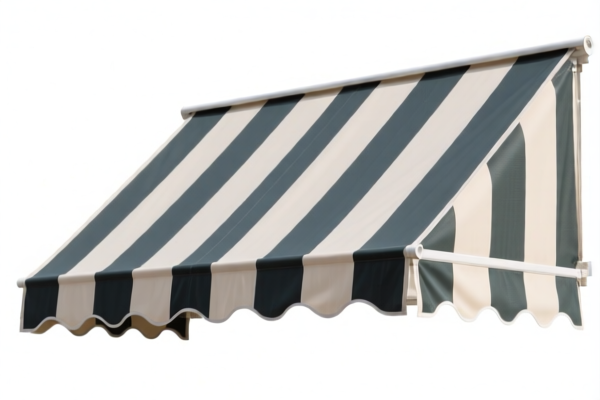
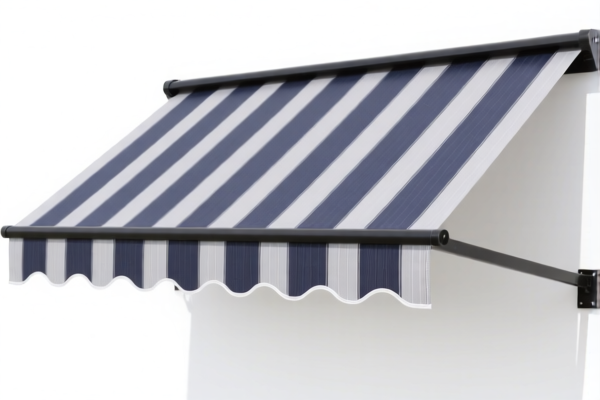
AI Analysis
☀️ Awning Fabric & Canopies (遮阳布/遮阳篷)
🌐 HS Code Reference & Customs Clearance Guide | 2026 Latest Tariff Analysis | Strategic Clearance Strategy 📌 Part I: Product Definition & Classification: Do You Really Understand "Awning"?
Awning fabrics are critical components in architecture, retail, and outdoor living. They serve as protective barriers against sun, rain, and UV radiation. In international trade, these products are often misclassified due to ambiguity between their form (finished product) and material (textile composite).
1. Finished Canopies/Shades (遮阳篷/防晒帘范畴): Structures or assembled fabrics designed specifically for shading. If the item is a finished awning or shade curtain, it may fall under heading 6306.
2. Coated/Laminated Textiles (浸渍/涂覆纺织面料): Most commercial "awning fabric" is not just woven cloth but a composite material—polyester, polyethylene, or acrylic fabric impregnated, coated, covered, or laminated with PVC, PU, or other plastics to make it waterproof and UV-resistant. These fall under headings 5903 or 5603.
⚠️ Key Distinction Point: - If it is a finished, sewn, or assembled shade/curtain → Look at 6306. - If it is raw or semi-finished fabric with plastic coating/lamination (PVC/PU) → Look at 5903 or 5603. - Warning: Misclassification can lead to a 16.2% difference in tax rates (18.8% vs. 35.0%).
📦 Part II: HS Code Classification Details (2026 Latest Tariff Authority Comparison)
| HS Code | Product Description | Application Scenario | Tax Rate Profile |
|---|---|---|---|
6306.12.00.00 |
Tarpaulins, Sails, Awning/Sun-blinds: Awnings and sun-blinds, of synthetic fibers | Finished awnings, retractable canopies, ready-to-use shade structures | 18.8% (Lower) |
5903.10.20.10 |
Textile fabrics impregnated, coated, covered or laminated with plastics: Other, with poly(vinyl chloride) | PVC-coated polyester awning fabric (common for outdoor tents/awnings) | 35.0% (Higher) |
5903.10.20.90 |
Textile fabrics impregnated, coated, covered or laminated with plastics: Other (non-PVC specific) | Plastic-coated/laminated textiles (PU, PE, etc.) without specific PVC designation | 35.0% (Higher) |
5603.12.00.70 |
Non-woven fabrics, whether or not impregnated, coated, covered or laminated: Of synthetic fibers, weighing >150g/m² | Heavy-duty non-woven awning materials, synthetic fiber mats | 35.0% (Higher) |
5603.11.00.70 |
Non-woven fabrics: Of synthetic fibers, weighing ≤150g/m² | Lighter non-woven synthetic awning liners or base layers | 35.0% (Higher) |
🔍 Key Reminder: - Finished vs. Material: If you are exporting raw fabric rolls that are already plastic-coated, do NOT use
6306.12.00.00. You must use5903or5603. - Material Conflict: Even if the fabric is for an awning, if it is not a finished "sun-blind" structure, it is treated as a textile material, not a textile article.
💰 Part III: 2026 Latest Tariff Rate Breakdown (Including Surtaxes & Policy Add-ons)
✅ Applicable Country: United States (US) ✅ Origin: China (CN) ✅ Effective Date: Post-2025 Tariff Regime
🎯 1. 6306.12.00.00 — Finished Awnings & Sun-blinds (Synthetic Fiber)
| Item | Detail |
|---|---|
| Base Tariff | 8.8% |
| Section 301 Surtax | 0.0% |
| Section 122 Tariff | 10.0% |
| Total Rate | 18.8% |
| Tax Calculation | CIF Value × 18.8% |
| De Minimis Eligibility | ❌ No (High tariff threshold generally excludes small package exemptions for textiles from CN) |
| Legal Basis Path | HTSUS:6306.12.00.00 → Section 122: 10% |
📌 Explanation: - This is the most favorable tax rate for awning products. - The "Section 122 Tariff" is a specific statutory tariff (often applied to specific textile/apparel categories or under new trade rules). - Crucial: To qualify, the product must be clearly a finished "sun-blind" or "awning". If it is just a roll of coated fabric, this classification is rejected.
🎯 2. 5903.10.20.10 & 5903.10.20.90 — Coated/Laminated Textiles (Plastic-Impregnated)
| Item | Detail |
|---|---|
| Base Tariff | 0.0% |
| Section 301 Surtax | 25.0% |
| Section 122 Tariff | 10.0% |
| Total Rate | 35.0% |
| Tax Calculation | CIF Value × 35.0% |
| De Minimis Eligibility | ❌ No |
| Legal Basis Path | HTSUS:5903.10.20.xx → USITC Footnote: Section 301 → Section 122: 10% |
📌 Explanation: - This applies to coated fabrics (e.g., PVC-coated polyester). - Section 301 Tariff (25%): Applies to all Chinese-origin textile materials under Chapter 59 due to trade restrictions. - Section 122 Tariff (10%): Additional layer applied to textile imports. - Total 35%: This is a high-cost classification. Importers often struggle to justify this higher tax unless the product is clearly a semi-finished coated fabric.
🎯 3. 5603.11.00.70 & 5603.12.00.70 — Non-Woven Synthetic Fabrics
| Item | Detail |
|---|---|
| Base Tariff | 0.0% |
| Section 301 Surtax | 25.0% |
| Section 122 Tariff | 10.0% |
| Total Rate | 35.0% |
| Tax Calculation | CIF Value × 35.0% |
| De Minimis Eligibility | ❌ No |
| Legal Basis Path | HTSUS:5603.xx.xx.xx → Section 301 → Section 122 |
📌 Explanation: - Applies to non-woven synthetic materials (e.g., needle-punched polypropylene). - Same tax structure as coated textiles: Base 0% + 301 (25%) + 122 (10%) = 35%. - Often used for lightweight awning liners or temporary shelters.
🛠️ Part IV: Customs Clearance Practical Advice (Avoid Pitfalls)
✅ 1. Preparation Checklist (Non-Negotiable)
| Document | Mandatory? | Description |
|---|---|---|
| ✅ Product Specifications | ✔️ | Must specify: Material (e.g., 100% Polyester), Treatment (e.g., PVC Coated, UV Resistant), Weight/m². |
| ✅ Material Composition Chart | ✔️ | Critical for distinguishing 6306 (Article) vs 5903 (Material). |
| ✅ Photos (Finished & Raw) | ✔️ | Show if the item is sewn/assembled (Awning) or just a fabric roll (Coated Textile). |
| ✅ Commercial Invoice | ✔️ | Description must match HS Code logic. E.g., "Finished Retractable Awning" vs. "PVC Coated Polyester Fabric". |
| ✅ Bill of Lading | ✔️ | Ensure packaging description aligns with declared goods. |
✅ 2. Declaration Strategy (Key Mantra)
🔥 "If it's sewn, it's 6306. If it's coated, it's 5903. Don't mix them!"
| Scenario | Correct HS Code | Error Consequence |
|---|---|---|
| Finished Retractable Awning (Installed/Ready to Hang) | 6306.12.00.00 (18.8%) |
If misdeclared as fabric → 35% (Overpayment). If declared as awning but it's just fabric → Smuggling Risk/Rejection. |
| PVC-Coated Polyester Roll (Raw Material) | 5903.10.20.10 (35.0%) |
If declared as awning → Customs Penalty for false declaration. |
| Non-Woven Synthetic Mat | 5603.12.00.70 (35.0%) |
Must prove non-woven structure (needle-punched, not woven). |
✅ 3. Special Circumstances Handling
| Situation | Handling Advice |
|---|---|
| Mixed Shipment | If a container contains both finished awnings and spare fabric rolls, separate the declarations. Do not lump them together. |
| OEM Custom Fabric | If the fabric is custom-colored/coated for a specific client, provide the purchase order and spec sheet to prove it is a material, not a finished good. |
| Section 122 Compliance | Ensure the exporter and importer are aware of the 10% Section 122 tariff. This is often overlooked in older tariff databases. |
| Origin Labeling | Clearly mark "Made in China" on packaging. This triggers Section 301 for materials (5903, 5603) and potentially affects Section 122 applicability. |
🌍 Part V: Global Market Comparison (2026 Latest)
| Country/Region | Recommended HS Code | Tariff Rate (CN Origin) | Key Certification | Note |
|---|---|---|---|---|
| 🇺🇸 USA | 6306.12.00.00 (if finished) |
18.8% | No special certs required | Cheapest route if finished. |
| 🇺🇸 USA | 5903.10.20.10 (if coated) |
35.0% | None | High tax due to Section 301 + 122. |
| 🇪🇺 EU | 6306.22 (Tents/Awnings) |
~6-12% | REACH Compliance | No Section 301/122 equivalent. |
| 🇨🇳 China | 6306.12 |
8.8% | None | Domestic market tax. |
📌 Conclusion: - For US Exporters: If you can sell finished awnings (
6306), the tax burden is less than half of selling coated fabrics (5903). - Strategy: Consider importing raw coated fabric (5903, 35%) only if you are adding significant value domestically or if finished goods are restricted. Otherwise, export finished awnings to save 16.2% in tariffs.
📌 Part VI: Common Errors & Pitfalls (Blood & Tears Lessons)
❌ Error 1: Declaring PVC-coated fabric rolls as "Finished Awnings" (6306)
👉 Consequence: Customs audits find no sewing/hardware. Reclassification to 35% + Penalties + Delay.
❌ Error 2: Declaring Finished Awnings as "Coated Fabric" (5903)
👉 Consequence: You overpay taxes by 16.2%. No refund is easily granted post-clearance.
❌ Error 3: Ignoring Section 122 Tariff 👉 Consequence: Many brokers use old templates that omit the 10% Surtax. Unexpected bill at customs.
✅ Correct Practice:
"Retractable Patio Awning, 10x10ft, Vinyl Fabric, Aluminum Frame, Fully Assembled" → HS 6306.12.00.00 "PVC Coated Polyester Fabric, 100m Roll, 500g/m², UV Resistant" → HS 5903.10.20.10
🎯 Part VII: Conclusion: Precision in Classification Saves Money!
🎯 Remember the Mantra:
🔹 "Finished = 18.8%. Coated Fabric = 35%. Check the seams!" 🔹 "Section 122 adds 10%. Don't forget the surtax!"
📌 Pro Tip:
If your product is borderline (e.g., semi-finished canopy panels), submit an Advance Ruling Request to CBP. The cost of a ruling is far less than 16.2% of your cargo value in unexpected taxes.
📣 Immediate Action:
📞 Contact a licensed customs broker. 📸 Send clear photos of both the fabric texture and the finished product (if any). 📝 Verify the Section 122 status on your commercial invoice.
✨ Professional clearance starts with precise classification! 💼 Every percentage point matters in your profit margin!
Customer Reviews
About HS Code Classification
The Harmonized System (HS) is an internationally standardized nomenclature developed by the World Customs Organization (WCO) to classify traded products. Over 200 countries use the HS system as the basis for customs tariffs, trade statistics, and import/export regulations.
Each HS code follows a hierarchical structure:
- Chapter (2 digits) — Broad category of goods (e.g., Chapter 84: Machinery and Mechanical Appliances)
- Heading (4 digits) — More specific grouping within the chapter
- Subheading (6 digits) — Internationally standardized breakdown, used by all WCO member countries
- National subdivisions (8-10 digits) — Country-specific extensions for further classification, such as US HTSUS 10-digit codes
Correct HS code classification is essential for smooth customs clearance, accurate duty payment, and compliance with trade regulations. Misclassification can lead to customs delays, overpayment of duties, or penalties.
When importing from CN to US, the applicable tariff rates may include:
- Most-Favored-Nation (MFN) rate — The standard duty rate applied to WTO members
- General rate — Applied to countries without trade agreements
- Trade remedy duties — Additional tariffs such as Section 301 (anti-dumping), Section 232 (national security), or countervailing duties
The information provided on this page is for reference purposes only. For official classification, please consult with your local customs authority or a licensed customs broker.