Ayu Wood Craft Veneer
CN → US| HS Code | Tariff Rate | Origin | Destination | Doc |
|---|---|---|---|---|
| 4408390250 | 35.0% | CN | US | Official Doc |
| 4408390230 | 35.0% | CN | US | Official Doc |
Product Images
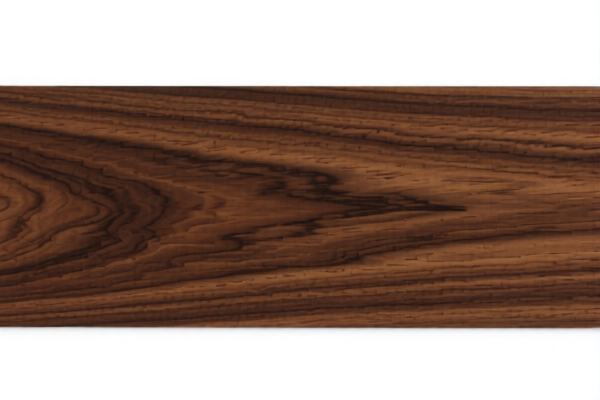
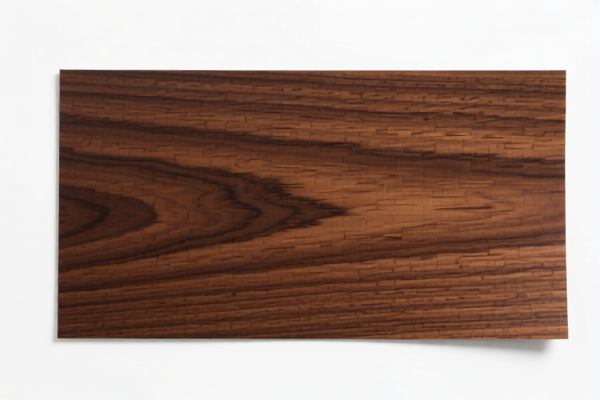
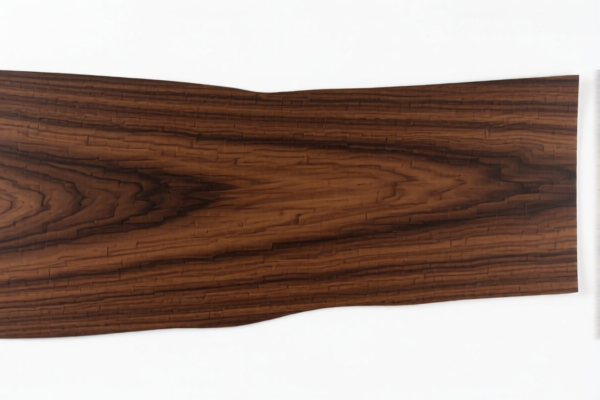
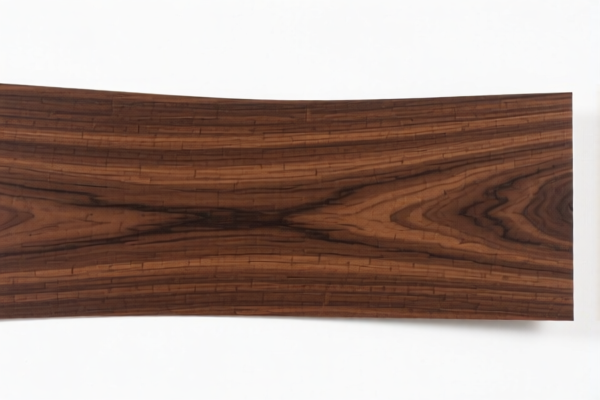
AI Analysis
🪵 Ayu Wood Craft Veneer (Obeche / Triplochiton spp.)
🌐 HS Code Reference & Customs Clearance Guide | 2026 Latest Tariff Analysis | Professional Clearance Strategy
📌 I. Product Definition & Classification: What Exactly is "Ayu Wood"?
In the international timber trade, "Ayu Wood" is a common commercial trade name, but it does not appear as a primary species in official Harmonized System (HS) nomenclature. It primarily refers to Obeche (Triplochiton scleroxylon), also known as Ayous, Afzele, or Obeche. It is a lightweight, white tropical hardwood widely used for plywood core, veneer sheets, and lightweight crafts due to its straight grain and ease of machining.
⚠️ Critical Distinction:
- If the product is Obeche (Triplochiton spp.), it falls under specific HS codes for "Other tropical woods."
- If the product is actually Anigre (Aningeria spp.) (sometimes confused in trade), it has a different HS code and potentially different clearance requirements.
- Thickness is Key: The classification applies to wood sawn lengthwise, sliced, or peeled, with a thickness not exceeding 6 mm. Thicker wood would fall under different chapters (e.g., Chapter 44 for other sawn wood).
📦 II. HS Code Classification Details (2026 Latest Tariff Authority)
Based on the provided data, the product "Ayu Wood Craft Veneer" is classified under Chapter 44 (Wood and articles of wood; wood charcoal). Specifically, it falls under Heading 44.08: Sheets for veneering... of a thickness not exceeding 6 mm.
| HS Code | Product Description | Species Identification | Key Characteristic |
|---|---|---|---|
4408.39.02.50 |
Sheets for veneering... Of tropical wood: Other: Obeche (Triplochiton spp.), also known as Ayous | Ayu Wood = Obeche | Thickness ≤ 6mm; Sawn/sliced/peeled |
4408.39.02.30 |
Sheets for veneering... Of tropical wood: Other: Anigre (Aningeria spp.) | Not Ayu/Obeche | Thickness ≤ 6mm; Sawn/sliced/peeled |
🔍 Important Note:
- Most "Ayu Wood" veneer is Obeche. Therefore,4408.39.02.50is the most likely correct classification.
- Always verify the botanical name with your supplier. If the supplier claims "Anigre," use4408.39.02.30. Misclassification can lead to severe penalties.
💰 III. 2026 Latest Tariff Rate Breakdown (Including Surcharges)
✅ Applicable Country: United States (US)
✅ Country of Origin: China (CN) (Note: If origin is Cameroon, Ivory Coast, etc., different rules may apply, but this analysis assumes CN origin based on standard tariff queries)
✅ Effective Date: Current rates as per 2026 data provided
🎯 1. HS Code 4408.39.02.50 —— Obeche Veneer (Ayu Wood)
| Item | Content |
|---|---|
| Base Tariff | 0.0% (Ad Valorem) |
| Section 301 Surtax | +25.0% |
| Total Tariff Rate | 25.0% |
| Tax Calculation | CIF Value × 25% |
| De Minimis Exemption | ❌ Not Eligible (Deny de minimis for Section 301 goods) |
| Legal Basis | Section 301 Tariff List (HTSUS 9903.88.01) |
📌 Explanation:
- The base duty for wood veneer is generally low (0%), reflecting its raw material status.
- However, due to Section 301 trade measures, an additional 25% surcharge applies to most wood products of Chinese origin.
- Total Cost Impact: For a $10,000 shipment, you will pay $2,500 in duties.
- No Exemptions: Unlike some consumer electronics, wood veneers from China do not qualify for the $800 de minimis exemption if shipped via small parcels.
🎯 2. HS Code 4408.39.02.30 —— Anigre Veneer
| Item | Content |
|---|---|
| Base Tariff | 0.0% |
| Section 301 Surtax | +25.0% |
| Total Tariff Rate | 25.0% |
| Tax Calculation | CIF Value × 25% |
📌 Note: Even if misidentified as Anigre, the tariff rate remains the same (25%). However, the HS Code error itself is a compliance violation that can trigger audits.
🛠️ IV. Customs Clearance Practical Advice (Avoid Pitfalls)
✅ 1. Documentation Checklist (Essential for Smooth Clearance)
| Document | Required? | Description |
|---|---|---|
| Commercial Invoice | ✅ | Must clearly state: "Wood Veneer Sheets," "Obeche (Triplochiton spp.)," "Thickness: X mm," "Quantity," "CIF Value." |
| Packing List | ✅ | Detail dimensions, weight, and number of sheets per package. |
| Phytosanitary Certificate | ✅ | Critical for Wood Products. Issued by the exporting country’s plant protection agency to prove the wood is pest-free. |
| ISPM 15 Marking | ✅ | Wooden packaging (pallets/crates) must bear the ISPM 15 stamp. Untreated wood can lead to rejection. |
| Species Declaration Letter | ✅ | A letter from the supplier confirming the botanical name (Triplochiton scleroxylon) to support HS Code 4408.39.02.50. |
✅ 2. Classification Strategy (Key Rules)
🔥 "Name it Right, Measure it Right, Declare it Tight!"
| Scenario | Correct Classification | Wrong Classification | Consequence |
|---|---|---|---|
| Obeche Veneer, 5mm thick | 4408.39.02.50 |
4408.10.00.00 (Teak) |
Underpayment/Penalty if Teak duty differs |
| Obeche Veneer, 7mm thick | Not 4408 (Likely 4407 or 4409) |
4408.39.02.50 |
Overpayment/Complexity; HS 4408 is strictly ≤6mm |
| Anigre Veneer | 4408.39.02.30 |
4408.39.02.50 |
Compliance Violation; Species mismatch |
| Raw Logs (Not Sliced) | 4403 or 4407 |
4408 |
Major Misclassification; High Penalty Risk |
✅ 3. Special Considerations
| Scenario | Handling Advice |
|---|---|
| Mixed Species Shipments | Declare each species separately. Mixing Obeche and Anigre in one line item is prohibited. |
| Planed/Sanded Veneer | Still falls under 4408 if ≤6mm. "Whether or not planed, sanded, spliced, or end-jointed" is explicitly stated in the description. |
| Origin Proof | Ensure the Certificate of Origin matches the country claimed. If the wood is from Africa but processed in China, rules of origin may vary. |
🌍 V. Global Market Comparison (2026 Latest)
| Country/Region | Recommended HS Code | Tariff Rate (China Origin) | Key Requirement | Notes |
|---|---|---|---|---|
| 🇺🇸 USA | 4408.39.02.50 |
25.0% (0% Base + 25% Surcharge) | Phytosanitary Cert + ISPM 15 | High tariff due to Section 301 |
| 🇨🇳 China | 4408.39.02.50 |
Varies (Import Duty) | Phytosanitary Cert | Import tax structure differs |
| 🇪🇺 EU | 4408.39.02.50 |
Varies (Usually 0-4%) | EUTR Compliance | Must prove legal harvest under EU Timber Regulation |
| 🇬🇧 UK | 4408.39.02.50 |
Varies | UK Timber Regulations | Post-Brexit rules apply |
📌 Conclusion:
- The US market has the highest effective tariff burden due to the 25% Section 301 surcharge.
- EU and UK require strict legality verification (due diligence) but generally have lower or zero base tariffs.
- Always secure the Phytosanitary Certificate before shipment; without it, goods will be detained or destroyed.
📌 VI. Common Errors & Pitfalls (Lessons Learned)
❌ Error 1: Labeling as "Craft Wood" instead of "Wood Veneer"
👉 Consequence: Customs may misclassify it, leading to delays or incorrect duty assessment.
👉 Fix: Use precise legal terminology: "Wood Veneer Sheets, Sliced, ≤6mm, Species: Obeche."
❌ Error 2: Ignoring the 6mm Thickness Limit
👉 Consequence: If thickness is 6.1mm, it does NOT qualify for HS 4408. It may fall under HS 4407 (Sawn Wood) or 4409 (Wood Continuously Shaped), with different duties.
👉 Fix: Measure accurately. Provide thickness certificates.
❌ Error 3: Missing Phytosanitary Certificate
👉 Consequence: US CBP will detain the shipment for pest risk. Demurrage fees accrue daily.
👉 Fix: Order from suppliers who provide valid phytosanitary certs issued by the national plant protection organization.
❌ Error 4: Confusing Obeche (Triplochiton) with Anigre (Aningeria)
👉 Consequence: While tariffs are similar, species misdeclaration is a compliance violation. Anigre is often more expensive; declaring it as Obeche is fraud.
👉 Fix: Verify with a wood expert or lab test if unsure.
✅ Correct Declaration Example:
"Wood Veneer Sheets, Sliced, Thickness 3.0mm, Species: Obeche (Triplochiton Scleroxylon), For Plywood Manufacturing, CIF Value $10,000, Country of Origin: China."
🎯 VII. Conclusion: Professional Declaration, Cost Control, Efficiency
🎯 Remember the Mantra:
🔹 "Obeche is Triplochiton, not Aningeria."
🔹 "≤6mm is Veneer (4408), >6mm is Sawn (4407)."
🔹 "25% Surcharge is Inevitable for China Origin to US."
🔹 "Phytosanitary Cert is Non-Negotiable."
📌 Pro Tip:
If you are importing large volumes, consider pre-arranging a binding ruling with US CBP to confirm the HS code and species classification. This provides legal certainty and avoids post-audit penalties.
📣 Immediate Action:
📞 Contact your freight forwarder to confirm ISPM 15 compliance on pallets.
📄 Request the Phytosanitary Certificate and Species Declaration from your supplier before payment.
📊 Calculate landed cost: CIF Value × 1.25 (for US duties).
✨ Professional clearance starts with precise classification!
💼 Your profit margin depends on accurate tariff management!
Customer Reviews
About HS Code Classification
The Harmonized System (HS) is an internationally standardized nomenclature developed by the World Customs Organization (WCO) to classify traded products. Over 200 countries use the HS system as the basis for customs tariffs, trade statistics, and import/export regulations.
Each HS code follows a hierarchical structure:
- Chapter (2 digits) — Broad category of goods (e.g., Chapter 84: Machinery and Mechanical Appliances)
- Heading (4 digits) — More specific grouping within the chapter
- Subheading (6 digits) — Internationally standardized breakdown, used by all WCO member countries
- National subdivisions (8-10 digits) — Country-specific extensions for further classification, such as US HTSUS 10-digit codes
Correct HS code classification is essential for smooth customs clearance, accurate duty payment, and compliance with trade regulations. Misclassification can lead to customs delays, overpayment of duties, or penalties.
When importing from CN to US, the applicable tariff rates may include:
- Most-Favored-Nation (MFN) rate — The standard duty rate applied to WTO members
- General rate — Applied to countries without trade agreements
- Trade remedy duties — Additional tariffs such as Section 301 (anti-dumping), Section 232 (national security), or countervailing duties
The information provided on this page is for reference purposes only. For official classification, please consult with your local customs authority or a licensed customs broker.