BBQ Nut Shell Charcoal
CN → US| HS Code | Tariff Rate | Origin | Destination | Doc |
|---|---|---|---|---|
| 3802100050 | 39.8% | CN | US | Official Doc |
| 4402200000 | 35.0% | CN | US | Official Doc |
| 4402900100 | 35.0% | CN | US | Official Doc |
| 2704000050 | 10.0% | CN | US | Official Doc |
| 4402100000 | 35.0% | CN | US | Official Doc |
Product Images
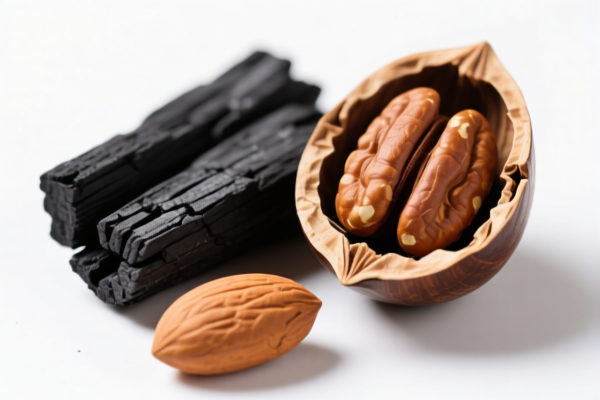
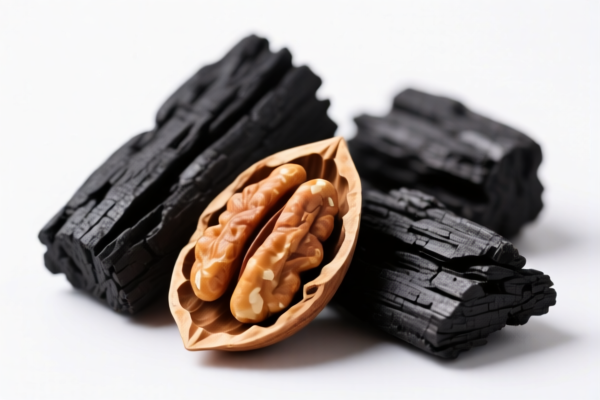
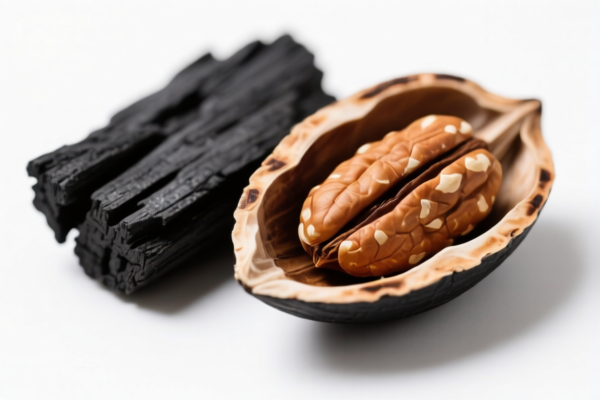
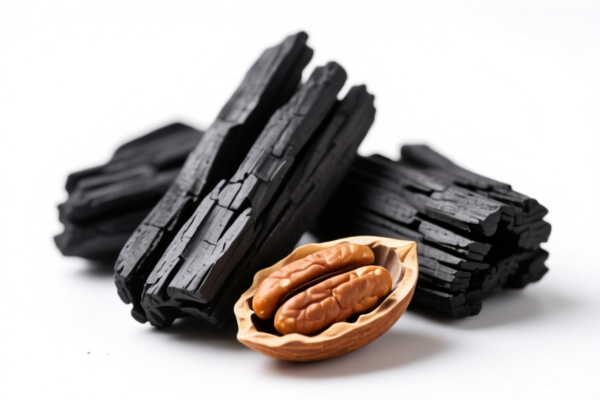
AI Analysis
🌿 BBQ Nut Shell Charcoal: HS Code Classification & Customs Clearance Guide (2026)
🌐 HS Code Reference & Customs Clearance Guide | 2026 Latest Tariff Analysis | Professional-Level Strategy
📌 I. Product Definition & Classification: Do You Truly Understand "Nut Shell Charcoal"?
BBQ Nut Shell Charcoal (commonly made from coconut shells, almond shells, or other nut shells) is a high-carbonized biomass fuel used for grilling. In international trade, its classification depends strictly on the raw material source and the processing method.
There are two main competitive classification paths:
1. As Activated Carbon (if highly processed/purified): 3802.10.00.50
2. As Wood/Plant Charcoal (if standard BBQ fuel): 4402.20.00.00, 4402.90.01.00, or 4402.10.00.00 (depending on specific shell type)
3. As Coal/Coke (if misclassified): 2704.00.00.50 (High Risk)
⚠️ Critical Distinction: - If the product is standard pyrolyzed biomass for heating/grilling → It belongs to Chapter 44 (Wood and Articles of Wood; Charcoal). - If the product has undergone chemical/physical activation for adsorption/filtering → It belongs to Chapter 38 (Chemical Products; Activated Carbon). - ⚠️ Warning: Do not classify as Coal/Coke (
2704) unless it is derived from coal, which nut shells are not.
📦 II. HS Code Classification Matrix (2026 Authoritative Mapping)
| HS Code | Product Description | Applicability | Material Basis | Total Tax Rate |
|---|---|---|---|---|
3802.10.00.50 |
Activated Carbon (Other Types) | High-grade activated carbon for filtration/catalysis | Carbonized nut shell with activation process | 39.8% |
4402.20.00.00 |
Charcoal from Leguminous Wood (e.g., Coconut) | BBQ fuel, biomass fuel | Nut shells (leguminous/plant source) | 35.0% |
4402.90.01.00 |
Charcoal from Other Plants | BBQ fuel, general biomass | Non-leguminous nut shells (almond, peach, etc.) | 35.0% |
2704.00.00.50 |
Coke and Semi-coke of Coal | ❌ Incorrect for Nut Shell | Coal-derived | 10.0% |
4402.10.00.00 |
Charcoal from Bamboo | BBQ fuel | Bamboo charcoal | 35.0% |
🔍 Key Insight: -
4402Series is the standard for BBQ Charcoal. Most nut shell charcoals (coconut, almond) fall under4402.20or4402.90. -3802Series is only for Activated Carbon used in industrial filtering. If sold as BBQ fuel, do not use this code. -2704Series is for Coal Coke. Nut shells are biomass, not coal. Misclassification here leads to customs audits.
💰 III. 2026 Latest Tariff Rate Breakdown (Detailed Tax Clauses)
✅ Applicable Country: United States (US)
✅ Origin: China (CN)
✅ Effective Date: Post-2025 (Including subsequent imports)
🎯 1. 3802.10.00.50 — Activated Carbon, Other
| Item | Details |
|---|---|
| Base Duty | 4.8% (ad valorem) |
| USITC Add-on Duty | +25% (Under USITC Footnote for Section 301) |
| IEEPA Add-on Duty | +10% (Against China/HK products, effective Nov 10, 2025) |
| Total Tax Rate | 39.8% |
| Tax Calculation | CIF Value × 39.8% |
| De Minimis Exemption | ❌ Not Eligible (deny_de_minimis) |
| Legal Basis Path | IEEPA:9903.01.25 → IEEPA:9903.01.24 → USITC:3802.10.00.50 → FOOTNOTE:301.00 |
📌 Explanation: - Even though "Activated Carbon" has a low base rate (4.8%), the 35% total tariff burden (25% + 10%) makes it expensive. - Only use this if your product is industrial-grade activated carbon (high surface area, adsorption capacity).
🎯 2. 4402.20.00.00 — Charcoal from Leguminous Wood (e.g., Coconut Shell)
| Item | Details |
|---|---|
| Base Duty | 0.0% |
| USITC Add-on Duty | +25% |
| IEEPA Add-on Duty | +10% |
| Total Tax Rate | 35.0% |
| Tax Calculation | CIF Value × 35.0% |
| De Minimis Exemption | ❌ Not Eligible |
| Legal Basis Path | IEEPA:9901.25 → IEEPA:9903.01.24 → USITC:4402.20.00.00 → FOOTNOTE:301.00 |
📌 Explanation: - Coconut shell charcoal is typically classified here. - Zero base duty is a major advantage, but the 35% total tariff remains significant. - Ensure documentation proves leguminous/plant origin (not coal).
🎯 3. 4402.90.01.00 — Charcoal from Other Plant Materials
| Item | Details |
|---|---|
| Base Duty | 0.0% |
| USITC Add-on Duty | +25% |
| IEEPA Add-on Duty | +10% |
| Total Tax Rate | 35.0% |
| Tax Calculation | CIF Value × 35.0% |
| De Minimis Exemption | ❌ Not Eligible |
| Legal Basis Path | IEEPA:9901.25 → IEEPA:9903.01.24 → USITC:4402.90.01.00 → FOOTNOTE:301.00 |
📌 Explanation: - Applies to almond, peach, cherry, or other non-leguminous nut shells. - Same tax structure as coconut shell: 0% base + 35% add-ons.
🎯 4. 2704.00.00.50 — Coke and Semi-Coke of Coal
| Item | Details |
|---|---|
| Base Duty | 0.0% |
| USITC Add-on Duty | 0.0% |
| IEEPA Add-on Duty | +10% |
| Total Tax Rate | 10.0% |
| Tax Calculation | CIF Value × 10.0% |
| De Minimis Exemption | ❌ Not Eligible |
| Legal Basis Path | IEEPA:9903.01.24 → USITC:2704.00.00.50 → FOOTNOTE:301.00 |
📌 Explanation: - ⚠️ High Risk of Misclassification. - Nut shells are biomass, not coal. - If you classify nut shell charcoal as
2704, customs may reject it, impose penalties, or reclassify it to4402(higher tax) during audit. - Only use if the product is coal-based coke, which is not the case for BBQ nut shells.
🎯 5. 4402.10.00.00 — Charcoal from Bamboo
| Item | Details |
|---|---|
| Base Duty | 0.0% |
| USITC Add-on Duty | +25% |
| IEEPA Add-on Duty | +10% |
| Total Tax Rate | 35.0% |
| Tax Calculation | CIF Value × 35.0% |
| De Minimis Exemption | ❌ Not Eligible |
| Legal Basis Path | IEEPA:9901.25 → IEEPA:9903.01.24 → USITC:4402.10.00.00 → FOOTNOTE:301.00 |
📌 Explanation: - Specifically for Bamboo Charcoal. - If your product is bamboo-based, use this code. - If it is nut shell-based, do not use this code.
🛠️ IV. Customs Clearance Practical Advice (Avoid Pitfalls)
✅ 1. Required Documentation Checklist
| Document | Must Provide | Explanation |
|---|---|---|
| ✅ Product Specification Sheet | ✔️ | Must state "Nut Shell Charcoal," raw material source (coconut, almond, etc.), carbon content, ash content. |
| ✅ Material Composition Proof | ✔️ | Lab report or supplier certificate proving biomass origin (not coal). |
| ✅ Product Photos (Packaging + Label) | ✔️ | Clear view of product, brand, model, and usage ("For BBQ/Grilling"). |
| ✅ Commercial Invoice | ✔️ | Clearly state "Charcoal for BBQ," HS Code, and CIF value. |
| ✅ Packing List | ✔️ | Net/Gross weight, dimensions, number of packages. |
| ✅ Origin Certificate (CO) | ✔️ | If applicable, for potential tariff preferences (though US-China tariffs remain high). |
✅ 2. Declaration Strategy (Key Rules)
🔥 Rule: "Material Defines Code, Usage Defines Description"
| Scenario | Correct HS Code | Wrong Action |
|---|---|---|
| Coconut Shell Charcoal (BBQ) | 4402.20.00.00 |
Misdeclare as 2704 (Coal) → Audit Risk |
| Almond/Nut Shell Charcoal (BBQ) | 4402.90.01.00 |
Misdeclare as 3802 (Activated Carbon) → Unnecessary High Tax |
| Bamboo Charcoal (BBQ) | 4402.10.00.00 |
Misdeclare as 4402.20 → Discrepancy in Material |
| Industrial Activated Carbon | 3802.10.00.50 |
Misdeclare as 4402 → Functional mismatch |
✅ 3. Special Handling for BBQ Charcoal
| Situation | Recommendation |
|---|---|
| Mixed Shell Types | Specify the dominant material. If mixed, use 4402.90.01.00 (Other). |
| Lumps vs. Powder | Lumps → 4402. Powder → May be 3802 if activated, or 4402 if just ground charcoal. |
| Packaging | Declare as "BBQ Charcoal," not "Fuel" or "Carbon" generically. Provide usage context. |
| Ash Content | High ash content may raise questions. Provide technical specs to prove quality. |
🌍 V. Global Market Comparison (2026)
| Country/Region | Recommended HS Code | Tariff (China Origin) | Certification | Notes |
|---|---|---|---|---|
| 🇺🇸 USA | 4402.20.00.00 / 4402.90.01.00 |
35% | No specific | 35% total (0% base + 35% add-ons) |
| 🇨🇳 China | 4402.20.00.00 |
5% | None | Low base duty |
| 🇪🇺 EU | 4402.10.00 / 4402.90.00 |
0% (if FSC certified) | None | Generally low duty |
| 🇦🇺 Australia | 4402.10.00 |
5% | None | Moderate duty |
| 🇯🇵 Japan | 4402.10.00 |
0% | None | Low duty |
📌 Conclusion: - USA has the highest effective tariff due to Section 301 + IEEPA. - EU, Japan, Australia offer more favorable rates if correctly classified under Chapter 44.
📌 VI. Common Errors & Pitfalls (Lessons Learned)
❌ Error 1: Classifying Nut Shell Charcoal as 2704 (Coal Coke)
👉 Consequence: Customs audit, penalty, or forced reclassification to 4402 with back taxes.
❌ Error 2: Classifying BBQ Charcoal as 3802 (Activated Carbon)
👉 Consequence: Paying 39.8% instead of 35%. No functional benefit.
❌ Error 3: Vague Description "Charcoal"
👉 Consequence: Customs may question the material source, causing delays.
❌ Error 4: Ignoring "Add-on Duties"
👉 Consequence: Budgeting only for base duty leads to cash flow issues.
✅ Correct Approach:
"Coconut Shell Charcoal for BBQ, Carbon Content >80%, Ash <5%, HS Code: 4402.20.00.00"
🎯 VII. Conclusion: Precise Classification Saves Money!
🎯 Remember:
🔹 "Nut Shell → 4402 (35% Total)"
🔹 "Activated Carbon → 3802 (39.8% Total)"
🔹 "Coal Coke → 2704 (10% Total) — BUT WRONG MATERIAL!"🔹 "HS Code determines destiny, 35% vs 39.8% matters, declare clearly, avoid audits!"
📌 Pro Tip: If your product is originating from Vietnam, Malaysia, or Indonesia, check for FTA benefits. However, US-China tariffs (if transshipped or re-labeled) still apply.
📣 Immediate Action:
📞 Consult a licensed customs broker.
📄 Provide product samples and technical sheets.
🚀 Ensure your HS Code matches material and function to avoid penalties.
✨ Professional Clearance Starts with Accurate Classification!
💼 Every dollar saved on tariffs is pure profit!
Customer Reviews
About HS Code Classification
The Harmonized System (HS) is an internationally standardized nomenclature developed by the World Customs Organization (WCO) to classify traded products. Over 200 countries use the HS system as the basis for customs tariffs, trade statistics, and import/export regulations.
Each HS code follows a hierarchical structure:
- Chapter (2 digits) — Broad category of goods (e.g., Chapter 84: Machinery and Mechanical Appliances)
- Heading (4 digits) — More specific grouping within the chapter
- Subheading (6 digits) — Internationally standardized breakdown, used by all WCO member countries
- National subdivisions (8-10 digits) — Country-specific extensions for further classification, such as US HTSUS 10-digit codes
Correct HS code classification is essential for smooth customs clearance, accurate duty payment, and compliance with trade regulations. Misclassification can lead to customs delays, overpayment of duties, or penalties.
When importing from CN to US, the applicable tariff rates may include:
- Most-Favored-Nation (MFN) rate — The standard duty rate applied to WTO members
- General rate — Applied to countries without trade agreements
- Trade remedy duties — Additional tariffs such as Section 301 (anti-dumping), Section 232 (national security), or countervailing duties
The information provided on this page is for reference purposes only. For official classification, please consult with your local customs authority or a licensed customs broker.