BOPP Stretch Packaging Film
CN → US| HS Code | Tariff Rate | Origin | Destination | Doc |
|---|---|---|---|---|
| 3920200055 | 39.2% | CN | US | Official Doc |
| 3920992000 | 39.2% | CN | US | Official Doc |
Product Images
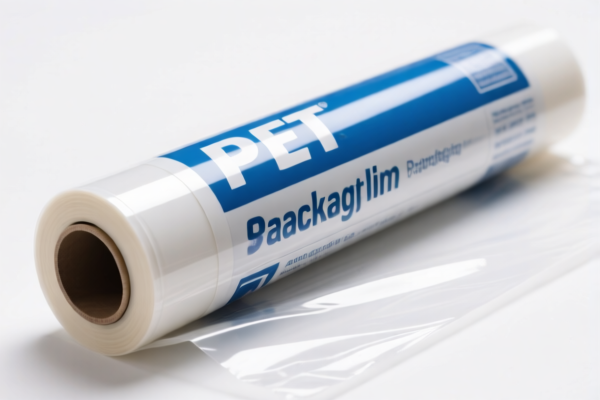


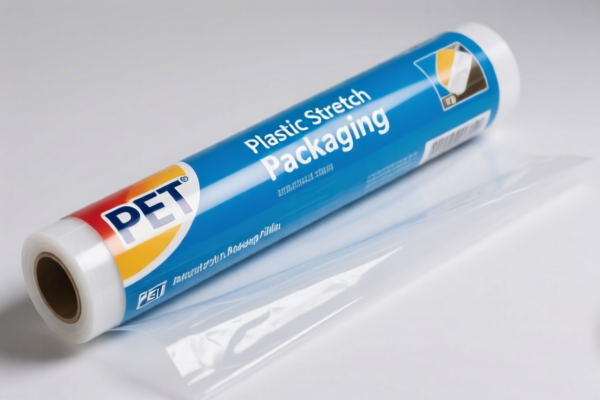
AI Analysis
🎞️ BOPP Stretch Packaging Film (Biaxially Oriented Polypropylene)
🌐 HS Code Reference & Customs Clearance Guide | 2026 Latest Tariff Analysis | Professional Clearance Strategy
📌 I. Product Definition & Classification: Do You Really Understand "BOPP Film"?
BOPP (Biaxially Oriented Polypropylene) stretch packaging film is a versatile plastic material widely used in food, tobacco, textile, and industrial packaging. It is known for its high transparency, moisture resistance, and excellent sealing properties. In international trade, precise classification depends on the chemical composition and physical form of the film.
Based on the provided data, two potential HS Codes apply. The key distinction lies in whether the film is made specifically of polypropylene (PP) or other plastics, and its flexibility characteristics.
⚠️ Key Distinction Point:
- If the film is explicitly identified as Polypropylene (PP) → It falls under 3920.20.00.55
- If the film is made of other plastics (or if the specific polymer is not clearly PP, or classified under general "other plastics" for flexible films) → It falls under 3920.99.20.00
- Crucial Note: Most standard BOPP films are Polypropylene. Therefore, 3920.20.00.55 is the primary and most accurate classification for BOPP. The second code (3920.99.20.00) serves as a fallback for "Other plastics" or if specific regulatory definitions shift, but for BOPP, PP is the defining material.
📦 II. HS Code Classification Details (2026 Latest Tariff Authority Comparison)
| HS Code | Product Description | Applicable Scenario | Polymer Material |
|---|---|---|---|
3920.20.00.55 |
Other plates, sheets, film, foil and strip, of plastics: Of polymers of propylene: Other | Standard BOPP Films, Stretch Wrap, Food Packaging | ✅ Polypropylene (PP) |
3920.99.20.00 |
Other plates, sheets, film, foil and strip, of plastics: Of other plastics: Of other plastics: Film, strip and sheets...: Other | Films made of non-PP plastics (e.g., PE, PET, PVC) or ambiguous classifications | ❌ Other Plastics |
🔍 Priority Reminder:
- BOPP stands for Biaxially Oriented Polypropylene. Since the base material is Polypropylene, it strictly belongs to the "Of polymers of propylene" subheading.
- Therefore,3920.20.00.55is the correct primary code.
-3920.99.20.00is included in the provided data but is technically for non-PP plastics. Use this only if the film is NOT polypropylene (e.g., if it’s actually BOPET or BOPA, though those have different codes, or if the supplier mislabels). For BOPP, stick to 3920.20.00.55.
💰 III. 2026 Latest Tariff Rate Breakdown (Including Additional Taxes)
✅ Applicable Country: United States (US)
✅ Origin: China (CN) (Based on the tax detail structure provided)
✅ Effective Date: As per current trade policies (Check specific effective dates for recent changes)
🎯 1. 3920.20.00.55 —— BOPP Film (Polypropylene Based)
| Item | Content |
|---|---|
| Base Tariff | 4.2% (Ad Valorem) |
| Section 301 Additional Tariff | +25.0% (Retaliatory/Trade War Tariff on China) |
| Total Tariff Rate | 29.2% |
| Tax Calculation | CIF Value × 29.2% |
| De Minimis Exemption | ❌ Not Eligible (Deny De Minimis) |
| Legal Basis | HTSUS 3920.20.00.55 + Section 301 Footnotes |
📌 Explanation:
- The 4.2% is the standard Most Favored Nation (MFN) rate for plastic films of polypropylene.
- The 25.0% is the additional tariff imposed under Section 301 of the Trade Act of 1974 on Chinese-origin goods.
- Total Cost Impact: A significant 29.2% tariff burden. This must be factored into landed cost calculations immediately.
🎯 2. 3920.99.20.00 —— Other Plastic Films (Non-Polypropylene)
| Item | Content |
|---|---|
| Base Tariff | 0.0% |
| Section 301 Additional Tariff | 0.0% |
| Total Tariff Rate | 0.0% |
| Tax Calculation | CIF Value × 0.0% |
| De Minimis Exemption | ✅ Eligible (Potentially, if under $800 and not excluded) |
| Legal Basis | HTSUS 3920.99.20.00 |
📌 Warning:
- This code has 0% tariff, making it highly attractive.
- However, it DOES NOT APPLY to BOPP films because BOPP is made of Polypropylene, which is explicitly listed under3920.20.
- Misdeclaring BOPP as "Other Plastics" to access the 0% rate is customs fraud and carries severe penalties. Only use this code if the film is genuinely not polypropylene.
🛠️ IV. Customs Clearance Operational Advice (Practical Pitfall Avoidance Guide)
✅ 1. Required Documentation Checklist (Mandatory)
| Document | Must Provide | Description |
|---|---|---|
| ✅ Product Specification Sheet | ✔️ | Must explicitly state "Polymer: Polypropylene (PP)" and "Biaxially Oriented" |
| ✅ Material Safety Data Sheet (MSDS) | ✔️ | Confirms chemical composition (no hidden PE/PVC blends) |
| ✅ Commercial Invoice | ✔️ | Clearly describe as "BOPP Stretch Film, 100% Polypropylene" |
| ✅ Packing List | ✔️ | Detail net/gross weight, dimensions, and number of rolls |
| ✅ CertIFICATE OF ORIGIN (CO) | ✔️ | Crucial for proving Chinese origin (to trigger or avoid Section 301 if exemptions apply) |
| ✅ Customs Bond | ✔️ | Required for US imports over $2,500 |
✅ 2. Declaration Tips (Key Mantra)
🔥 "Material is King, Name is Precise, BOPP means PP, Don't Lie!"
| Scenario | Correct Declaration | Wrong Practice |
|---|---|---|
| BOPP Film (Standard) | 3920.20.00.55 + "BOPP Film, Polypropylene" |
Declaring as "Plastic Wrap, Other" → Risk of audit |
| BOPP Film + Coated | Still 3920.20.00.55 (if base is PP) |
Declaring as coated adhesive tape → Wrong code |
| Non-BOPP Stretch Film (PE) | 3920.99.20.00 (if applicable) |
Declaring PE as BOPP → Fraud |
| Rolled vs. Cut | Declare as "Film in Rolls" | Declaring as "Sheets" → May change subheading |
✅ 3. Special Cases Handling
| Situation | Handling Advice |
|---|---|
| Multi-layer Films | If BOPP is the primary structural layer, declare under 3920.20.00.55 |
| Re-exports | If shipped from a third country (e.g., Vietnam), ensure Certificate of Origin shows US origin to avoid Section 301 |
| Small Samples | If value < $800, may qualify for De Minimis (Form 7512), but only if the product is NOT on the exclusion list. Check latest USITC lists. |
| Anti-Dumping | Verify if BOPP films from China are subject to Anti-Dumping Duties (AD). Currently, many plastic films have AD/CVD orders. Check CBP Orders! |
🚨 Critical Alert on Anti-Dumping:
While the provided data only shows Section 301 tariffs, BOPP films from China may be subject to separate Anti-Dumping (AD) and Countervailing Duties (CVD) cases.
- Action: Consult the latest CBP (U.S. Customs and Border Protection) case numbers for plastic films. If AD/CVD applies, add those duties to the 29.2% total.
🌍 V. Global Market Comparison (2026 Latest)
| Country/Region | Recommended HS Code | Tariff (China Origin) | Certification | Notes |
|---|---|---|---|---|
| 🇺🇸 USA | 3920.20.00.55 |
29.2% (4.2% Base + 25% Sec 301) | None specific | High tariff burden |
| 🇨🇳 China | 3920.20.00.55 |
~6-10% (Import Tariff) | CCC (if applicable) | Domestic production is high |
| 🇪🇺 EU | 3920.20.29 |
6.5% | REACH | No Section 301 equivalent |
| 🇬🇧 UK | 3920.20.29 |
6.5% | UKCA | Post-Brexit rules apply |
| 🇦🇺 Australia | 3920.20.29 |
5% | ARA | Free Trade Agreement benefits? Check |
📌 Conclusion:
- The US is the most expensive market for BOPP films from China due to the 25% Section 301 tariff.
- Consider supply chain diversification (e.g., sourcing from Southeast Asia) if the final assembly allows for origin change.
📌 VI. Common Errors & Pitfall Guide (Lessons Learned)
❌ Error 1: Declaring BOPP as "Plastic Film, Other" (3920.99.20.00) to avoid tariffs
👉 Consequence: Customs audit, penalty, back-tariff, and potential seizure.
Fix: Always declare the exact polymer. BOPP = Polypropylene.
❌ Error 2: Ignoring Anti-Dumping Duties (AD/CVD)
👉 Consequence: Sudden additional duties of 100-500% on top of 29.2%.
Fix: Check CBP Case Numbers for "Plastic Film from China" before shipping.
❌ Error 3: Vague Description "Plastic Wrap"
👉 Consequence: CBP may assign a different code or delay clearance.
Fix: Use "BOPP Stretch Film, 100% Polypropylene, Width X, Thickness Y".
✅ Correct Practice:
"BOPP (Biaxially Oriented Polypropylene) Stretch Film, 100% Polypropylene, Clear, for Food Packaging, Rolls, Width: 30cm, Thickness: 20mic"
🎯 VII. Conclusion: Professional Declaration, Cost Control
🎯 Remember the Mantra:
🔹 "BOPP is PP, Code is 3920.20, Tariff is 29.2%, Don't Lie!"
🔹 "Material Truth, Tariff Savings, Customs Trust!"
📌 Pro Tip:
If your BOPP film is co-extruded with PE, but the outer layer is BOPP, it may still be classified as PP. However, if it's a multi-layer laminate, the classification becomes complex.
- Recommendation: For co-extruded films, consult a licensed customs broker for a Pre-Ruling (Advance Ruling) from CBP.
- Alternative: If possible, source BOPP film from Vietnam, Thailand, or Malaysia to mitigate Section 301 tariffs, provided Rules of Origin are met.
📣 Immediate Action:
📞 Contact a Licensed Customs Broker
🔍 Verify CBP AD/CVD Orders for Plastic Films
🚀 Accurate Declaration Saves Money and Avoids Fines!
✨ Professional Customs Clearance Starts with Accurate Classification!
💼 Your Margins Are Worth Protecting!
Customer Reviews
About HS Code Classification
The Harmonized System (HS) is an internationally standardized nomenclature developed by the World Customs Organization (WCO) to classify traded products. Over 200 countries use the HS system as the basis for customs tariffs, trade statistics, and import/export regulations.
Each HS code follows a hierarchical structure:
- Chapter (2 digits) — Broad category of goods (e.g., Chapter 84: Machinery and Mechanical Appliances)
- Heading (4 digits) — More specific grouping within the chapter
- Subheading (6 digits) — Internationally standardized breakdown, used by all WCO member countries
- National subdivisions (8-10 digits) — Country-specific extensions for further classification, such as US HTSUS 10-digit codes
Correct HS code classification is essential for smooth customs clearance, accurate duty payment, and compliance with trade regulations. Misclassification can lead to customs delays, overpayment of duties, or penalties.
When importing from CN to US, the applicable tariff rates may include:
- Most-Favored-Nation (MFN) rate — The standard duty rate applied to WTO members
- General rate — Applied to countries without trade agreements
- Trade remedy duties — Additional tariffs such as Section 301 (anti-dumping), Section 232 (national security), or countervailing duties
The information provided on this page is for reference purposes only. For official classification, please consult with your local customs authority or a licensed customs broker.