BT Experiment Kit
CN → US| HS Code | Tariff Rate | Origin | Destination | Doc |
|---|---|---|---|---|
| 8543709301 | 10.0% | CN | US | Official Doc |
| 8543709860 | 37.6% | CN | US | Official Doc |
| 9503000073 | 10.0% | CN | US | Official Doc |
| 9503000071 | 10.0% | CN | US | Official Doc |
Product Images
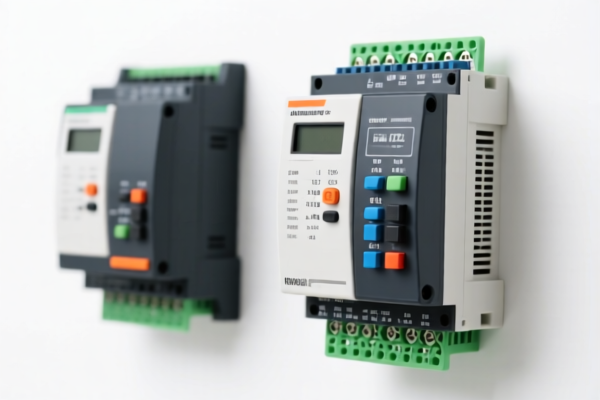
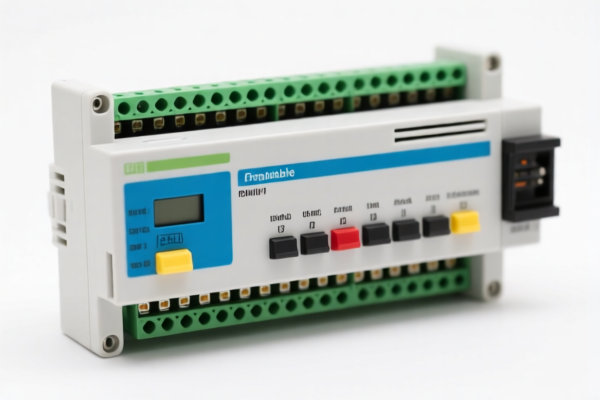


AI Analysis
🧪 BT Experiment Kit (Chemistry/Science Kits)
🌐 HS Code Reference & Customs Clearance Guide | 2026 Latest Tariff Analysis | Professional Strategy for Global Trade
📌 I. Product Definition & Classification: What Exactly is a "BT Experiment Kit"?
A BT Experiment Kit (often standing for "Biology/Chemistry/Technology" or a specific brand/subject code) is a collection of educational materials, equipment, and chemicals designed to conduct scientific experiments. In international trade, these kits are highly sensitive to classification because they can fall into multiple HS Codes depending on:
1. Primary Purpose (Educational toys vs. Lab equipment),
2. Age Group (Children <3 vs. 3–12 vs. Adults),
3. Content (Toys/dolls vs. Chemicals vs. Electronic devices).
⚠️ Critical Distinction:
- Educational Toys for Kids (3–12 yrs) → 9503.00.00.73 (0% tax)
- Educational Toys for Babies (<3 yrs) → 9503.00.00.71 (0% tax)
- Portable Interactive Electronic Education Devices → 8543.70.93.01 (0% tax)
- Other Non-Educational Kits (General Lab/Chemical Kits) → 8543.70.98.60 (27.6% tax)
📦 II. HS Code Classification Details (2026 Official Tariff Schedule)
| HS Code | Product Description | Age Group / Intended Use | Tax Rate (CN→US) |
|---|---|---|---|
9503.00.00.73 |
Tricycles, scooters, dolls, toys... "Children's products": Labeled/intended for 3–12 years | School/Toy Kits for kids (3–12) | 0.0% (Base + Add-on) |
9503.00.00.71 |
Tricycles, scooters, dolls, toys... "Children's products": Labeled/intended for Under 3 years | Baby-safe playsets (<3) | 0.0% (Base + Add-on) |
8543.70.93.01 |
Electronic machines: Portable interactive electronic education devices primarily for children | Digital/Interactive Kits (e.g., coding, science tablets) | 0.0% (Base + Add-on) |
8543.70.98.60 |
Other machines: Not specified elsewhere (General lab kits, adult education, non-electronic) | Adult/General Science Kits | 27.6% (Base 2.6% + 25% Add-on) |
🔍 Key Insight:
- 0% Tax applies ONLY if the kit is explicitly designed for children (and labeled accordingly) OR is an electronic educational device for kids.
- 27.6% Tax applies if the kit is generic, for adults, or not primarily for children (e.g., "Chemistry Lab Kit for High School/University").
💰 III. 2026 Tariff Rate Breakdown (Detailed Analysis)
✅ Applicable Country: United States (US)
✅ Origin: China (CN)
✅ Effective Date: As per current USITC/Section 301 rules
🎯 1. 9503.00.00.73 & 9503.00.00.71 — Children's Educational Toys
| Item | Detail |
|---|---|
| Base Tariff | 0.0% (Free entry) |
| Section 301 Add-on | 0.0% (No additional duty) |
| Total Tax | 0.0% |
| De Minimis Exemption | ✅ Yes (if < $800, no duty; but toys < $250 may still be subject to CPSC testing) |
| Legal Basis | 15 U.S.C. § 2052 (Children's Product Definition) |
📌 Explanation:
- If your kit is labeled for children (3–12 or <3) and contains toys, dolls, or simple tools (e.g., plastic beakers, non-hazardous chemicals), it qualifies for 0% tax.
- Critical Requirement: Must comply with CPSIA (Consumer Product Safety Improvement Act) testing (e.g., lead content, small parts).
🎯 2. 8543.70.93.01 — Electronic Educational Devices for Kids
| Item | Detail |
|---|---|
| Base Tariff | 0.0% |
| Section 301 Add-on | 0.0% |
| Total Tax | 0.0% |
| De Minimis Exemption | ✅ Yes |
| Legal Basis | 8543.70.93.01 (Specific for "Portable interactive electronic education devices primarily designed for children") |
📌 Explanation:
- This covers digital kits (e.g., Arduino for kids, coding robots, science tablets).
- Must be primarily for children (marketing, packaging, and design must reflect this).
🎯 3. 8543.70.98.60 — General/Adult Kits (27.6% Tax)
| Item | Detail |
|---|---|
| Base Tariff | 2.6% |
| Section 301 Add-on | 25.0% (USITC Footnote 9903.88.01) |
| Total Tax | 27.6% |
| De Minimis Exemption | ❌ No (Section 301 applies) |
| Legal Basis | IEEPA:9903.01.24 → USITC:8543.70.98.60 |
📌 Explanation:
- Applies to non-child-focused kits (e.g., "Advanced Chemistry Lab Kit for College" or "Generic Electronics Kit").
- No tax exemption even if value is < $800 (due to Section 301).
🛠️ IV. Customs Clearance Tips (Practical Guide)
✅ 1. Required Documents
| Document | Must Provide? | Why? |
|---|---|---|
| Product Labeling | ✔️ | Must explicitly state "Intended for Children 3–12 Years" or "Under 3 Years" |
| Safety Certificates | ✔️ | CPSIA compliance (ASTM F963, Lead tests) |
| User Manual | ✔️ | Must indicate age range and safety warnings |
| Invoice | ✔️ | Clearly describe as "Children's Educational Toy Kit" |
| HS Code Declaration | ✔️ | Specify exact code (e.g., 9503.00.00.73) |
| Component List | ✔️ | Separate toys from electronic parts (if mixed) |
✅ 2. Declaration Strategy
🔥 Golden Rule: "Age Labeling = Tax Savings!"
| Scenario | Correct HS Code | Tax | Risk if Wrong |
|---|---|---|---|
| Toy Kit for Kids 5-year-olds | 9503.00.00.73 |
0% | ❌ If declared as "General Kit" → 27.6% |
| Baby Safety Kit (<3 yrs) | 9503.00.00.71 |
0% | ❌ If declared as "Adult Kit" → 27.6% |
| Interactive Science Tablet | 8543.70.93.01 |
0% | ❌ If declared as "Generic Electronics" → 27.6% |
| College Chemistry Lab Kit | 8543.70.98.60 |
27.6% | ✅ Correct (no alternative) |
✅ 3. Common Pitfalls
| Mistake | Consequence | Solution |
|---|---|---|
| No Age Labeling | Customs reclassifies as 8543.70.98.60 → 27.6% tax |
Add clear "For Children 3–12 Years" on packaging |
| Mixed Age Kits | Customs may reject "children" claim | Split shipments or repackage for specific age groups |
| Chemical Components | CPSIA testing failure → Seizure | Ensure all chemicals are non-hazardous (e.g., vinegar, baking soda) |
| Electronic Parts | Misclassified as "toys" → CPSIA + FCC | Separate electronic kits under 8543.70.93.01 |
🌍 V. Global Market Comparison (2026)
| Country | Recommended HS Code | Tax Rate | Certification | Notes |
|---|---|---|---|---|
| 🇺🇸 USA | 9503.00.00.73 / 8543.70.93.01 |
0% | CPSIA + FCC | Critical: Must label age group |
| 🇨🇳 China | 9503.00.00.73 |
0% | CCC | Domestic market similar |
| 🇪🇺 EU | 9503.00.00.73 |
0% | CE + EN71 | Age labeling required |
| 🇯🇵 Japan | 9503.00.00.73 |
0% | PSE | Safety standards strict |
📌 Conclusion:
- USA and EU both offer 0% tax for children's kits, but strict safety testing is required.
- 27.6% tax in US applies to non-child kits — do not mislabel to avoid penalties.
📌 VI. Actionable Recommendations
🚀 Step 1: Labeling
✅ Print on Packaging:
"Educational Science Kit for Children Ages 3–12 Years. Complies with CPSIA ASTM F963."
🚀 Step 2: Testing
✅ Required Tests:
- Lead Content (<100 ppm)
- Small Parts (if for <3 yrs)
- Flammability (if contains plastics)
🚀 Step 3: Customs Declaration
✅ Invoice Description:
"Children's Educational Experiment Kit, Ages 3–12, Toy Grade, No Hazardous Chemicals, HS Code 9503.00.00.73"
🚀 Step 4: Avoid Pitfalls
❌ Never declare a kids' kit as "General Laboratory Equipment" to save taxes (illegal).
✅ Always use the correct age-specific HS Code.
🎯 VII. Final Summary: Tax Savings = Age + Labeling!
🔹 "Children = 0% Tax" (with correct labeling & testing)
🔹 "Adult/General = 27.6% Tax" (no exemptions)
🔹 "Electronic Kids Kits = 0% Tax" (if interactive)📌 Pro Tip:
If your kit has mixed age groups, split the shipment and declare separately!
Example:
- Shipment 1: "Kit for Ages 3–5" →9503.00.00.71(0%)
- Shipment 2: "Kit for Ages 6–12" →9503.00.00.73(0%)
📣 Call to Action
📞 Contact a Customs Broker to:
1. Verify CPSIA compliance for your kit.
2. Confirm HS Code based on age labeling.
3. Avoid 27.6% tax by declaring correctly!
✨ Clear Customs, Zero Tax, Fast Delivery!
💼 Your Science Kit, Your Success — Start Right!
Customer Reviews
About HS Code Classification
The Harmonized System (HS) is an internationally standardized nomenclature developed by the World Customs Organization (WCO) to classify traded products. Over 200 countries use the HS system as the basis for customs tariffs, trade statistics, and import/export regulations.
Each HS code follows a hierarchical structure:
- Chapter (2 digits) — Broad category of goods (e.g., Chapter 84: Machinery and Mechanical Appliances)
- Heading (4 digits) — More specific grouping within the chapter
- Subheading (6 digits) — Internationally standardized breakdown, used by all WCO member countries
- National subdivisions (8-10 digits) — Country-specific extensions for further classification, such as US HTSUS 10-digit codes
Correct HS code classification is essential for smooth customs clearance, accurate duty payment, and compliance with trade regulations. Misclassification can lead to customs delays, overpayment of duties, or penalties.
When importing from CN to US, the applicable tariff rates may include:
- Most-Favored-Nation (MFN) rate — The standard duty rate applied to WTO members
- General rate — Applied to countries without trade agreements
- Trade remedy duties — Additional tariffs such as Section 301 (anti-dumping), Section 232 (national security), or countervailing duties
The information provided on this page is for reference purposes only. For official classification, please consult with your local customs authority or a licensed customs broker.