Baby Diaper Bag
CN → US| HS Code | Tariff Rate | Origin | Destination | Doc |
|---|---|---|---|---|
| 4202929100 | 52.6% | CN | US | Official Doc |
| 4202923131 | 52.6% | CN | US | Official Doc |
| 6307909891 | 24.5% | CN | US | Official Doc |
Product Images
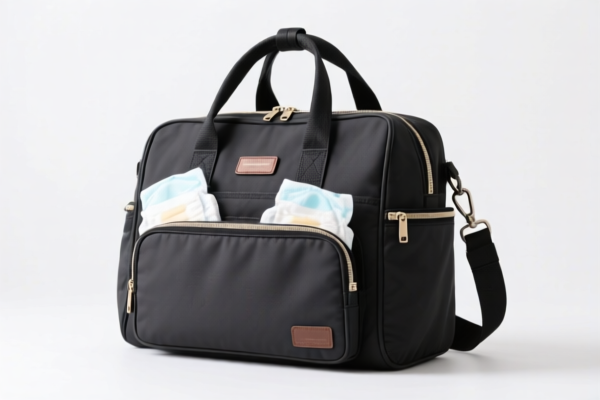


AI Analysis
🍼 Baby Diaper Bag (Mommy Bags / Nursery Totes)
🌐 HS Code Reference & Customs Clearance Guide | 2026 Latest Tariff Analysis | Professional Compliance Strategy
📌 I. Product Definition & Classification: What Exactly is a "Diaper Bag"?
A Baby Diaper Bag is a specialized travel accessory designed for parents, serving the dual purpose of a backpack, tote, or handbag while organizing infant care essentials (diapers, wipes, bottles, clothes).
In international trade, the classification hinges on two critical factors: 1. Surface Material: Typically textile (nylon, canvas, polyester, leather, or synthetic leather). 2. Functionality: It functions as a container/backpack/handbag, not merely a clothing accessory or general household item.
⚠️ Key Distinction:
- If it is a structured bag (backpack, tote, shoulder bag) made of textile/synthetic material → Falls under Chapter 42 (Articles of Leather; Travel Goods).
- If it is loosely classified as a general "made-up textile article" without specific bag features → May fall under Chapter 63 (Other Made-up Textile Articles).
- Note: The provided data explicitly categorizes it under Bag/Travel Goods (Ch 42) or General Textile Goods (Ch 63).
📦 II. HS Code Classification Details (Based on Provided Data)
| HS Code | Product Description (Based on Data) | Surface Material | Tax Rate |
|---|---|---|---|
4202.92.91.00 |
Travel/Travel-Like Bags Classified as bags/backpacks. Exterior surface is typically textile. No material conflict. |
Textile / Synthetic | 52.6% |
4202.92.31.31 |
Travel/Sports/Like Bags Similar to above. Fits characteristics of textile-surface travel goods. |
Textile / Synthetic | 52.6% |
6307.90.98.91 |
Other Made-Up Articles Classified as a "finished consumer good (bag-type)" under "Other finished goods." No material conflict. |
Textile | 24.5% |
🔍 Critical Insight:
- Codes4202.92...treat the diaper bag as a Travel Good/Bag. This is the standard classification for branded, structured bags.
- Code6307.90...treats it as a General Textile Article. This might apply if the bag lacks specific "bag" characteristics (e.g., very simple pouch-like structure) or if a specific duty mitigation strategy is needed.
- Warning: The tax difference is massive (52.6% vs. 24.5%). Incorrect classification leads to severe penalties or unexpected costs.
💰 III. 2026 Latest Tariff Rate Breakdown (Including Surcharges)
✅ Applicable Country: United States (US)
✅ Country of Origin: China (CN)
✅ Effective Date: Post-2025/2026 (Including 122 Section Tariffs)
🎯 1. Codes 4202.92.91.00 & 4202.92.31.31 —— Travel Goods/Backpacks (High Tariff)
| Item | Detail |
|---|---|
| Base Tariff | 17.6% (Standard MFN Rate for Travel Goods) |
| Section 301 Surcharge | +25.0% (Trade War Tariff) |
| Section 122 Tariff | +10.0% (Specific US Trade Measure) |
| Total Effective Rate | 52.6% |
| Tax Calculation | CIF Value × 52.6% |
| De Minimis Exemption | ❌ Denied (deny_de_minimis) |
| Legal Pathway | Base Duty → Section 301 Footnote → Section 122 Specific List |
📌 Explanation:
- These codes classify the diaper bag as a structured bag. US Customs views structured bags from China as highly competitive manufactured goods, thus applying all applicable surcharges.
- Total 52.6% is a heavy burden. This rate applies to most premium, branded, or structured diaper bags.
🎯 2. Code 6307.90.98.91 —— Other Made-Up Textile Articles (Lower Tariff)
| Item | Detail |
|---|---|
| Base Tariff | 7.0% (Standard Rate for Other Made-Up Textile Items) |
| Section 301 Surcharge | +7.5% (Reduced surcharge for this specific subcategory) |
| Section 122 Tariff | +10.0% |
| Total Effective Rate | 24.5% |
| Tax Calculation | CIF Value × 24.5% |
| De Minimis Exemption | ❌ Denied (deny_de_minimis) |
| Legal Pathway | Base Duty → Section 301 Footnote → Section 122 Specific List |
📌 Explanation:
- By classifying the diaper bag under "Other Finished Textile Articles" rather than "Travel Bags," the base duty drops from 17.6% to 7.0%.
- The Section 301 surcharge is also lower (7.5% vs. 25%).
- Total 24.5% is significantly more competitive.
- ⚠️ Risk: This classification must be defensible. If customs determines the item is clearly a "bag" (has straps, handles, main compartment structure), they may reclassify it to Chapter 42, leading to back-taxes and penalties.
🛠️ IV. Customs Clearance Operational Advice (Practical Pitfall Avoidance)
✅ 1. Preparation Checklist (Must-Have Documents)
| Document | Required | Purpose |
|---|---|---|
| ✅ Product Spec Sheet | ✔️ | Detail dimensions, materials (outer fabric, lining, zippers), and compartments. |
| ✅ Product Photos | ✔️ | Clear images of the bag from all angles, showing handles/straps to prove "bag" structure. |
| ✅ Commercial Invoice | ✔️ | Description must match HS Code. E.g., if using 6307, describe as "Textile Travel Pouch/Bag"; if 4202, use "Backpack/Travel Bag." |
| ✅ Material Composition Statement | ✔️ | Verify % of textile vs. synthetic vs. leather. Critical for Chapter 42 vs. 63. |
| ✅ Packaging List | ✔️ | Show contents to ensure no electronic accessories (which would change classification entirely). |
✅ 2. Declaration Strategy (Key Mantras)
🔥 "Structure Defines Chapter, Material Defines Subheading!"
| Scenario | Recommended HS Code | Reasoning |
|---|---|---|
| Structured Bag (Backpack/Tote with stiff shape, multiple handles) | 4202.92.91.00 |
Clearly fits "Articles of leather or travel goods." High tax (52.6%). |
| Soft/Loose Bag (Simple pouch, less structured, primarily textile function) | 6307.90.98.91 |
Fits "Other made-up textile articles." Lower tax (24.5%). Requires strong defense. |
| Bag with Electronics (e.g., built-in warmer, charging port) | Different Code Entirely | Not covered in this data. Likely Chapter 85 or 90. |
✅ 3. Special Handling for Diaper Bags
| Situation | Advice |
|---|---|
| OEM/Unbranded | Provide factory invoices. Avoid "brand name" in description if trying to argue for lower-value textile classification, but ensure accuracy. |
| Set with Accessories | If the bag comes with bottles/wipes, declare the bag as the primary item. Do not bundle unrelated goods to lower the bag's tax. |
| Material Mix | If the bag has leather straps (>70% surface area), it may fall under different leather codes. Stick to textile if using the provided codes. |
🌍 V. Global Market Comparison (2026 Context)
| Region | Typical HS Code | Estimated Duty (China Origin) | Notes |
|---|---|---|---|
| 🇺🇸 USA | 4202.92 or 6307.90 |
52.6% vs 24.5% | Section 301 & 122 add huge burden. Classification choice is critical. |
| 🇨🇳 China | 4202.92 |
10-15% | Standard import duty. No Section 301. |
| 🇪🇺 EU | 4202.92 |
4% + VAT (20-25%) | No Section 301. VAT is the main cost driver. |
| 🇬🇧 UK | 4202.92 |
12% + VAT (20%) | Post-Brexit tariff structure. |
| 🇨🇦 Canada | 4202.92 |
17.5% + GST/HST | Standard MFN rates. |
📌 Conclusion:
- USA is the most expensive market for diaper bags due to trade tariffs.
- EU and UK are more favorable in terms of base duty, but VAT adds significant cost.
- China has moderate duties but no punitive trade surcharges.
📌 VI. Common Errors & Pitfalls (Lessons Learned)
❌ Error 1: Classifying a structured backpack as a "Textile Pouch" (6307) to save tax.
👉 Consequence: Customs audit reveals "bag" structure. Back-taxes + Penalties for misdeclaration.
❌ Error 2: Ignoring Section 122 Tariffs.
👉 Consequence: The 10% surcharge applies to both codes. Underestimating total landed cost.
❌ Error 3: Using "Baby Bag" as the sole description.
👉 Consequence: Ambiguity. Customs may assign a default high-duty code. Use precise terms: "Textile Travel Backpack" or "Made-Up Textile Carry-All."
✅ Correct Approach:
"Textile Travel Bag, Back-Style, Exterior Surface: Nylon, Interior: Polyester Lining, Model DB-100"
Match description strictly to the chosen HS Code characteristics.
🎯 VII. Conclusion: Professional Classification for Cost Efficiency
🎯 Remember the Rule:
🔹 "Structured Bag = Chapter 42 (High Tax)"
🔹 "Loose Textile Article = Chapter 63 (Lower Tax)"
🔹 "Section 122 (10%) hits both!"
📌 Strategic Tip:
- If your diaper bag is highly structured (hard to deny as a bag), you must use 4202.92. Accept the 52.6% cost.
- If your product is a simple, soft pouch or less structured, you may argue for 6307.90 to achieve 24.5%.
- Consult a licensed customs broker to review product photos before shipment. The cost of an audit far exceeds the legal consultation fee.
📣 Immediate Action:
📞 Contact a Customs Broker + Provide Product Photos + Verify Material Composition
🚀 Ensure Accurate Declaration, Avoid Delays, Maximize Profit Margins!
✨ Professional Clearance Starts with Precise Classification!
💼 Every Percent of Duty Saved is Pure Profit!
Customer Reviews
About HS Code Classification
The Harmonized System (HS) is an internationally standardized nomenclature developed by the World Customs Organization (WCO) to classify traded products. Over 200 countries use the HS system as the basis for customs tariffs, trade statistics, and import/export regulations.
Each HS code follows a hierarchical structure:
- Chapter (2 digits) — Broad category of goods (e.g., Chapter 84: Machinery and Mechanical Appliances)
- Heading (4 digits) — More specific grouping within the chapter
- Subheading (6 digits) — Internationally standardized breakdown, used by all WCO member countries
- National subdivisions (8-10 digits) — Country-specific extensions for further classification, such as US HTSUS 10-digit codes
Correct HS code classification is essential for smooth customs clearance, accurate duty payment, and compliance with trade regulations. Misclassification can lead to customs delays, overpayment of duties, or penalties.
When importing from CN to US, the applicable tariff rates may include:
- Most-Favored-Nation (MFN) rate — The standard duty rate applied to WTO members
- General rate — Applied to countries without trade agreements
- Trade remedy duties — Additional tariffs such as Section 301 (anti-dumping), Section 232 (national security), or countervailing duties
The information provided on this page is for reference purposes only. For official classification, please consult with your local customs authority or a licensed customs broker.