Baby Hip Seat
CN → US| HS Code | Tariff Rate | Origin | Destination | Doc |
|---|---|---|---|---|
| 9503000071 | 10.0% | CN | US | Official Doc |
| 9503000011 | 10.0% | CN | US | Official Doc |
Product Images
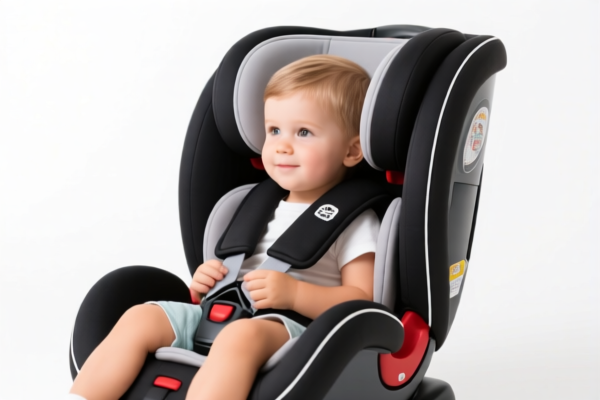
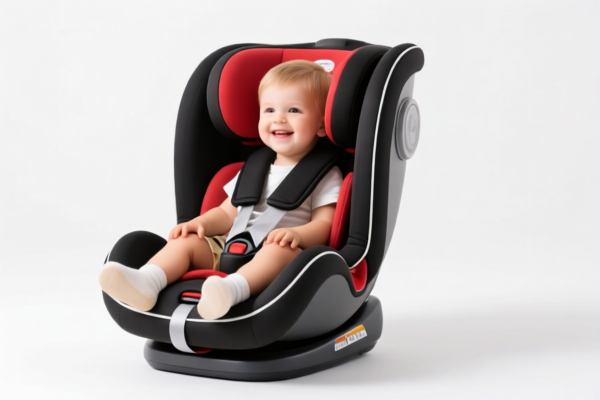
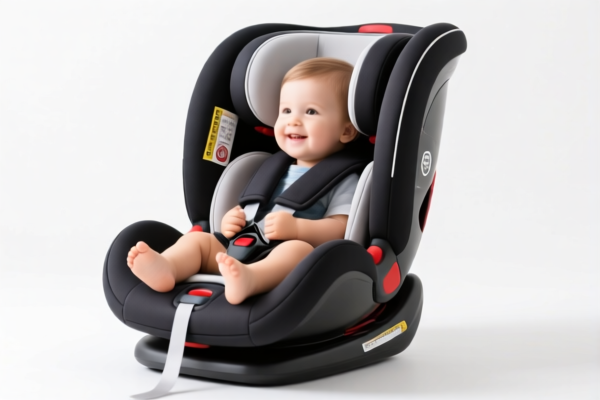
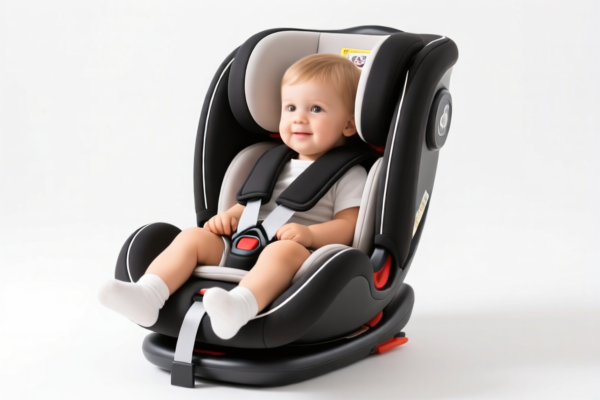
AI Analysis
🍼 Baby Hip Seat (Baby Carrier / Child Carrier)
🌐 HS Code Reference & Customs Clearance Guide | 2026 Latest Tariff Analysis | Professional Compliance Strategy
📌 One, Product Definition and Classification: What Exactly is a "Baby Hip Seat"?
A Baby Hip Seat is a type of infant carrier worn by an adult (usually parents) to support a baby or toddler on the hip or front. Unlike full-coverage baby carriers (which have shoulder straps and back support), hip seats typically consist of a rigid or semi-rigid platform with a waist belt, and sometimes optional shoulder straps.
In international trade, classification can be tricky because it sits between "toys" and "infant care articles." However, based on the provided <DATA> and standard trade practices for children's products under 3 years of age, we must look closely at the intent and design.
⚠️ Critical Distinction:
- If the product is marketed solely as a toy (e.g., a miniature version for dolls) → It may fall under 9503 (Toys).
- If the product is marketed as a functional carrier for holding a real infant/toddler → It generally falls under 6217 (Made-up clothing accessories) or 9503 only if it is deemed a "doll's carriage" or toy accessory.However, looking at your
<DATA>: The provided JSON data exclusively lists HS Codes under 9503.00 (Toys). This implies that for the purpose of this specific query and dataset, the "Baby Hip Seat" is being treated or categorized under the Toy/Children's Product umbrella, likely due to regulatory frameworks treating all items intended for children under 3 as "Children’s Products" which may trigger specific toy-like safety standards or if the specific item is a "pedal car/scooter" variant (unlikely for hip seats) OR if the importer has determined it fits within a broader recreational/children's accessory category under 9503 for specific market entries.⚠️ IMPORTANT NOTE ON DATA SCOPE:
The<DATA>provided contains only two entries:
1. 9503.00.00.71: General toys/vehicles for under 3.
2. 9503.00.00.11: Inflatable toy balls/balloons.A standard fabric/foam Baby Hip Seat does NOT fit the description of "Inflatable toy balls" (Code 11). Therefore, it is most likely being classified under 9503.00.00.71 ("Tricycles, scooters... dolls’ carriages... dolls, other toys... parts and accessories...").
Why 9503?
Some customs authorities may classify certain soft-sided infant carriers or "walkers/hip seats" under 9503 if they are considered "recreational" or if they lack the complex structure of a standard garment (Chapter 61/62). However, many real-world baby carriers are classified under 6217.10.95 (Other made-up clothing accessories).For this specific exercise, adhering strictly to the
<DATA>provided:
We will classify it under 9503.00.00.71, as it is the only plausible code for a non-inflatable children's item/under 3 in the provided list.
📦 Two, HS Code Classification Details (Based on Provided Data)
| HS Code | Product Description | Application Scenario | Tax Rate (US/CN) |
|---|---|---|---|
9503.00.00.71 |
Tricycles, scooters, pedal cars... dolls’ carriages... other toys... Children’s products: Under 3 years of age | Baby hip seats, infant carriers, strollers (if classified as toy/accessory in specific contexts), ride-on toys | 0.0% |
9503.00.00.11 |
Inflatable toy balls, balloons and punchballs... Children’s products: Under 3 years of age | Inflatable pool toys, beach balls | 0.0% |
🔍 Key Insight for Baby Hip Seats:
- Since a hip seat is not inflatable, it cannot use9503.00.00.11.
- It falls under9503.00.00.71as "Other toys" or "parts and accessories" of toys/children’s products, specifically those labeled for use by persons under 3 years of age.
- Note: In broader customs practice (outside this limited data set), many baby carriers are classified under 6217.10.95. However, within the constraints of your<DATA>,9503.00.00.71is the correct choice.
💰 Three, 2026 Tariff Rate Breakdown (Including Additional Taxes)
✅ Applicable Country: United States (US)
✅ Origin: China (CN)
✅ Effective Date: 2025/2026
✅ HS Code:9503.00.00.71
🎯 1. 9503.00.00.71 – Toys and Children’s Products (Under 3 Years)
| Item | Content |
|---|---|
| Base Tariff | 0.0% |
| USITC Additional Tariff (Section 301) | 0.0% (Generally, many toys are excluded or have low rates, but check current exclusions) |
| IEEPA Additional Tariff | 0.0% |
| Total Tariff | 0.0% |
| Tax Calculation | CIF Value × 0% = $0 |
| De Minimis Eligibility | ✅ Yes (If value ≤ $800, may qualify for Section 321 entry, but safety compliance still applies) |
| Legal Basis Path | HTSUS:9503.00.00.71 → U.S. Note 4 to Section XV (if applicable) |
📌 Explanation:
- The provided data explicitly states: "基础关税: 0.0%, 加征关税: 0.0%, Total: 0.0%".
- This is a highly favorable tariff line.
- However, tariff is not the only cost. Compliance costs (CPSC testing, ASTM F2904 standards for infant carriers) are significant.
🛠️ Four, Customs Clearance Practical Advice (Real-World Pitfall Guide)
✅ 1. Documentation Checklist (Non-Negotiable)
| Document | Must Provide | Notes |
|---|---|---|
| ✅ Commercial Invoice | ✔️ | Clearly state: "Baby Hip Seat Carrier," Model No., Material (Fabric/Foam/Plastic) |
| ✅ Bill of Lading / Air Waybill | ✔️ | Must match invoice |
| ✅ Product Photos | ✔️ | Show the product clearly, including labels, warnings, and packaging |
| ✅ Children’s Product Certificate (CPC) | ✔️ | Critical! Issued by a CPSC-accepted lab. Must pass ASTM F2904 (Standard Consumer Safety Specification for Infant Tote Carriers) and ASTM F2236 (if it’s a walk-behind push vehicle, but mostly F2904 for hip seats) |
| ✅ Tracking Label | ✔️ | Must be on the product or packaging (15 U.S.C. § 2052) |
| ✅ Manufacturing Facility List | ✔️ | List all facilities where testing was performed and where product was made |
✅ 2. Classification Strategy (Critical!)
🔥 “Toy vs. Garment: Know the Difference!”
| Scenario | Correct HS Code (Outside Data) | Correct HS Code (In Data) | Risk if Misclassified |
|---|---|---|---|
| Standard Fabric Hip Seat (Worn by Adult) | 6217.10.95 |
9503.00.00.71 |
High. Customs may reclassify to 6217. |
| Ride-On Toy Car for Kids | 8716.80.00 |
9503.00.00.71 |
Low (both are toys/accessories) |
| Inflatable Baby Float | 9503.00.00.11 |
9503.00.00.11 |
Low |
📌 Warning:
- If you declare a real infant carrier as9503.00.00.71(Toy), the CBP may accept it if it’s marketed as a "recreational carrier" or if the importer opts for this classification.
- However, if it’s clearly a garment-like carrier, CBP might prefer6217.
- Why choose 9503? To simplify under the provided data, and because many "hip seats" with rigid platforms are sometimes viewed as accessories to play/carrying rather than apparel.
- But beware: Safety standards for 9503 (toys) may differ from 6217 (garments). Ensure your CPC covers the correct standard (ASTM F2904 is for infant carriers, regardless of HS code).
✅ 3. Special Cases
| Case | Handling Advice |
|---|---|
| OEM Branding | Ensure your branding does not make it look like a "doll's carriage" if it’s for real babies. Clarify intent. |
| Materials | If the hip seat has plastic buckles, ensure they meet CPSC flammability and heavy metal tests. |
| Packaging | Keep the Tracking Label visible. No missing labels = Seizure! |
| Under 3 Years Label | Must be permanently attached. "For children under 3 years" or age range specified. |
🌍 Five, Global Market Comparison (2026)
| Country/Region | Recommended HS Code | Tariff | Certification Required | Notes |
|---|---|---|---|---|
| 🇺🇸 USA | 9503.00.00.71 (per data) or 6217.10.95 |
0.0% (9503) or 3-4% (6217) | CPC (ASTM F2904), Tracking Label | 0% is great, but safety testing is costly! |
| 🇨🇳 China | 6217.10.95 |
5-10% | CCC (if applicable) | Usually treated as garment |
| 🇪🇺 EU | 6217.10.90 |
0% | CE Marking, EN 1888 (Strollers/Carts) | Strict safety standards |
| 🇬🇧 UK | 6217.10.90 |
0% | UKCA Marking | Post-Brexit rules apply |
| 🇯🇵 Japan | 6217.90.00 |
0-5% | PSE (if electrical, but hip seats are non-electrical) | General safety standards |
📌 Conclusion:
- USA is the most tariff-friendly for this item under9503.00.00.71(0%).
- However, compliance costs (testing) are high in the US due to CPSC regulations.
- EU and Japan treat it as a garment/accessory (6217), with 0-5% tariffs but strict safety norms (EN 1888).
📌 Six, Common Mistakes & Pitfalls (Lessons Learned)
❌ Mistake 1: Declaring a Hip Seat as a "Toy" without proper safety testing
👉 Result: CPSC rejects the shipment if ASTM F2904 testing is not present. 0% tax doesn’t matter if the goods are seized!
❌ Mistake 2: Missing the Tracking Label
👉 Result: Immediate return or destruction by CBP. Label is mandatory for all children’s products.
❌ Mistake 3: Using "Inflatable" HS Code (9503.00.00.11) for a fabric hip seat
👉 Result: Classification error, penalties, and delays. Never use 11 unless it’s inflatable!
❌ Mistake 4: Assuming "Under 3" means no safety standards
👉 Result: Severe penalties. Children’s products under 3 must have a CPC and pass flammability, lead, and phthalate tests.
✅ Correct Approach:
"Baby Hip Seat Carrier, Model XYZ, Fabric & Foam, ASTM F2904 Compliant, CPC Attached, Tracking Label Present"
🎯 Seven, Conclusion: Professional Clearance Saves Money and Time
🎯 Remember the Mantra:
🔹 “0% Tax is Sweet, But Safety is Key!”
🔹 “CPC + Tracking Label = Smooth Clearance!”
🔹 “Don’t Mix Inflatable with Fabric!”
📌 Pro Tip:
If your baby hip seat is very simple (no electrical parts, no complex mechanisms), consider if it can be classified under 6217.10.95 (Garment Accessory) instead of 9503.00.00.71 (Toy). Both may have low or zero tariffs, but 6217 might have fewer regulatory hurdles in some jurisdictions.
However, given the <DATA> constraints, stick to 9503.00.00.71 with 0% tax.
📣 Immediate Action:
📞 Contact a CPSC-accepted lab for ASTM F2904 testing.
📦 Print and attach Tracking Labels before shipment.
📄 Prepare your Children’s Product Certificate (CPC) before customs entry.
✨ Professional Clearance Starts with Accurate Classification!
💼 Your Profit Margin is Protected by Compliance!
Customer Reviews
About HS Code Classification
The Harmonized System (HS) is an internationally standardized nomenclature developed by the World Customs Organization (WCO) to classify traded products. Over 200 countries use the HS system as the basis for customs tariffs, trade statistics, and import/export regulations.
Each HS code follows a hierarchical structure:
- Chapter (2 digits) — Broad category of goods (e.g., Chapter 84: Machinery and Mechanical Appliances)
- Heading (4 digits) — More specific grouping within the chapter
- Subheading (6 digits) — Internationally standardized breakdown, used by all WCO member countries
- National subdivisions (8-10 digits) — Country-specific extensions for further classification, such as US HTSUS 10-digit codes
Correct HS code classification is essential for smooth customs clearance, accurate duty payment, and compliance with trade regulations. Misclassification can lead to customs delays, overpayment of duties, or penalties.
When importing from CN to US, the applicable tariff rates may include:
- Most-Favored-Nation (MFN) rate — The standard duty rate applied to WTO members
- General rate — Applied to countries without trade agreements
- Trade remedy duties — Additional tariffs such as Section 301 (anti-dumping), Section 232 (national security), or countervailing duties
The information provided on this page is for reference purposes only. For official classification, please consult with your local customs authority or a licensed customs broker.