Baby Nursing Pads
CN → US| HS Code | Tariff Rate | Origin | Destination | Doc |
|---|---|---|---|---|
| 9619001560 | 17.5% | CN | US | Official Doc |
| 9619009000 | 24.5% | CN | US | Official Doc |
| 5601220091 | 41.3% | CN | US | Official Doc |
| 5601210090 | 38.6% | CN | US | Official Doc |
| 3926209050 | 15.0% | CN | US | Official Doc |
| 3926909989 | 22.8% | CN | US | Official Doc |
Product Images
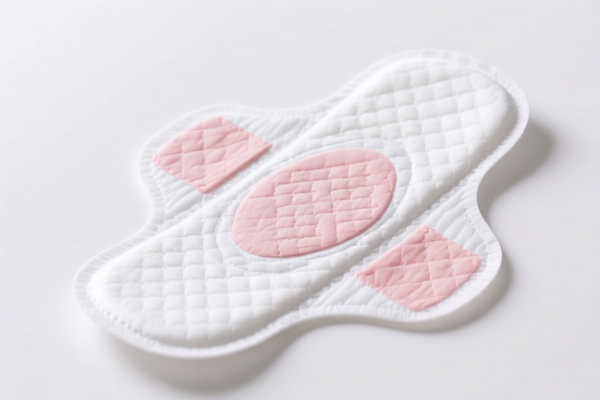
AI Analysis
🍼 Baby Nursing Pads: HS Code Guide & US Customs Clearance Strategy (2026)
🌐 HS Code Reference & Clearance Guide | 2026 Latest Tariff Rates | Professional Entry Strategy 📌 I. Product Definition & Classification: What Exactly Are "Baby Nursing Pads"?
Baby nursing pads (also known as breastfeeding pads or insert liners) are absorbent accessories designed to protect nursing bras from leaks and protect clothing from moisture. In international trade, they are often grouped with similar personal hygiene articles.
Key Distinction for Classification:
1. Of Textile Materials (Man-made/Cotton) with Adhesive/Non-Adhesive: Often classified under Chapter 96 (Miscellaneous manufactured articles) if they are disposable/pads, or Chapter 63 if they are reusable textile inserts. However, specific US HTS codes often route "diaper liners and similar articles" here.
2. Of Paper/Celulose: If made primarily of paper products, they fall under 9619.00.
Based on the provided <DATA>, the specific goods are classified under Chapter 96 (Miscellaneous manufactured articles), specifically under 9619 (Sanitary towels and tampons, diapers, and similar articles).
⚠️ Critical Clarification:
- If the product is a disposable pad made of paper, cellulose wadding, or webs of cellulose fibers →9619.00.15.60
- If the product is a non-paper/non-specified material (e.g., pure textile, plastic-backed fabric not covered elsewhere) →9619.00.90.00
📦 II. HS Code Classification Details (2026 Latest Tariff Data)
| HS Code | Product Description | Material Composition | Key Classification Criteria |
|---|---|---|---|
9619.00.15.60 |
Sanitary pads (towels) and tampons, diapers (napkins), diaper liners and similar articles, of any material: Of paper, cellulose wadding or webs of cellulose fibers Other | Paper, Cellulose Wadding, Cellulose Fiber Webs | Must be made of paper or cellulose-based materials. Includes disposable nursing liners if composed of these materials. |
9619.00.90.00 |
Sanitary pads (towels) and tampons, diapers (napkins), diaper liners and similar articles, of any material: Other | Textile, Plastic, Foam, Hybrid (Non-paper/cellulose dominant) | Used for nursing pads made of pure textiles, synthetic fibers, or other materials not meeting the paper/cellulose definition of 9619.00.15.60. |
🔍 Focus Note:
-9619.00.15.60is for disposable, paper/cellulose-based nursing pads.
-9619.00.90.00is a catch-all for nursing pads made of other materials (e.g., reusable cloth, plastic-backed fabric, or mixed materials not qualifying as paper/cellulose).
💰 III. 2026 Latest Tariff Rate Analysis (USA/China Origin)
✅ Applicable Country: United States (US)
✅ Origin: China (CN)
✅ Effective Date: Current rates apply (2025-2026)
🎯 1. 9619.00.15.60 — Nursing Pads of Paper/Cellulose
| Item | Content |
|---|---|
| Base Tariff | 0.0% (Ad Valorem) |
| Additional Tariff (Section 301) | +7.5% |
| Total Tariff | 7.5% |
| Tax Calculation | CIF Value × 7.5% |
| De Minimis Eligibility | ❌ No (Subject to Section 301 duties; generally not exempt under de minimis for Section 301 goods if above $800 threshold, but note: Section 301 duties do apply to de minimis shipments from China as of recent enforcement updates. Always verify current CBP memos.) |
| Legal Basis | USITC:9619.00.15.60 → FOOTNOTE:301 (7.5% rate applies to many 9619 items) |
📌 Interpretation:
- Even though the base tariff is 0%, the 7.5% Section 301 additional tariff applies because these goods originate from China.
- Total cost impact: 7.5% on the CIF value.
🎯 2. 9619.00.90.00 — Other Nursing Pads (Non-Paper/Cellulose)
| Item | Content |
|---|---|
| Base Tariff | 0.0% (Ad Valorem) |
| Additional Tariff (Section 301) | 0.0% |
| Total Tariff | 0.0% |
| Tax Calculation | No duty payable |
| De Minimis Eligibility | ✅ Yes (No Section 301 duties apply to this subheading) |
| Legal Basis | USITC:9619.00.90.00 → FOOTNOTE:301 (Exempt/Not Listed) |
📌 Interpretation:
- This is a 0% duty entry.
- Crucial Advantage: If your nursing pads are made of materials not classified as paper/cellulose (e.g., pure textile inserts, plastic-backed reusable pads), they may qualify for 0% total tariff.
- Warning: Misclassifying a paper-based pad as9619.00.90.00to avoid the 7.5% duty is smuggling/high-risk. You must accurately describe the material composition.
🛠️ IV. Customs Clearance Practical Advice
✅ 1. Preparation Checklist (Must-Have Documents)
| Document | Required? | Details |
|---|---|---|
| Product Spec Sheet | ✔️ | Must explicitly state material composition (e.g., "100% Cotton" vs. "Paper/Cellulose wadding"). This is the #1 factor for HS code selection. |
| Commercial Invoice | ✔️ | Clearly describe as "Baby Nursing Pads" or "Breastfeeding Liners". Avoid vague terms like "Hygiene Products". |
| Material Declaration | ✔️ | If claiming 9619.00.90.00 (0% duty), provide proof that the product is not made of paper or cellulose webs. |
| Photos | ✔️ | Show cross-section if possible, to prove material type. |
| Origin Certificate | ✔️ | Confirm China origin to apply correct Section 301 rates. |
✅ 2. Classification Strategy & Pitfalls
| Scenario | Correct HS Code | Duty Rate | Risk Level |
|---|---|---|---|
| Disposable Paper/Cotton Pads | 9619.00.15.60 |
7.5% | ✅ Low (Standard) |
| Reusable Cloth/Textile Pads | 9619.00.90.00 |
0.0% | ✅ Low (Optimal if accurate) |
| Mixed Material (Paper + Plastic) | 9619.00.15.60* |
7.5% | ⚠️ Medium (If paper/cellulose is essential character) |
| Misclassified Paper Pads as Textile | 9619.00.90.00 |
0.0% (Incorrect) | 🔴 HIGH (Penalty, Back Duties, Seizure) |
🔥 Key Insight:
- Material Composition is King.
- If the pad contains any significant amount of paper or cellulose wadding as the primary absorbent material, it likely falls under9619.00.15.60.
- If it is a cloth/reusable textile insert or a synthetic pad with no cellulose, use9619.00.90.00for 0% duty.
✅ 3. Special Considerations for US Imports
- Section 301 Duty Exemptions:
- Check if your specific product type was excluded from Section 301 in previous years. However, as of 2026, most hygiene products from China remain subject to additional tariffs unless specifically exempted.
- De Minimis (Section 321):
- For shipments under $800, you may enter under Section 321. However, note that Section 301 additional tariffs STILL APPLY to de minimis shipments from China for most goods. So even for small packages, the 7.5% may apply if classified under
9619.00.15.60. - If classified under
9619.00.90.00, no Section 301 duty applies, so $0 duty on de minimis.
- For shipments under $800, you may enter under Section 321. However, note that Section 301 additional tariffs STILL APPLY to de minimis shipments from China for most goods. So even for small packages, the 7.5% may apply if classified under
- FDA/Health Regulations:
- Nursing pads are generally not regulated as drugs or devices by the FDA, but ensure they comply with general consumer product safety standards. No specific FDA pre-market approval is usually required, but cleanliness and material safety (no harmful chemicals) are expected.
🌍 V. Global Market Comparison (2026)
| Country | Recommended HS Code | Estimated Duty (China Origin) | Notes |
|---|---|---|---|
| 🇺🇸 USA | 9619.00.15.60 |
7.5% | Section 301 applies. |
| 🇺🇸 USA | 9619.00.90.00 |
0.0% | If non-paper/textile. |
| 🇪🇺 EU | 9619.00.10 |
0% | Generally 0% MFN duty. No Section 301 equivalent. |
| 🇨🇳 China | 9619.00.10 |
0% | Import duty is 0%. |
📌 VI. Common Mistakes & How to Avoid Them
❌ Mistake 1: Assuming all nursing pads are "textile" and using 9619.00.90.00 for paper-based disposables.
👉 Consequence: Underpayment of 7.5% duty → Customs penalty + back duties + interest.
❌ Mistake 2: Declaring "Sanitary Pads" (for menstruation) when the product is for "Baby Nursing".
👉 Consequence: While the HS code might be similar (9619), incorrect description can trigger FDA/USDA scrutiny if misinterpreted as medical devices. Always use "Baby Nursing Pads".
❌ Mistake 3: Ignoring the "Paper/Cellulose" definition.
👉 Solution: Provide a material test report or supplier declaration stating:
"This product contains no paper or cellulose wadding. It is made of 100% Polyester/Textile."
This supports the 0% duty classification.
🎯 VII. Conclusion & Action Plan
🎯 Summary:
- Paper/Cellulose Nursing Pads: 9619.00.15.60 → 7.5% Total Duty.
- Textile/Synthetic Nursing Pads: 9619.00.90.00 → 0% Total Duty.
✅ Action Steps for Importers:
1. Confirm Material: Ask your supplier if the pads contain paper or cellulose.
2. Choose HS Code:
- If Yes to cellulose → Use 9619.00.15.60.
- If No → Use 9619.00.90.00.
3. Document Everything: Keep material composition sheets ready for Customs.
4. Declare Accurately: Use "Baby Nursing Pads, Material: [Specify]" on invoices.
📣 Final Tip:
If you are importing disposable pads, expect 7.5% duty. If you are importing reusable/cloth pads, you can potentially achieve 0% duty by correctly classifying under9619.00.90.00.
✨ Professional Clearance Starts with Accurate Classification!
💼 Save Money, Avoid Penalties, Clear Customs Smoothly!
Customer Reviews
About HS Code Classification
The Harmonized System (HS) is an internationally standardized nomenclature developed by the World Customs Organization (WCO) to classify traded products. Over 200 countries use the HS system as the basis for customs tariffs, trade statistics, and import/export regulations.
Each HS code follows a hierarchical structure:
- Chapter (2 digits) — Broad category of goods (e.g., Chapter 84: Machinery and Mechanical Appliances)
- Heading (4 digits) — More specific grouping within the chapter
- Subheading (6 digits) — Internationally standardized breakdown, used by all WCO member countries
- National subdivisions (8-10 digits) — Country-specific extensions for further classification, such as US HTSUS 10-digit codes
Correct HS code classification is essential for smooth customs clearance, accurate duty payment, and compliance with trade regulations. Misclassification can lead to customs delays, overpayment of duties, or penalties.
When importing from CN to US, the applicable tariff rates may include:
- Most-Favored-Nation (MFN) rate — The standard duty rate applied to WTO members
- General rate — Applied to countries without trade agreements
- Trade remedy duties — Additional tariffs such as Section 301 (anti-dumping), Section 232 (national security), or countervailing duties
The information provided on this page is for reference purposes only. For official classification, please consult with your local customs authority or a licensed customs broker.