Baby Play Mat
CN → US| HS Code | Tariff Rate | Origin | Destination | Doc |
|---|---|---|---|---|
| 4016910000 | 37.7% | CN | US | Official Doc |
| 4016100000 | 35.0% | CN | US | Official Doc |
| 5603941090 | 35.0% | CN | US | Official Doc |
| 5603941010 | 35.0% | CN | US | Official Doc |
| 9503000071 | 10.0% | CN | US | Official Doc |
Product Images
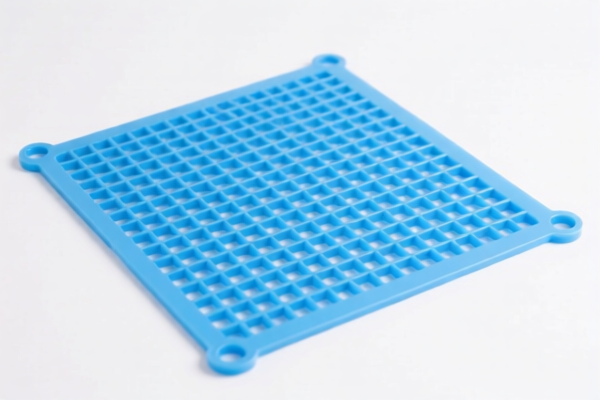
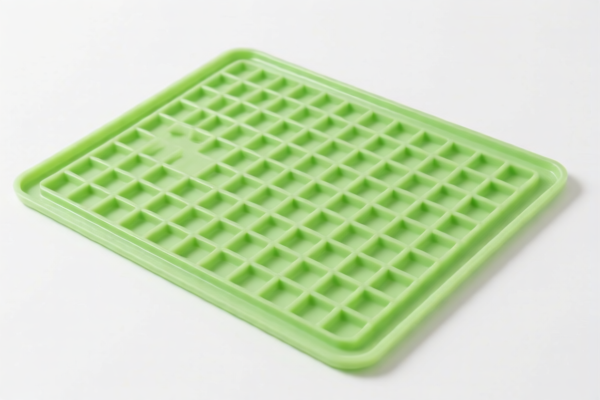
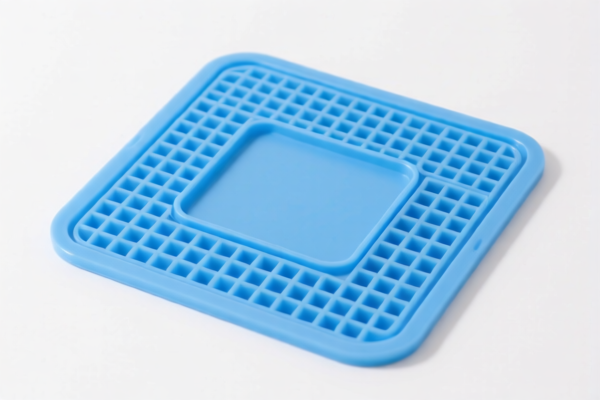
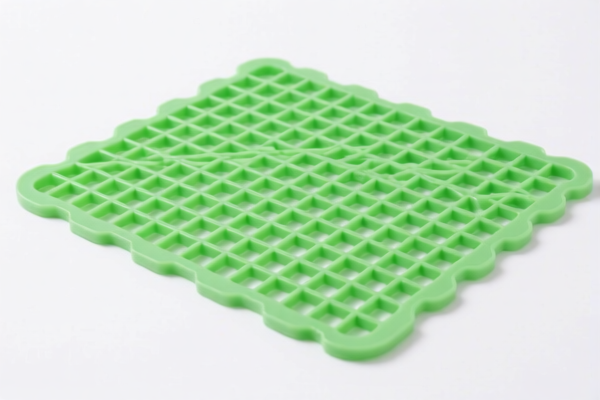
AI Analysis
🧸 Baby Play Mat (Infant Floor Mat)
🌐 HS Code Reference & Customs Clearance Guide | 2026 Latest Tariff Analysis | Professional Clearance Strategy
📌 I. Product Definition & Classification: Do You Really Understand "Baby Play Mats"?
A Baby Play Mat is a soft, cushioned surface designed for infants and toddlers to crawl, sit, or play on. It provides safety, comfort, and stimulation. In international trade, classification depends heavily on the material composition and intended use, which can lead to different tariff treatments depending on how the product is constructed.
⚠️ Key Distinction Point:
- If the mat is made of rubber/plastic (e.g., PVC, EVA foam, or vulcanized rubber) for anti-slip or durability → It falls under Chapter 40 (Rubber).
- If the mat is made of non-woven fabrics or textiles (often with backing) → It falls under Chapter 56 (Non-wovens) or Chapter 63 (Other made-up textile articles).
- If it is explicitly marketed and recognized as a toy (interactive, educational, or part of a toy set) → It may fall under Chapter 95 (Toys).
📦 II. HS Code Classification Details (2026 Latest Tariff Authoritative Comparison)
Based on the provided data, here are the four most likely HS Codes for Baby Play Mats, along with their rationale and tax implications.
| HS Code | Product Description | Application Scenario | Material/Structure |
|---|---|---|---|
4016.91.00.00 |
Other vulcanized rubber goods (Carpets and Mats) | Heavy-duty, anti-slip rubber mats; industrial-grade or high-durability baby mats | ✅ Vulcanized Rubber (Inferred from "anti-slip" attribute) |
4016.10.00.00 |
Other vulcanized rubber articles | General rubber/plastic mats; no specific material conflict with "article" description | ✅ Vulcanized Rubber/Plastic |
5603.94.10.90 |
Non-woven carpets and mats (Other) | Textile-based mats, often with non-woven backing; common in lightweight baby play areas | ✅ Non-woven Fabric (Inferred from "mat" form) |
5603.94.10.10 |
Non-woven carpets and mats (Specific) | Similar to above; non-woven material suitable for anti-slip baby mats | ✅ Non-woven Fabric |
9503.00.00.71 |
Other toys | Interactive play mats, activity centers, or mats sold as part of a toy set | ✅ Toy Category (Inferred from "Toy" classification) |
🔍 Important Reminder:
- Rubber Mats (4016.xx): Typically heavier, more durable, and used for gym or heavy-impact play. High tariffs due to Chapter 40.
- Non-woven Mats (5603.xx): Lighter, textile-like, often used for indoor floor protection. Moderate tariffs.
- Toy Mats (9503.xx): Must be clearly marketed as a toy. Lowest tariff burden but strict definition requirements.
💰 III. 2026 Latest Tariff Rate Detailed Breakdown (Including Surcharges & Policy Add-ons)
✅ Applicable Country: United States (US)
✅ Country of Origin: China (CN)
✅ Effective Date: Post-2025 (Including subsequent imports)
🎯 1. 4016.91.00.00 – Other Vulcanized Rubber Goods (Carpets and Mats)
| Item | Detail |
|---|---|
| Base Tariff | 2.7% (ad valorem) |
| Section 301 Surcharge | +25.0% |
| Section 122 Tariff | +10.0% |
| Total Effective Rate | 37.7% |
| Tax Calculation | CIF Value × 37.7% |
| De Minimis Exemption | ❌ Not Eligible |
| Legal Basis Path | Section 301: 9903.88.01 → Section 122 → USITC: 4016.91.00.00 |
📌 Explanation:
- 2.7% is the standard Most Favored Nation (MFN) rate for rubber mats.
- 25% is the Section 301 tariff imposed on Chinese goods.
- 10% is the Section 122 tariff (national security/trade remedy).
- Total: 37.7%. This is a high-cost category. Misclassification as a toy could lead to penalties.
🎯 2. 4016.10.00.00 – Other Vulcanized Rubber Articles
| Item | Detail |
|---|---|
| Base Tariff | 0.0% |
| Section 301 Surcharge | +25.0% |
| Section 122 Tariff | +10.0% |
| Total Effective Rate | 35.0% |
| Tax Calculation | CIF Value × 35.0% |
| De Minimis Exemption | ❌ Not Eligible |
| Legal Basis Path | Section 301 → Section 122 → USITC: 4016.10.00.00 |
📌 Note:
- Slightly lower than4016.91.00.00because the base rate is 0%.
- Still subject to the same 35% total tariff.
- Applicable if the mat is not specifically defined as a "carpet/mat" in subsection .91, but still rubber-based.
🎯 3. 5603.94.10.90 – Non-woven Carpets and Mats (Other)
| Item | Detail |
|---|---|
| Base Tariff | 0.0% |
| Section 301 Surcharge | +25.0% |
| Section 122 Tariff | +10.0% |
| Total Effective Rate | 35.0% |
| Tax Calculation | CIF Value × 35.0% |
| De Minimis Exemption | ❌ Not Eligible |
| Legal Basis Path | Section 301 → Section 122 → USITC: 5603.94.10.90 |
📌 Note:
- Common for fabric-backed or non-woven baby mats.
- Same 35% total tariff as rubber articles.
- Material must be verifiably non-woven (e.g., polyester, polypropylene fibers bonded together).
🎯 4. 5603.94.10.10 – Non-woven Carpets and Mats (Specific)
| Item | Detail |
|---|---|
| Base Tariff | 0.0% |
| Section 301 Surcharge | +25.0% |
| Section 122 Tariff | +10.0% |
| Total Effective Rate | 35.0% |
| Tax Calculation | CIF Value × 35.0% |
| De Minimis Exemption | ❌ Not Eligible |
| Legal Basis Path | Section 301 → Section 122 → USITC: 5603.94.10.10 |
📌 Note:
- Essentially identical to.90in tariff treatment.
- Difference lies in specific sub-classification within non-wovens.
- Total: 35%.
🎯 5. 9503.00.00.71 – Other Toys
| Item | Detail |
|---|---|
| Base Tariff | 0.0% |
| Section 301 Surcharge | 0.0% |
| Section 122 Tariff | +10.0% |
| Total Effective Rate | 10.0% |
| Tax Calculation | CIF Value × 10.0% |
| De Minimis Exemption | ❌ Not Eligible |
| Legal Basis Path | Section 122 → USITC: 9503.00.00.71 |
📌 Critical Insight:
- Only 10% Total Tariff! This is the most cost-effective classification if eligible.
- Condition: The product must be clearly defined as a toy (e.g., interactive elements, educational purpose, or marketed to children as play equipment).
- Risk: If customs determines it is a mat (floor covering) rather than a toy, you will be reassigned to Chapter 40 or 56, resulting in a 25%–37.7% tariff hike + potential penalties.
- Section 122 (10%) still applies to all goods from China under current policy, but Section 301 (25%) is waived for toys in some interpretations, leading to the 10% total.
🛠️ IV. Customs Clearance Practical Advice (Avoid Pitfalls)
✅ 1. Documentation Checklist (All Required)
| Document | Must Provide | Description |
|---|---|---|
| ✅ Product Specification Sheet | ✔️ | Dimensions, thickness, material composition (rubber %, fabric %, foam %) |
| ✅ Material Test Report | ✔️ | Certify material type: e.g., "100% Non-woven Polyester" or "EVA Rubber" |
| ✅ Product Photos | ✔️ | Clear shots of packaging, labels, and usage context (e.g., baby playing on it) |
| ✅ Commercial Invoice | ✔️ | Describe product accurately: e.g., "Baby Play Mat, Non-woven, Size 100x150cm" |
| ✅ Labeling | ✔️ | Must state "Made in China" and care instructions |
| ✅ Toy Certification (If claiming 9503) | ✔️ | ASTM F963 (US) or CPSIA compliance proof |
✅ 2. Classification Strategy (Key Tips)
🔥 “Know Your Material, Choose Your Tax!”
| Scenario | Recommended HS Code | Estimated Total Tax | Action |
|---|---|---|---|
| Rubber/Plastic Mat (e.g., EVA, PVC, Anti-slip) | 4016.91.00.00 or 4016.10.00.00 |
35% – 37.7% | Declare as "Rubber Mat". Accept higher tax. |
| Non-woven Fabric Mat (e.g., Polyester backing) | 5603.94.10.10 or 5603.94.10.90 |
35.0% | Declare as "Non-woven Mat". Provide material proof. |
| Interactive/Educational Play Mat | 9503.00.00.71 |
10.0% | Declare as "Toy". Must have toy-like features (sounds, textures, educational). |
⚠️ Warning:
- Do NOT declare a simple rubber mat as a "Toy" to save tax. Customs will inspect, verify, and reclassify → Penalties + Back Taxes.
- For9503, ensure the product has play value beyond just cushioning (e.g., puzzles, songs, textures for sensory development).
✅ 3. Special Case Handling
| Situation | Recommendation |
|---|---|
| Mixed Material Mat (e.g., Fabric top + Rubber bottom) | Analyze Principal Character: If rubber bottom dominates function → 4016. If fabric top dominates → 5603. |
| OEM/White Label | Provide buyer’s design specs. If buyer markets it as a toy, you can support that classification. |
| Small Sample Shipments | Even de minimis shipments from China are subject to Section 122 (10%). No full exemption. |
| Mat with Accessories (e.g., hanging toys) | If toys are attached, the entire set may be classified as a Toy (9503), lowering overall tax. |
🌍 V. Global Market Comparison (2026 Latest)
| Country/Region | Recommended HS Code | Approx. Tariff (China Origin) | Certification Needed | Notes |
|---|---|---|---|---|
| 🇺🇸 USA | 9503.00.00.71 (if toy) |
10% | CPSIA, ASTM F963 | Highest risk/reward. If not toy, 35-37.7%. |
| 🇺🇸 USA | 4016.91.00.00 (rubber) |
37.7% | No special cert | High tax, but straightforward classification. |
| 🇪🇺 EU | 9503.00 (Toy) |
0% | CE, EN71 | No Section 301/122 equivalent. |
| 🇨🇳 China | 9503.00 (Toy) |
0% | CCC (if applicable) | Low import tax for toys. |
📌 Conclusion:
- The US market is the most complex due to Section 301 and 122 tariffs.
- Classification accuracy is critical to avoid 25-37% tax shocks.
- Toy classification (9503) offers significant savings but requires robust product justification.
📌 VI. Common Mistakes & Pitfalls (Lessons Learned)
❌ Mistake 1: Calling a simple rubber floor mat a "Toy" without interactive features
👉 Result: Customs reclassifies to 4016 → Tax increases from 10% to 37.7% + fines.
❌ Mistake 2: Ignoring Section 122 Tariff
👉 Result: Underpaying 10% on all goods, regardless of classification.
❌ Mistake 3: Ambiguous Material Description ("Plastic Mat")
👉 Result: Customs may assign the highest duty rate under Chapter 40 or 39. Specify "EVA Foam" or "Vulcanized Rubber".
❌ Mistake 4: Assuming De Minimis ($800) Exemption Applies
👉 Result: Section 122 (10%) still applies to all Chinese goods under $800. No savings.
✅ Correct Approach:
"Baby Play Mat, Non-woven Polyester Fabric with Anti-Slip Bottom, Size 120x180cm, CPSIA Compliant"
OR
"Interactive Baby Activity Play Mat, with Sounds and Textures, Toy Category, ASTM F963 Certified"
🎯 VII. Conclusion: Precise Classification Saves Money!
🎯 Key Takeaway:
🔹 Toy? →
9503.00.00.71→ 10% Total
🔹 Rubber? →4016.91.00.00→ 37.7% Total
🔹 Non-woven? →5603.94.10.10→ 35.0% Total🔹 "Material Determines Chapter, Use Determines Tariff!"
🔹 "Don't Guess HS Code, Get Pre-Ruling for High-Value Shipments!"
📌 Pro Tip:
If your play mat has interactive elements (sounds, lights, puzzles), explicitly market it as a toy and provide ASTM F963 certification. This can save you 25-27% in tariffs. For simple cushioning mats, accept the 35-37.7% rate or consider sourcing from non-China countries to avoid Section 301/122.
📣 Immediate Action:
📞 Contact your customs broker to verify material composition.
📝 Request Pre-Ruling from US CBP if volume is high.
🚀 Clearance Success = Correct HS Code + Complete Documentation
✨ Professional Clearance Starts with Accurate Classification!
💼 Every Percent of Tax Saved is Pure Profit!
Customer Reviews
About HS Code Classification
The Harmonized System (HS) is an internationally standardized nomenclature developed by the World Customs Organization (WCO) to classify traded products. Over 200 countries use the HS system as the basis for customs tariffs, trade statistics, and import/export regulations.
Each HS code follows a hierarchical structure:
- Chapter (2 digits) — Broad category of goods (e.g., Chapter 84: Machinery and Mechanical Appliances)
- Heading (4 digits) — More specific grouping within the chapter
- Subheading (6 digits) — Internationally standardized breakdown, used by all WCO member countries
- National subdivisions (8-10 digits) — Country-specific extensions for further classification, such as US HTSUS 10-digit codes
Correct HS code classification is essential for smooth customs clearance, accurate duty payment, and compliance with trade regulations. Misclassification can lead to customs delays, overpayment of duties, or penalties.
When importing from CN to US, the applicable tariff rates may include:
- Most-Favored-Nation (MFN) rate — The standard duty rate applied to WTO members
- General rate — Applied to countries without trade agreements
- Trade remedy duties — Additional tariffs such as Section 301 (anti-dumping), Section 232 (national security), or countervailing duties
The information provided on this page is for reference purposes only. For official classification, please consult with your local customs authority or a licensed customs broker.