Baby Safety Gate Screws
CN → US| HS Code | Tariff Rate | Origin | Destination | Doc |
|---|---|---|---|---|
| 7318156070 | 91.2% | CN | US | Official Doc |
| 7318156080 | 91.2% | CN | US | Official Doc |
| 8302416015 | 88.9% | CN | US | Official Doc |
| 8302416080 | 88.9% | CN | US | Official Doc |
Product Images
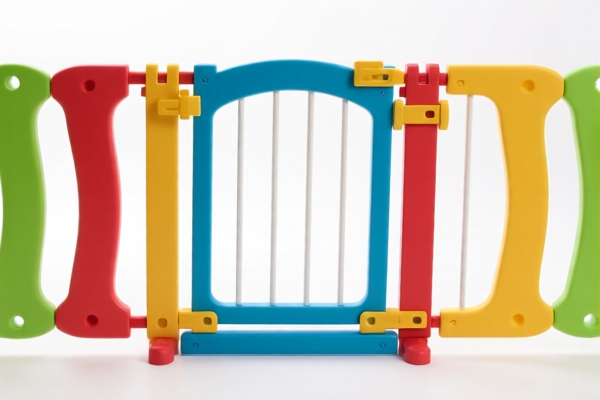
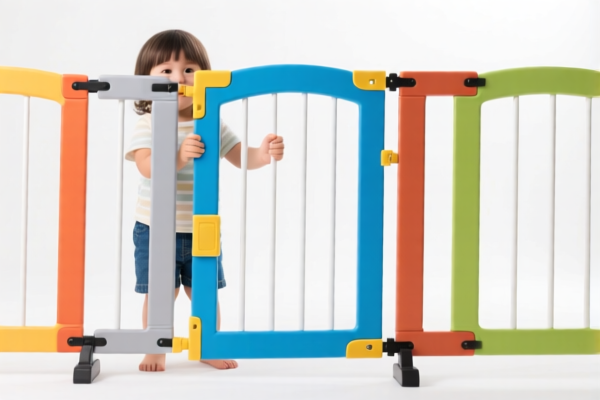
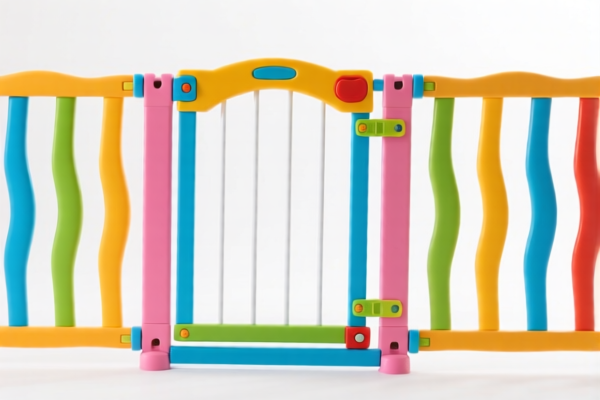
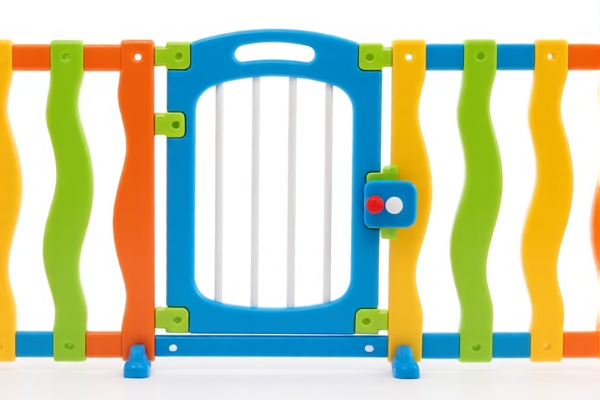
AI Analysis
🔩 Baby Safety Gate Screws (Base Metal Fasteners & Fittings)
🌐 HS Code Reference & Customs Clearance Guide | 2026 Latest Tariff Analysis | Iron & Steel Hardware Classification
Baby Safety Gates are critical home safety products. However, when importing specifically the screws, bolts, nuts, or mounting brackets for these gates, they are NOT classified as "Safety Equipment." Instead, they are classified as Base Metal Articles under Chapter 73 and Chapter 83.
Misclassification here can lead to severe penalties. Below is the precise breakdown based on material, size, and function.
⚠️ CRITICAL WARNING:
If you import the complete safety gate, it may fall under different codes (e.g., 7326.90 or 7325.99).
If you import only the fasteners/hardware (screws, brackets, doorstops), you MUST use the codes below.
Do not mix them in one shipment without clear separation, or customs may inspect the entire batch under the highest-risk code.
📦 1. HS Code Classification Matrix (Detailed Breakdown)
The classification depends on two factors:
1. Material: Stainless Steel vs. Other Iron/Steel.
2. Function/Size: Screws/Bolts (Ch 73) vs. Fittings/Brackets (Ch 83).
| HS Code | Product Description | Key Characteristics | Applicable Scenario for Baby Gates |
|---|---|---|---|
| 7318.15.60.70 | Screws, bolts, etc., of Stainless Steel, diameter < 6 mm | • Material: Stainless Steel • Diameter: < 6 mm • Type: Screw/Bolt |
Small mounting screws used to attach gate panels to walls/doorframes. Often high-grade stainless to prevent rust and ensure strength. |
| 7318.15.60.80 | Screws, bolts, etc., of Other Iron/Steel, diameter < 6 mm | • Material: Iron, Steel, or Aluminum • Diameter: < 6 mm • Type: Screw/Bolt |
Standard black oxide or zinc-plated screws for gate installation. |
| 8302.41.60.15 | Base metal fittings suitable for doors, specifically: Doorstops, fasteners, pulls, knockers | • Material: Iron, Steel, Aluminum, or Zinc • Function: Specific door hardware • Part of Building/Furniture Fittings |
If the "screw" is part of a specialized doorstop, chain fastener, or escutcheon specifically designed for the gate's door mechanism. |
| 8302.41.60.80 | Base metal fittings suitable for doors, Other | • Material: Iron, Steel, Aluminum, or Zinc • Function: General mounting brackets, hinges, or generic fasteners not listed in .15 |
Mounting brackets, hinge screws, or generic fixings that don't fit the specific "doorstop/fastener" description. |
🔍 Key Distinction:
- 7318.xx: Pure fasteners (screws, bolts, nuts). Focus on material and diameter.
- 8302.xx: Functional fittings (brackets, doorstops). Focus on application (suitable for doors/buildings).
💰 2. 2026 Tariff Rate Analysis (Strictly Based on Provided Data)
✅ Applicable Jurisdiction: United States (US)
✅ Origin: China (CN) (Note: Tariff details provided in data specify "Steel, Aluminum, Copper products surcharge: 50%")
✅ Effective Date: Current regulations as per provided dataset
🎯 1. 7318.15.60.70 & 7318.15.60.80 (Screws & Bolts)
| Item | Details |
|---|---|
| Base Tariff | 0.0% |
| Section 301 / Additional Surcharge | 50.0% (Applied to "Steel, Aluminum, Copper products" from China) |
| Total Tariff Rate | 50.0% |
| Calculation | CIF Value × 50% |
| De Minimis Exemption | ❌ Not Eligible (Section 301 tariffs typically void de minimis exemptions for direct imports from China). |
| Legal Basis | USITC HTSUS Chapter 73 + Trade Remedy Duties (Section 301). |
📌 Explanation:
- Although the base MFN rate is 0%, the 50% additional tariff applies to steel and aluminum products originating from China.
- Stainless Steel Screws (7318.15.60.70) are still considered "steel articles" for tariff surcharge purposes.
- Other Steel Screws (7318.15.60.80) are also subject to the 50% surcharge.
- Result: You pay 50 cents for every $1.00 of product value.
🎯 2. 8302.41.60.15 & 8302.41.60.80 (Door Fittings & Brackets)
| Item | Details |
|---|---|
| Base Tariff | 0.0% |
| Section 301 / Additional Surcharge | 50.0% (Applied to "Steel, Aluminum, Copper products" from China) |
| Total Tariff Rate | 50.0% |
| Calculation | CIF Value × 50% |
| De Minimis Exemption | ❌ Not Eligible |
| Legal Basis | USITC HTSUS Chapter 83 + Trade Remedy Duties (Section 301). |
📌 Explanation:
- Base metal fittings for doors are also subject to the same 50% surcharge on Chinese steel/aluminum products.
- There is no differential tariff between screws and fittings in the provided data; both are taxed at 50%.
🛠️ 3. Customs Clearance Practical Advice
✅ A. Documentation Checklist (Must-Have)
| Document | Requirement | Purpose |
|---|---|---|
| Commercial Invoice | Must clearly state: "Screws/Bolts of Stainless Steel/Steel" OR "Door Fittings/Brackets". Do NOT write "Baby Gate Parts" generically. | To justify the HS Code classification. |
| Product Specification Sheet | Detail material (e.g., "304 Stainless Steel"), diameter (e.g., "4mm"), and length. | To confirm < 6mm diameter for HS 7318.15.60.x. |
| Material Certification | Mill test certificate or declaration of stainless steel content. | To verify if it's Stainless Steel (7318.15.60.70) or Other (7318.15.60.80). |
| Photo of Labels/Markings | Show any "SS304", "Stainless", or "Made in China" marks. | Proof of material and origin. |
| Packing List | Separate screws/brackets from other gate components if possible. | Avoid commingling risks. |
✅ B. Classification Strategy & Pitfalls
| Scenario | Correct Action | Risk if Incorrect |
|---|---|---|
| Importing Stainless Screws (<6mm) | Use 7318.15.60.70 | Using "Other Steel" code might attract scrutiny if stainless is declared, but tax rate is the same (50%). Better to be precise. |
| Importing Steel Screws (<6mm) | Use 7318.15.60.80 | Clear classification. |
| Importing Mounting Brackets | Use 8302.41.60.80 | Do NOT classify brackets as "Screws". Brackets are "Fittings". |
| Importing Door Stops/Fasteners | Use 8302.41.60.15 | This is a specific subset of fittings. Ensure the product is indeed a door stop/fastener. |
| Mixed Shipment (Screws + Brackets) | Separate Line Items on Invoice | Combine into one HS Code → Customs May Reject or Audit Entire Shipment. |
✅ C. Pro Tips for Cost Reduction & Compliance
- Volume Declaration: Since the tax is 50%, every dollar saved on declaration value (if legal) matters. Ensure accurate CIF values (Cost + Insurance + Freight).
- Origin Labeling: Clearly mark "Made in China" on all packaging. Mislabeling origin can lead to double tariffs or seizure.
- Stainless Steel Advantage: While tax is the same (50%), stainless steel (7318.15.60.70) is often perceived as higher quality. Ensure your invoice reflects this to avoid customs questioning why "high-value" goods are declared as "low-value" generic steel.
- Avoid "Baby Safety" in HS Description: In the HS Code Description Field on the CBP entry, use technical terms: "Stainless Steel Screws, Diameter <6mm". Do NOT write "Baby Safety Gate Screws". This keeps the entry technical and reduces the chance of it being flagged under "Children's Products" (which might trigger CPSIA/CPSC inspections).
🌍 4. Global Market Comparison (Contextual)
| Market | Typical HS Code | Tariff Trend | Notes |
|---|---|---|---|
| 🇺🇸 USA | 7318.15.60.xx / 8302.41.60.xx |
50% Surcharge | High barrier due to Section 301. |
| 🇨🇳 China | 7318.15 / 8302.41 |
0-5% | Importing into China is low tax, but not relevant for US exports. |
| 🇪🇺 EU | 7318.15 / 8302.41 |
0-2% | Generally low tariff, no Section 301 equivalent. |
| 🇨🇦 Canada | 7318.15 / 8302.41 |
0% (Most) | CUSMA allows duty-free for many steel articles if Canadian/US/Mexico origin. |
📌 Conclusion for US Importers:
The 50% tariff is the dominant cost factor.
- Action: Calculate landed cost including 50% duty before pricing.
- Strategy: Consider if non-Chinese origin steel/aluminum is available to avoid the 50% surcharge (check country of origin rules carefully).
🎯 5. Final Checklist for Smooth Clearance
- [ ] Invoice Description: "Stainless Steel Screws, <6mm Diameter" OR "Base Metal Door Fittings".
- [ ] HS Code:
7318.15.60.70(Stainless) or8302.41.60.80(Brackets). - [ ] Tax Calculation: Budget for 50% additional duty.
- [ ] Origin Marking: "Made in China" visible on product/packaging.
- [ ] Separation: If possible, ship screws and brackets on separate line items or in separate shipments to avoid complex audits.
✨ Pro Tip:
"Precise Description Prevents Delays!"
Use technical HS Code language, not marketing terms.
50% Tax is High: Explore if your supplier can ship from a Vietnam or Mexico factory (with genuine transformation) to potentially avoid the 50% Section 301 tariff. Consult a trade lawyer for OFAC/CUSMA compliance.
Customer Reviews
About HS Code Classification
The Harmonized System (HS) is an internationally standardized nomenclature developed by the World Customs Organization (WCO) to classify traded products. Over 200 countries use the HS system as the basis for customs tariffs, trade statistics, and import/export regulations.
Each HS code follows a hierarchical structure:
- Chapter (2 digits) — Broad category of goods (e.g., Chapter 84: Machinery and Mechanical Appliances)
- Heading (4 digits) — More specific grouping within the chapter
- Subheading (6 digits) — Internationally standardized breakdown, used by all WCO member countries
- National subdivisions (8-10 digits) — Country-specific extensions for further classification, such as US HTSUS 10-digit codes
Correct HS code classification is essential for smooth customs clearance, accurate duty payment, and compliance with trade regulations. Misclassification can lead to customs delays, overpayment of duties, or penalties.
When importing from CN to US, the applicable tariff rates may include:
- Most-Favored-Nation (MFN) rate — The standard duty rate applied to WTO members
- General rate — Applied to countries without trade agreements
- Trade remedy duties — Additional tariffs such as Section 301 (anti-dumping), Section 232 (national security), or countervailing duties
The information provided on this page is for reference purposes only. For official classification, please consult with your local customs authority or a licensed customs broker.