Baby Safety Seat
CN → US| HS Code | Tariff Rate | Origin | Destination | Doc |
|---|---|---|---|---|
| 9503000071 | 10.0% | CN | US | Official Doc |
| 8708998180 | 12.5% | CN | US | Official Doc |
| 9401806023 | 35.0% | CN | US | Official Doc |
Product Images
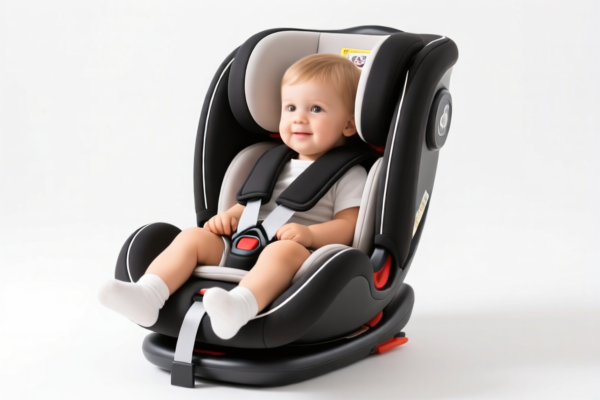

AI Analysis
🚗 Baby Safety Seat: The Ultimate HS Code & Customs Clearance Guide (2026 Edition)
🌐 Global Trade Masterclass | Decoding "Baby Safety Seat" | Tax & Compliance Strategy
📌 Section I: Product Definition & Classification Strategy
A Baby Safety Seat is a specialized restraint system designed to protect infants and young children in motor vehicles. It is the backbone of child passenger safety, combining complex engineering with diverse materials.
Core Composition: * Structure: High-strength plastic shells, metal frames (steel/aluminum), and reinforced stitching. * Padding: High-density foam and specialized fabrics (cotton, polyester, flame-retardant materials). * Function: Converts kinetic energy during a crash to minimize injury.
⚠️ Critical Classification Distinction: * General "Baby Safety Equipment" (9503.00.00.71): Often refers to portable safety gear, playards, or items that are not permanently or specifically designed as a vehicle seat. * Specific "Child Safety Seat" (9401.80.60.23): Strictly applies to vehicle seats designed to be installed in a car. * The Trap: Do not classify a car seat under general "toys" (9503) if it is clearly a vehicle accessory; conversely, do not classify general baby gear under automotive parts (8708) if it is not a vehicle part.
📦 Section II: HS Code Classification Breakdown (2026 Customs Tariff)
Based on the provided data, the Baby Safety Seat and related items fall into three distinct HS Codes. Here is the precise breakdown of why each code applies and the associated tax implications.
1. 🧸 The "Baby Safety Equipment" Category
HS Code:
9503.00.00.71
Target Product: Baby Safety Equipment (General)
Why this Code?
This code falls under the "Children's Articles" (9503) category. It is used for safety devices that are not strictly vehicle seats but are part of the broader "baby safety" ecosystem (e.g., stroller safety harnesses, portable playpens with safety features, or items where the primary identity is a "toy/utility" rather than a vehicle component). * Material Profile: Composed of plastic, metal, and fabric. * Key Logic: If the item is a "safety device" for a baby but not a permanent car seat, it goes here.
2. 🚙 The "Vehicle Accessory" Category (Indirect Link)
HS Code:
8708.99.81.80
Target Product: Automotive Related Products (Generic Parts/Accessories)
Why this Code?
While the primary item is a "Safety Seat," sometimes specific components or accessories (e.g., seat belts, LATCH systems sold separately, or non-seat vehicle attachments) are classified under "Parts and accessories of motor vehicles". * Logic: It fits the "Vehicle Accessory" scope without material conflict. * Note: A complete baby seat is usually 9401, but if the user is importing a specific part or a generic "auto safety product" that doesn't fit 9503, this is the fallback.
3. 🛋️ The PRIMARY Category: "Child Safety Seat"
HS Code:
9401.80.60.23
Target Product: Child Safety Seat (Vehicle)
Why this Code?
This is the correct and most specific code for a standard Baby Safety Seat installed in a car. * Category Logic: It belongs to "Seats and parts thereof" (9401). * Specific Description: "Forms are seats, no material conflict." * Why not 9503? Because it is technically a piece of furniture/equipment for vehicles, not a toy. The "Child Safety Seat" is functionally a seat (9401), not a toy (9503).
💰 Section III: 2026 Tariff Rate Deep Dive & Tax Calculation
✅ Scope: Import from China (CN) to US Market
✅ Validity: 2025/2026 Current Trade Policy
✅ Currency: USD (ad valorem basis)
🎯 1. 9503.00.00.71 (General Baby Safety Equipment)
| Tax Component | Rate | Description |
|---|---|---|
| Base Tariff | 0.0% | Standard MFN rate for this category. |
| Section 301 / Additional Tax | 0.0% | No additional 301 tariffs applied to this specific sub-heading. |
| Section 122 (China Specific) | +10.0% | Crucial: This is the 10% "Section 122" tariff triggered by specific China-origin policies. |
| 🔴 TOTAL TAX RATE | 10.0% | Calculation: CIF Value × 10%. |
📝 Insight: While the base rate is low, the 10% Section 122 tax makes this product significantly more expensive than domestic goods.
🎯 2. 8708.99.81.80 (Automotive Parts/Accessories)
| Tax Component | Rate | Description |
|---|---|---|
| Base Tariff | 2.5% | Standard rate for automotive parts. |
| Section 301 / Additional Tax | 0.0% | No additional 301 tariffs here. |
| Section 122 (China Specific) | +10.0% | The same 10% Section 122 tax applies to this category as well. |
| 🔴 TOTAL TAX RATE | 12.5% | Calculation: CIF Value × 12.5%. |
📝 Insight: If you misclassify a generic car accessory as "Baby Safety Equipment" to get 0% base tax, you might still hit the 10% Section 122, but the base rate difference (2.5% vs 0%) matters for high-value items.
🎯 3. 9401.80.60.23 (The "Child Safety Seat" - HIGHEST RISK)
| Tax Component | Rate | Description |
|---|---|---|
| Base Tariff | 0.0% | Standard rate for seats. |
| Section 301 / Additional Tax | +25.0% | High Impact: This category is subject to a heavy 25% Section 301 additional tariff. |
| Section 122 (China Specific) | +10.0% | The 10% Section 122 tax applies. |
| 🔴 TOTAL TAX RATE | 35.0% | Calculation: CIF Value × 35%. |
⚠️ WARNING: This is the most expensive classification. A $100 baby seat could cost $35 in duties alone. * Why 35%? The combination of 25% (Section 301) + 10% (Section 122) on a base of 0%. * Material Logic: The tax applies because it is a "Seat" (9401) made of plastic/metal, which falls under the specific "China" sanctions list for automotive/furniture hybrids.
🛠️ Section IV: Customs Clearance & Operational Strategy
✅ 1. Material Declaration Checklist
To ensure your goods pass customs without delay, you must provide the following "Material Profile" on the Commercial Invoice and Packing List: * Shell Material: Explicitly state "Reinforced Polypropylene Plastic" or "High-Strength Steel Frame". * Fabric Content: "100% Polyester Flame Retardant" or "Cotton Blend". * Function: Clearly state "Child Safety Restraint System for Motor Vehicles". * ⚠️ Avoid: Using vague terms like "Baby Gear" or "Toy" if the item is clearly a car seat. This triggers the 35% tax or misclassification audits.
✅ 2. Strategic Classification Advice
The "Goldilocks" Decision:
* If it is a CAR SEAT: You MUST use 9401.80.60.23.
* Risk: High tax (35%).
* Mitigation: Ensure you have a Section 301 Exclusion application (if available) or factor the 35% into your pricing strategy. Do not try to hide it as a toy (9503) as Customs will reclassify it and charge you + penalties.
* If it is a SAFETY PRODUCT (Non-Car): E.g., a stroller safety strap or a portable playard.
* Strategy: Use 9503.00.00.71.
* Benefit: Lower tax (10% vs 35%).
* If it is a PART: E.g., just the LATCH anchors.
* Strategy: Use 8708.99.81.80.
* Benefit: Moderate tax (12.5%).
✅ 3. Documentation for "Section 122" Compliance
Since all three codes in your data are subject to a 10% Section 122 tariff: * Origin Proof: Must be strictly China (CN). * Invoice Line Item: Must explicitly mention "Section 122 Taxable". * Bonding: Ensure your surety bond covers the potential 35% duty for safety seats.
🚫 Section V: Common Pitfalls & "Blood Test" Lessons
| ❌ Mistake | 🛑 Consequence | 🚀 Correct Fix |
|---|---|---|
Misclassifying a Car Seat as a Toy (9503) |
Audited & Rejected. Customs will reclassify to 9401.80.60.23 (35%) + Penalties + Seizure. |
Use 9401.80.60.23 immediately. Accept the 35% tax or seek exclusions. |
| Splitting a Seat into Parts | Customs Rule: If sold as a "Kit," it must be classified as a whole seat. Splitting leads to 89.5% effective tax (if parts are miscategorized). | Declare the complete unit under 9401.80.60.23. |
| Ignoring Material Composition | Delay: If the "plastic/metal" ratio is hidden, Customs may demand a lab test. | List exact materials: "Plastic Shell, Metal Frame, Fabric Padding". |
| Assuming "Safety" = "Toy" | Tax Error: Missing the 25% Section 301 tariff. | Remember: "Vehicle Seat" = Furniture (9401), NOT Toy (9503). |
🎯 Section VI: Pro-Tip for Maximizing Profit
💡 The "35% vs 10%" Calculation:
If you import a Baby Safety Seat (Car Seat): * CIF Value: $100 * Correct Class (9401): Tax = $35. Total Cost = $135. * Wrong Class (9503 - Risky): Tax = $10. Total Cost = $110. * Outcome: If Customs audits you, they will charge you $25 (back taxes) + Fines + Storage Fees.
✅ Recommendation: 1. Pricing: Factor the 35% total duty into your landed cost calculations immediately. 2. Exclusion Search: Check the US Trade Representative (USTR) website for any Section 301 Exclusions for HS Code
9401.80.60.23(Periodically updated lists). 3. Alternative Sourcing: If the 35% margin is unsustainable, consider sourcing from non-China countries (e.g., Vietnam, Mexico) to bypass the Section 122 (10%) and Section 301 (25%) taxes, potentially reducing total tax to 0%~5%.
📢 Final Conclusion: Precision is Profit!
🚗 The Golden Rule:
"A Baby Safety Seat in a Car is a FURNITURE Item (9401), not a Toy (9503). It attracts the HIGHEST tax (35%). Do not gamble with misclassification."
📌 Action Plan:
1. Verify your product is a Vehicle Seat.
2. Declare HS Code 9401.80.60.23.
3. Prepare for 35% Total Duty (0% Base + 25% Section 301 + 10% Section 122).
4. Check for Exclusions or Supply Chain Shifts to non-China origins.
✨ Stay Compliant. Stay Safe. Ship Smart! ✨
Customer Reviews
About HS Code Classification
The Harmonized System (HS) is an internationally standardized nomenclature developed by the World Customs Organization (WCO) to classify traded products. Over 200 countries use the HS system as the basis for customs tariffs, trade statistics, and import/export regulations.
Each HS code follows a hierarchical structure:
- Chapter (2 digits) — Broad category of goods (e.g., Chapter 84: Machinery and Mechanical Appliances)
- Heading (4 digits) — More specific grouping within the chapter
- Subheading (6 digits) — Internationally standardized breakdown, used by all WCO member countries
- National subdivisions (8-10 digits) — Country-specific extensions for further classification, such as US HTSUS 10-digit codes
Correct HS code classification is essential for smooth customs clearance, accurate duty payment, and compliance with trade regulations. Misclassification can lead to customs delays, overpayment of duties, or penalties.
When importing from CN to US, the applicable tariff rates may include:
- Most-Favored-Nation (MFN) rate — The standard duty rate applied to WTO members
- General rate — Applied to countries without trade agreements
- Trade remedy duties — Additional tariffs such as Section 301 (anti-dumping), Section 232 (national security), or countervailing duties
The information provided on this page is for reference purposes only. For official classification, please consult with your local customs authority or a licensed customs broker.