Baby Socks
CN → US| HS Code | Tariff Rate | Origin | Destination | Doc |
|---|---|---|---|---|
| 6115969020 | 24.6% | CN | US | Official Doc |
| 6115959000 | 31.0% | CN | US | Official Doc |
| 6111305050 | 33.5% | CN | US | Official Doc |
| 6111206050 | 25.6% | CN | US | Official Doc |
| 6115966010 | 36.3% | CN | US | Official Doc |
Product Images
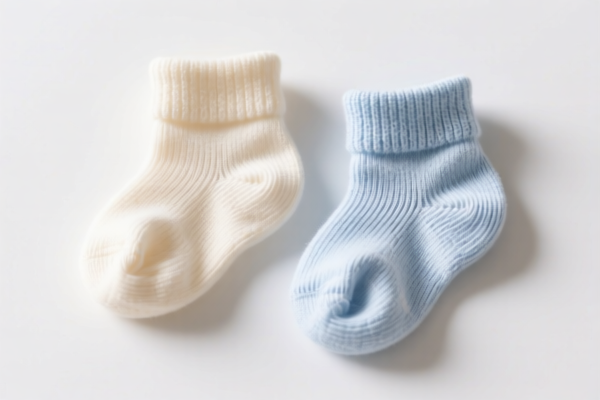
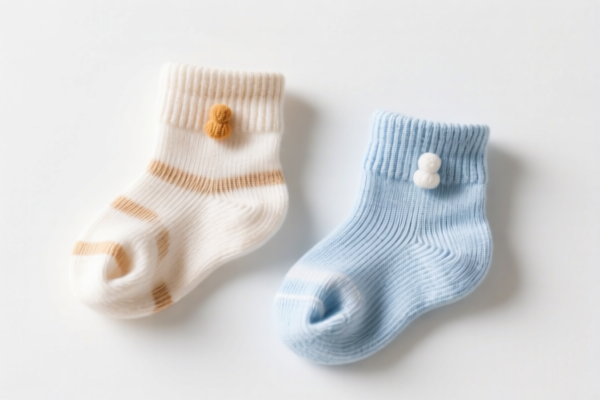
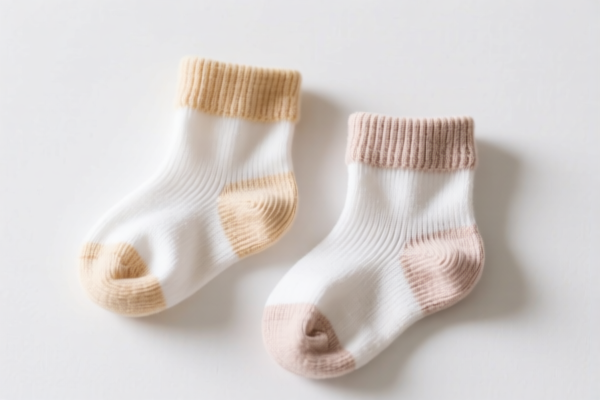

AI Analysis
🧦 Baby Socks (Infant Socks & Leggings)
🌐 HS Code Reference & Customs Clearance Guide | 2026 Latest Tariff Analysis | Professional Clearance Strategy
📌 I. Product Definition & Classification: Do You Know "Baby Socks"?
"Baby Socks" is a broad term in international trade that primarily falls under Chapter 61 (Articles of Apparel and Clothing Accessories, Knitted or Crocheted). However, the exact HS Code depends heavily on three critical factors: 1. Usage: Is it strictly for infants (under 2 years) or general use? 2. Form: Are they simple socks, leg warmers, or part of a knitset? 3. Material: Cotton, Synthetic Fibers, or Other Textiles?
In the current US tariff landscape (specifically targeting Chinese imports), misclassification is the most expensive risk. A slight error in material or usage can result in tariffs jumping from ~25% to over 36%.
⚠️ Key Distinction:
- Specific Infant Wear (6111): Designed specifically for infants. Often has lower base duty but higher additional duties.
- General Socks (6115): General use socks. Often higher base duty.
- Material Matters: Cotton vs. Synthetic fibers triggers different base rates (8.1% vs 14.6% vs 16.0%).
📦 II. HS Code Classification Matrix (2026 Data Source Analysis)
Based on the provided <DATA>, here are the five most relevant HS Codes for "Baby Socks," ranked by strategic advantage.
| HS Code | Summary from Data | Inferred Material | Usage/Shape Match | Total Tax Rate |
|---|---|---|---|---|
6111.20.60.50 |
Baby Socks; Infant Use; Knitted/Socks Shape | Cotton | ✅ Exact Match | 25.6% |
6115.96.90.20 |
Baby Socks; General Socks Shape | Synthetic/Cotton | ⚠️ Shape Match | 24.6% |
6115.95.90.00 |
Baby Socks; General Socks Shape | Cotton | ⚠️ Shape Match | 31.0% |
6111.30.50.50 |
Baby Socks; Infant Use; Knitted/Synthetic | Synthetic Fiber | ✅ Exact Match | 33.5% |
6115.96.60.10 |
Socks (General); Material Unclear | Unknown/Mixed | ⚠️ Generic | 36.3% |
🔍 Critical Insight:
- Lowest Risk/Rate:6111.20.60.50(Cotton, Infant Use) at 25.6%.
- Lowest Absolute Rate:6115.96.90.20(Synthetic/General) at 24.6%.
- Highest Penalty:6115.96.60.10due to vague material description leading to highest base duty (18.8%).
💰 III. 2026 Tariff Rate Breakdown (Detailed Tax Clauses)
✅ Applicable Country: United States (US)
✅ Origin: China (CN) (Inferred from "122 Clause" and Section 301 context)
✅ Effective Time: Current as of 2025/2026 Trade Policy
🎯 1. 6111.20.60.50 —— Best Option for Cotton Baby Socks
Why it works: Specific infant classification + Low Base Duty.
| Item | Detail |
|---|---|
| Base Duty (MFN) | 8.1% |
| Section 301 Add-on | +7.5% |
| Section 122 Duty | +10.0% |
| Total Effective Rate | 25.6% |
| De Minimis Eligibility | ❌ No (Value exceeds $800 threshold often, or restricted for textiles) |
| Legal Path | Section 301 → Section 122 → HTSUS 6111.20.60.50 |
📌 Explanation:
- This is likely the most cost-effective route if the socks are Cotton and explicitly marketed for Infants.
- The base duty (8.1%) is significantly lower than general socks (13.5% - 18.8%).
🎯 2. 6115.96.90.20 —— Best Option for Synthetic/Blended Baby Socks
Why it works: Lowest Base Duty for non-specific infant wear.
| Item | Detail |
|---|---|
| Base Duty (MFN) | 14.6% |
| Section 301 Add-on | 0.0% (Note: Data shows 0.0% here) |
| Section 122 Duty | +10.0% |
| Total Effective Rate | 24.6% |
| De Minimis Eligibility | ❌ No |
| Legal Path | Section 122 → HTSUS 6115.96.90.20 |
📌 Explanation:
- Despite being labeled "Baby Socks," if classified under 6115 (Other Socks) rather than 6111 (Infant Wear), the Section 301 tax drops to 0% in this specific subheading (per provided data).
- Total 24.6% is the absolute lowest rate in the dataset.
- Risk: Customs may reclassify if they deem "6115" inappropriate for infant-specific designs.
🎯 3. 6115.95.90.00 —— Standard Cotton Socks (General)
Higher Base Duty applies.
| Item | Detail |
|---|---|
| Base Duty (MFN) | 13.5% |
| Section 301 Add-on | +7.5% |
| Section 122 Duty | +10.0% |
| Total Effective Rate | 31.0% |
🎯 4. 6111.30.50.50 —— Synthetic Baby Socks
Highest Base Duty for Infant Category.
| Item | Detail |
|---|---|
| Base Duty (MFN) | 16.0% |
| Section 301 Add-on | +7.5% |
| Section 122 Duty | +10.0% |
| Total Effective Rate | 33.5% |
🎯 5. 6115.96.60.10 —— Vague/Unspecified Socks
Avoid this if possible.
| Item | Detail |
|---|---|
| Base Duty (MFN) | 18.8% (Highest Base) |
| Section 301 Add-on | +7.5% |
| Section 122 Duty | +10.0% |
| Total Effective Rate | 36.3% |
🛠️ IV. Customs Clearance Practical Advice (Battle-Tested Tips)
✅ 1. Documentation Checklist (Non-Negotiable)
| Document | Required? | Notes |
|---|---|---|
| Product Specification Sheet | ✔️ | Must clearly state: Material Composition (e.g., 100% Cotton vs. 80% Polyester), Intended User (Infant < 2 years), and Construction (Knitted). |
| Commercial Invoice | ✔️ | Description must be precise: "Baby Socks, 100% Cotton, Knitted, For Infants." Do NOT just write "Socks." |
| Packing List | ✔️ | Match quantities and weights exactly. |
| Bill of Lading/Air Waybill | ✔️ | Ensure origin is clearly marked as China (CN). |
| Certificate of Origin (CO) | ✔️ | Required to prove Chinese origin for Section 301/122 applicability. |
✅ 2. Declaration Strategy (Crucial for Cost Saving)
| Scenario | Recommended HS Code | Why? |
|---|---|---|
| 100% Cotton, Designed for Infants | 6111.20.60.50 |
Lowest Infant rate (25.6%). Justification: Specific infant fit/cut. |
| Synthetic/Blend, General "Baby" Style | 6115.96.90.20 |
Lowest Overall rate (24.6%). Justification: General sock classification avoids higher Section 301 if applicable. |
| Unspecified Material / Vague Description | AVOID | Leads to 6115.96.60.10 (36.3%). High risk of audit. |
| OEM Private Label | Same as Above | Brand does not change HS code. Focus on Material and Usage. |
🔥 Golden Rule:
"Material Dictates Base, Usage Dictates Chapter, Origin Dictates Penalty."
- If you can prove it's Cotton + Infant, use 6111.20.60.50.
- If it's Synthetic + General, use 6115.96.90.20 to save on Section 301.
✅ 3. Common Pitfalls & How to Avoid Them
❌ Mistake 1: Declaring "Baby Socks" under 6115 (General Socks) when they are clearly 6111 (Infant Wear).
👉 Consequence: Customs may reclassify to 6111.30.50.50 (33.5%) if they find synthetic content, or apply higher duties if they dispute the "Infant" classification.
👉 Fix: Provide photos showing infant-specific sizing/cuts if using 6111. If using 6115, ensure they look like general socks.
❌ Mistake 2: Ignoring Section 122 (10% surcharge).
👉 Consequence: Many brokers forget this. It applies to ALL textile/apparel imports from China in 2025/2026.
👉 Fix: Ensure your tariff calculation includes the +10% explicitly.
❌ Mistake 3: Vague Material Description ("Mixed Fabric").
👉 Consequence: Triggers 6115.96.60.10 (36.3%) due to highest base duty.
👉 Fix: Specify exact percentages (e.g., "85% Cotton, 15% Elastane").
🌍 V. Global Market Comparison (2026 Outlook)
| Destination | Recommended HS | Est. Total Tax (China Origin) | Key Requirement |
|---|---|---|---|
| 🇺🇸 USA | 6111.20.60.50 or 6115.96.90.20 |
24.6% - 25.6% | Section 301 + Section 122 Compliance |
| 🇨🇳 China | 6111.20.60.50 |
~5-10% (Import Duty) | CCC if applicable, but usually low for socks |
| 🇪🇺 EU | 6115.95.10 |
~12% + VAT | CE/RoHS not always for socks, but REACH compliance |
| 🇬🇧 UK | 6115.95.10 |
~12% + VAT | Post-Brexit tariff rules apply |
📌 Conclusion:
The USA is the most complex market due to叠加 (stacked) tariffs (Base + 301 + 122). Precision in Material and Usage classification is the only way to minimize costs.
📌 VI. Final Recommendations for Importers
- Audit Your Material: If you are using Synthetic Fibers, check if
6115.96.90.20(24.6%) is legally justifiable. If yes, this is the cheapest option. - Highlight "Infant": If you are using Cotton,
6111.20.60.50(25.6%) is the safest and most standard route. - Avoid "Unknown": Never ship with vague material descriptions. The 36.3% penalty is not worth the convenience.
- Pre-Audit: Submit product photos and spec sheets to your customs broker before shipping to confirm the HS Code.
🎯 Bottom Line:
"For Cotton Baby Socks: Target
6111.20.60.50(25.6%).
For Synthetic Baby Socks: Target6115.96.90.20(24.6%).
Avoid6115.96.60.10like the plague (36.3%)."
✨ Professional clearance saves money. Precise classification saves taxes.
💼 Don't guess. Verify. Import with confidence.
Customer Reviews
About HS Code Classification
The Harmonized System (HS) is an internationally standardized nomenclature developed by the World Customs Organization (WCO) to classify traded products. Over 200 countries use the HS system as the basis for customs tariffs, trade statistics, and import/export regulations.
Each HS code follows a hierarchical structure:
- Chapter (2 digits) — Broad category of goods (e.g., Chapter 84: Machinery and Mechanical Appliances)
- Heading (4 digits) — More specific grouping within the chapter
- Subheading (6 digits) — Internationally standardized breakdown, used by all WCO member countries
- National subdivisions (8-10 digits) — Country-specific extensions for further classification, such as US HTSUS 10-digit codes
Correct HS code classification is essential for smooth customs clearance, accurate duty payment, and compliance with trade regulations. Misclassification can lead to customs delays, overpayment of duties, or penalties.
When importing from CN to US, the applicable tariff rates may include:
- Most-Favored-Nation (MFN) rate — The standard duty rate applied to WTO members
- General rate — Applied to countries without trade agreements
- Trade remedy duties — Additional tariffs such as Section 301 (anti-dumping), Section 232 (national security), or countervailing duties
The information provided on this page is for reference purposes only. For official classification, please consult with your local customs authority or a licensed customs broker.