Baby Stroller Sleeping Bag
CN → US| HS Code | Tariff Rate | Origin | Destination | Doc |
|---|---|---|---|---|
| 9503000071 | 10.0% | CN | US | Official Doc |
| 9503000090 | 10.0% | CN | US | Official Doc |
| 8715000020 | 14.4% | CN | US | Official Doc |
Product Images

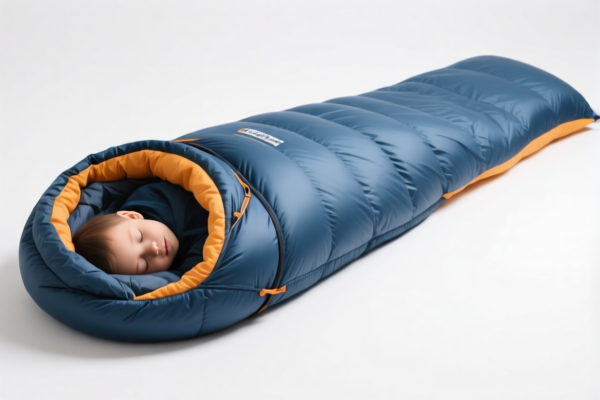
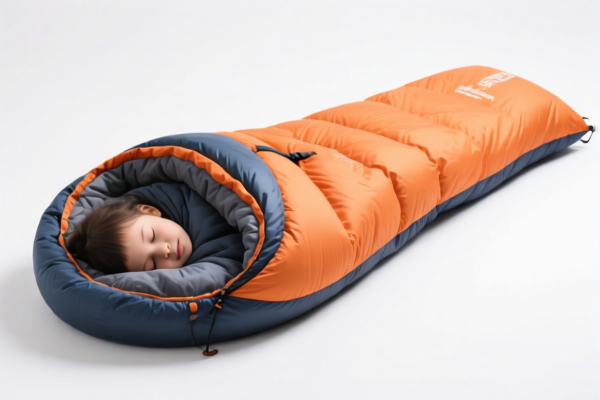
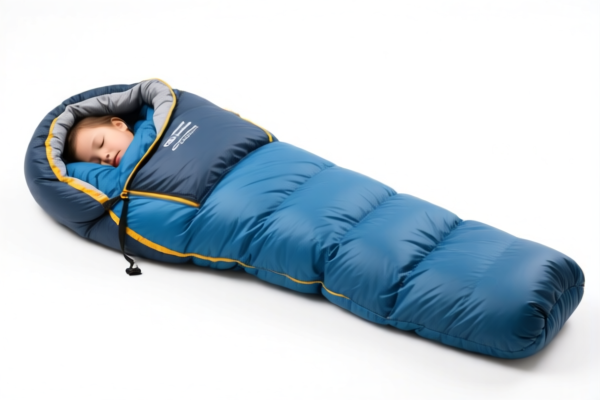
AI Analysis
👶 Baby Stroller Sleeping Bag (婴儿推车睡袋)
🌐 HS Code Reference & Customs Clearance Guide | 2026 Latest Tariff Analysis | Professional Level Strategy
📌 I. Product Definition & Classification: What Exactly is a "Baby Stroller Sleeping Bag"?
A Baby Stroller Sleeping Bag is a specialized infant accessory designed to attach to or fit inside a baby stroller. It provides warmth, safety, and weather protection. In international trade, it faces a critical classification dilemma: Is it a Toy/Children's Play Item (Chapter 95) or a Non-Motorized Vehicle Accessory (Chapter 87)?
The classification depends heavily on the primary function and design structure: - Toys/Play Items: If the item is primarily marketed as a "doll pram accessory" or a play item for children, it may fall under Chapter 95. - Vehicle Accessory: If it is an integral part of the stroller system (e.g., a footmuff, weather shield, or integrated sleeping bag for the chassis), it may fall under Chapter 87.
⚠️ Key Distinction Point:
- If the product is explicitly marketed for doll strollers or as a toy accessory → Likely Chapter 95.
- If the product is designed for real infant transport and attaches to a stroller frame → Likely Chapter 87 (though often disputed).
📦 II. HS Code Classification Details (Based on Provided Data)
| HS Code | Product Description | Summary | Total Tax Rate | Tax Breakdown |
|---|---|---|---|---|
9503.00.00.71 |
Baby Stroller classified as Doll Carriages and Similar Wheeled Toys | Doll Carriages / Wheeled Toys | 10.0% | Base: 0.0%, Additional: 0.0%, Section 122 Tariff: 10% |
9503.00.00.90 |
Baby Stroller classified as Other Toys; Reduced-Size Scale Models; Strollers | Other Toys / Doll Carriages | 10.0% | Base: 0.0%, Additional: 0.0%, Section 122 Tariff: 10% |
8715.00.00.20 |
Baby Stroller classified as Infant Carriages | Infant Carriages (Including Strollers) | 14.4% | Base: 4.4%, Additional: 0.0%, Section 122 Tariff: 10% |
🔍 Analysis:
- The Chapter 95 codes (9503...) treat the stroller/sleeping bag as a toy. This is often used when the sleeping bag is seen as a play accessory or if the importer chooses this route to avoid higher duties. - The Chapter 87 code (8715...) treats the stroller (and potentially its attached sleeping bag) as a vehicle/accessory. This carries a higher base duty (4.4%). - Crucial Note: The "Section 122 Tariff of 10%" applies to ALL categories listed in the data, indicating a specific trade policy (likely US-China trade related) affecting these goods regardless of their primary classification.
💰 III. 2026 Latest Tariff Rate Details (Detailed Policy Explanation)
✅ Applicable Context: Based on the provided
total_taxandtax_detail.
✅ Key Policy: Section 122 Tariff (10%) is applied universally across all three HS codes.
🎯 1. 9503.00.00.71 & 9503.00.00.90 — Classified as Toys/Doll Carriages
| Item | Content |
|---|---|
| Base Tariff | 0.0% |
| Additional Tariffs | 0.0% |
| Section 122 Tariff | +10.0% |
| Total Tariff Rate | 10.0% |
| Tax Calculation | CIF Value × 10% |
| Legal Basis | Specific Section 122 Provision (10%) |
📌 Explanation:
- These codes benefit from a 0% base duty.
- However, they are not exempt from the Section 122 tariff, which adds a flat 10% on top.
- Strategy: This is the lowest duty rate available for this product type according to the data. Importers often prefer this classification to minimize costs, provided the product description aligns with "toy" or "doll carriage accessory."
🎯 2. 8715.00.00.20 — Classified as Infant Carriages (Vehicle Accessory)
| Item | Content |
|---|---|
| Base Tariff | 4.4% |
| Additional Tariffs | 0.0% |
| Section 122 Tariff | +10.0% |
| Total Tariff Rate | 14.4% |
| Tax Calculation | CIF Value × 14.4% |
| Legal Basis | Chapter 87 (Vehicles) + Section 122 Provision (10%) |
📌 Explanation:
- This classification is more "technically correct" for a real infant stroller/sleeping bag but comes with a 4.4% base duty.
- Combined with the 10% Section 122 tariff, the total cost is 14.4%.
- Risk: If U.S. Customs disagrees with this classification and reclassifies it as a toy (9503), you might get a refund. But if they stick with8715, you pay more. Conversely, if you declare as toy but they insist it's a vehicle, you face penalties.
🛠️ IV. Customs Clearance Practical Advice (Battle-Tested Guide)
✅ 1. Preparation Checklist (Non-Negotiable)
| Material | Mandatory | Description |
|---|---|---|
| ✅ Product Photos | ✔️ | Clear images of the sleeping bag attached to a stroller, showing fit, material, and closure mechanisms. |
| ✅ Product Specification | ✔️ | Material composition (e.g., polyester, cotton), dimensions, weight, and intended age range. |
| ✅ Function Description | ✔️ | Clearly state: Is it a toy accessory or a safety/warming accessory for transport? |
| ✅ Commercial Invoice | ✔️ | Must match the declared HS Code exactly. Use consistent terminology. |
| ✅ Packing List | ✔️ | Detail contents. If sleeping bag is sold separately from the stroller, ensure documentation reflects this. |
| ✅ Test Reports | ✔️ | CPC (Children’s Product Certificate) may be required if classified under Chapter 95 (toys). |
✅ 2. Declaration Strategy (Key Mnemonic)
🔥 “Toy or Trolley? Choose Wisely, Pay Less!”
| Scenario | Recommended HS Code | Tax Rate | Reasoning |
|---|---|---|---|
| Marketed as Doll/Stroller Toy | 9503.00.00.71 / .90 |
10.0% | Lowest total duty. Suitable if selling as a play item or part of a toy line. |
| Marketed as Real Infant Transport Accessory | 8715.00.00.20 |
14.4% | Technically accurate for real strollers. Higher base duty. |
| Ambiguous/Mixed Use | Consult Customs | Variable | Risk of misclassification. Provide detailed function docs. |
⚠️ Warning:
- Do NOT split the shipment if the sleeping bag and stroller are sold together. Declare as a single unit. - If the sleeping bag is a detachable accessory, consider declaring it separately if it has a different primary function, but be prepared to justify the classification.
✅ 3. Special Circumstances Handling
| Situation | Handling Advice |
|---|---|
| OEM/Private Label | Provide design specs to prove if it’s a "toy" or "vehicle accessory." |
| Multi-Function Bag | If it’s a sleeping bag that converts to a backpack, declare based on primary use. |
| Material Composition | Natural fibers (cotton/wool) might attract different scrutiny than synthetic polyester. Ensure material specs are accurate. |
| Safety Compliance | If classified as 9503 (toy), ensure CPC is ready. If 8715, ensure general consumer safety compliance. |
🌍 V. Global Market Comparison (2026 Latest)
| Country/Region | Recommended HS Code | Estimated Total Tax | Notes |
|---|---|---|---|
| 🇺🇸 USA | 9503.00.00.71 |
10.0% | Best rate for this product. Section 122 applies. |
| 🇺🇸 USA | 8715.00.00.20 |
14.4% | Higher base duty. Only use if Chapter 95 is rejected. |
| 🇪🇺 EU | 9503.00.70 / 8715.00 |
Varies | EU typically treats strollers as vehicles (low/zero duty) but accessories may vary. |
| 🇨🇳 China | 9503.00.00 |
Varies | Check current Chinese import tariffs for exports. |
📌 Conclusion:
- USA is the primary market indicated by the data (Section 122 Tariff).
- Classifying as a Toy (9503) offers the lowest cost (10%) compared to the Vehicle classification (8715at 14.4%).
- Ensure your product marketing and documentation support the "toy/doll carriage" angle if you choose the 10% rate, to avoid customs rejection or penalties.
📌 VI. Common Mistakes & Pitfalls (Blood Lessons)
❌ Mistake 1: Declaring as 8715 (Vehicle) when marketed as a Toy
👉 Consequence: Higher tax (14.4% vs 10%). Overpayment!
❌ Mistake 2: Declaring as 9503 (Toy) when it’s a Real Infant Accessory
👉 Consequence: Customs may reclassify it, leading to penalties, back taxes, and delays.
❌ Mistake 3: Ignoring the Section 122 Tariff
👉 Consequence: Assuming 0% duty because base is 0%. You still pay 10%.
❌ Mistake 4: Inconsistent Product Descriptions
👉 Consequence: "Baby Stroller Sleeping Bag" vs. "Doll Stroller Cover" must match the invoice and the HS code logic.
✅ Correct Approach:
“Stroller Sleeping Bag, Polyester, for Dolls/Toys, Model XYZ” → Use
9503codes.
“Infant Stroller Footmuff, Real Use, Model ABC” → Consider8715codes (with higher duty).
🎯 VII. Conclusion: Precision Saves Money
🎯 Remember the Mantra:
🔹 “Toy or Trolley? 10% vs 14.4% – Choose Smart!”
🔹 “Section 122 is the 10% Trap – Always Include It!”
🔹 “Documentation Must Match Classification – Or Pay the Price!”
📌 Pro Tip:
If you are unsure, apply for an Advance Ruling with US Customs and Border Protection (CBP) before shipping. The cost of a ruling is far less than the cost of a 4.4% duty difference + penalties.
📣 Immediate Action:
📞 Contact your freight forwarder
📄 Prepare your CPC (if Toy)
🚀 Declare correctly to save 4.4% per unit!
✨ Professional clearance starts with accurate classification!
💼 Every percentage point counts in profit margins!
Customer Reviews
About HS Code Classification
The Harmonized System (HS) is an internationally standardized nomenclature developed by the World Customs Organization (WCO) to classify traded products. Over 200 countries use the HS system as the basis for customs tariffs, trade statistics, and import/export regulations.
Each HS code follows a hierarchical structure:
- Chapter (2 digits) — Broad category of goods (e.g., Chapter 84: Machinery and Mechanical Appliances)
- Heading (4 digits) — More specific grouping within the chapter
- Subheading (6 digits) — Internationally standardized breakdown, used by all WCO member countries
- National subdivisions (8-10 digits) — Country-specific extensions for further classification, such as US HTSUS 10-digit codes
Correct HS code classification is essential for smooth customs clearance, accurate duty payment, and compliance with trade regulations. Misclassification can lead to customs delays, overpayment of duties, or penalties.
When importing from CN to US, the applicable tariff rates may include:
- Most-Favored-Nation (MFN) rate — The standard duty rate applied to WTO members
- General rate — Applied to countries without trade agreements
- Trade remedy duties — Additional tariffs such as Section 301 (anti-dumping), Section 232 (national security), or countervailing duties
The information provided on this page is for reference purposes only. For official classification, please consult with your local customs authority or a licensed customs broker.