Baby Thermometer
CN → US| HS Code | Tariff Rate | Origin | Destination | Doc |
|---|---|---|---|---|
| 7017905000 | 41.7% | CN | US | Official Doc |
| 9025112000 | 10.0% | CN | US | Official Doc |
| 9018194000 | 35.0% | CN | US | Official Doc |
| 9018199550 | 35.0% | CN | US | Official Doc |
| 7017200000 | 41.7% | CN | US | Official Doc |
Product Images


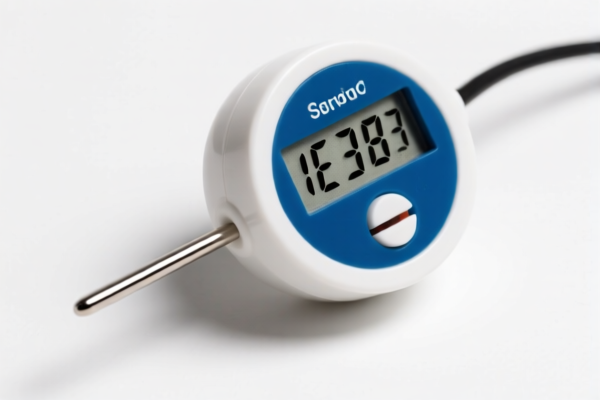

AI Analysis
🌡️ Baby Thermometer (Infant Clinical Thermometers)
🌐 HS Code Reference & Clearance Guide | 2026 Updated Tax Breakdown | Professional Customs Strategy
📌 I. Product Definition & Classification: What Exactly Is a "Baby Thermometer"?
Baby thermometers are precision medical instruments designed to safely and accurately measure the body temperature of infants and young children. In international trade, they fall under two main categories based on material and technology:
Glass Mercury/Alcohol Thermometers: Traditional glass tubes filled with liquid, manually read via scale.
Electronic/Digital Thermometers: Devices with liquid-filled probes or electronic sensors, providing digital readouts for quick and safe measurement.
⚠️ Critical Distinction:
- Glass-based thermometers (regardless of use) → Classified under Chapter 70 (Glassware).
- Electronic/clinical thermometers (digital or liquid-filled with sensors) → Classified under Chapter 90 (Medical Instruments).
- Misclassification Risk: Declaring a digital thermometer as "glassware" or vice versa leads to massive tax penalties and potential customs seizure.
📦 II. HS Code Classification Breakdown (2026 Official Tariff Schedule)
| HS Code | Product Description | Application Scenario | Material/Technology |
|---|---|---|---|
7017.90.50.00 |
Glass thermometers for sanitary/medical use (e.g., baby thermometers) | Traditional clinical use, pediatric settings | ✅ Glass + Liquid |
7017.20.00.00 |
Glass thermometers for medical/hygiene use (specific subtype) | Clinical glass thermometers | ✅ Glass + Liquid |
9025.11.20.00 |
Clinical thermometers (liquid-filled or digital readout) | General pediatric use, home care | ✅ Liquid/Digital |
9018.19.40.00 |
Medical diagnostic instruments (electro-diagnostic, temp measurement) | Hospital-grade, specialized baby thermometers | ✅ Electronic/Electro-diagnostic |
9018.19.95.50 |
Other medical diagnostic equipment (physiological parameter check) | Advanced baby thermometers with sensors | ✅ Electronic/Electro-diagnostic |
🔍 Key Insight:
- Glass thermometers (7017.*) are subject to higher tariffs due to material classification.
- Electronic/Digital thermometers (9025.*and9018.*) have lower base tariffs, but附加税 may apply depending on origin.
- All baby thermometers must be clearly declared as "Medical/Clinical Use" to avoid misclassification.
💰 III. 2026 Tax Rate Breakdown (Including Base, Additional, and Policy Surcharges)
✅ Target Market: United States (US)
✅ Country of Origin: China (CN)
✅ Effective Date: From November 10, 2025 (including subsequent imports)
🎯 1. 7017.90.50.00 & 7017.20.00.00 —— Glass Baby Thermometers
| Item | Content |
|---|---|
| Base Tariff | 6.7% (ad valorem) |
| Section 301 Additional Tariff | +25.0% (USITC Footnote 9903.88.01) |
| IEEPA Additional Tariff | +10.0% (China/HK origin, from 2025-11-10) |
| Total Tariff | 41.7% |
| Tax Calculation | CIF Value × 41.7% |
| De Minimis Exemption | ❌ Not Allowed (deny_de_minimis) |
| Legal Reference Path | IEEPA:9903.01.25 → IEEPA:9903.01.24 → USITC:7017.90.50.00 → FOOTNOTE:9903.88.01 |
📌 Explanation:
- The 25% Section 301 tariff is imposed under US Trade Act Section 301 on Chinese glass products.
- The 10% IEEPA tariff applies to all Chinese-origin goods under international emergency economic powers.
- Combined 41.7% makes glass baby thermometers highly expensive to import.
🎯 2. 9025.11.20.00 —— Liquid-Filled or Digital Clinical Thermometers
| Item | Content |
|---|---|
| Base Tariff | 0.0% |
| Section 301 Additional Tariff | 0.0% |
| IEEPA Additional Tariff | +10.0% |
| Total Tariff | 10.0% |
| Tax Calculation | CIF Value × 10.0% |
| De Minimis Exemption | ❌ Not Allowed |
| Legal Reference Path | IEEPA:9901.25 → IEEPA:9903.01.24 |
📌 Note:
- This is the most cost-effective classification for baby thermometers.
- Even if the device uses liquid, as long as it is digital-readout or electronic, it qualifies for 0% base tariff.
🎯 3. 9018.19.40.00 & 9018.19.95.50 —— Advanced Electronic Medical Thermometers
| Item | Content |
|---|---|
| Base Tariff | 0.0% |
| Section 301 Additional Tariff | +25.0% |
| IEEPA Additional Tariff | +10.0% |
| Total Tariff | 35.0% |
| Tax Calculation | CIF Value × 35.0% |
| De Minimis Exemption | ❌ Not Allowed |
| Legal Reference Path | IEEPA:9903.01.25 → IEEPA:9903.01.24 → USITC:9018.19.40.00 |
📌 Explanation:
- These thermometers are classified as electro-diagnostic instruments, triggering the 25% Section 301 surcharge.
- Despite 0% base tariff, the 35% total is still significantly lower than glass thermometers (41.7%).
🛠️ IV. Customs Clearance Practical Advice (Actionable Tips)
✅ 1. Documentation Checklist (Mandatory)
| Document | Required | Details |
|---|---|---|
| ✅ Product Specification Sheet | ✔️ | Include material, reading method (digital/liquid), accuracy, safety certifications |
| ✅ Circuit/Structure Diagram | ✔️ | To prove electronic components (for 9018/9025 classification) |
| ✅ Product Photos (with label) | ✔️ | Show model, brand, input/output, voltage |
| ✅ Third-Party Test Report | ✔️ | FDA, CE, RoHS, FCC (if applicable) |
| ✅ Commercial Invoice | ✔️ | Clearly state "Baby Thermometer, Medical Use" |
| ✅ Certificate of Origin (CO) | ✔️ | For potential tariff exemptions (non-China origin) |
| ✅ Packing List | ✔️ | Clarify packaging (whole unit vs. components) |
✅ 2. Declaration Strategy (Golden Rules)
🔥 "Material Matters, Tech Defines, Name Must Match, Tariff Drops!"
| Scenario | Correct Declaration | Wrong Practice |
|---|---|---|
| Glass Baby Thermometer | 7017.90.50.00 or 7017.20.00.00 |
Misdeclare as "digital" → 35% or 10% |
| Digital Baby Thermometer | 9025.11.20.00 |
Misdeclare as "glass" → 41.7% |
| Advanced Electronic Thermometer | 9018.19.40.00 / 9018.19.95.50 |
Misdeclare as "generic" → 35% |
| Thermometer + Case + Battery | Declare as whole unit | Split declaration → Higher tax per item |
✅ 3. Special Cases & Mitigation
| Situation | Recommended Action |
|---|---|
| OEM Baby Thermometers | Provide client order + design drawings to avoid "non-standard" classification |
| Rectal/E tympanic Thermometers | Still qualify for 9025 or 9018, not 7017 |
| Thermometers for Hospital Use | Can apply for "non-commercial" exemption with proof |
| Thermometers for Military/Research | Special declaration may reduce tax, requires prior approval |
🌍 V. Global Customs Comparison (2026 Update)
| Country/Region | Recommended HS Code | Tariff | Certification Required | Notes |
|---|---|---|---|---|
| 🇺🇸 USA | 9025.11.20.00 (Best) |
10% (China origin) | FDA + RoHS | Glass thermometers: 41.7% |
| 🇨🇳 China | 9025.11.20.00 |
0% | CCC + RoHS | No surcharges |
| 🇪🇺 EU | 9025.11.20.00 |
0% (if CE certified) | CE + MDR | No extra tariffs |
| 🇦🇺 Australia | 9025.11.20.00 |
5% | RCM | No surcharges |
| 🇯🇵 Japan | 9025.11.20.00 |
0% | PSE | No surcharges |
📌 Conclusion:
- USA imposes the highest tariffs on Chinese-origin baby thermometers.
- Electronic/Digital models (9025) are most tax-efficient (10% vs. 41.7% for glass).
- Consider shifting production to Vietnam, Mexico, or Thailand for IEEPA exemptions (0–5% tariff).
📌 VI. Common Mistakes & Pitfalls (Lessons Learned)
❌ Mistake 1: Declaring digital baby thermometers as "glass"
👉 Result: Pay 41.7% instead of 10% → 31.7% overpayment!
❌ Mistake 2: Splitting "thermometer + case + battery" into separate shipments
👉 Result: Each item taxed separately → Total tax > 100%!
❌ Mistake 3: Missing circuit diagram for electronic thermometers
👉 Result: Customs doubts classification → Delay or rejection
❌ Mistake 4: Using vague names like "Temperature Device"
👉 Result: Misclassification risk → Penalties + Back Taxes
✅ Best Practice:
"Digital Baby Thermometer, Rectal/E tympanic, FDA 510(k) Cleared, Model XYZ, 0.1°C Accuracy, 9025.11.20.00"
🎯 VII. Final Takeaway: Precision Classification = Profit Protection!
🎯 Remember:
🔹 "Glass = 41.7%, Digital = 10% or 35%, Accuracy Saves Thousands!"
🔹 "HS Code is Life, Tariff is Death, One Mistake = Big Loss!"
📌 Pro Tip:
If your baby thermometers are originating from Vietnam, Mexico, Thailand, or Malaysia, you may qualify for IEEPA exemptions, reducing tariffs to 0–5%.
✅ Recommendation: Apply for Pre-Ruling (Advance Ruling) from US Customs to avoid surprises.
📣 Take Action Now:
📞 Contact a licensed customs broker + Provide product images + Apply for HS Code pre-ruling
🚀 Ensure your baby thermometers clear customs smoothly, efficiently, and profitably!
✨ Expert Customs Clearance Starts with Accurate Classification!
💼 Every dollar saved counts in global trade!
Customer Reviews
About HS Code Classification
The Harmonized System (HS) is an internationally standardized nomenclature developed by the World Customs Organization (WCO) to classify traded products. Over 200 countries use the HS system as the basis for customs tariffs, trade statistics, and import/export regulations.
Each HS code follows a hierarchical structure:
- Chapter (2 digits) — Broad category of goods (e.g., Chapter 84: Machinery and Mechanical Appliances)
- Heading (4 digits) — More specific grouping within the chapter
- Subheading (6 digits) — Internationally standardized breakdown, used by all WCO member countries
- National subdivisions (8-10 digits) — Country-specific extensions for further classification, such as US HTSUS 10-digit codes
Correct HS code classification is essential for smooth customs clearance, accurate duty payment, and compliance with trade regulations. Misclassification can lead to customs delays, overpayment of duties, or penalties.
When importing from CN to US, the applicable tariff rates may include:
- Most-Favored-Nation (MFN) rate — The standard duty rate applied to WTO members
- General rate — Applied to countries without trade agreements
- Trade remedy duties — Additional tariffs such as Section 301 (anti-dumping), Section 232 (national security), or countervailing duties
The information provided on this page is for reference purposes only. For official classification, please consult with your local customs authority or a licensed customs broker.