Baby Toys
CN → US| HS Code | Tariff Rate | Origin | Destination | Doc |
|---|---|---|---|---|
| 9503000071 | 10.0% | CN | US | Official Doc |
| 3926909989 | 22.8% | CN | US | Official Doc |
| 3926904800 | 13.4% | CN | US | Official Doc |
| 9503000011 | 10.0% | CN | US | Official Doc |
| 9503000073 | 10.0% | CN | US | Official Doc |
Product Images
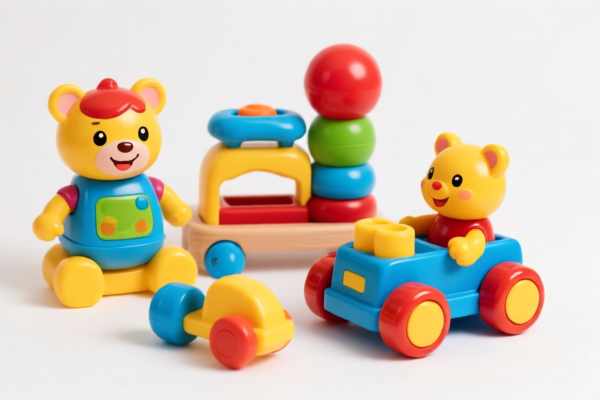
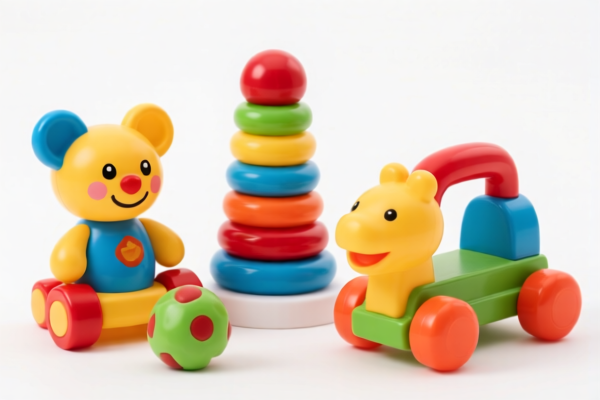
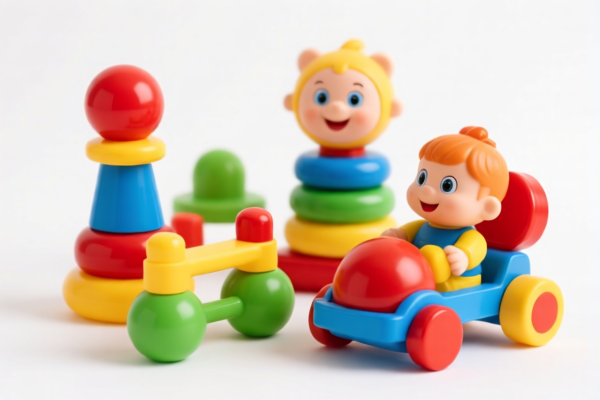
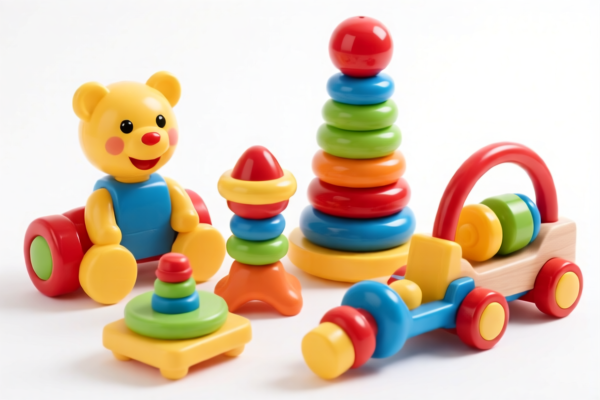
AI Analysis
🧸 Baby Toys (Toys for Infants and Young Children)
🌐 HS Code Reference & Customs Clearance Guide | 2026 Latest Tariff Analysis | Professional Strategy
📌 Part 1: Product Definition & Classification: Do You Really Understand “Baby Toys”?
Baby toys are essential items for the development, entertainment, and safety of infants and toddlers (typically ages 0–3, sometimes extending to 12 depending on design). In international trade, they are strictly regulated due to safety concerns. They are broadly categorized into two types:
Plastic Toy Parts/Accessories: Components like doll limbs, toy vehicle bodies, or unpainted plastic shells that are not yet assembled or lack full functionality as a complete toy. Complete Baby Toys: Fully assembled items such as doll strollers, rattles, plush toys, bath toys, or activity centers that are ready for use.
⚠️ Key Distinction:
- If the item is merely a "part" or "component" of a toy (e.g., a plastic shell for a doll) → Classified under Chapter 95 Part 1 or specific plastic articles codes.
- If the item is a "finished toy" designed for children → Classified under 9503 (Tricycles, scooters, pedal cars, dolls, etc.) or 9503.00 (Other toys, stuffed toys).
📦 Part 2: HS Code Classification Details (2026 Latest Tariff Concordance)
| HS Code | Product Description | Use Case | Complete vs. Part |
|---|---|---|---|
9503.00.00.11 |
Baby toys, possibly made of rubber, plastic, or fabric (for children under 3) | General infant toys (rattles, teethers, soft blocks) | ✅ Finished Toy |
9503.00.00.71 |
Plastic baby toys, such as infant toys, no material conflict (under 3 years) | Specific plastic molded toys for infants | ✅ Finished Toy |
9503.00.00.73 |
Plush cars and other toys for children under 3 or 3-12 years belonging to toy categories | Plush vehicles, stuffed animals | ✅ Finished Toy |
9503.00.00.48 |
Plush toys, classified as other plush products | Plush dolls, teddy bears | ✅ Finished Toy |
3926.90.99.89 |
Other articles of plastic, based on plastic materials for baby toys (unclassified other plastic articles) | Plastic toy parts, unformed toy components | ❌ Part/Component |
9503.00.00.71 (Revisited) |
Plastic-based infant toys, belonging to unclassified other plastic articles | Specific niche plastic toys | ⚠️ Depends on Assembly |
🔍 Key Reminder:
- All complete toys designed for children under 3 should generally fall under 9503.
- Plastic parts or articles not yet assembled into a functional toy may fall under Chapter 39 (Plastics) if they are merely raw components, but once they take the shape of a toy (e.g., a car body), they are often considered part of the toy under 9503.
- If the item is a "plastic article" that is not clearly a toy (e.g., a generic plastic container sold as a toy), it might be misclassified. Correct classification is crucial for safety compliance (CPSIA, EN71, etc.).
💰 Part 3: 2026 Latest Tariff Rate Details (Including Surcharge & Policy Additions)
✅ Applicable Country: United States (US)
✅ Country of Origin: China (CN)
✅ Effective Date: November 10, 2025 (Including subsequent imports)
🎯 1. 9503.00.00.11 —— Baby Toys (Rubber, Plastic, Fabric)
| Item | Content |
|---|---|
| Base Tariff | 0% (ad valorem) |
| USITC Surcharge | +25% (From USITC Footnote 9903.88.01) |
| IEEPA Surcharge | +10% (Targeting China/HK products, from Nov 10, 2025) |
| Total Tariff | 45% |
| Tariff Calculation | CIF Value × 45% |
| De Minimis Eligibility | ❌ No (deny_de_minimis) |
| Legal Pathway | IEEPA:9903.01.25 → IEEPA:9903.01.24 → USITC:9503.00.00.11 → FOOTNOTE:9903.88.01 |
📌 Explanation:
- The "25% USITC surcharge" comes from Section 301 tariffs;
- The "10% IEEPA surcharge" is the additional tariff under the International Emergency Economic Powers Act;
- Total 45% is a high tariff rate, requiring careful cost assessment.
🎯 2. 9503.00.00.71 —— Plastic Baby Toys (Under 3 Years)
| Item | Content |
|---|---|
| Base Tariff | 0% |
| USITC Surcharge | +25% |
| IEEPA Surcharge | +10% |
| Total Tariff | 45% |
| Tariff Calculation | CIF × 45% |
| De Minimis Eligibility | ❌ No |
| Legal Pathway | IEEPA:9901.25 → IEEPA:9903.01.24 → USITC:9503.00.00.71 → FOOTNOTE:9903.88.01 |
📌 Note:
- Same as above, applies to specific plastic infant toys.
- Even if made of different plastics, if the end-use is a baby toy, it is subject to this tariff structure.
🎯 3. 3926.90.99.89 —— Other Plastic Articles (Toy Parts/Components)
| Item | Content |
|---|---|
| Base Tariff | 5.3% |
| USITC Surcharge | +7.5% |
| IEEPA Surcharge | +10% |
| Total Tariff | 22.8% |
| Tariff Calculation | CIF × 22.8% |
| De Minimis Eligibility | ❌ No |
| Legal Pathway | IEEPA:9901.25 → IEEPA:9903.01.24 → USITC:3926.90.99.89 → FOOTNOTE:9903.88.01 |
📌 Warning:
- This code is for plastic articles not classified as toys (e.g., loose plastic parts, packaging, or unformed toy components).
- If customs determines these parts are "clearly identifiable as toys," they may reclassify them to 9503, leading to a higher effective tariff (45%) and penalties.
🎯 4. 9503.00.00.48 —— Other Plush Toys
| Item | Content |
|---|---|
| Base Tariff | 3.4% |
| USITC Surcharge | +0% (Note: Some plush toys may have different surcharge levels, but generally similar) |
| IEEPA Surcharge | +10% |
| Total Tariff | 13.4% (Base 3.4% + IEEPA 10%) |
| Tariff Calculation | CIF × 13.4% |
| De Minimis Eligibility | ❌ No |
| Legal Pathway | IEEPA:9901.25 → IEEPA:9903.01.24 → USITC:9503.00.00.48 |
📌 Note:
- Plush toys often have lower base tariffs but are still subject to IEEPA surcharges.
- Ensure the product is truly "plush" and not mixed with hard plastic toys, which might trigger a different classification.
🛠️ Part 4: Customs Clearance Practical Advice (Pitfall Avoidance Guide)
✅ 1. Preparation Checklist (Essential Documents)
| Document | Required | Explanation |
|---|---|---|
| ✅ Product Specification Sheet | ✔️ | Includes materials, dimensions, age range, safety standards (ASTM F963, EN71) |
| ✅ Test Reports | ✔️ | CPSIA (US), REACH (EU), RoHS, Lead Content, Phthalates |
| ✅ Product Photos (with Labels) | ✔️ | Clear view of model number, brand, warning labels (choking hazard) |
| ✅ Commercial Invoice | ✔️ | Must state "Baby Toys" and "Made in China" |
| ✅ Packing List | ✔️ | Show inner/outer packing, avoid mixed categories if possible |
| ✅ Certificate of Origin | ✔️ | If claiming preferential rates (e.g., for non-China origins) |
| ✅ Declaration of Conformity | ✔️ | For EU/UK markets, CE Marking is critical |
✅ 2. Declaration Tips (Key Rules)
🔥 "Finish Toy to 9503, Part to 3926, Label Clearly, Safety First!"
| Situation | Correct Declaration | Wrong Practice |
|---|---|---|
| Complete Baby Toy (Rattle, Doll) | 9503.00.00.11 or 9503.00.00.71 |
Declared as "Plastic Toy Parts" → Lower tariff but risk of reclassification & penalty |
| Plastic Toy Parts (Unassembled) | 3926.90.99.89 |
Declared as "Finished Toy" → Lower base tariff but higher complexity |
| Plush Toy (Stuffed Animal) | 9503.00.00.48 or 9503.00.00.73 |
Declared as "Other Plastic Articles" → Incorrect material classification |
| Mixed Set (Plush + Plastic) | Declare main item or split | Mixed without clarity → Customs delay |
✅ 3. Special Case Handling
| Scenario | Handling Advice |
|---|---|
| OEM Custom Toys | Provide design drawings and client agreements to prove intent and specifications |
| Toys with Electronics | May require FCC certification (US) or CE-EMC (EU) in addition to safety tests |
| Wooden Toys | Ensure fumigation certificates if made of natural wood |
| Toys for Medical Use | If marketed as therapeutic, may fall under Chapter 90 (Medical Devices), requiring FDA approval |
🌍 Part 5: Global Customs Comparison (2026 Latest)
| Country/Region | Recommended HS Code | Tariff (China Origin) | Certification Requirements | Remarks |
|---|---|---|---|---|
| 🇺🇸 USA | 9503.00.00.11 |
45% (with surcharges) | CPSIA, ASTM F963, CPC | High tariffs, strict safety |
| 🇨🇳 China | 9503.00.00.11 |
0% | CCC (for some) | No surcharges, easy entry |
| 🇪🇺 EU | 9503.00.00.00 |
0% | CE, EN71, REACH | Free trade, strict safety |
| 🇬🇧 UK | 9503.00.00.00 |
0% | UKCA, EN71 | Post-Brexit rules apply |
| 🇦🇺 Australia | 9503.00.00.00 |
5% | AS/NZS Standards | Moderate tariffs |
| 🇯🇵 Japan | 9503.00.00.00 |
0% | JIS, ST Mark | Low tariffs, high quality standards |
📌 Conclusion:
- USA has the highest effective tariffs due to surcharges.
- EU/UK offer tariff-free access but have rigorous safety certifications.
- China domestic market has no tariffs but requires CCC certification for certain toys.
📌 Part 6: Common Mistakes & Pitfall Guide (Lessons Learned)
❌ Mistake 1: Declaring "Finished Toys" as "Plastic Parts" to avoid surcharges
👉 Consequence: Customs reclassification, fines, and back-tariffs (up to 45% vs. 22.8%).
❌ Mistake 2: Missing CPSIA/CE Certification
👉 Consequence: Product seizure, destruction, or recall.
❌ Mistake 3: Using vague descriptions like "Plastic Items"
👉 Consequence: Delays, additional inspections, and higher duties.
❌ Mistake 4: Mixing toy types without clear declaration
👉 Consequence: Complex customs clearance, potential penalties for misclassification.
✅ Correct Approach:
"Baby Rattle, Plastic, Age 0-12M, ASTM F963 Certified, Model ABC, Made in China"
🎯 Part 7: Conclusion: Professional Declaration, Safety, and Cost Efficiency!
🎯 Remember the Motto:
🔹 "Toy Type Defines HS, Safety Docs are Key, Tariffs Vary by Origin, Declare Accurately to Stay Compliant!"
🔹 "45% for Toys, 22.8% for Parts, 13.4% for Plush, Choose Wisely!"
📌 Pro Tip:
If your toys are originally from Vietnam, Mexico, or India, you may qualify for IEEPA exemptions or lower tariffs.
It is recommended to apply for Advance Rulings before shipment to avoid clearance risks.
📣 Take Action Now:
📞 Contact a Professional Customs Broker + Provide Product Specs + Apply for HS Code Advance Ruling
🚀 Ensure your baby toys, clear smoothly, meet safety standards, and maximize profits!
✨ Professional Customs Clearance Starts with Accurate Classification!
💼 Every Penny of Cost Deserves Precise Calculation!
Customer Reviews
About HS Code Classification
The Harmonized System (HS) is an internationally standardized nomenclature developed by the World Customs Organization (WCO) to classify traded products. Over 200 countries use the HS system as the basis for customs tariffs, trade statistics, and import/export regulations.
Each HS code follows a hierarchical structure:
- Chapter (2 digits) — Broad category of goods (e.g., Chapter 84: Machinery and Mechanical Appliances)
- Heading (4 digits) — More specific grouping within the chapter
- Subheading (6 digits) — Internationally standardized breakdown, used by all WCO member countries
- National subdivisions (8-10 digits) — Country-specific extensions for further classification, such as US HTSUS 10-digit codes
Correct HS code classification is essential for smooth customs clearance, accurate duty payment, and compliance with trade regulations. Misclassification can lead to customs delays, overpayment of duties, or penalties.
When importing from CN to US, the applicable tariff rates may include:
- Most-Favored-Nation (MFN) rate — The standard duty rate applied to WTO members
- General rate — Applied to countries without trade agreements
- Trade remedy duties — Additional tariffs such as Section 301 (anti-dumping), Section 232 (national security), or countervailing duties
The information provided on this page is for reference purposes only. For official classification, please consult with your local customs authority or a licensed customs broker.