Back Cross Elastic Band
CN → US| HS Code | Tariff Rate | Origin | Destination | Doc |
|---|---|---|---|---|
| 6117808500 | 32.1% | CN | US | Official Doc |
| 6117809570 | 32.1% | CN | US | Official Doc |
| 5806200010 | 42.0% | CN | US | Official Doc |
| 5806200090 | 42.0% | CN | US | Official Doc |
| 6112410010 | 42.4% | CN | US | Official Doc |
| 6112410020 | 42.4% | CN | US | Official Doc |
Product Images
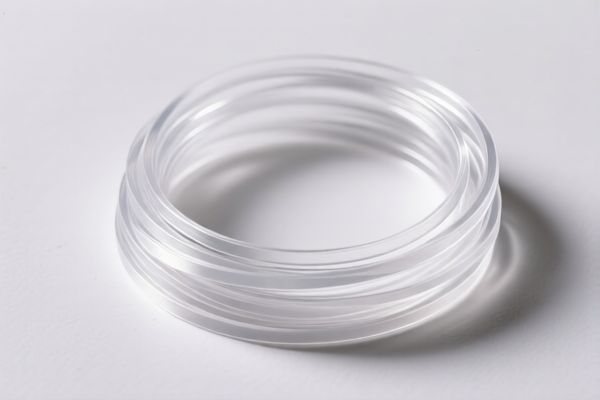
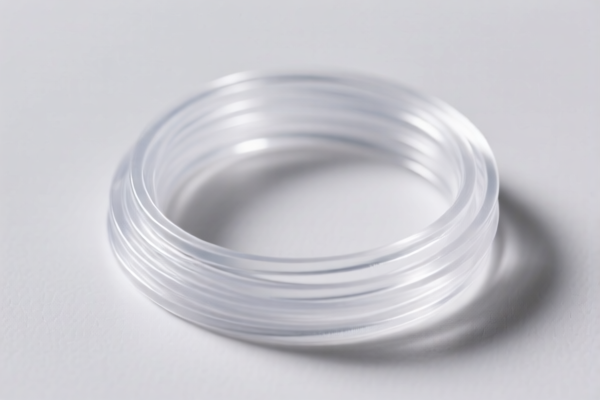
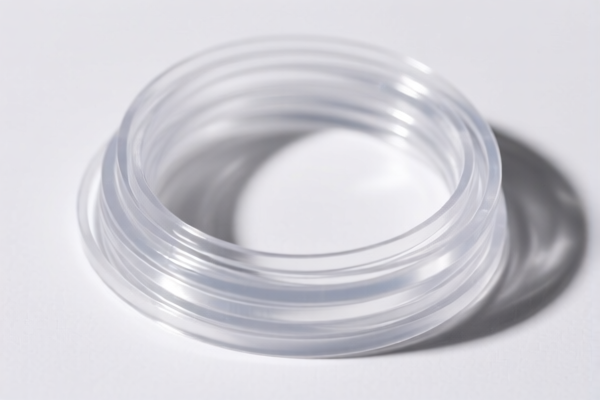
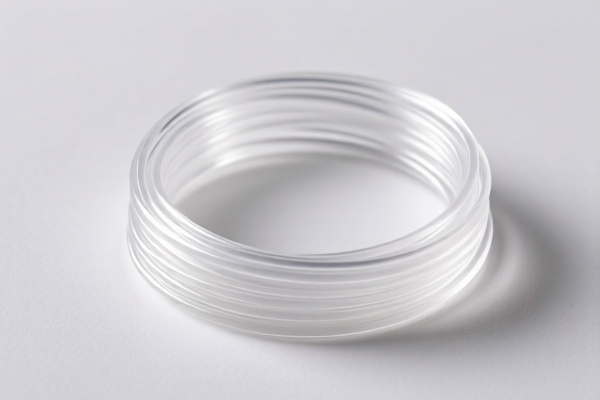
AI Analysis
🩲 Back Cross Elastic Band (Underwear/Intimates Component)
🌐 HS Code Reference & Customs Clearance Guide | 2026 Latest Tariff Analysis | Professional Clearance Strategy
📌 1. Product Definition: What is a "Back Cross Elastic Band"?
A Back Cross Elastic Band is a specialized narrow woven fabric or knitted accessory used primarily in women’s underwear, bikinis, and swimwear. Its defining feature is the "cross" or "X" design at the back, which prevents the elastic from rolling up, reduces visible panty lines (VPL), and provides a secure fit.
In international trade, these items are classified based on their material composition and form: * Woven Elastic Bands: If made of woven fabric with elastomeric yarn. * Knitted Accessories: If part of a knitted garment or a finished knitted accessory.
⚠️ Critical Distinction:
- Is it a raw material/component (narrow fabric)? → Go to Heading 5806.
- Is it a finished accessory (e.g., headband, ponytail holder, or sewn-in strap)? → Go to Heading 6117.
- Is it part of swimwear? → Go to Heading 6112.
📦 2. HS Code Classification Details (2026 Latest Tariff Authority)
Based on your input data, here are the relevant HS Codes for "Back Cross Elastic Band" components and related goods. Note that the classification depends heavily on whether the item is considered a narrow fabric, a knitted accessory, or swimwear.
| HS Code | Product Description | Application Scenario | Material/Type |
|---|---|---|---|
5806.20.00.10 |
Narrow woven fabrics, other than goods of heading 5807; narrow fabrics consisting of warp without weft assembled by means of an adhesive (bolducs): Other woven fabrics, containing by weight 5 percent or more of elastomeric yarn or rubber thread Containing elastomeric yarn | Raw elastic bands for underwear waistbands, leg openings, or back crosses. | ✅ Woven, >5% Elastomer |
5806.20.00.90 |
Narrow woven fabrics... Other | General narrow elastic fabrics not specifically "containing elastomeric yarn" (e.g., rubber thread only or different construction). | ✅ Woven, >5% Elastomer/Rubber |
6117.80.85.00 |
Other made up clothing accessories, knitted or crocheted... Headbands, ponytail holders and similar articles | If the "back cross band" is designed as a hair accessory (unlikely for underwear, but possible in fashion lingerie sets). | ❌ Knitted Accessory |
6117.80.95.70 |
Other made up clothing accessories... Other | Other finished knitted accessories not specified elsewhere. | ❌ Knitted Accessory |
6112.41.00.10 |
Track suits, ski-suits and swimwear, knitted or crocheted: Women's or girls' swimwear: Of synthetic fibers Of fabric containing by weight 5 percent or more elastomeric yarn or rubber thread: Women's | If the "back cross" is part of a knitted swimwear garment (e.g., a bikini bottom). | ✅ Knitted Swimwear |
6112.41.00.20 |
... Girls' | Same as above, for girls' swimwear. | ✅ Knitted Swimwear |
🔍 Key Clarification:
- Most "Back Cross Elastic Bands" used in lingerie production are classified as Narrow Woven Fabrics (5806.20.xx) because they are components, not finished accessories.
- If the product is a finished knitted strap used as an accessory (not part of a garment), it may fall under6117.80.xx.
- If it is part of a swimsuit, it is classified as Swimwear (6112.41.xx).
💰 3. 2026 Latest Tariff Rate Details (Including Surcharges)
✅ Applicable Country: United States (US)
✅ Origin: China (CN)
✅ Effective Date: 2025/2026 (Current Data)
🎯 1. 5806.20.00.10 & 5806.20.00.90 —— Narrow Woven Elastic Fabrics (Components)
| Item | Content |
|---|---|
| Base Tariff Rate | 0.0% |
| Additional Surcharge (Section 301/IEEPA) | 0.0% |
| Total Tariff Rate | 0.0% |
| Tax Calculation | CIF Value × 0.0% = $0 |
| De Minimis Eligibility | ✅ Yes (if value ≤ $800, no duty/tax for informal entry) |
| Legal Basis | HTSUS 5806.20.00 |
📌 Interpretation:
- Narrow woven fabrics with elastomeric yarn enjoy 0% total tariff for US imports from China.
- This is a low-risk, low-cost classification for elastic components.
- No additional 25% or 10% surcharges apply to these specific codes.
🎯 2. 6117.80.85.00 —— Knitted Accessories (e.g., Headbands, Ponytail Holders)
| Item | Content |
|---|---|
| Base Tariff Rate | 14.6% |
| Additional Surcharge (Section 301/IEEPA) | 7.5% |
| Total Tariff Rate | 22.1% |
| Tax Calculation | CIF Value × 22.1% |
| De Minimis Eligibility | ❌ No (Deny De Minimis for high-duty items in some contexts, but generally subject to duty) |
| Legal Basis | HTSUS 6117.80.85 |
📌 Interpretation:
- If your "back cross band" is mistakenly classified as a finished knitted accessory (e.g., sold as a hair tie or standalone fashion item), the tariff jumps to 22.1%.
- Avoid this classification for underwear components. Ensure customs declarations specify "Elastic Fabric for Underwear" or "Narrow Woven Fabric."
🎯 3. 6112.41.00.10 & 6112.41.00.20 —— Knitted Swimwear
| Item | Content |
|---|---|
| Base Tariff Rate | 0.0% |
| Additional Surcharge | 0.0% |
| Total Tariff Rate | 0.0% |
| Tax Calculation | CIF Value × 0.0% = $0 |
| De Minimis Eligibility | ✅ Yes |
| Legal Basis | HTSUS 6112.41 |
📌 Interpretation:
- If the product is swimwear (bikini bottoms), it also enjoys 0% tariff.
- Crucial: Must be clearly declared as "Swimwear" and not as "Elastic Band."
🛠️ 4. Customs Clearance Practical Advice (Real-World Pitfall Prevention)
✅ 1. Prepare the Following Documents (Indispensable)
| Document | Must Provide | Description |
|---|---|---|
| ✅ Product Specification Sheet | ✔️ | Detail: Woven vs. Knitted, Elastomer content >5%, Width, Thickness. |
| ✅ Composition Label | ✔️ | e.g., "90% Nylon, 10% Spandex" or "Polyester/Elastomer Blend." |
| ✅ Product Photos | ✔️ | Clear images showing the "cross" design, weave structure, and packaging. |
| ✅ Commercial Invoice | ✔️ | Description: "Narrow Woven Elastic Band for Underwear," NOT "Fashion Accessory." |
| ✅ Packing List | ✔️ | Quantity, weight, dimensions. |
✅ 2. Declaration Tips (Key Mantra)
🔥 "Fabric vs. Accessory: Declare Material, Not Function!"
| Scenario | Correct Declaration | Wrong Declaration |
|---|---|---|
| Elastic Band for Lingerie | 5806.20.00.10 - "Narrow Woven Fabric, Elastomeric" |
"Underwear Elastic" (Too vague) |
| Swimwear Bottom | 6112.41.00.10 - "Women's Knitted Swimwear" |
"Elastic Band" (Incorrect) |
| Hair Tie/Accessory | 6117.80.85.00 - "Knitted Accessory" |
"Elastic Band" (Under-declaring) |
📌 Critical Warning:
- Do NOT declare elastic bands as "Clothing Accessories" (6117) if they are raw fabric components. This leads to 22.1% tariff instead of 0%.
- Use precise terminology: "Narrow Woven Fabric, Containing >5% Elastomeric Yarn."
✅ 3. Special Cases
| Case | Handling Advice |
|---|---|
| OEM Custom Elastic | Provide design specs to prove it's a component, not a finished accessory. |
| Mixed Bundles | If elastic bands are packed with finished underwear, declare separately to avoid misclassification. |
| Rubber Thread Only | If no elastomeric yarn, use 5806.20.00.90 (still 0% tariff). |
🌍 5. Global Market Comparison (2026 Latest)
| Country/Region | Recommended HS Code | Tariff | Notes |
|---|---|---|---|
| 🇺🇸 USA | 5806.20.00.10 |
0% | No additional duties for narrow woven fabrics. |
| 🇨🇳 China | 5806.20.00.10 |
0-5% | Import duty for elastic fabrics is low. |
| 🇪🇺 EU | 5806.32.00 |
0-4% | Depends on elastomer content. |
| 🇬🇧 UK | 5806.32.00 |
0-4% | Post-Brexit rules similar to EU. |
📌 Conclusion:
- USA is the most tariff-friendly for narrow woven elastic fabrics (5806.20.xxat 0%).
- Avoid classifying as accessories (6117) unless it’s a finished hair item, to prevent 22.1% duty.
📌 6. Common Mistakes & Pitfalls (Lessons Learned)
❌ Mistake 1: Declaring elastic bands as "Clothing Accessories" (6117.80.85.00)
👉 Result: Pay 22.1% tariff instead of 0%. Cost increase!
❌ Mistake 2: Not specifying elastomer content
👉 Result: Customs may reclassify as general fabric with higher duty. Delay & Penalty!
❌ Mistake 3: Confusing "Woven" vs. "Knitted"
👉 Result:
- Woven → 5806 (0%)
- Knitted Accessory → 6117 (22.1%)
- Knitted Swimwear → 6112 (0%)
Check weave structure carefully!
✅ Correct Declaration Example:
"Narrow Woven Fabric, Elastomeric, 10mm Width, for Underwear Waistbands, HS 5806.20.00.10"
🎯 7. Conclusion: Professional Declaration, Save Costs!
🎯 Remember the Mantra:
🔹 "Fabric is 0%, Accessory is 22.1%!"
🔹 "Narrow Woven, Elastomer >5%, Declare as 5806!"
📌 Tip:
If your product is swimwear, declare as 6112.41.00.10 (0%).
If it’s elastic band fabric, declare as 5806.20.00.10 (0%).
Never declare as 6117.80.85.00 unless it’s a hair accessory!
📣 Action Required:
📞 Confirm weave structure (Woven vs. Knitted) with your manufacturer.
📄 Ensure invoice states "Narrow Woven Fabric" or "Knitted Swimwear," NOT "Elastic Band."
🚀 Smooth clearance, zero extra duty!
✨ Professional classification starts with precise description!
💼 Every dollar saved in duty is pure profit!
Customer Reviews
About HS Code Classification
The Harmonized System (HS) is an internationally standardized nomenclature developed by the World Customs Organization (WCO) to classify traded products. Over 200 countries use the HS system as the basis for customs tariffs, trade statistics, and import/export regulations.
Each HS code follows a hierarchical structure:
- Chapter (2 digits) — Broad category of goods (e.g., Chapter 84: Machinery and Mechanical Appliances)
- Heading (4 digits) — More specific grouping within the chapter
- Subheading (6 digits) — Internationally standardized breakdown, used by all WCO member countries
- National subdivisions (8-10 digits) — Country-specific extensions for further classification, such as US HTSUS 10-digit codes
Correct HS code classification is essential for smooth customs clearance, accurate duty payment, and compliance with trade regulations. Misclassification can lead to customs delays, overpayment of duties, or penalties.
When importing from CN to US, the applicable tariff rates may include:
- Most-Favored-Nation (MFN) rate — The standard duty rate applied to WTO members
- General rate — Applied to countries without trade agreements
- Trade remedy duties — Additional tariffs such as Section 301 (anti-dumping), Section 232 (national security), or countervailing duties
The information provided on this page is for reference purposes only. For official classification, please consult with your local customs authority or a licensed customs broker.