Backpack with outer layer of plastic or textile materials
CN → US| HS Code | Tariff Rate | Origin | Destination | Doc |
|---|---|---|---|---|
| 6305390000 | 25.9% | CN | US | Official Doc |
| 4202923120 | 52.6% | CN | US | Official Doc |
| 6305330080 | 25.9% | CN | US | Official Doc |
| 4202921500 | 41.3% | CN | US | Official Doc |
| 4202923120 | 52.6% | CN | US | Official Doc |
Product Images
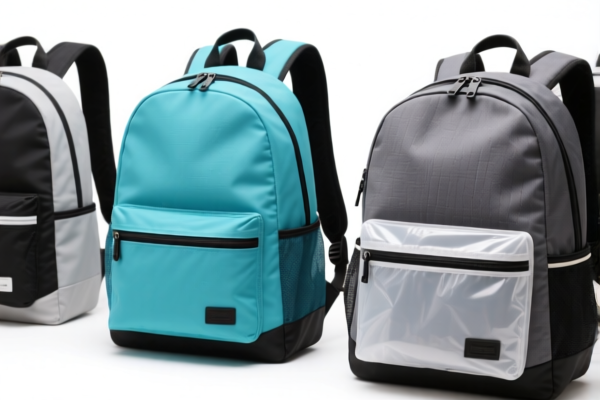
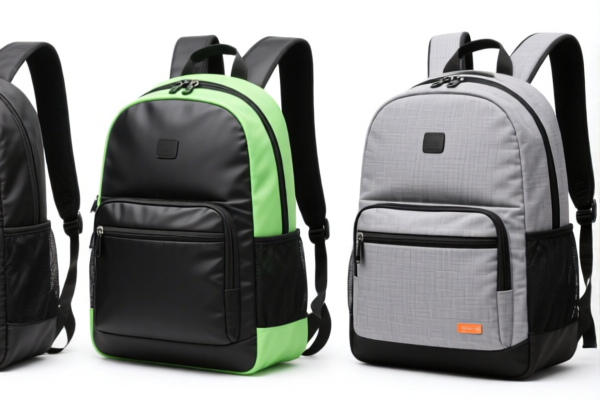
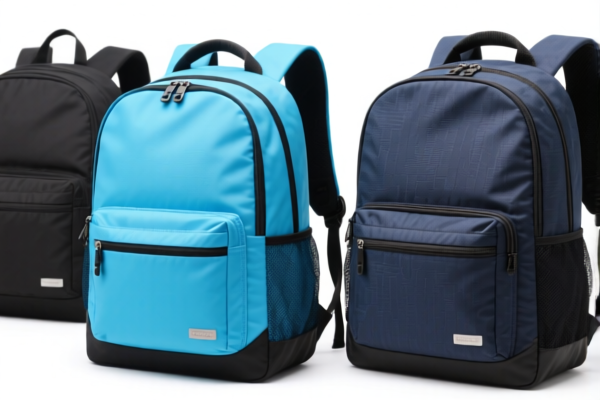
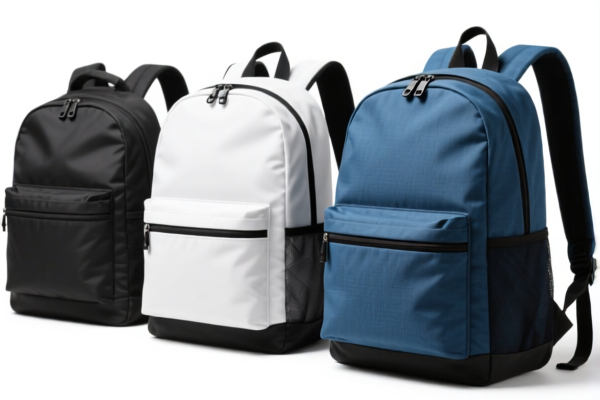
AI Analysis
🎒 Backpacks with Outer Layer of Plastic or Textile Materials
🌐 HS Code Reference & Customs Clearance Guide | 2026 Latest Tariff Analysis | Professional-Level Entry Strategy
📌 I. Product Definition & Classification: Do You Really Understand "Backpacks"?
Backpacks, essential for travel, sports, and daily commuting, are classified differently in international trade depending on their material composition and intended use.
Key Distinction Points:
- If the outer surface is textile materials (e.g., nylon, polyester, cotton) and used for general bagging/packaging → HS Code: 6305
- If the outer surface is plastic or textile and specifically shaped/constructed as a backpack for personal carry → HS Code: 4202
⚠️ Critical Clarification:
- If it is a general-purpose bag (e.g., for packaging goods) with plastic/textile exterior → 6305 series
- If it is specifically designed as a backpack (with straps, specific structure) for personal use → 4202 series
📦 II. HS Code Classification Details (2026 Latest Tariff Authority Comparison)
| HS Code | Product Description | Application Scenario | Material/Structure |
|---|---|---|---|
6305.39.00.00 |
Backpack with outer layer of plastic or textile materials, made of artificial textile materials, used for bag class | General textile backpacks, artificial fiber bags | ✅ Artificial textile materials |
4202.92.31.20 |
Backpack with outer layer of plastic or textile materials, made of plastic or textile materials, shape is backpack | Standard plastic/textile backpacks, personal carry | ✅ Plastic or textile materials, backpack shape |
6305.33.00.80 |
Backpack with outer layer of plastic or textile materials, containing plastic or textile, used for bag class for packaging goods | Packaging bags, industrial textile/plastic bags | ✅ Plastic or textile, packaging use |
4202.92.15.00 |
Backpack with outer layer of leather or synthetic leather, cotton face plastic or textile fabric exterior, containing cotton and textile materials, used for travel/sports bag class | Travel/sports backpacks with cotton/textile exterior | ✅ Cotton + textile materials, travel/sports use |
🔍 Important Notes:
-4202.92.31.20and4202.92.15.00are both personal backpacks, but differ in material and use case; -6305series is for general bagging/packaging, not specifically shaped as personal backpacks; - Shape and Intended Use are the key factors in distinguishing between 6305 and 4202.
💰 III. 2026 Latest Tariff Rate Details (Including Additional Taxes, Policy Surcharges)
✅ Applicable Country: United States (US)
✅ Country of Origin: China (CN)
✅ Effective Date: November 10, 2025 (including subsequent imports)
🎯 1. 6305.39.00.00 —— Artificial Textile Material Backpack (Bag Class)
| Item | Content |
|---|---|
| Base Tariff Rate | 8.4% |
| Additional Tariff | 7.5% |
| Section 301 Tariff | 10% (122-clause tariff) |
| Total Tax Rate | 25.9% |
| Tax Calculation | CIF Value × 25.9% |
| De Minimis Exemption Eligible | ❌ No |
| Legal Basis Path | Section 301: 122-clause 10% → Base 8.4% → Additional 7.5% |
📌 Explanation:
- "Base Tariff 8.4%" is the standard MFN rate for textile bags; - "Additional Tariff 7.5%" is applied under specific trade measures; - "Section 301 10%" is the additional tariff for Chinese products; - Total 25.9% is a moderate-high tariff, must be considered in cost planning.
🎯 2. 4202.92.31.20 —— Plastic or Textile Material Backpack (Personal Carry)
| Item | Content |
|---|---|
| Base Tariff Rate | 17.6% |
| Additional Tariff | 25.0% |
| Section 301 Tariff | 10% (122-clause tariff) |
| Total Tax Rate | 52.6% |
| Tax Calculation | CIF Value × 52.6% |
| De Minimis Exemption Eligible | ❌ No |
| Legal Basis Path | Section 301: 122-clause 10% → Base 17.6% → Additional 25.0% |
📌 Note:
- This is a high-tariff category for personal backpacks; - Even if the material is similar to6305, the shape and use as a backpack push it to 4202, which has a much higher base tariff; - Total 52.6% is a very high tariff, significantly impacting profitability.
🎯 3. 6305.33.00.80 —— Packaging Bag (Plastic/Textile, Bag Class)
| Item | Content |
|---|---|
| Base Tariff Rate | 8.4% |
| Additional Tariff | 7.5% |
| Section 301 Tariff | 10% (122-clause tariff) |
| Total Tax Rate | 25.9% |
| Tax Calculation | CIF Value × 25.9% |
| De Minimis Exemption Eligible | ❌ No |
| Legal Basis Path | Section 301: 122-clause 10% → Base 8.4% → Additional 7.5% |
📌 Explanation:
- Same tariff structure as6305.39.00.00; - Applies to packaging bags made of plastic or textile materials; - Not for personal backpacks;
🎯 4. 4202.92.15.00 —— Cotton/Textile Travel/Sports Backpack
| Item | Content |
|---|---|
| Base Tariff Rate | 6.3% |
| Additional Tariff | 25.0% |
| Section 301 Tariff | 10% (122-clause tariff) |
| Total Tax Rate | 41.3% |
| Tax Calculation | CIF Value × 41.3% |
| De Minimis Exemption Eligible | ❌ No |
| Legal Basis Path | Section 301: 122-clause 10% → Base 6.3% → Additional 25.0% |
📌 Note:
- Lower base tariff (6.3%) due to cotton/textile composition; - However, the Additional Tariff 25.0% makes the total 41.3%; - Still high, but lower than4202.92.31.20(52.6%).
🛠️ IV. Customs Clearance Practical Advice (实战避坑指南)
✅ 1. Required Documentation Checklist (None Can Be Missing)
| Document | Must Provide | Description |
|---|---|---|
| ✅ Product Specification Sheet | ✔️ | Includes size, material, capacity, strap type |
| ✅ Product Photos (with label) | ✔️ | Clear view of brand, model, material composition |
| ✅ Commercial Invoice | ✔️ | Must specify "Backpack" or "Bag" clearly |
| ✅ Packing List | ✔️ | Detail items, weights, dimensions |
| ✅ Certificate of Origin (CO) | ✔️ | If non-China origin, may qualify for preferential rates |
| ✅ Third-Party Test Report | ✔️ | If applicable (e.g., REACH, Prop 65) |
✅ 2. Declaration Tips (Key Mnemonics)
🔥 "Shape determines code, use determines rate! Personal backpacks = 4202, general bags = 6305!"
| Scenario | Correct Declaration | Wrong Practice |
|---|---|---|
| Personal backpack (plastic/textile) | 4202.92.31.20 |
Misdeclared as general bag → 25.9% (lower tax, but risk of penalty if caught) |
| Packaging bag (textile/plastic) | 6305.39.00.00 or 6305.33.00.80 |
Misdeclared as personal backpack → 52.6% (higher tax, unnecessary cost) |
| Travel/sports backpack (cotton/textile) | 4202.92.15.00 |
Misdeclared as general bag → 25.9% (underpayment, risk of audit) |
| Artificial textile bag | 6305.39.00.00 |
Misdeclared as personal backpack → 52.6% (overpayment, unnecessary cost) |
✅ 3. Special Cases Handling
| Scenario | Handling Advice |
|---|---|
| OEM Custom Backpacks | Provide customer orders + design drawings to avoid "non-standard" classification |
| Backpacks with Special Features (e.g., laptop compartment, waterproof) | Still classified under 4202 if shaped as backpack; additional features do not change HS Code |
| Backpacks for Children | Same classification as adult backpacks; no preferential rate |
| Backpacks for Industrial Use | If used for packaging goods, may qualify for 6305 series; provide proof of use |
🌍 V. Global Main Market Clearance Comparison (2026 Latest)
| Country/Region | Recommended HS Code | Tariff | Certification Requirements | Remarks |
|---|---|---|---|---|
| 🇺🇸 USA | 4202.92.31.20 |
52.6% (China origin) | None specific | High tariff, must consider cost |
| 🇺🇸 USA | 6305.39.00.00 |
25.9% (China origin) | None specific | Lower tariff for general bags |
| 🇨🇳 China | 4202.92.31.20 |
5% | CCC (if applicable) | No additional tariffs |
| 🇪🇺 EU | 4202.92.31.20 |
4% (if compliant) | CE + REACH | No additional tariffs |
| 🇦🇺 Australia | 4202.92.31.20 |
5% | RCM | No additional tariffs |
| 🇯🇵 Japan | 4202.92.31.20 |
10% | PSE | No additional tariffs |
📌 Conclusion:
- USA has the highest tariffs for backpacks, especially under4202series; - China, EU, Australia, Japan have much lower tariffs; - Cost planning is critical for US imports; consider sourcing from non-China origins if possible.
📌 VI. Common Mistakes & Pitfalls (Blood & Tears Lessons)
❌ Mistake 1: Declaring a personal backpack as a general bag to avoid high tariff
👉 Consequence: Risk of customs audit, penalty, or retroactive tariff payment → 52.6% + fines!
❌ Mistake 2: Declaring a packaging bag as a personal backpack
👉 Consequence: Overpayment of tariff → Unnecessary cost increase!
❌ Mistake 3: Failing to specify material composition (cotton, plastic, textile)
👉 Consequence: Customs may misclassify → Delays or incorrect tariff application!
❌ Mistake 4: Using vague terms like "bag" or "backpack" without specifying use case
👉 Consequence: Customs may request additional documentation → Delays in clearance!
✅ Correct Approach:
"Backpack, Outer Material: 100% Polyester, Straps: Nylon, Capacity: 20L, Intended Use: Personal Travel, Model: XYZ, FCC Compliant"
🎯 VII. Conclusion: Professional Declaration, Save Time, Reduce Costs!
🎯 Remember the Mnemonic:
🔹 "Personal Backpack = 4202 (High Tariff), General Bag = 6305 (Lower Tariff)!"
🔹 "HS Code Determines Life, Tariff Differs by 27 Points, One Step Wrong, Thousands in Tax!"
📌 Pro Tip:
- If your backpacks are originating from Vietnam, Mexico, Thailand, or Malaysia, you may apply for IEEPA Exemption, reducing tariffs to 0%~5%;
- Consider Advance Ruling to avoid clearance risks.
📣 Immediate Action:
📞 Contact a professional customs broker + Provide product photos + Apply for HS Code Advance Ruling
🚀 Let your backpacks clear smoothly, exit efficiently, and double your profits!
✨ Professional clearance starts with accurate classification!
💼 Every cent of your cost deserves precise calculation!
Customer Reviews
About HS Code Classification
The Harmonized System (HS) is an internationally standardized nomenclature developed by the World Customs Organization (WCO) to classify traded products. Over 200 countries use the HS system as the basis for customs tariffs, trade statistics, and import/export regulations.
Each HS code follows a hierarchical structure:
- Chapter (2 digits) — Broad category of goods (e.g., Chapter 84: Machinery and Mechanical Appliances)
- Heading (4 digits) — More specific grouping within the chapter
- Subheading (6 digits) — Internationally standardized breakdown, used by all WCO member countries
- National subdivisions (8-10 digits) — Country-specific extensions for further classification, such as US HTSUS 10-digit codes
Correct HS code classification is essential for smooth customs clearance, accurate duty payment, and compliance with trade regulations. Misclassification can lead to customs delays, overpayment of duties, or penalties.
When importing from CN to US, the applicable tariff rates may include:
- Most-Favored-Nation (MFN) rate — The standard duty rate applied to WTO members
- General rate — Applied to countries without trade agreements
- Trade remedy duties — Additional tariffs such as Section 301 (anti-dumping), Section 232 (national security), or countervailing duties
The information provided on this page is for reference purposes only. For official classification, please consult with your local customs authority or a licensed customs broker.