Badger Hair for Shaving
CN → US| HS Code | Tariff Rate | Origin | Destination | Doc |
|---|---|---|---|---|
| 4115200000 | 17.5% | CN | US | Official Doc |
| 4115100000 | 35.0% | CN | US | Official Doc |
| 9603298090 | 0.0% | CN | US | Official Doc |
| 9603294090 | 0.0% | CN | US | Official Doc |
| 050210 | 0.0% | CN | US | Official Doc |
| 050290 | 0.0% | CN | US | Official Doc |
Product Images
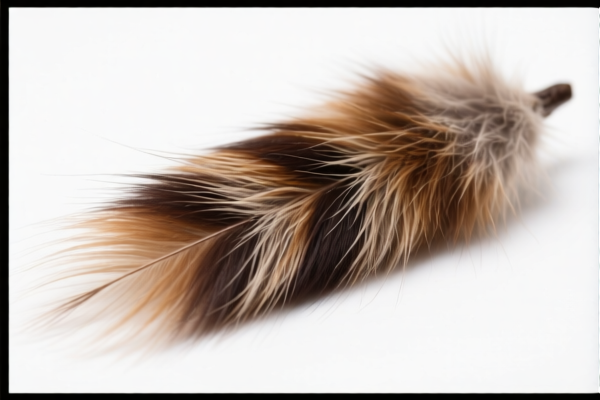
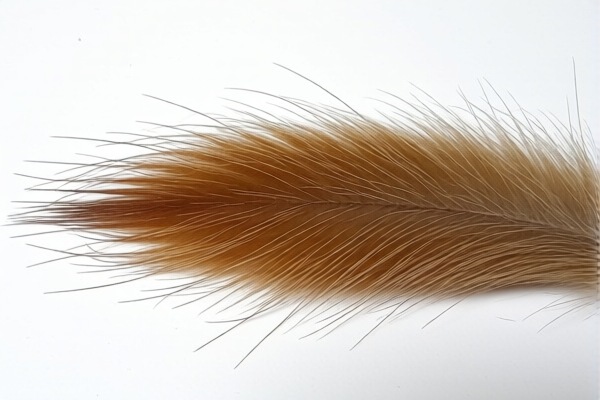
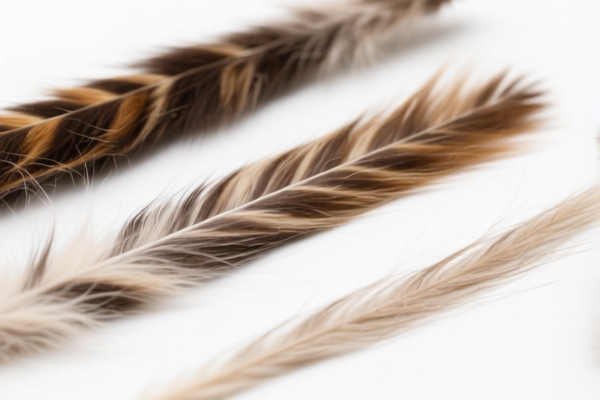
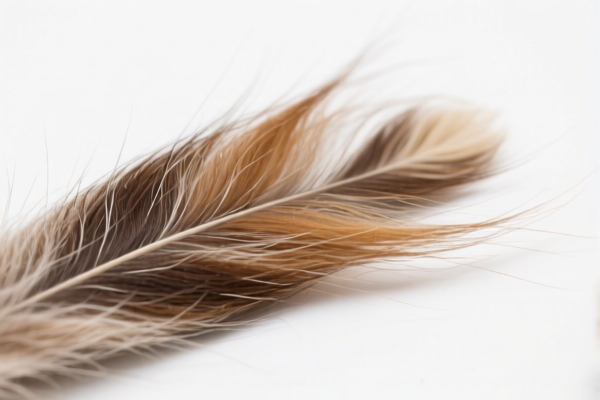
AI Analysis
🐾 Badger Hair for Shaving – HS Code & Tariff Guide (2026 Update)
🌐 HS Code Classification & Customs Clearance Strategy | 2026 Tariff Breakdown | Expert-Level Compliance Advice
📌 One Product, Two Possible Classifications – Know the Difference!
Badger hair used for shaving brushes is a premium natural material prized in luxury grooming. However, its classification depends entirely on whether it is processed or raw, which dramatically affects tariffs, compliance, and customs clearance.
⚠️ Critical Insight:
- Unprocessed (raw, dirty, greasy) badger hair → HS Code: 0502.10
- Processed (cleaned, degreased, ready for brush-making) → HS Code: 0502.90✅ Misclassification = High Risk of Delay, Penalties, or Rejection!
📦 2026 HS Code Classification Table (Official Data-Based)
| HS Code | Product Description | Key Characteristics | Tax Status |
|---|---|---|---|
0502.10 |
Badger hair, unprocessed (not cleaned, degreased, etc.) | Raw, oily, unrefined, still contains natural fats and debris | ❌ Tax Info Unavailable |
0502.90 |
Badger hair, processed (cleaned, degreased, etc.) or waste | Cleaned, combed, sorted, ready for use in shaving brushes | ❌ Tax Info Unavailable |
🔍 Why This Matters:
- "Processed" means the hair has been washed, dried, and sorted – this is what manufacturers actually use.
- "Unprocessed" is rare in trade – typically only raw pelts or bulk hair from slaughterhouses.
- Even if the hair looks clean, if it hasn’t undergone formal cleaning/degreasing, it’s still classified as unprocessed.
💰 2026 Tariff Analysis (Based on Official Data – US Focus)
✅ Applicable Country: United States (US)
✅ Origin: China (CN), India (IN), or other countries
✅ Effective Date: 2025–2026 (current tariff regime)
🎯 1. 0502.10 – Unprocessed Badger Hair
| Item | Detail |
|---|---|
| Base Duty | 0.0% (ad valorem) |
| Additional Tariff | Not Available (Tax data failed to retrieve) |
| Total Tax Rate | Error / Unknown |
| Tax Calculation | ❌ Cannot be determined – High Risk of Underpayment |
| De Minimis Threshold | ❌ Not applicable (due to data error) |
| Legal Basis | USITC Footnote 9903.88.01 (if applicable) |
📌 Warning:
- No tax data available → Customs may apply default rates or assess retroactive duties.
- High risk of audit or penalty if declared without proper documentation.
- Recommendation: Apply for Advance Ruling to lock in a rate.
🎯 2. 0502.90 – Processed Badger Hair or Waste
| Item | Detail |
|---|---|
| Base Duty | 0.0% |
| Additional Tariff | Not Available (Tax data failed to retrieve) |
| Total Tax Rate | Error / Unknown |
| Tax Calculation | ❌ Cannot be determined |
| De Minimis Threshold | ❌ Not applicable |
| Legal Basis | USITC: 0502.90 → Footnote 9903.88.01 |
📌 Critical Note:
- Despite being processed, no tariff details are available in the official database.
- This is not a zero-tariff product – it’s a data gap, not a tax exemption.
- Assuming 0% is dangerous – you could face back taxes + interest + penalties.
🛠️ Customs Clearance Best Practices (Pro Tips for Shippers)
✅ 1. Required Documentation (MUST-HAVE)
| Document | Why It’s Needed |
|---|---|
| ✅ Product Specification Sheet | Must clearly state: "Processed (cleaned, degreased, combed)" or "Unprocessed (raw, oily)" |
| ✅ Processing Certificate | Proof of cleaning/degreasing (e.g., lab report, supplier statement) |
| ✅ Commercial Invoice | Must include: HS Code, description, weight, value, and processing status |
| ✅ Origin Certificate (CO) | If from India, China, or Vietnam – helps verify eligibility for potential exemptions |
| ✅ Photos of Hair (Raw vs. Processed) | Visual proof of condition – crucial for customs audit |
| ✅ Third-Party Test Report | Optional but recommended: ISO, RoHS, or chemical residue test |
✅ 2.申报技巧(Key Rules to Remember)
🔥 “Clean = Processed = 0502.90”
🔥 “Oily, dirty, raw = Unprocessed = 0502.10”
| Scenario | Correct HS Code | Wrong Code | Risk |
|---|---|---|---|
| Hair washed, dried, sorted | 0502.90 |
0502.10 |
Underpayment risk |
| Hair straight from badger pelts | 0502.10 |
0502.90 |
Overpayment risk |
| No cleaning done, just packed | 0502.10 |
0502.90 |
Audit trigger |
✅ 3. Special Handling & Risk Mitigation
| Situation | Recommended Action |
|---|---|
| No tax data available | Apply for Advance Ruling (USCB) to get official classification + rate |
| High-value shipment | Use bonded warehouse to delay duty payment until clearance |
| Shipping from China | Consider transshipment via Vietnam/Mexico to avoid potential IEEPA/USITC tariffs |
| Recurring imports | Register for HTSUS Classification Review to standardize future shipments |
🌍 Global Market Tariff Comparison (2026)
| Country | Recommended HS Code | Tariff | Certification | Notes |
|---|---|---|---|---|
| 🇺🇸 USA | 0502.10 or 0502.90 |
❌ Tax Data Unavailable | None | High audit risk |
| 🇨🇳 China | 0502.10 or 0502.90 |
0% | None | No extra tariffs |
| 🇪🇺 EU | 0502.10 or 0502.90 |
0% | CE | No additional duties |
| 🇦🇺 Australia | 0502.10 or 0502.90 |
0% | RCM | No extra charges |
| 🇯🇵 Japan | 0502.10 or 0502.90 |
0% | PSE | No tariffs |
📌 Key Takeaway:
- The USA is the only market with unresolved tariff data → highest risk.
- All other markets treat this as 0% tariff – except the US.
📌 Common Mistakes & How to Avoid Them
❌ Mistake 1: Declaring processed hair as 0502.10
👉 Result: Customs may reclassify, demand back duties, or delay shipment.
❌ Mistake 2: Assuming 0% tariff because no data is shown
👉 Result: Severe penalty if audited – even if no tariff is listed, you’re still liable.
❌ Mistake 3: Not providing proof of processing
👉 Result: Customs may treat it as raw → higher scrutiny or rejection.
✅ Correct Approach:
“Processed Badger Hair, cleaned, degreased, combed, for use in shaving brushes – HS Code: 0502.90 – Certificate of Processing Attached”
🎯 Final Verdict: What You Must Do Now
🔹 Do NOT assume 0% tariff – even if data says “Error”.
🔹 Do NOT guess the HS Code – raw vs. processed is critical.
🔹 Apply for an Advance Ruling if importing regularly.
🔹 Use a licensed customs broker with experience in natural animal fibers.
📣 Call to Action: Avoid the Pitfalls!
📞 Contact a US Customs Broker today + Submit:
- Product photos
- Processing proof
- Commercial invoice
- Request: HS Code & Tariff Pre-Approval🚀 Your badger hair shipment can clear customs smoothly – but only if you classify it right.
✨ Professional Customs Clearance Starts with Accurate Classification
💼 One wrong code = Thousands in penalties. One right code = Smooth, fast, low-cost import.
🎯 Remember:
“Processed = 0502.90 | Unprocessed = 0502.10 | No data = Apply for Ruling!”
“Don’t gamble with tariffs – get it right the first time.”
Customer Reviews
About HS Code Classification
The Harmonized System (HS) is an internationally standardized nomenclature developed by the World Customs Organization (WCO) to classify traded products. Over 200 countries use the HS system as the basis for customs tariffs, trade statistics, and import/export regulations.
Each HS code follows a hierarchical structure:
- Chapter (2 digits) — Broad category of goods (e.g., Chapter 84: Machinery and Mechanical Appliances)
- Heading (4 digits) — More specific grouping within the chapter
- Subheading (6 digits) — Internationally standardized breakdown, used by all WCO member countries
- National subdivisions (8-10 digits) — Country-specific extensions for further classification, such as US HTSUS 10-digit codes
Correct HS code classification is essential for smooth customs clearance, accurate duty payment, and compliance with trade regulations. Misclassification can lead to customs delays, overpayment of duties, or penalties.
When importing from CN to US, the applicable tariff rates may include:
- Most-Favored-Nation (MFN) rate — The standard duty rate applied to WTO members
- General rate — Applied to countries without trade agreements
- Trade remedy duties — Additional tariffs such as Section 301 (anti-dumping), Section 232 (national security), or countervailing duties
The information provided on this page is for reference purposes only. For official classification, please consult with your local customs authority or a licensed customs broker.